Extractive Gas Analyzer
Extractive Gas Analyzer
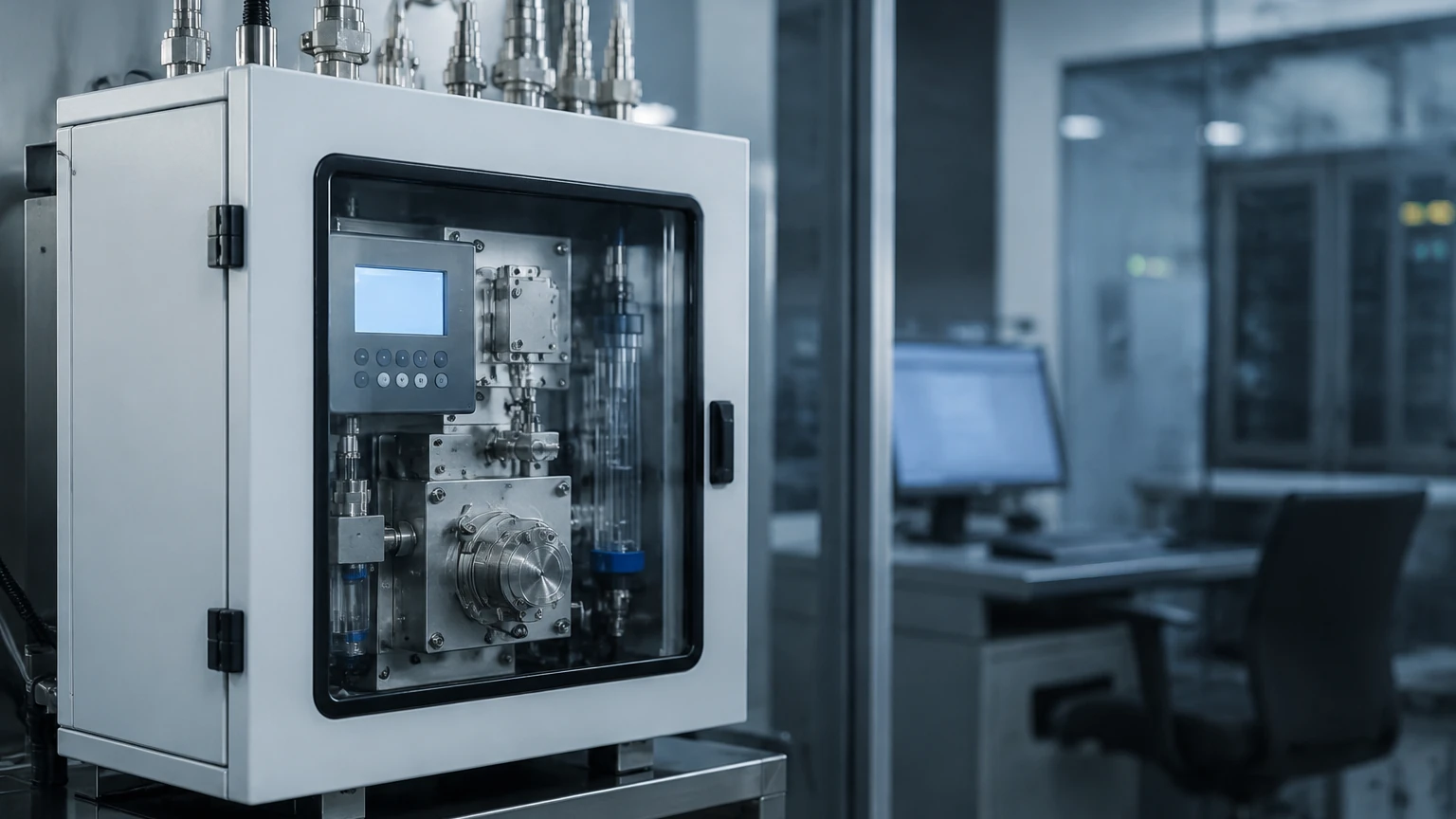
In industrial process control and environmental monitoring, the ability to accurately quantify gas concentrations is fundamental to safety, efficiency, and regulatory compliance. An extractive gas analyzer is a sophisticated system designed to withdraw a representative sample of gas from a process stream or flue, transport it to a remote location, and condition it before measurement. Unlike in-situ analyzers that measure gas directly within the stack or pipe, extractive systems provide a controlled environment for the sensor, allowing for high-precision analysis even in extreme process conditions.
For engineers and plant operators, choosing the right gas analysis strategy is as critical as selecting the correct level measurement technology. While brands like Welk provide the Main Page for level instrumentation solutions, understanding the synergy between gas composition and liquid level monitoring is essential for comprehensive process automation.
Measurement Principles of Extractive Gas Analysis
The fundamental principle of an extractive gas analyzer involves three distinct stages: sampling, conditioning, and detection. By decoupling the measurement sensor from the harsh process environment, extractive systems can handle gases that are too hot, too wet, or too corrosive for direct contact with sensitive electronics.
The Sampling and Conditioning Chain
1. Extraction: A vacuum pump or aspirator pulls the gas through a sampling probe. This probe is typically equipped with a primary filter to remove large particulates.
2. Transport: The gas travels through a sample line. In many applications, this line is heated (typically to 120°C–180°C) to prevent the condensation of water vapor or heavy hydrocarbons, which could absorb soluble gases like SO2 or NO2.
3. Conditioning: Once the gas reaches the analyzer cabinet, it must be stabilized. This involves removing moisture (using thermoelectric chillers or permeation dryers), fine filtration, and pressure regulation.
4. Analysis: The clean, dry, and stable gas is passed through the detection cell.
Common Detection Technologies
Extractive systems can utilize various sensor technologies depending on the target gas:
* Non-Dispersive Infrared (NDIR): Measures the absorption of infrared light at specific wavelengths. It is the standard for CO, CO2, and CH4.
* Paramagnetic Analysis: Utilizes the unique magnetic susceptibility of oxygen molecules to measure O2 concentration.
* Thermal Conductivity (TCD): Measures the ability of a gas to conduct heat, commonly used for binary gas mixtures like H2 in N2.
* Chemiluminescence: A highly sensitive method for detecting Nitrogen Oxides (NOx) by measuring the light emitted during a chemical reaction.
Components of an Extractive Gas Sampling System
An extractive gas analyzer is rarely a single device; it is a system of integrated components designed to maintain sample integrity.
* Sample Probe: Often constructed from 316L stainless steel, Hastelloy, or ceramic, depending on the temperature and acidity of the process. For high-dust environments, probes may feature blowback systems to clear the filter automatically.
* Heated Sample Line: These lines use self-regulating or constant-wattage heating cables to maintain the sample above its dew point. This is crucial for "Cold/Dry" extractive systems where moisture is removed later.
* Sample Cooler: A thermoelectric (Peltier) or compressor-based chiller that rapidly drops the gas temperature to approximately 4°C. This forces moisture to condense and be removed via a peristaltic pump, leaving a "dry" gas for the sensor.
* Flow Control: Rotameters and needle valves ensure a constant flow rate to the analyzer, typically between 0.5 and 2.0 liters per minute.
Comparing Extractive vs. In-Situ Gas Analyzers
When designing a monitoring station, engineers must decide between extractive and in-situ (cross-stack) methods. The following table highlights the primary differences:
| Feature | Extractive Gas Analyzer | In-Situ Gas Analyzer |
| :— | :— | :— |
| Measurement Environment | Controlled (Remote Cabinet) | Process Conditions (Stack/Pipe) |
| Maintenance Access | Easy (Ground level) | Difficult (Requires climbing) |
| Calibration | Simple (Using bottled gas) | Complex (Requires flow-through cells) |
| Response Time | Slower (Due to transport lag) | Near-instantaneous |
| Sample Integrity | Potential for loss in lines | High (Direct measurement) |
| Process Limits | Can handle very high temps (>1000°C) | Limited by sensor tolerances |
Selection Criteria for Industrial Applications
Selecting an extractive gas analyzer requires a detailed analysis of the process matrix. Failure to account for "interferents"—gases that absorb light at the same wavelength as the target gas—is a common cause of measurement error.
1. Gas Composition and Concentration
Determine the expected range (ppm vs. %) of the target gas. If measuring low concentrations of SO2 in the presence of high CO2, an analyzer with high selectivity or specialized optical filters is required.
2. Process Conditions
If the process gas is under high pressure (e.g., >5 bar), the sampling system must include pressure reduction stages. Conversely, if the process is under vacuum, a high-performance pump is necessary to extract the sample.
3. Environmental Regulations
For Continuous Emissions Monitoring Systems (CEMS), the analyzer must meet specific certification standards (such as US EPA Part 60/75 or European EN 14181). These regulations dictate the required accuracy, drift limits, and uptime.
4. Integration with Level and Pressure Systems
In many chemical storage applications, gas analysis is paired with level measurement. For instance, in tanks with nitrogen blanketing, an extractive O2 analyzer ensures the inert atmosphere is maintained, while a radar level meter from the Welk product range monitors the liquid volume. The two systems together provide a complete picture of the vessel's safety and inventory.
Installation and Maintenance Best Practices
To ensure the longevity of an extractive gas analyzer, the installation must prioritize sample integrity and ease of service.
* Probe Placement: The probe should be installed in a representative location, away from stagnant zones or areas where ambient air might leak in (e.g., near dampers or leaky seals).
* Line Slope: Sample lines should always slope downward toward the conditioning unit (at least a 5-degree incline) to ensure that any accidental condensation drains away from the probe and toward the moisture removal system.
* Calibration Frequency: Even the best sensors drift. Automated calibration cycles using certified span gases should be programmed weekly or monthly to maintain accuracy.
* Filter Replacement: Particulate filters are the first line of defense. A routine schedule for replacing primary (at the probe) and secondary (at the analyzer) filters prevents flow restrictions and pump strain.
The Role of Gas Analysis in Tank Level Monitoring
While gas analyzers and level meters are different instruments, they often work in tandem within industrial automation. For example, in wastewater treatment, an extractive gas analyzer might monitor H2S levels to protect equipment from corrosion, while an ultrasonic level sensor monitors the height of the effluent.
In pressurized vessels, the gas composition in the headspace can affect the accuracy of certain level technologies. For instance, the speed of sound used by ultrasonic level sensors changes based on the gas density and composition. If the gas mixture fluctuates significantly, data from an extractive gas analyzer can be used to provide real-time compensation for the level meter, ensuring the calculated distance remains accurate.
Frequently Asked Questions (FAQ)
Q: How long can the sample line be in an extractive system?
A: While lines can technically extend up to 100 meters, it is best to keep them under 30 meters to minimize transport lag and reduce the power requirements for heating. Longer lines increase the risk of "cold spots" where condensation can occur.
Q: Can extractive gas analyzers measure multiple gases simultaneously?
A: Yes, many modern analyzers are multi-component. A single NDIR bench can often measure CO, CO2, and CH4, while an additional paramagnetic sensor can be integrated into the same housing for O2.
Q: What is the difference between "Hot/Wet" and "Cold/Dry" extractive systems?
A: A "Cold/Dry" system removes moisture before the gas reaches the sensor. A "Hot/Wet" system keeps the entire sampling chain and the analyzer cell heated above the dew point, measuring the gas in its raw state. Hot/Wet systems are often used when the target gases are highly soluble in water (like HCl or NH3).
Q: How does dust affect the analyzer?
A: Dust is the primary enemy of extractive systems. It can clog probes, damage pump diaphragms, and coat the optical windows of the sensor. High-dust applications require multi-stage filtration and frequent automatic blowback cycles.
For more information on integrating these analytical tools with industrial level measurement systems, professionals can consult technical resources on the Main Page of the Welk website, where detailed specifications for radar, ultrasonic, and hydrostatic sensors are available to complement process gas monitoring strategies.