Cleaning Efficiency Meters
Cleaning Efficiency Meters
In the modern industrial landscape, particularly within the food and beverage, pharmaceutical, and chemical sectors, the integrity of Cleaning-in-Place (CIP) and Sterilization-in-Place (SIP) processes is paramount. The term "cleaning efficiency meters" does not typically refer to a single standalone device but rather a sophisticated suite of analytical and process instrumentation designed to validate that a vessel or piping system has reached the required level of cleanliness. These systems ensure that residues from previous batches are removed, microbial growth is inhibited, and chemical detergents are thoroughly rinsed away.
Effective cleaning validation relies on the integration of various sensors, including conductivity meters, turbidity sensors, and, crucially, high-precision level measurement instruments. Level sensors play a foundational role in cleaning efficiency by monitoring the volume of cleaning agents, ensuring complete drainage, and verifying that spray balls are operating at the correct pressures to reach all internal surfaces. For a comprehensive overview of industrial level measurement technologies used in these applications, visit the Main Page of Welk's technical resource center.
Fundamentals of Industrial Cleaning Validation
Cleaning efficiency is measured through the quantification of four primary variables: mechanical action, chemical concentration, temperature, and time (often referred to as Sinner’s Circle). Instruments acting as cleaning efficiency meters must provide real-time data to confirm these variables are within the validated parameters.
1. Mechanical Action and Flow
Mechanical action is usually provided by spray balls or jet cleaners. Instrumentation monitors the flow rate and pressure of the cleaning fluid. If the pressure drops, the mechanical force of the water hitting the tank walls decreases, leading to "shadow zones" where soil remains. Level meters assist here by monitoring the supply tank levels to ensure consistent pump suction.
2. Chemical Concentration (Conductivity)
Conductivity sensors are the primary tool for measuring the concentration of caustic or acid cleaning solutions. By measuring the electrical conductivity of the fluid, the system can determine if the detergent is at the correct strength. During the final rinse phase, these sensors detect when the conductivity returns to that of pure water, signaling that all chemicals have been flushed.
3. Soil Removal (Turbidity)
Turbidity meters measure the clarity of the effluent. High turbidity in the initial rinse indicates a high level of soil removal. As the cleaning cycle progresses, the decrease in turbidity provides a direct metric for cleaning efficiency, allowing the system to move to the next phase only when the rinse water is clear.
4. Volume and Drainage (Level Measurement)
Level transmitters are essential for verifying that the correct volume of rinse water has been used and, more importantly, that the tank has drained completely. Residual liquid at the bottom of a tank can harbor bacteria or dilute the next batch of product, compromising the entire production run.
Instrumentation Technologies for Cleaning Efficiency
When selecting instruments to monitor cleaning efficiency, engineers must prioritize hygienic design. This includes the use of stainless steel (typically 316L), high-grade polymers like PTFE or PEEK, and process connections that eliminate crevices where bacteria can hide.
Radar Level Meters (80GHz)
High-frequency radar (80GHz) has become the gold standard for monitoring cleaning cycles in large vessels. Its narrow beam angle allows it to avoid internal obstructions like spray balls or agitators. Because it is a non-contact technology, it is inherently hygienic. Radar is particularly effective in CIP environments because it can penetrate steam and is unaffected by the rapid temperature shifts common during hot caustic washes and cold water rinses.
Ultrasonic Level Sensors
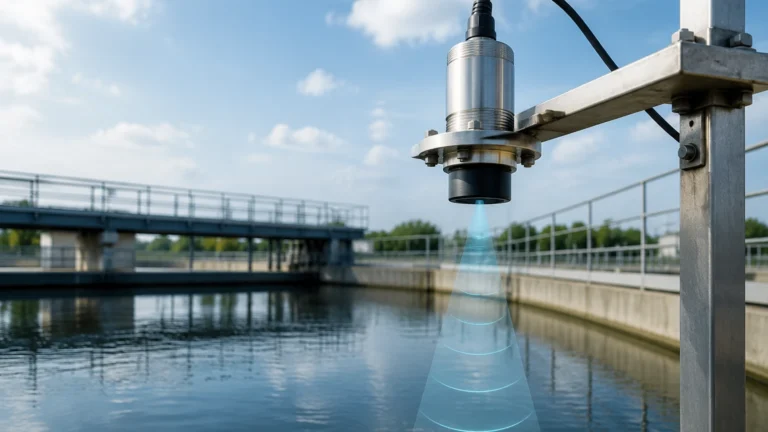
Ultrasonic sensors are a cost-effective alternative for monitoring cleaning fluid storage tanks. They use sound waves to determine the distance to the liquid surface. However, their performance can be hindered by heavy steam or significant temperature gradients within the tank's headspace, which are common during the cleaning of dairy or brewery equipment.
Hydrostatic Pressure Transmitters
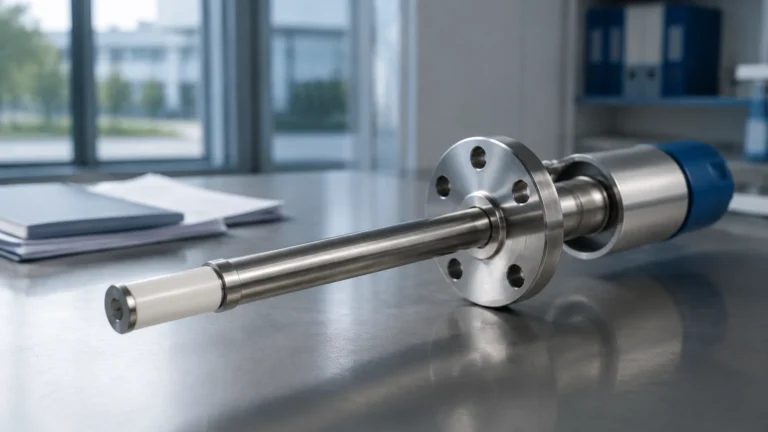
Hydrostatic transmitters measure the pressure exerted by the liquid column. In cleaning efficiency applications, flush-diaphragm hydrostatic sensors are used to detect even the smallest amounts of residual liquid (puddling) at the bottom of a conical vessel. This ensures that the "drain" phase of the CIP cycle is truly complete.
Selection Criteria for CIP-Compatible Level Sensors
Choosing the right components for a cleaning efficiency monitoring system requires a balance between accuracy, environmental resistance, and regulatory compliance (such as 3-A or EHEDG standards).
| Feature | 80GHz Radar | Ultrasonic | Hydrostatic (Flush) |
| :— | :— | :— | :— |
| Measurement Principle | Electromagnetic Wave | Acoustic Pulse | Pressure Differential |
| Hygienic Rating | Excellent (Non-contact) | Good (Non-contact) | Excellent (Flush Diaphragm) |
| Steam Resistance | High | Low | Moderate |
| Accuracy | ±1 mm | ±0.25% of range | ±0.1% to ±0.2% of range |
| Installation | Top-mounted | Top-mounted | Side/Bottom-mounted |
| Foam Sensitivity | Low to Moderate | High | None |
Installation Guidelines for Process Hygiene
To ensure that cleaning efficiency meters provide accurate data without becoming sources of contamination themselves, specific installation protocols must be followed.
1. Surface Finish: All wetted parts of the sensors should have a surface roughness (Ra) of less than 0.8 μm. This prevents microorganisms from adhering to the sensor face.
2. Mounting Orientation: Sensors should be mounted in a way that allows for self-draining. For example, a radar sensor should be mounted vertically, and any mounting nozzles should be short enough to allow the spray ball to reach the sensor face.
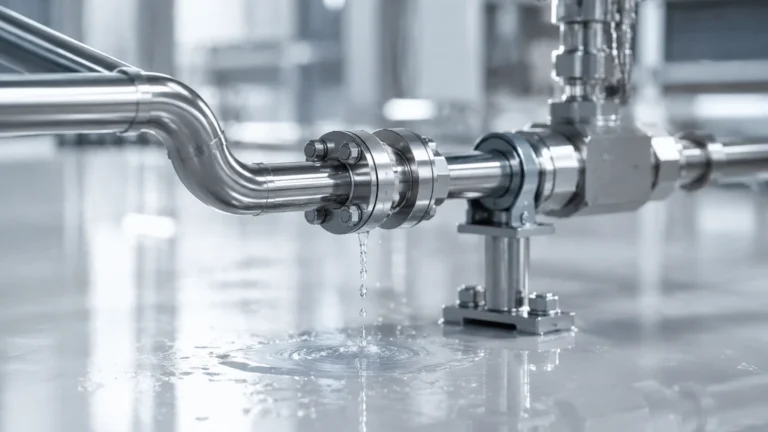
3. Dead Zones: Avoid mounting sensors in deep nozzles or stagnant pockets. In a CIP system, any area that cannot be reached by the cleaning fluid is a "dead zone" and a potential point of failure for the cleaning process.
4. Tri-Clamp Fittings: Use industry-standard hygienic fittings (e.g., Tri-Clamp or Varivent) to ensure a leak-proof and crevice-free connection between the sensor and the vessel.
Practical Limitations and Challenges
While modern cleaning efficiency meters are highly advanced, certain process conditions can still pose challenges to accurate measurement.
* Heavy Foam: During the caustic wash phase, significant foam can build up on the liquid surface. Ultrasonic sensors may lose the signal entirely, as the foam absorbs sound waves. Radar sensors are more resilient but may still experience signal attenuation if the foam is exceptionally dense and wet.
* Rapid Temperature Changes: Moving from a 80°C caustic wash to a 10°C cold water rinse can cause condensation to form on the sensor face. While 80GHz radar can typically see through this condensation, it can cause "ringing" or false near-range readings in lower-frequency devices.
* High-Pressure Spray: If a spray ball is directed straight at a sensor face, it can create false level readings or, in the case of pressure transmitters, temporary pressure spikes. Correct positioning and the use of software filtering (damping) are necessary to mitigate these effects.
Frequently Asked Questions (FAQs)
Q: How do level meters confirm the effectiveness of a spray ball?
A: While a level meter doesn't measure the spray directly, it monitors the depletion rate of the cleaning supply tank and the accumulation rate in the receiving tank. If the levels do not change as expected, it indicates a blockage in the spray ball or a pump failure.
Q: Can one sensor act as a complete cleaning efficiency meter?
A: No. A complete system requires a combination of sensors. For example, a conductivity sensor confirms the chemical presence, while a radar level meter confirms the tank is empty after the rinse, and a flow meter confirms the mechanical action.
Q: Why is 80GHz radar preferred over 26GHz for CIP applications?
A: The 80GHz frequency allows for a much smaller antenna and a narrower beam (often as small as 3 degrees). This makes it easier to install on small hygienic nozzles and ensures the signal doesn't reflect off the sides of the tank or internal CIP hardware.
Q: Do these sensors require frequent recalibration?
A: Most modern digital sensors are designed for long-term stability. However, in regulated industries like pharmaceuticals, it is standard practice to perform an annual calibration check to ensure the cleaning efficiency metrics remain within the validated range.
Conclusion
Implementing a robust array of cleaning efficiency meters is essential for any facility prioritizing product safety and operational efficiency. By integrating advanced level measurement technologies—such as 80GHz radar and flush-diaphragm pressure transmitters—with traditional analytical sensors, manufacturers can achieve a transparent, repeatable, and fully validated cleaning process. This not only protects the consumer but also reduces waste by optimizing the use of water, chemicals, and energy. For detailed specifications on hygienic level instruments, please refer to the Main Page for technical documentation and product selection guides.