Diesel Fuel Tank Level Monitoring System
Diesel Fuel Tank Level Monitoring System
Effective management of diesel fuel reserves is a critical requirement for industries ranging from data centers and hospitals to logistics hubs and remote construction sites. A reliable diesel fuel tank level monitoring system prevents operational downtime caused by fuel exhaustion, mitigates the risk of environmental contamination from overfills, and provides the data necessary for precise inventory management.
Selecting the appropriate instrumentation requires an understanding of the physical properties of diesel, the geometry of the storage vessel, and the specific environmental conditions of the installation site. This guide explores the primary measurement principles, selection criteria, and installation best practices for industrial diesel level monitoring.
Measurement Principles for Diesel Fuel
Before selecting a specific sensor, it is essential to understand how different technologies interact with diesel fuel. Diesel is a hydrocarbon with a relatively stable density (typically 820 to 860 kg/m³) and a low dielectric constant (approximately 2.1). These characteristics influence the efficacy of various measurement methods.
Hydrostatic Pressure Measurement
Hydrostatic level transmitters operate on the principle that the pressure at the bottom of a tank is directly proportional to the height of the liquid column above it. The formula used is $P = \rho \cdot g \cdot h$, where $P$ is pressure, $\rho$ (rho) is the density of the diesel, $g$ is gravity, and $h$ is the liquid height.
In a diesel fuel tank level monitoring system, a submersible pressure transducer is lowered to the bottom of the tank. The sensor measures the head pressure of the fuel and converts it into an electrical signal (typically 4-20mA). Because diesel density can change slightly with temperature, high-precision systems often include temperature compensation to maintain accuracy.
Ultrasonic (Non-Contact) Measurement
Ultrasonic sensors emit high-frequency sound pulses that reflect off the surface of the fuel and return to the transducer. The system calculates the distance based on the time-of-flight of the sound wave.
Since this is a non-contact method, it is ideal for preventing sensor fouling. However, because sound speed is affected by air temperature and vapor density within the tank's headspace, ultrasonic sensors are best suited for atmospheric tanks with stable temperature profiles. In diesel applications, heavy vapor or foam can occasionally attenuate the signal, requiring careful calibration.
Radar Level Measurement
Radar technology uses electromagnetic pulses rather than sound waves. There are two primary types used in diesel monitoring:
1. Guided Wave Radar (GWR): A probe or cable extends into the fuel. The pulse travels along the guide, reflects off the fuel surface, and returns. GWR is highly effective for diesel because the probe concentrates the energy, making it easier to detect the reflection from a low-dielectric fluid.
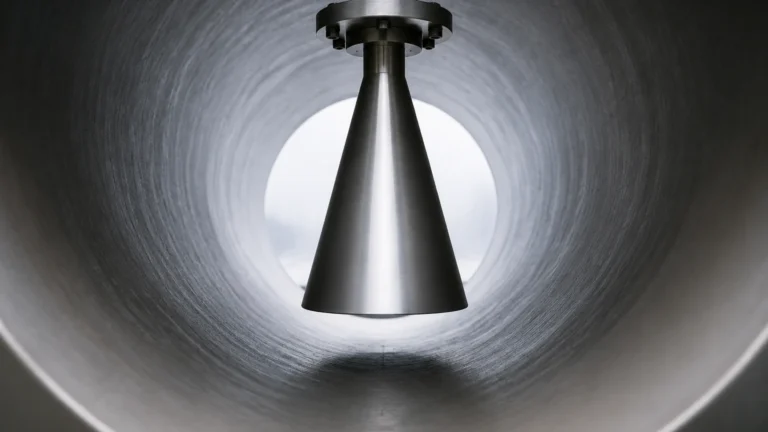
2. Non-Contact Radar (80GHz): These sensors transmit high-frequency signals through the air. Modern 80GHz radar systems have a narrow beam angle, allowing them to avoid internal tank obstructions like ladders or agitators. They are largely unaffected by temperature, pressure, or vapor, making them the most robust choice for complex diesel storage environments.
Magnetic Level Gauges
For localized visual monitoring, magnetic level gauges are often used. A float containing an internal magnet moves with the fuel level inside a bypass chamber. This magnet flips external flags or rollers to show the level visually. For integration into a wider monitoring system, a reed switch transmitter or a magnetostrictive sensor can be mounted to the chamber to provide a continuous electronic output.
Key Evaluation Criteria for System Selection
When designing a diesel fuel tank level monitoring system, engineers must evaluate several factors to ensure long-term reliability and data integrity.
Tank Geometry and Location
* Above-Ground Storage Tanks (AST): These are subject to ambient temperature swings. Non-contact radar or hydrostatic sensors with temperature compensation are preferred.
* Underground Storage Tanks (UST): Space is often limited at the tank head. Submersible hydrostatic sensors or flexible guided wave radar probes are common choices here due to ease of installation through standard risers.
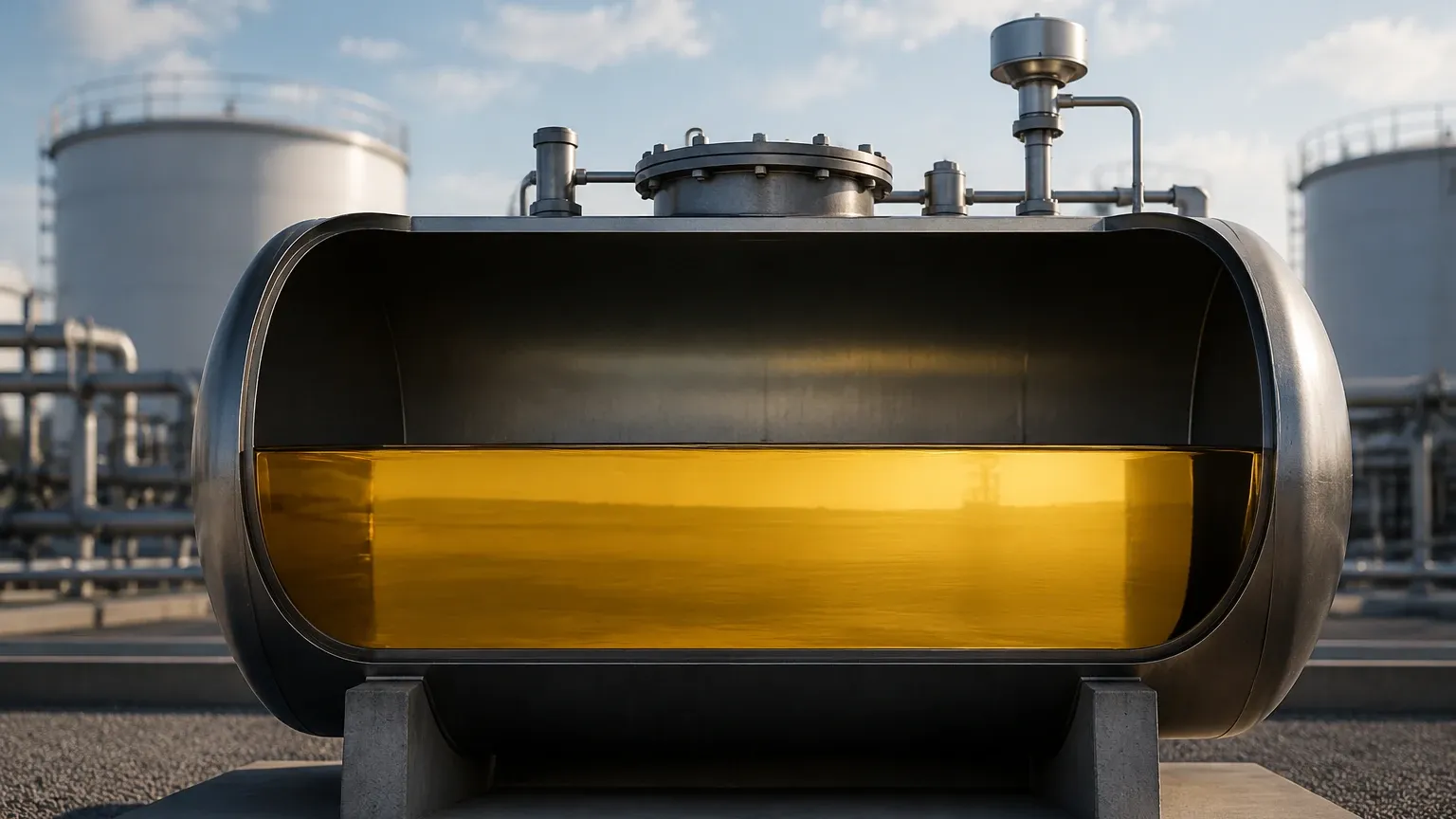
* Horizontal vs. Vertical: For horizontal cylindrical tanks, the monitoring system's software must include strapping tables to convert linear height into volume, as the volume-to-height ratio is non-linear.
Accuracy and Resolution Requirements
Inventory control for high-value fuel requires higher accuracy (±2mm to ±5mm) compared to simple "low-level" alarm systems. If the goal is leak detection or custody transfer, high-frequency radar or magnetostrictive probes are the industry standard.
Connectivity and Integration
Modern industrial facilities require data to be accessible via PLC (Programmable Logic Controller) or SCADA systems. Common output protocols include:
* 4-20mA / HART: The industry standard for analog signaling with digital diagnostic data.
* Modbus RTU/RS485: Ideal for multi-tank configurations where several sensors are daisy-chained to a single controller.
* Wireless (LoRaWAN/NB-IoT): Used for remote tanks where trenching for cables is cost-prohibitive.
Selection Table: Diesel Level Technologies
| Technology | Accuracy | Max Range | Best Application | Limitations |
| :— | :— | :— | :— | :— |
| Hydrostatic | ±0.5% FS | Up to 200m | Deep tanks, USTs | Sensitive to density changes |
| Ultrasonic | ±0.25% FS | 15m – 20m | Vented ASTs | Affected by heavy vapor/foam |
| Guided Wave Radar | ±2mm | 30m | Small tanks, foam | Probe can attract paraffin buildup |
| 80GHz Radar | ±1mm | 120m | High-precision inventory | Higher initial cost |
| Magnetic Gauge | ±5mm – 10mm | 6m | Visual bypass | Mechanical moving parts |
Installation Considerations
Correct installation is as vital as sensor selection. Even the most advanced diesel fuel tank level monitoring system will fail if environmental factors are ignored.
1. Dead Zones (Blocking Distance): Every top-mounted sensor has a "dead zone" near the transmitter where measurement is impossible. Ensure the sensor is mounted high enough (perhaps on a nozzle) so the maximum fuel level does not enter this zone.
2. Turbulence and Stilling Wells: If the tank has a high-flow return line or an agitator, turbulence can cause erratic readings. In these cases, installing the sensor inside a stilling well (a perforated pipe) will provide a calm surface for measurement.
3. Venting: For non-contact sensors, the tank must be properly vented to prevent pressure buildup, which can alter the speed of sound (for ultrasonic) or damage the seal of the transmitter.
4. Nozzle Interference: For radar and ultrasonic sensors, ensure the beam path is clear of internal obstructions. A 100mm (4") nozzle is typically sufficient for most modern narrow-beam radar units.
Common Risks and Limitations
* Paraffin Wax Buildup: In cold climates, diesel can "cloud," and paraffin wax may settle on contact probes (hydrostatic or GWR). Regular inspection or the use of non-contact radar can mitigate this risk.
* Water Bottoms: Water is denser than diesel and settles at the bottom of the tank. Hydrostatic sensors measure the total pressure, which may lead to slight errors if a significant water layer is present. Some specialized probes can measure both the fuel level and the water interface.
* Dielectric Fluctuations: While diesel is stable, biodiesel blends have different dielectric constants. If switching fuel types, radar systems may require recalibration to ensure the surface reflection is correctly identified.
Frequently Asked Questions (FAQ)
Q: Can I use a single sensor for both level monitoring and overfill protection?
A: While some high-end sensors are SIL2 certified for safety functions, best engineering practice and many local regulations (such as NFPA 30) require a separate, independent high-level switch for overfill protection to ensure redundancy.
Q: How often do diesel level sensors need calibration?
A: Hydrostatic sensors should be checked annually for drift. Non-contact radar systems are generally "set and forget" but should be verified every 24 months against a manual dip tape measurement.
Q: Is explosion-proof equipment required for diesel tanks?
A: Diesel has a higher flash point than gasoline, but it is still classified as a combustible liquid. Most industrial installations require ATEX or IECEx certified Class I, Div 1 or Div 2 equipment, especially if the tank is located in a confined space where vapors might accumulate.
Conclusion and Next Steps
Implementing a robust diesel fuel tank level monitoring system requires balancing cost, accuracy, and ease of maintenance. For most industrial applications, 80GHz non-contact radar offers the highest reliability, while hydrostatic transmitters provide a cost-effective solution for deep or underground storage.
Before finalizing a specification, project managers should confirm the tank dimensions, the presence of internal obstructions, and the required communication protocol for the facility's control system. For detailed specifications and to compare specific models for your application, you may Review product options and application support on our Main Page to find the ideal instrument for your infrastructure.