Haake Rheostress
Haake Rheostress
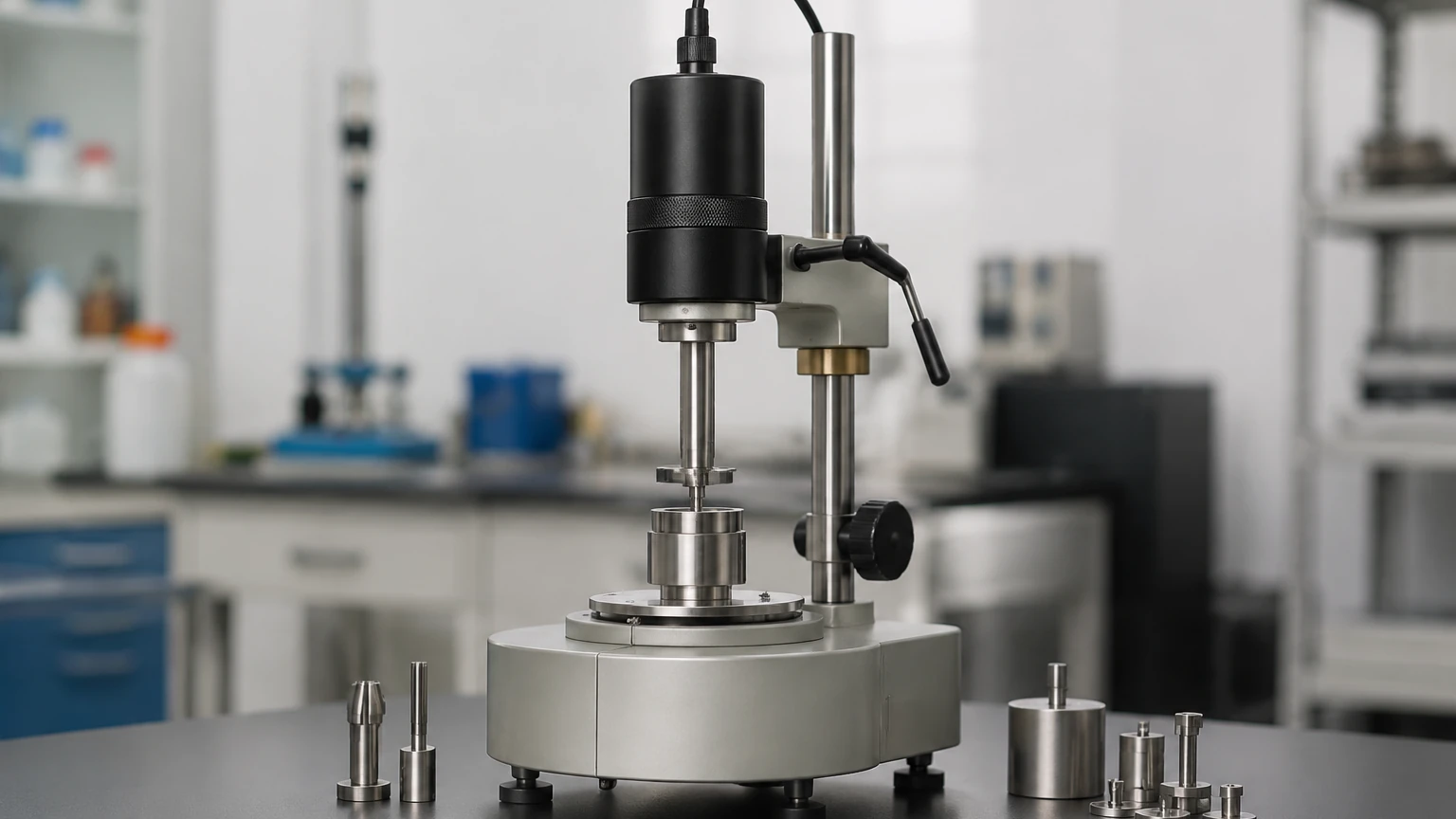
In the landscape of industrial process control, the characterization of fluid behavior is a fundamental requirement for ensuring the accuracy of secondary measurements, such as tank level and volume. The Haake Rheostress series of rheometers has historically served as a critical tool for laboratory and process engineers to understand the flow properties of complex fluids. While the Haake Rheostress itself is a laboratory instrument designed to measure viscosity, yield stress, and viscoelasticity, the data it produces is indispensable when selecting and calibrating level measurement instrumentation for industrial tanks and reactors.
For engineers managing materials ranging from polymer melts and chemical slurries to food products and heavy oils, the rheological profile of the medium dictates which level sensing technology will provide reliable performance. Understanding the relationship between fluid dynamics and sensor physics is the first step in designing a robust automation system.
Fundamentals of Rheology and Level Measurement
Rheology is the study of the flow of matter, primarily in a liquid state, but also as "soft solids" or solids under conditions in which they respond with plastic flow rather than deforming elastically. The Haake Rheostress instrument utilizes a controlled-stress or controlled-rate principle to subject a sample to shear forces, measuring the resulting deformation.
In industrial level measurement, these properties manifest in several ways:
1. Viscosity (Resistance to Flow): Highly viscous fluids do not level out quickly. In a large storage tank, a viscous fluid may form a cone at the inlet or a crater at the outlet. A level sensor measuring a single point may report an inaccurate volume if the surface is not horizontal.
2. Yield Stress: This is the minimum stress required to make a material flow. Materials with high yield stress can adhere to the internal components of level meters, such as the probes of guided wave radar or the floats of magnetic level gauges, leading to mechanical failure or signal attenuation.
3. Thixotropy and Rheopexy: Some fluids change viscosity over time under constant shear. In an agitated tank, the level measurement environment changes dynamically as the fluid is stirred.
When these properties are quantified using a Haake Rheostress, engineers can consult the Main Page of instrumentation providers to match the fluid's profile with the appropriate sensor physics, such as non-contact radar or ultrasonic systems.
How Haake Rheostress Data Informs Level Sensor Selection
The data derived from rheological testing allows for a scientific approach to sensor selection. Instead of relying on trial and error, engineers can categorize their media based on flowability and stickiness.
Selection Table: Level Measurement by Fluid Property
| Fluid Characteristic | Typical Viscosity (mPa·s) | Recommended Level Technology | Considerations |
| :— | :— | :— | :— |
| Low Viscosity | < 500 | Ultrasonic / Hydrostatic | Clean liquids, easy flow. |
| Medium Viscosity | 500 – 5,000 | Radar (Non-contact) | Minimal surface turbulence. |
| High Viscosity | 5,000 – 50,000 | Radar / Guided Wave Radar | Watch for probe coating/buildup. |
| Non-Newtonian / Pastes | > 50,000 | High-Frequency Radar | Requires high-energy signal to penetrate foam/vapor. |
| Slurries with Solids | Variable | Magnetic Level Gauge | Ensure float buoyancy exceeds fluid density. |
For materials characterized by a Haake Rheostress as having high elasticity or significant yield stress, non-contact measurement is almost always preferred. Contact-based sensors, such as tuning forks or pressure diaphragms, may suffer from "bridging" or "clogging," where the material hardens or sticks to the sensor face, providing a false "tank full" reading even after the level has dropped.
Comparative Analysis: Level Measurement Technologies for Complex Fluids
Radar Level Meters
Radar technology, particularly high-frequency (80 GHz) systems, is often the most effective solution for fluids analyzed by rheometers. Because radar is non-contact, the viscosity and yield stress of the fluid do not affect the mechanical integrity of the sensor. The primary concern is the dielectric constant of the material. If a Haake Rheostress analysis indicates a highly aerated or foamy fluid, the radar signal may be scattered, requiring a sensor with advanced signal processing algorithms to filter out noise.
Ultrasonic Level Sensors
Ultrasonic sensors are cost-effective for water-based or low-viscosity liquids. However, they are sensitive to surface conditions. If a fluid is thixotropic and becomes turbulent under agitation, the ultrasonic waves may not return to the transducer reliably. Furthermore, high-viscosity fluids often outgas, creating a vapor layer that can change the speed of sound in the tank headspace, leading to measurement errors.
Hydrostatic Pressure Transmitters
Hydrostatic level measurement relies on the formula $P = \rho \cdot g \cdot h$, where $P$ is pressure, $\rho$ is density, $g$ is gravity, and $h$ is the height of the liquid. While viscosity does not directly enter this equation, it affects the density distribution and the responsiveness of the pressure diaphragm. If the fluid is so viscous that it creates a "plug" in the mounting nozzle, the transmitter will fail to sense the true head pressure.
Engineering Challenges: Viscosity, Agitation, and Surface Conditions
When a Haake Rheostress confirms that a fluid is non-Newtonian (meaning its viscosity changes with the rate of shear), several engineering challenges arise for level monitoring.
Surface Profiling
In tanks containing Newtonian fluids like water, the surface is flat. In tanks containing shear-thinning polymers or pastes, the surface may be irregular. A single-point radar sensor might measure the peak of a mound rather than the average level. In these cases, installing multiple sensors or using a sensor with a wider beam angle might be necessary to calculate a more accurate volume.
Coating and Buildup
Materials with high adhesive properties, often identified during the "tackiness" tests on a rheometer, pose a risk to any sensor that enters the tank. For example, a magnetic level gauge uses a float that moves within a bypass chamber. If the fluid leaves a thick film on the chamber walls, the float may become stuck. Regular maintenance or the use of PTFE-coated components is required for these applications.
Temperature Effects
Viscosity is highly temperature-dependent. A fluid that is easily measured at 80°C may become a solid mass at 20°C. Level measurement systems must be designed for the worst-case viscosity scenario, often requiring heat tracing on the level instrument or the use of flush-mounted diaphragms to prevent the media from cooling and hardening in dead spaces.
Installation Best Practices for Viscous Material Monitoring
To ensure the longevity and accuracy of level instruments in environments where Haake Rheostress data suggests difficult flow characteristics, follow these installation guidelines:
* Nozzle Geometry: For non-contact radar, use the shortest possible mounting nozzle to prevent the buildup of viscous vapors or splashes that could coat the antenna.
* Standoff Distance: Ensure the sensor is mounted away from the tank walls. Viscous fluids tend to "climb" or stick to walls (the Weissenberg effect), which can create false echoes for ultrasonic or radar sensors.
* Agitator Interference: In rheologically complex processes, agitation is common. Sensors should be positioned to avoid the path of agitator blades and the resulting vortex. Advanced level meters allow for "false echo suppression" to ignore these internal tank structures.
* Venting: Ensure the tank is properly vented. Viscous fluids can trap air bubbles (entrained air), which changes the effective density and the dielectric constant of the medium.
Frequently Asked Questions (FAQs)
Q: Can a level meter measure the viscosity of a fluid?
A: Standard level meters (radar, ultrasonic, hydrostatic) are designed to measure distance or pressure, not viscosity. Viscosity must be determined by an instrument like the Haake Rheostress in a laboratory or by an in-line viscometer in the process pipe.
Q: How does high viscosity affect the accuracy of a radar level meter?
A: Viscosity itself does not affect the speed of the radar signal. However, it affects the surface condition (smooth vs. irregular) and the likelihood of material buildup on the sensor antenna, both of which can impact signal reliability.
Q: Why use a non-contact sensor for fluids with high yield stress?
A: Fluids with high yield stress act like solids until a certain force is applied. They are prone to sticking to probes and floats. Non-contact sensors avoid all physical interaction with the media, eliminating the risk of mechanical fouling.
Q: Does temperature compensation matter for viscous fluids?
A: Yes. Temperature changes the viscosity and often the density of the fluid. For hydrostatic sensors, density changes directly affect level accuracy. For ultrasonic sensors, temperature changes the speed of sound in the headspace.
Q: What is the best way to clean a level sensor coated in viscous material?
A: If a non-contact sensor antenna becomes coated, it should be cleaned with a solvent compatible with both the process material and the sensor's construction (e.g., PTFE or Stainless Steel). Some radar sensors feature a "purge connection" that allows for automated cleaning with compressed air or steam.
By integrating the precise fluid data from a Haake Rheostress with the robust engineering of modern level measurement instruments, plant operators can achieve higher levels of process safety and efficiency. For detailed product specifications and application support, engineers should refer to the Main Page of their equipment provider to ensure all technical constraints are met.