Mag Meter Manufacturers
Mag Meter Manufacturers
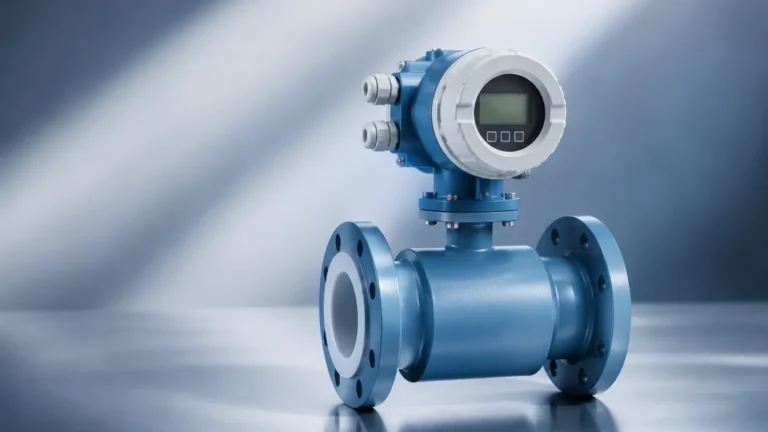
In the landscape of industrial process control, electromagnetic flowmeters—commonly referred to as mag meters—stand as a cornerstone technology for measuring the volumetric flow of conductive liquids. For procurement teams, plant engineers, and system integrators, selecting the right mag meter manufacturers is a decision that impacts long-term operational efficiency, maintenance costs, and measurement accuracy. This guide provides a technical overview of mag meter technology, selection criteria, and the critical factors to confirm when evaluating manufacturing partners.
The Science Behind Electromagnetic Flow Measurement
Before evaluating mag meter manufacturers, it is essential to understand the physical principles that govern these instruments. Mag meters operate based on Faraday’s Law of Electromagnetic Induction. This principle states that a conductor moving through a magnetic field produces an electrical signal within the conductor, which is proportional to the velocity of the water moving through the field.
In a practical industrial application, the "conductor" is the liquid flowing through the pipe. The equation used is:
E = k × B × D × v
Where:
* E is the induced voltage.
* k is a constant related to the instrument.
* B is the magnetic field strength.
* D is the distance between the electrodes (internal diameter of the pipe).
* v is the average velocity of the fluid.
Because the magnetic field (B) and the pipe diameter (D) are fixed, the induced voltage (E) is directly proportional to the fluid velocity (v). The internal electronics of the meter then convert this voltage into a flow rate measurement. Because this method measures the volume of the fluid, it is unaffected by changes in fluid density, viscosity, temperature, or pressure, provided the fluid meets a minimum threshold of electrical conductivity (typically >5 μS/cm).
Evaluating Mag Meter Manufacturers: Essential Quality Indicators
When sourcing from mag meter manufacturers, technical specifications on a datasheet only tell half the story. Reliable manufacturers distinguish themselves through rigorous production standards and application-specific engineering.
Calibration Facilities
One of the most critical aspects of a manufacturer is their calibration capability. High-end manufacturers utilize "wet calibration" rigs where the meter is tested against a master meter or a weigh scale system. Ensure the manufacturer provides NIST-traceable (or equivalent international standard) calibration certificates. Accuracy levels typically range from ±0.5% to ±0.2% of the flow rate.
Material Versatility
Industrial processes vary from clean water to highly corrosive chemicals or abrasive slurries. A reputable manufacturer must offer a variety of lining and electrode materials. For example, Welk emphasizes the importance of material compatibility in industrial instrumentation to ensure longevity and safety in harsh environments. If a manufacturer only offers a single lining type, they may not be suitable for diverse industrial applications.
Certification and Compliance
For specific industries, certifications are non-negotiable. Mag meter manufacturers serving the food and beverage industry must comply with 3-A or EHEDG standards. Those serving the hazardous chemical sector must provide ATEX, IECEx, or UL explosion-proof certifications for the electronics housing and the sensor body.
Selection Guide: Materials and Specifications
Choosing the correct configuration from a manufacturer requires matching the instrument's build to the process fluid. The following table outlines standard material selections common among leading mag meter manufacturers.
| Component | Material Options | Typical Application |
| :— | :— | :— |
| Lining | Hard Rubber | Water treatment, general purpose (up to 80°C) |
| Lining | PTFE (Teflon) | Corrosive chemicals, high temperature (up to 180°C) |
| Lining | PFA | High-purity chemicals, vacuum resistance |
| Lining | Polyurethane | Abrasive slurries, mining applications |
| Electrodes | SS316L | Clean water, mildly corrosive liquids |
| Electrodes | Hastelloy C | Highly corrosive acids and bases |
| Electrodes | Tantalum | Extreme chemical resistance (e.g., concentrated HCl) |
| Electrodes | Platinum/Iridium | Pharmaceutical and high-precision applications |
When reviewing options on a Main Page, engineers should verify that the pressure rating (e.g., PN16, PN40, or ANSI 150/300) matches the piping system's requirements to prevent mechanical failure.
Critical Installation Guidelines for Mag Meters
Even a high-quality instrument from the best mag meter manufacturers will fail to provide accurate data if installed incorrectly. Follow these engineering best practices to ensure optimal performance:
1. Pipe Orientation and Fullness
The mag meter must always be full of liquid to measure accurately. The preferred installation is in a vertical pipe with the flow moving upward. This ensures the pipe remains full and prevents air bubbles from collecting at the electrodes. If horizontal installation is necessary, the electrodes should be positioned at the 3 o'clock and 9 o'clock positions (the "equator" of the pipe) to avoid interference from sediment at the bottom or air at the top.
2. Straight Pipe Runs
To ensure a stable flow profile, manufacturers generally recommend a minimum of 5D (five times the nominal diameter) of straight pipe upstream of the meter and 2D downstream. If there are pumps, valves, or tight bends immediately before the meter, these requirements may increase to 10D or more to eliminate turbulence.
3. Grounding
Mag meters measure very small voltages (millivolts). Any stray electrical noise in the piping system can interfere with the signal. In metal piping, the meter is usually grounded to the flanges. In plastic or lined piping, grounding rings (thin metallic discs) must be installed between the meter and the pipe flanges to provide a path for the fluid to reach the same electrical potential as the meter body.

Understanding the Limitations of Mag Meter Technology
While highly versatile, mag meters are not universal solutions. Understanding their limitations is vital during the procurement phase:
* Conductivity Requirements: Mag meters cannot measure non-conductive fluids such as oils, deionized water, or hydrocarbons. Most manufacturers require a minimum conductivity of 5 to 20 μS/cm.
* Gas Content: The presence of large amounts of entrained air or gas bubbles will cause measurement errors, as the meter interprets the volume of the gas as liquid.
* Lining Vacuum Sensitivity: Some linings, like PTFE, can collapse or peel away from the tube wall if subjected to a vacuum (negative pressure) at high temperatures. In vacuum applications, PFA or reinforced linings are preferred.
* Flow Velocity: Mag meters typically have a minimum velocity requirement (often >0.3 m/s) to maintain accuracy. If the flow is too slow, the signal-to-noise ratio becomes too low for reliable measurement.
Frequently Asked Questions (FAQ)
Q: How often should a mag meter be recalibrated?
A: In most standard water applications, a mag meter can maintain its accuracy for 3 to 5 years. However, in abrasive or corrosive environments where the lining or electrodes may degrade, annual verification is recommended. Many modern manufacturers offer "in-situ" verification tools that check the electronics and coil integrity without removing the meter from the line.
Q: Can mag meters measure steam or gas?
A: No. Mag meters require a conductive liquid medium. For steam or gas measurement, technologies such as vortex, thermal mass, or differential pressure meters are required.
Q: What is the difference between an integral and a remote converter?
A: An integral converter is mounted directly on the flow sensor. A remote converter is connected via a signal cable and mounted in a more accessible location (e.g., a control room or eye-level wall). Remote converters are ideal for sensors installed in high-vibration areas, high-temperature zones, or submerged locations (IP68).
Q: Do mag meter manufacturers provide support for hazardous areas?
A: Yes, most professional manufacturers offer explosion-proof or intrinsically safe versions of their meters. It is crucial to specify the zone (e.g., Zone 1 or Zone 2) and the gas group when requesting a quote.
Conclusion and Next Steps
Selecting from the various mag meter manufacturers requires a balance of technical capability, material expertise, and post-sale support. By focusing on the fundamental principles of Faraday's Law and ensuring that installation and material requirements are strictly met, industrial operators can achieve highly accurate and maintenance-free flow measurement for years.
For those seeking reliable measurement solutions across water treatment, chemical processing, and industrial automation, it is advisable to partner with manufacturers who provide a comprehensive range of instrumentation. To explore further technical data and product options, you may refer to the Main Page for a detailed overview of industrial level and flow measurement technologies.