Thermal Mass Flow Meter Price
Thermal Mass Flow Meter Price
In industrial gas measurement, thermal mass flow meters (TMFM) have become a standard for monitoring compressed air, natural gas, and various process gases. Unlike volumetric flow meters, these instruments measure mass flow directly, eliminating the need for separate temperature and pressure compensation. When evaluating a thermal mass flow meter price, engineers and procurement specialists must look beyond the initial capital expenditure to understand the technical variables that drive costs and the long-term operational savings associated with direct mass measurement.
Understanding the Measurement Principle
Before analyzing the factors that influence the thermal mass flow meter price, it is essential to understand how these devices function. Thermal mass flow meters operate based on the principle of thermal diffusion or the King’s Law of heat transfer.
Most modern industrial units, such as those provided by Welk, utilize two Resistance Temperature Detectors (RTDs). One RTD acts as a temperature sensor to measure the actual process gas temperature, while the second RTD is heated to a specific, constant temperature differential above the process gas. As gas flows past the heated sensor, it carries away heat.
The instrument's electronics measure the amount of electrical power required to maintain the constant temperature differential. Because the cooling effect is directly related to the number of gas molecules passing the sensor (the molecular density), the power consumed is proportional to the mass flow rate. This allows the meter to provide accurate readings in standard units (such as Nm³/h or SCFM) without requiring external flow computers.
Key Factors Determining Thermal Mass Flow Meter Price
The price of a thermal mass flow meter is not a fixed figure but a reflection of the application's complexity. Several technical specifications significantly impact the final quote.
1. Sensor Configuration: Insertion vs. In-line
The physical design is the primary cost driver.
* Insertion Meters: These are designed for larger pipe diameters, typically 80 mm (3 inches) and above. They consist of a probe inserted through a flange or a compression fitting. Because the sensor size remains constant regardless of the pipe size, insertion meters are highly cost-effective for large-diameter ducts.
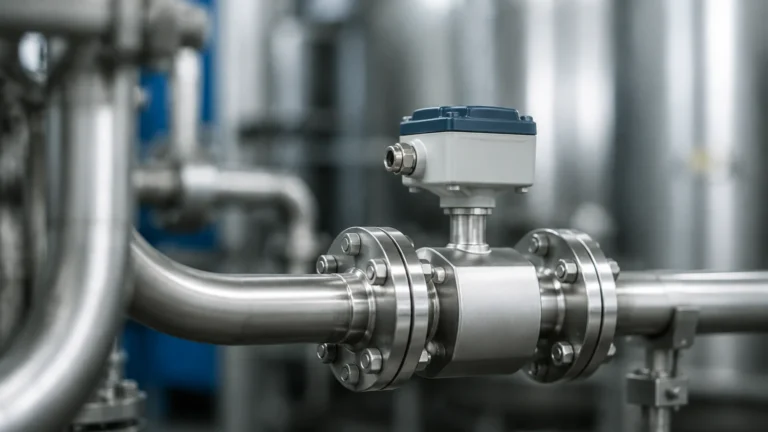
* In-line Meters: These include a flow body or spool piece that is integrated into the piping. These are generally used for smaller pipes (10 mm to 50 mm / 0.5 to 2 inches) where flow profile stability is critical. The cost increases with the size and material of the flow body.
2. Gas Composition and Calibration
Thermal mass flow meters are gas-specific. The thermal conductivity and specific heat of the gas must be known.
* Standard Air/Nitrogen: Meters calibrated for clean, dry air or nitrogen are the most affordable because these gases are easy to handle in calibration labs.
* Mixed or Corrosive Gases: Measuring biogas, flare gas, or corrosive chemical vapors requires specialized calibration and often exotic materials like Hastelloy or Monel for the sensor tips, which can double or triple the thermal mass flow meter price.
3. Accuracy and Turn-down Ratio
Standard industrial meters typically offer an accuracy of ±1% of reading plus ±0.5% of full scale. If a project requires higher precision or an extremely wide turn-down ratio (e.g., 100:1 or 1000:1), the complexity of the signal processing electronics and the rigor of the calibration process will increase the cost.
4. Hazardous Area Ratings
Instruments used in oil and gas or chemical processing often require explosion-proof (Ex d) or intrinsically safe (Ex i) certifications. The ruggedized housing and specialized electronics required for ATEX or IECEx compliance add a premium to the base price compared to standard IP65 or IP67 rated units used in general manufacturing.
Practical Selection Table for Industrial Applications
The following table provides a general comparison of how different configurations affect the application scope and relative price levels.
| Meter Type | Typical Pipe Size | Common Application | Relative Price Level |
| :— | :— | :— | :— |
| Basic Insertion | 80mm – 1000mm | Compressed air monitoring | Low to Medium |
| In-line (Stainless Steel) | 15mm – 50mm | Natural gas consumption | Medium |
| High-Temp Insertion | 100mm – 2000mm | Stack gas / Flue gas | Medium to High |
| Explosion-Proof In-line | 25mm – 80mm | Hydrogen or Biogas | High |
| Multi-Variable Thermal | 50mm – 300mm | Complex gas mixtures | High |
Installation Requirements and Their Impact on Cost
While the thermal mass flow meter price covers the hardware, the total cost of ownership is influenced by installation requirements. To ensure accuracy, these meters require a fully developed flow profile.
1. Straight Pipe Runs: Typically, a TMFM requires 20 diameters of straight pipe upstream and 10 diameters downstream. If the installation site lacks this space, flow conditioners (vanes or plates) must be installed, adding to the material and labor costs.
2. Moisture Management: Thermal mass technology is sensitive to moisture droplets. If the gas stream is saturated, water hitting the heated sensor will cause a cooling spike, leading to false high-flow readings. In such cases, installing a water trap or choosing a heated sensor design is necessary.
3. Hot Tapping: For insertion meters, "hot tapping" allows for installation without shutting down the process. While the specialized valves and drilling equipment for hot tapping increase the initial setup cost, they eliminate the expensive downtime associated with a full system purge.
For engineers seeking a comprehensive overview of how these instruments integrate into broader process control systems, visiting a specialized resource like the Welk Main Page can provide deeper insights into compatible technologies and system integration.
Limitations and Application Risks
To avoid wasting investment, it is critical to recognize where thermal mass flow meters may not be the optimal choice:
* Wet Gases: As mentioned, liquid droplets in the gas stream interfere with the thermal transfer principle. If the gas is not dry, the meter will lose accuracy.
* Varying Gas Compositions: If the ratio of gases in a mixture changes frequently (e.g., a biogas digester with fluctuating methane/CO2 levels), a standard TMFM will provide inaccurate data unless it is equipped with a gas analyzer or dynamic compensation.
* High Velocity Limits: While TMFMs are excellent for low-flow sensitivity, they have an upper velocity limit (typically around 100-120 m/s). Exceeding this can lead to sensor damage or non-linear readings.
Frequently Asked Questions (FAQs)
Q: Why is a thermal mass flow meter more expensive than a rotameter?
A: A rotameter is a mechanical, visual indicator with low accuracy and no data output. A TMFM provides an electronic signal (4-20mA, Modbus, HART), measures mass flow directly without pressure compensation, and handles much wider turn-down ratios, justifying the higher thermal mass flow meter price through automation and precision.
Q: Can I use one meter for different types of gas?
A: Generally, no. Each meter is calibrated for the specific thermal properties of the target gas. Using a meter calibrated for Air on a Helium line will result in massive errors. However, some high-end digital meters allow for the selection of different gas profiles from a pre-programmed library.
Q: How often does a thermal mass flow meter need recalibration?
A: In clean gas applications like nitrogen or compressed air, recalibration is usually recommended every 2 to 3 years. In dirty or corrosive environments, annual checks are advised to ensure sensor coating has not occurred.
Q: Does the orientation of the meter matter?
A: Yes. For most insertion meters, the sensor must be oriented perpendicular to the flow. In-line meters often have specific orientation requirements (horizontal vs. vertical) to prevent moisture accumulation on the sensors.
Summary of Procurement Considerations
When requesting a quote for a thermal mass flow meter, ensure you have the following data ready to provide to the manufacturer:
1. Gas Type: Specific composition or purity levels.
2. Flow Range: Minimum, maximum, and normal operating flow rates.
3. Process Conditions: Operating pressure and temperature ranges.
4. Pipe Details: Interior diameter and material.
5. Environment: Is the area hazardous? What is the ambient temperature range?
By focusing on these technical parameters, you ensure that the thermal mass flow meter price you pay aligns with the performance requirements of your facility. Reliable measurement is the foundation of process efficiency, and selecting the right instrument is the first step toward optimizing industrial gas consumption.