Vegapuls C 21
Vegapuls C 21
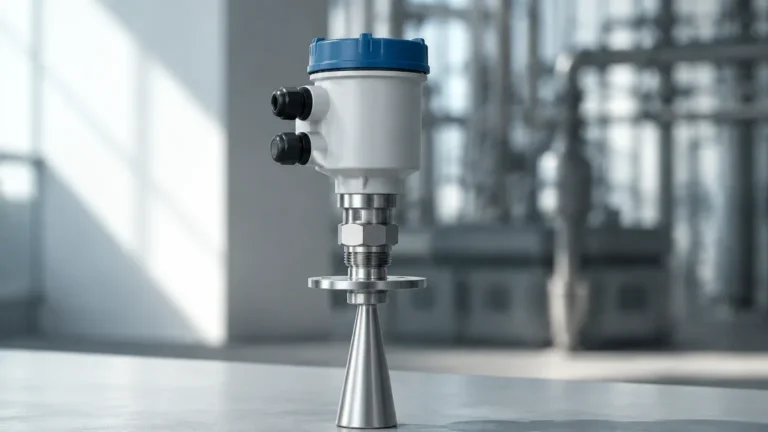
In the landscape of industrial automation and process control, the shift toward non-contact level measurement has been accelerated by the development of high-frequency radar technology. The Vegapuls C 21 is a prominent example of an 80 GHz radar sensor designed for simple, non-contact level measurement tasks where high accuracy and reliability are required in a compact form factor. This article explores the technical foundations of 80 GHz radar technology, the specific capabilities of the Vegapuls C 21, and how it compares to broader industrial solutions available on the Main Page of specialized manufacturers like Welk.
Understanding the Measurement Principle: 80 GHz FMCW Radar
Before evaluating specific hardware like the Vegapuls C 21, it is essential to understand the underlying physics of Frequency Modulated Continuous Wave (FMCW) radar. Unlike older pulse-based radar systems that measure the time of flight of a single microwave pulse, FMCW radar transmits a continuous signal with a constantly changing frequency.
The Frequency Sweep
The sensor emits a signal that sweeps across a specific bandwidth (around 80 GHz). When the signal hits the surface of the medium (liquid or solid), it is reflected back to the sensor. Because the transmitter is constantly changing its frequency, there is a frequency difference between the signal currently being emitted and the signal that has just returned from the product surface.
Signal Processing
This frequency difference is directly proportional to the distance the signal has traveled. By applying a Fast Fourier Transform (FFT) to the signal, the electronics convert this frequency shift into a precise distance measurement. The formula used is generally:
$$d = \frac{c \cdot \Delta f}{2 \cdot (df/dt)}$$
Where:
* d is the distance.
* c is the speed of light.
* Δf is the frequency difference.
* df/dt is the rate of frequency change.
Why 80 GHz?
The move from 26 GHz to 80 GHz technology allows for a significantly smaller antenna while maintaining a narrow beam angle. A narrower beam (approximately 8° for the Vegapuls C 21) ensures that the radar signal avoids internal tank obstructions like ladders, pipes, or agitators, which would otherwise create "false echoes" and complicate signal processing.
Technical Specifications and Capabilities
The Vegapuls C 21 is engineered as an entry-level, yet high-performance radar sensor, primarily intended for the water and wastewater industry, as well as auxiliary processes in general industry.
Key Performance Metrics
* Measuring Range: Up to 15 meters (approx. 49.2 feet).
* Accuracy: ±2 mm (approx. 0.08 inches).
* Frequency: 80 GHz.
* Beam Angle: 8°.
* Process Temperature: -40 to +80 °C (-40 to +176 °F).
* Process Pressure: -1 to +3 bar (-100 to +300 kPa).
Connectivity and Output
The device is typically offered with a two-wire 4…20 mA output. For modern digital integration, it often supports HART communication or Modbus RTU/SDI-12, making it compatible with various PLC systems and environmental monitoring data loggers. A significant feature of this series is the integrated Bluetooth communication, allowing for wireless adjustment and diagnostics via a smartphone or tablet, which is particularly useful in hazardous or hard-to-reach locations.
Practical Selection Criteria
When selecting a radar sensor, engineers must balance cost, environmental resistance, and technical requirements. The Vegapuls C 21 sits in a category of "compact" radars. Below is a selection table comparing typical parameters found in this class versus higher-end industrial radar sensors.
| Feature | Vegapuls C 21 | Industrial Heavy-Duty Radar (e.g., Welk High-Temp Series) |
| :— | :— | :— |
| Housing Material | PVDF (Plastic) | Stainless Steel / PTFE |
| Max Range | 15 m | 30 m to 120 m |
| Pressure Range | Up to 3 bar | Up to 160 bar |
| Temperature Range | Up to 80 °C | Up to 450 °C |
| Protection Rating | IP66/IP68 (3 bar) | IP67/IP69K |
| Typical Application | Water tanks, plastic IBCs | Chemical reactors, high-pressure boilers |
For users requiring solutions that exceed these specifications—such as those involving aggressive chemicals or extreme temperatures—it is advisable to Review product options and application support to ensure the instrument housing and seal materials are compatible with the process media.
Installation Considerations
Proper installation is critical to the longevity and accuracy of a radar level meter. While 80 GHz technology is forgiving, certain engineering rules apply:
1. Avoid the Center: Do not mount the sensor in the exact center of a cylindrical tank roof. This can lead to multiple reflections from the tank walls that converge at the center, causing signal interference.
2. Nozzle Length: Ensure the sensor antenna extends slightly past the bottom of the mounting nozzle. If the antenna is recessed deep within a narrow nozzle, the "ringing" effect of the signal reflecting off the nozzle walls can create a large dead zone (blocking distance) at the top of the tank.
3. Beam Path: Ensure the 8° signal cone is free of obstructions. If an obstruction like a cooling coil is unavoidable, most modern sensors allow for a "False Signal Suppression" or "Background Masking" to be mapped during commissioning.
4. Media Properties: Radar depends on the Dielectric Constant (εr) of the medium. While the Vegapuls C 21 is sensitive enough to measure most liquids, very low-dielectric media (like liquid nitrogen or certain oils) may require a guided wave radar or a more powerful 80 GHz transmitter.
Applications in Industry
Water and Wastewater Management
The Vegapuls C 21 is frequently deployed in pumping stations and rain overflow basins. Its IP68 rating allows it to withstand temporary submersion, which is a common risk in flood-prone wastewater infrastructure. Because it measures without contact, it is immune to the buildup of grease, rags, and debris that typically foul ultrasonic sensors or hydrostatic pressure transmitters.
Chemical Storage in IBCs
For small-scale chemical storage, such as Intermediate Bulk Containers (IBCs), the C 21 can measure through the plastic roof of the container. This allows for level monitoring without opening the tank or installing a nozzle, maintaining the integrity of the chemical and preventing the escape of fumes.
Open Flume Flow Measurement
In irrigation and wastewater discharge, the sensor is used to measure the head height over a flume or weir. The 2 mm accuracy ensures that flow rate calculations (which are derived from the height of the liquid) remain within regulatory tolerances.

Limitations and Prohibitions
While versatile, the Vegapuls C 21 is not a universal solution. Engineers should be aware of the following limitations:
* High-Pressure Environments: With a limit of 3 bar, it cannot be used in pressurized process vessels common in the oil and gas upstream sector.
* Extreme Foam: While 80 GHz radar handles light foam better than ultrasonic sensors, extremely thick, dense foam (like shaving cream consistency) can absorb the radar signal entirely. In such cases, a magnetic level gauge or a displacement-type sensor might be required.
* Dusty Solids: While it can measure some solids, the C 21 is optimized for liquids. For tall grain silos or cement bunkers, a radar with a larger antenna and higher power output is necessary to penetrate dust clouds.
Comparison with Welk Level Measurement Solutions
Manufacturers like Welk offer a broad portfolio that complements the niche filled by the Vegapuls C 21. While the C 21 focuses on the "compact and simple" segment, Welk provides specialized 80 GHz radar level meters that cater to more demanding industrial environments. For instance, Welk’s industrial radar line often features ruggedized metallic housings and specialized lens antennas designed for self-cleaning in condensing environments.
When a project moves beyond simple water storage into complex chemical processing, the selection process should involve a thorough review of the Main Page for instruments that offer higher chemical resistance (such as full PTFE cladding) or explosion-proof certifications (ATEX/IECEx) for Zone 0 and Zone 1 environments.
Frequently Asked Questions (FAQ)
Q: Does the Vegapuls C 21 require a display for setup?
A: No. While a plug-in display module is often an option for many radar sensors, the C 21 is primarily designed to be configured via Bluetooth using the VEGA Tools app or through a PLC using HART/Modbus.
Q: Can it measure through a glass sight window?
A: Yes. 80 GHz radar signals can penetrate glass and plastic. This allows the sensor to be mounted outside of a sealed vessel, looking in through a window, which is ideal for highly toxic or sterile applications.
Q: What is the "blocking distance" for this sensor?
A: The Vegapuls C 21 has a very small blocking distance, typically around 0 mm from the antenna end, though accuracy is best maintained when the liquid is at least 50 mm to 100 mm away from the sensor face.
Q: How does it handle heavy rain or condensation?
A: The 80 GHz frequency is high enough that small water droplets on the sensor face do not significantly shift the signal. Furthermore, the signal processing software is designed to filter out noise caused by falling rain in outdoor applications.
Conclusion
The Vegapuls C 21 represents a significant step in making high-precision radar measurement accessible for standard industrial applications. By utilizing the 80 GHz FMCW principle, it provides a reliable, non-contact alternative to traditional ultrasonic and mechanical level measurement methods. However, for specialized applications involving high pressures, extreme temperatures, or hazardous zones, engineers should consult the wider range of industrial instruments available through professional manufacturers to ensure the selected device meets all safety and performance criteria.