Ph Sensor Probe
Ph Sensor Probe
In industrial process control, the Ph sensor probe is an indispensable tool for monitoring and managing the chemical balance of liquids. While level measurement instruments, such as those detailed on the Main Page, provide critical data regarding the volume and inventory of fluids in a tank, the pH probe provides insight into the chemical quality and reactivity of the medium. Understanding the selection, installation, and maintenance of these probes is essential for engineers working in water treatment, chemical processing, and industrial automation.
Measurement Principles of the pH Sensor Probe
The operation of a Ph sensor probe is based on the potentiometric method, which measures the electrical potential difference between two electrodes immersed in a solution. This potential is directly proportional to the hydrogen ion activity in the liquid, which defines its acidity or alkalinity.
The Nernst Equation
The relationship between the measured voltage and the pH value is governed by the Nernst equation. Ideally, a pH probe produces a potential of 0 mV in a neutral solution (pH 7.0). As the solution becomes more acidic (lower pH), the hydrogen ion concentration increases, creating a positive voltage. Conversely, alkaline solutions (higher pH) create a negative voltage. At 25 °C (77 °F), the theoretical change in potential is 59.16 mV per pH unit.
The Electrode System
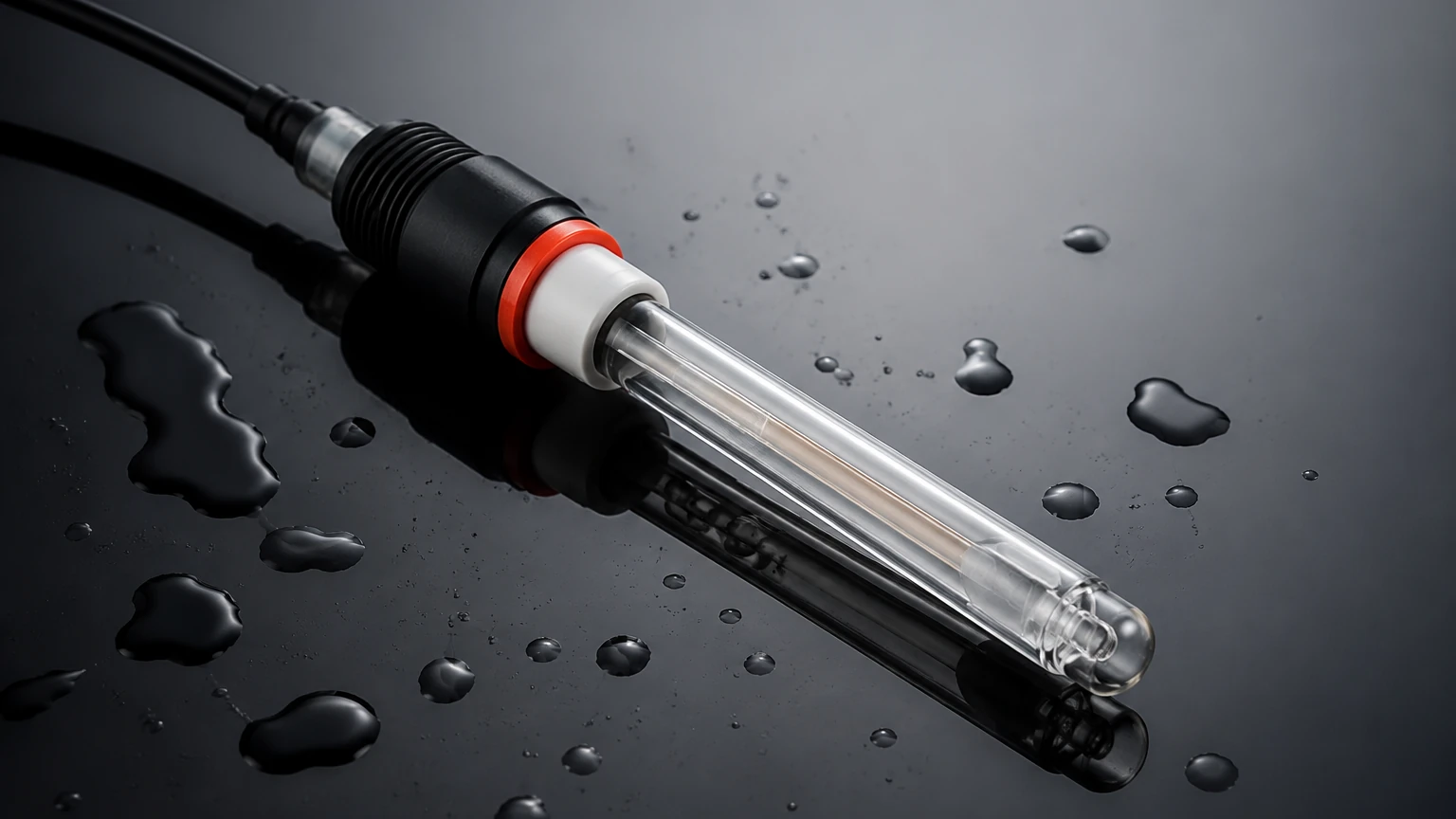
A standard industrial Ph sensor probe typically consists of two primary components, often combined into a single "combination electrode":
1. Glass Electrode (Sensing Electrode): This component features a specialized pH-sensitive glass membrane. When immersed, a thin hydrated layer forms on the outer surface of the glass, allowing hydrogen ions to exchange with the ions in the glass, creating a charge.
2. Reference Electrode: This electrode provides a stable, constant potential regardless of the pH of the solution. It is usually composed of a silver/silver chloride (Ag/AgCl) element immersed in a concentrated potassium chloride (KCl) electrolyte.
3. The Junction: To complete the electrical circuit, the reference electrolyte must make contact with the process liquid through a small opening called a junction. The material of this junction (ceramic, Teflon, or open aperture) is critical for preventing contamination and ensuring a steady flow of ions.
Key Components and Construction
Industrial Ph sensor probes are engineered to withstand harsher conditions than laboratory versions. Their construction typically includes:
* Body Material: Common materials include glass for high-temperature resistance or plastic (such as Ryton, PVDF, or CPVC) for mechanical durability and impact resistance.
* Electrolyte Type: Industrial probes often use gelled electrolytes or solid polymer references to minimize the maintenance required for refilling and to reduce the risk of electrolyte depletion in pressurized systems.
* Temperature Compensation: Since pH measurement is temperature-dependent, most industrial probes include an integrated temperature sensor (such as a Pt100 or Pt1000 RTD). This allows the transmitter to perform Automatic Temperature Compensation (ATC), adjusting the pH reading based on the current temperature of the process fluid.
Selection Criteria for Industrial Applications
Choosing the correct Ph sensor probe requires an analysis of the process environment. A probe that works well in clean water may fail within hours in a chemical wastewater stream. Use the following table as a guide for selection:
| Application Environment | Recommended Probe Feature | Rationale |
| :— | :— | :— |
| General Water Treatment | Standard Glass / Ceramic Junction | Cost-effective and reliable for stable, clean fluids. |
| Wastewater with Solids | Flat Surface Glass / PTFE Junction | Reduces fouling and prevents particles from clogging the junction. |
| High-Pressure Tanks | Double Junction / Gelled Electrolyte | Prevents process fluid from backing into the reference electrode. |
| High Temperature (>80°C / 176°F) | Low-Impedance Glass / Special Electrolyte | Prevents glass dehydration and electrolyte breakdown. |
| Low Conductivity (Pure Water) | Large Surface Area Junction | Ensures a stable electrical connection in ion-poor environments. |
| Chemical Processing | Chemical-Resistant Body (PVDF/PTFE) | Protects the probe body from corrosive acids or bases. |
Installation and Mounting Guidelines
Proper installation is vital to the longevity and accuracy of a Ph sensor probe. Unlike non-contact level meters, pH probes must be in direct contact with the process fluid, making them susceptible to physical and chemical stress.
Mounting Positions
* Submersion Mounting: Used in open tanks or sumps. The probe is mounted at the end of a pipe or bracket, submerged to a specific depth. It is important to ensure the probe is not positioned where sludge or sediment accumulates at the bottom of the tank.
* In-Line Mounting: The probe is installed directly into a process pipe via a T-fitting. The probe should be installed at an angle (at least 15° above the horizontal) to ensure that the internal buffer solution stays in contact with the glass membrane and to prevent air bubbles from being trapped at the sensing tip.
* Bypass Loop: In many industrial setups, a portion of the flow is diverted through a smaller bypass line where the pH probe is housed. This allows for easier maintenance and calibration without shutting down the main process line.
Pressure and Flow Considerations
In pressurized lines, the process pressure must not exceed the maximum rating of the probe (typically 6 to 10 bar / 87 to 145 psi). High flow velocities can cause "streaming potentials," leading to unstable readings. Conversely, stagnant flow can lead to coating and slow response times. A flow rate between 0.5 and 2 meters per second (1.6 to 6.5 feet per second) is generally ideal.
Maintenance, Calibration, and Troubleshooting
A Ph sensor probe is a consumable item; its sensitivity will naturally degrade over time. Regular maintenance is required to extend its lifespan, which typically ranges from 6 to 24 months depending on the application.
Calibration
Calibration should be performed using standard buffer solutions (usually pH 4.0, 7.0, and 10.0).
1. Two-Point Calibration: Use pH 7.0 for the "zero" or offset and either 4.0 or 10.0 for the "slope" (span).
2. Frequency: In critical chemical dosing applications, calibration may be required weekly. In stable water treatment processes, monthly calibration may suffice.
Cleaning Procedures
If the probe becomes coated with scale, oils, or biological growth, it must be cleaned to restore response time:
* General Debris: Rinse with warm water and mild detergent.
* Inorganic Scale (Calcium): Soak in 5% Hydrochloric Acid (HCl) for 5-10 minutes.
* Oils and Greases: Rinse with isopropyl alcohol or a specialized detergent.
* Protein Deposits: Soak in a solution of Pepsin and HCl.
Limitations and Common Challenges
Engineers must be aware of the inherent limitations of Ph sensor probes to avoid measurement errors:
* Glass Dehydration: If a probe is allowed to dry out, the hydrated layer on the glass membrane is destroyed. Probes should always be stored in a storage solution (usually 3.0M or 4.0M KCl).
* Reference Poisoning: Certain ions (like cyanide, bromide, or sulfide) can react with the silver ions in the reference electrode, forming precipitates that clog the junction and cause significant drift.
* Sodium Error: At very high pH levels (pH >12), the probe may respond to sodium ions as if they were hydrogen ions, resulting in a reading that is lower than the actual pH.
* Aging: As the glass membrane ages, its impedance increases, leading to a slower response time and a reduced slope during calibration.
Integration with Industrial Level Measurement Systems
In modern industrial automation, the Ph sensor probe rarely operates in isolation. It is typically part of a comprehensive monitoring system that includes level measurement. For instance, in a neutralization tank, an ultrasonic or radar level meter (available via the Main Page) monitors the volume of wastewater, while the pH probe controls the dosing of acid or caustic agents.
By integrating these data points into a PLC (Programmable Logic Controller) or SCADA system, facilities can automate chemical dosing based on both the concentration (pH) and the volume (level) of the liquid. This ensures that the correct amount of reagent is added, preventing waste and ensuring environmental compliance.
Frequently Asked Questions (FAQs)
Q: How long can I expect a Ph sensor probe to last?
A: In clean water applications, a probe can last 2 years or more. In harsh chemical processes or high-temperature environments, the lifespan may be as short as 3 to 6 months.
Q: Can I use a pH probe to measure the pH of soil or semi-solids?
A: Yes, but you must use a probe specifically designed with a "spear tip" or a flat surface glass membrane to prevent breakage and ensure adequate contact with the moisture in the sample.
Q: Why does my pH reading drift even after calibration?
A: Drift is often caused by a clogged or contaminated reference junction. If the junction is blocked, the electrical circuit is unstable. Cleaning the junction or replacing the probe is usually necessary.
Q: Does the cable length affect the pH reading?
A: Yes. Standard pH probes produce a high-impedance signal that is very sensitive to electrical noise and signal loss over long distances. For cable runs longer than 10-15 meters (33-49 feet), a pre-amplifier or a digital (smart) Ph sensor probe should be used to convert the signal into a more robust format like 4-20mA or Modbus RS485.