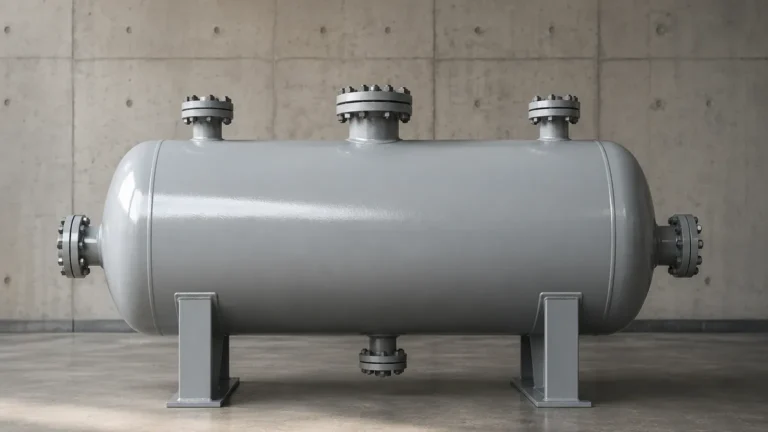
Fluid Catalytic Cracker Unit
Fluid Catalytic Cracker Unit
The fluid catalytic cracker unit (FCCU) is often described as the "heart" of a modern petroleum refinery. Its primary function is to convert high-boiling, high-molecular-weight hydrocarbon fractions of petroleum crude oils into more valuable gasoline, olefinic gases, and other products. This process relies on a fluidized powdered catalyst, which circulates between a reactor and a regenerator.
For process engineers and instrumentation specialists, the FCCU presents one of the most challenging environments for level measurement and control. The combination of extreme temperatures, high pressures, abrasive catalyst particles, and turbulent fluidization regimes requires a deep understanding of both the process dynamics and the physics of measurement technologies. Ensuring accurate level data is critical not only for production efficiency but also for the safety and mechanical integrity of the vessel internals.
The Role of Level Measurement in the Fluid Catalytic Cracker Unit
In a fluid catalytic cracker unit, level measurement is essential in several key areas, most notably the reactor, the regenerator, and the catalyst standpipes. Unlike liquid level measurement in a standard storage tank, the "level" in an FCCU often refers to the interface of a fluidized bed—a mixture of solid catalyst particles and hydrocarbon vapors or air that behaves like a fluid.
Reactor Level Control
In the reactor, the catalyst and vaporized oil react. Maintaining the correct catalyst bed level ensures sufficient residence time for the cracking reactions to occur. If the level is too low, the conversion rate drops; if it is too high, catalyst carryover into the fractionator can cause significant downstream damage and equipment fouling.
Regenerator Level Control
The regenerator burns off the coke that deposits on the catalyst during the cracking process. Level control here is vital for managing the heat balance of the entire unit. A stable bed level ensures that the air distribution is uniform and that the combustion of coke is efficient. Furthermore, the pressure balance between the reactor and regenerator is maintained by the height of the catalyst columns in the standpipes, making precise level monitoring a prerequisite for stable operation.
Measurement Principles for FCCU Environments
Before selecting a specific instrument, it is necessary to understand the physical principles employed in these high-temperature, abrasive environments. The most common technologies include Differential Pressure (DP), Radiometric (Nuclear), and Radar-based systems.
1. Differential Pressure (DP) Measurement
DP is the traditional method for level measurement in an FCCU. It works on the principle that the pressure at the bottom of a column of fluid is proportional to the height and density of that fluid. In a fluidized bed, the "fluid" is a mixture of catalyst and gas.
* Principle: Two pressure taps are used—one at the bottom of the bed and one in the vapor space above. The difference in pressure ($ΔP$) is divided by the expected density of the fluidized bed to calculate the level.
* Purging Requirements: Because the catalyst is a fine powder, the impulse lines of a DP transmitter will plug almost instantly without a continuous purge of steam or nitrogen. This purge must be carefully regulated to ensure it does not interfere with the pressure reading.
2. Radiometric (Nuclear) Measurement
Radiometric level measurement is often considered the gold standard for the harshest FCCU applications because it is non-intrusive.
* Principle: A radioactive source (usually Cesium-137 or Cobalt-60) is mounted on one side of the vessel, and a detector is mounted on the opposite side. As the catalyst level rises, it attenuates (blocks) more of the radiation reaching the detector.
* Advantage: Since the sensors are mounted outside the vessel, they are not subject to the 700°C+ temperatures or the abrasive nature of the catalyst inside the fluid catalytic cracker unit.
3. Radar Level Measurement
Radar technology has advanced significantly, with both Guided Wave Radar (GWR) and Non-Contact (Free-space) Radar being used in specific parts of the FCC process.
* Principle: Radar units emit electromagnetic pulses that reflect off the surface of the catalyst bed. The time-of-flight is measured to determine the distance.
* Guided Wave Radar (GWR): Uses a physical probe to guide the signal. While highly accurate, the probe is susceptible to erosion from the high-velocity catalyst particles.
* Non-Contact Radar: Uses high-frequency signals (often 80 GHz) to penetrate dust and vapor. These units require specialized cooling jackets and high-temperature process seals (antennas) to survive the FCCU environment.
Selecting Level Instruments for FCCU Applications
Choosing the right technology depends on the specific zone of the fluid catalytic cracker unit and the process conditions. The following table provides a comparison of the primary technologies used in these applications.
Selection Comparison Table
| Criteria | Differential Pressure (DP) | Radiometric (Nuclear) | Non-Contact Radar (FMCW) |
| :— | :— | :— | :— |
| Measurement Style | Intrusive (via taps) | Non-intrusive | Top-down (Non-contact) |
| Temperature Limit | Limited by purge/seals | Unlimited (external) | Up to 450°C (with cooling) |
| Abrasive Resistance | Poor (requires purging) | Excellent | Good (no moving parts) |
| Maintenance | High (purge monitoring) | Low (source decay checks) | Moderate (lens cleaning) |
| Accuracy | Dependent on density | High | High |
| Installation Cost | Moderate | High (due to shielding) | Moderate |
| Typical Application | Standpipes, Slurry Settlers | Reactor/Regenerator Bed | Catalyst Storage Hoppers |
When evaluating these options, engineers should consult the Main Page for detailed technical specifications and to review product options and application support for high-temperature industrial sensors.
Installation and Engineering Considerations
Successful level measurement in a fluid catalytic cracker unit is as much about installation as it is about the sensor itself. Due to the extreme conditions, several engineering steps are mandatory.
Nozzle Design and Orientation
For radar and DP systems, nozzle buildup is a primary cause of failure. Nozzles should be designed to minimize "dead zones" where catalyst can accumulate and harden (coke). For radar, the nozzle should be short and wide to prevent internal reflections that could interfere with the signal.
Purging Systems
As mentioned, DP systems require a constant purge. The purge gas (usually nitrogen or steam) must be maintained at a pressure higher than the vessel pressure. Flow meters and needle valves are typically installed to ensure a consistent, low-volume flow that keeps the taps clear without causing local turbulence that would skew the level reading.
Thermal Management
In the regenerator, temperatures can exceed 750°C (1382°F). Even for non-intrusive nuclear detectors, the heat radiating from the vessel wall can damage electronics. Specialized heat shields and stand-off mounting brackets are used to create an air gap, ensuring the electronics remain within their rated operating temperature (typically below 60°C).

Limitations and Challenges in FCCU Level Monitoring
Despite the availability of advanced technology, several factors can complicate level monitoring in the fluid catalytic cracker unit:
1. Variable Catalyst Density: In a fluidized bed, the density is not constant. It changes with the aeration rate and the age of the catalyst. Since DP transmitters rely on a constant density to calculate level, changes in fluidization can lead to significant errors.
2. Coking: Hydrocarbons can crack and form solid carbon (coke) on any surface cooler than the process stream. This includes instrument probes and pressure taps. If a GWR probe becomes coated in coke, the signal strength will degrade significantly.
3. Vibration: FCCUs are high-energy environments with significant mechanical vibration. Instruments must be ruggedized, and mounting brackets must be designed to withstand constant oscillation without fatigue failure.
4. Signal Attenuation: In non-contact radar, the high concentration of catalyst dust in the vapor space can absorb or scatter the radar signal. High-frequency 80 GHz radar is generally better at penetrating this dust, but it is not immune to extreme conditions.
Frequently Asked Questions (FAQ)
Why is nuclear level measurement so common in FCCUs?
Nuclear measurement is preferred because it does not require a hole in the vessel wall for a probe or a tap that could leak or plug. In a unit as critical as the FCCU, the ability to maintain or replace the measurement system without shutting down the process is a massive operational advantage.
How often do DP taps need to be cleaned in an FCCU?
With a properly designed and maintained purging system, DP taps can operate for an entire turnaround cycle (3 to 5 years). However, if the purge fails even for a few minutes, the taps can plug, requiring manual rodding or high-pressure clearing, which is hazardous during operation.
Can radar be used for the reactor bed level?
Yes, but it is challenging. Non-contact radar is increasingly used in the reactor vapor space to monitor the top of the bed. However, it requires a high-temperature process seal (typically a ceramic or specialized quartz window) and often a nitrogen purge to keep the lens clean of coke deposits.
What is the typical pressure in a fluid catalytic cracker unit?
While temperatures are very high, pressures are relatively moderate, typically ranging from 1.5 to 3.5 bar (22 to 50 psi). The challenge is not the pressure itself, but the pressure *balance* between different sections of the unit.
Summary of Confirmation Requirements
Before finalizing an instrumentation selection for a fluid catalytic cracker unit, project teams should confirm the following data points:
* Minimum and Maximum Fluidized Density: Essential for calibrating DP and Radiometric systems.
* Catalyst Particle Size and Abrasiveness: To determine the lifespan of intrusive probes.
* Nozzle Dimensions: To ensure radar beam angles do not intersect with vessel walls or internals like cyclones.
* Available Utilities: Confirm the availability of dry, high-pressure nitrogen or instrument-grade steam for purging.
By carefully matching the measurement principle to the specific zone of the FCCU and accounting for the harsh physical realities of the process, refineries can maintain the stable, safe, and efficient operation of their most critical asset. For further guidance on selecting the appropriate hardware for these demanding applications, engineers are encouraged to consult technical references and Review product options and application support to ensure compliance with modern industrial standards.