How to Use Ph Sensor
How to Use Ph Sensor
In industrial process control, the measurement of pH is as critical as monitoring pressure, flow, or liquid level. For engineers and plant operators, understanding how to use ph sensor technology effectively is essential for ensuring product quality, protecting expensive equipment from corrosion, and meeting environmental discharge regulations. Whether in water treatment plants, chemical processing facilities, or the oil and gas sector, a pH sensor serves as the primary interface between the chemical process and the automation system.
This guide provides a comprehensive technical overview of pH measurement principles, selection criteria, installation best practices, and maintenance protocols required for reliable industrial operation.
Understanding pH Measurement Principles
Before discussing the practicalities of how to use ph sensor hardware, it is necessary to understand the electrochemical principles that govern its operation. pH is a measure of the hydrogen ion activity in a solution, defined mathematically as the negative logarithm of the hydrogen ion concentration.
The Electrochemical Cell
An industrial pH sensor typically consists of a measuring electrode and a reference electrode, often combined into a single "composite" sensor body.
1. The Glass Electrode (Measuring): This electrode features a pH-sensitive glass membrane. When immersed in a liquid, a hydrated layer forms on both the inside and outside of the glass. A potential difference develops across this membrane that is proportional to the difference in hydrogen ion concentration between the internal buffer and the external process liquid.
2. The Reference Electrode: To measure the potential of the glass electrode, a stable reference point is required. The reference electrode provides a constant potential, regardless of the pH of the solution. It typically uses a silver/silver chloride (Ag/AgCl) system submerged in a potassium chloride (KCl) electrolyte.
3. The Nernst Equation: The relationship between the measured voltage (mV) and the pH value is defined by the Nernst Equation. At 25°C (77°F), a change of one pH unit corresponds to a change of 59.16 mV.
Selecting the Right pH Sensor for Industrial Applications
Choosing the correct sensor is the first step in learning how to use ph sensor systems effectively. Industrial environments vary significantly, and a sensor designed for clean water will fail rapidly in a chemical slurry.
Selection Criteria Table
| Application Environment | Recommended Electrode Type | Junction Material | Key Features |
| :— | :— | :— | :— |
| General Water Treatment | Standard Glass Bulb | Ceramic | Cost-effective, fast response |
| Wastewater/Slurries | Flat Surface Glass | Teflon (PTFE) | Resists fouling and abrasion |
| High-Purity Water | Low-Impedance Glass | Liquid Sleeve | Minimizes flow-induced noise |
| Chemical Processing | High-Temp/Chemical Resistant | Double Junction | Prevents poisoning of the reference |
| Food & Beverage | Hygienic/Steam Sterilizable | Food-grade Gel | Withstands CIP/SIP cycles |
Material Compatibility
When selecting a sensor, ensure the body material (often Ryton, PVDF, or Stainless Steel) is compatible with the process chemistry. For highly corrosive applications, specialized polymers are required to prevent premature structural failure of the probe.
How to Use Ph Sensor: Installation and Setup
Proper installation is the most frequent point of failure in industrial pH loops. Unlike level sensors that can often be mounted at the top of a tank—such as the radar or ultrasonic solutions found on our Main Page—pH sensors must be in direct contact with the process fluid and require specific orientations.
Positioning and Orientation
1. The 15-Degree Rule: Most glass pH electrodes must be installed at an angle of at least 15 degrees above the horizontal. This ensures that the internal electrolyte stays in contact with the glass bulb and prevents air bubbles from being trapped at the sensing tip, which would break the electrical circuit.
2. Immersion Depth: The sensor must be submerged deep enough to ensure the junction and the glass bulb are always in the liquid, even during fluctuations in tank levels. However, excessive depth in high-pressure lines can stress the seals.
3. Flow Velocity: In pipeline installations, the sensor should be placed where the flow is turbulent enough to ensure a representative sample but not so fast that it causes cavitation or physical damage to the glass membrane.
Wiring and Signal Transmission
Because pH sensors produce a high-impedance mV signal, they are extremely sensitive to electrical noise.
* Cable Length: Keep cables as short as possible. If the distance between the sensor and the transmitter exceeds 10–15 meters (33–49 feet), use a pre-amplifier.
* Shielding: Always use high-quality shielded coaxial cables and keep them away from high-voltage power lines or variable frequency drives (VFDs).
Calibration and Maintenance Procedures
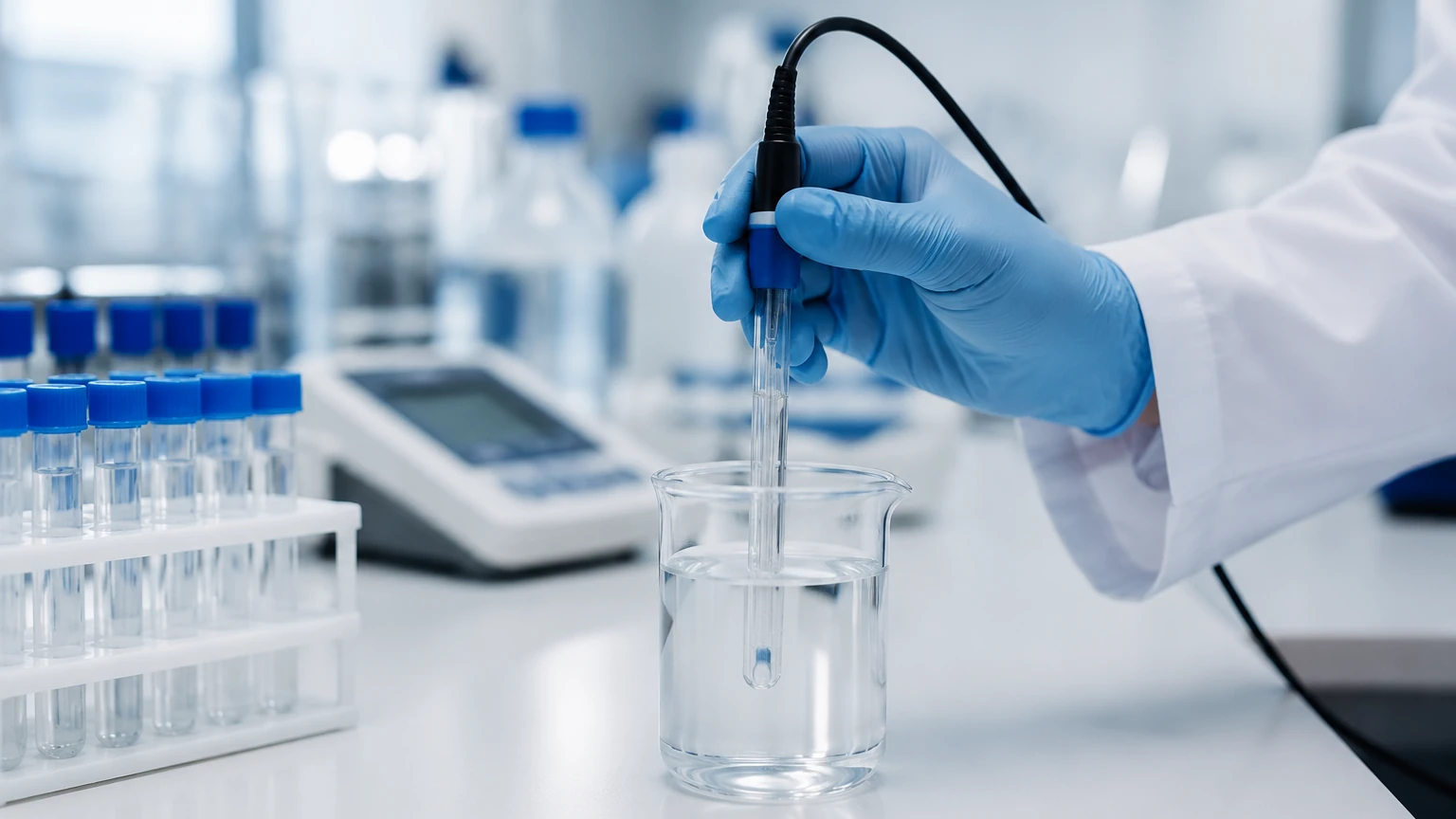
One cannot simply install a pH sensor and leave it indefinitely. Because the glass membrane and reference junction change over time, regular calibration is mandatory.
Step-by-Step Calibration
1. Cleaning: Before calibration, clean the sensor with a mild detergent or a specialized cleaning solution (e.g., 5% HCl for calcium deposits) to remove any coatings.
2. Two-Point Calibration: Use two buffer solutions that bracket the expected process pH. For example, if your process is typically pH 8.5, use pH 7.0 and pH 10.0 buffers.
3. Temperature Compensation: Ensure the transmitter is set to Automatic Temperature Compensation (ATC). The pH of a solution is temperature-dependent, and the sensor's mV output changes with temperature.
4. Slope and Offset: After calibration, check the "slope" (efficiency) of the electrode. A new electrode should have a slope between 95% and 102%. If the slope drops below 85%, the sensor likely needs replacement.
Storage Requirements
Never store a pH sensor in deionized (DI) or distilled water, as this will leach the ions out of the glass and the reference electrolyte. Always store the sensor in a specialized storage solution or a pH 4.0 buffer mixed with KCl.
Limitations and Common Risks
Understanding the limitations of the technology is a core part of knowing how to use ph sensor equipment in a B2B context.
* Fouling and Coating: In wastewater or oil-water separators, oils and solids can coat the glass bulb. This increases response time and leads to measurement drift. Automated cleaning systems (water jets or ultrasonic cleaners) may be necessary.
* Reference Poisoning: Certain chemicals, such as sulfides, cyanides, and heavy metals, can react with the silver ions in the reference electrode, forming precipitates that clog the junction.
* Sodium Error: In highly alkaline solutions (pH > 12), the sensor may respond to sodium ions as if they were hydrogen ions, leading to a falsely low pH reading. Specialized "low sodium error" glass is required for these applications.
* Pressure Spikes: Rapid changes in process pressure can force process liquid into the reference junction, contaminating the electrolyte. In these cases, pressurized reference electrodes or solid-state junctions are preferred.
Integrating pH and Level Measurement Solutions
In many industrial processes, pH control is inextricably linked to tank management. For instance, in a neutralization tank, the rate of acid or base injection must be coordinated with the volume of liquid in the tank.
While pH sensors provide the chemical data, level measurement instruments—such as those manufactured by Welk—provide the physical data. Combining a high-accuracy radar level meter with a robust pH loop allows for advanced volumetric control and prevents tank overflows during chemical dosing. For engineers looking to optimize their entire tank farm or process vessel setup, reviewing a variety of measurement technologies is vital. You can explore integrated solutions for level and flow at the Main Page.
Frequently Asked Questions (FAQs)
Q: How often should I calibrate my pH sensor?
A: This depends entirely on the process. In clean water, once a month may suffice. In aggressive chemical processes or wastewater, weekly or even daily calibration might be required to maintain accuracy.
Q: Can I use a pH sensor to measure the pH of soil?
A: Yes, but the soil must first be mixed with distilled water to create a slurry. Direct insertion into dry soil will damage the glass membrane and provide no reading.
Q: Why is my pH reading drifting?
A: The most common causes of drift are a clogged reference junction, a depleted electrolyte, or electrical interference (ground loops). Ensure the sensor is clean and the cable shielding is properly grounded.
Q: What is the lifespan of an industrial pH sensor?
A: In standard conditions, a sensor typically lasts 6 to 18 months. In high-temperature or highly corrosive environments, the lifespan may be reduced to weeks or even days.
Q: Does temperature affect pH readings?
A: Yes, in two ways. First, the chemical pH of the solution itself changes with temperature. Second, the electrode's mV output per pH unit changes. Modern transmitters use ATC to correct for the electrode's sensitivity change, but they cannot "correct" the actual chemical change of the fluid.
By following these technical guidelines on how to use ph sensor technology, industrial operators can ensure higher process uptime and more accurate chemical control. Proper selection, coupled with a rigorous maintenance schedule, remains the most effective way to manage the inherent challenges of electrochemical sensing.