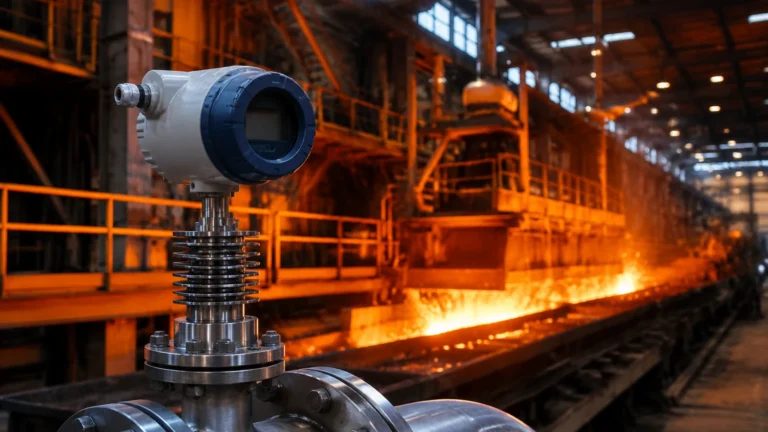
Endress Hauser Flowmeter
Endress Hauser Flowmeter
In the landscape of industrial process automation, the accurate measurement of fluid dynamics is essential for operational efficiency, safety, and regulatory compliance. Among the most recognized names in this sector is the Endress Hauser flowmeter range, a comprehensive portfolio of instruments designed to measure the volume, mass, and velocity of liquids, gases, and steam. This guide explores the fundamental measurement principles utilized by these instruments, provides technical selection criteria, and outlines the practical considerations necessary for successful integration into industrial systems.
Understanding Flow Measurement Principles
Before selecting a specific instrument, it is critical to understand the physics governing different measurement technologies. Endress+Hauser categorizes its flowmeters based on several core principles, each suited to specific fluid properties and environmental conditions.
Electromagnetic Flow Measurement
Electromagnetic flowmeters, such as the Promag series, operate based on Faraday’s Law of Induction. This principle states that a conductor (the fluid) moving through a magnetic field generates an electrical voltage. For this to work, the fluid must have a minimum electrical conductivity, typically ≥ 5 μS/cm.
* Formula: $U = B \cdot v \cdot d$ (where $U$ is voltage, $B$ is magnetic field strength, $v$ is flow velocity, and $d$ is pipe diameter).
* Application: Ideal for water, wastewater, chemicals, and food products where the medium is conductive.
Coriolis Mass Flow Measurement
Coriolis flowmeters, represented by the Promass line, measure mass flow directly rather than volume. They utilize the Coriolis effect: an oscillating measuring tube experiences a phase shift as fluid flows through it. This shift is directly proportional to the mass flow rate.
* Advantages: Extremely high accuracy (up to ±0.05%) and the ability to measure density and temperature simultaneously.
* Application: Critical for custody transfer, oil and gas, and high-precision chemical dosing.
Ultrasonic Flow Measurement
Ultrasonic meters, such as the Prosonic Flow, use sound waves to determine velocity. There are two primary methods: transit-time (measuring the difference in time for signals sent upstream versus downstream) and Doppler (measuring frequency shifts from particles or bubbles).
* Configuration: Available as inline sensors or "clamp-on" versions that attach to the outside of the pipe without interrupting the process.
* Application: Useful for non-conductive liquids, ultrapure water, or retrofitting existing pipelines.
Vortex Flow Measurement
Based on the Karman vortex street principle, vortex flowmeters (Prowirl) measure the frequency of vortices shed from a bluff body placed in the flow stream. The frequency of these vortices is proportional to the flow velocity.
* Application: The preferred choice for steam measurement and high-pressure gases.
Key Evaluation Criteria for Flowmeter Selection
Choosing the correct Endress Hauser flowmeter requires a detailed analysis of the process environment. Engineers must evaluate several technical parameters to ensure long-term reliability.
1. Fluid Characteristics: Is the medium a liquid, gas, or steam? What is its viscosity, conductivity, and density? For instance, a non-conductive hydrocarbon cannot be measured with an electromagnetic meter.
2. Process Conditions: Operating pressure and temperature ranges must fall within the sensor’s limits. Standard industrial models often handle temperatures from -40°C to +350°C, but specialized versions exist for cryogenic or high-heat applications.
3. Accuracy Requirements: While a Coriolis meter offers the highest precision, it may be over-engineered for a simple cooling water line where an electromagnetic or ultrasonic meter would suffice.
4. Pipe Size and Material: Flowmeters are available for diameters ranging from DN 1 (1/25") to DN 2400 (90"). The material of the pipe (steel, plastic, etc.) affects how ultrasonic signals penetrate or how electromagnetic fields are contained.
Technical Selection Table
| Technology | Primary Medium | Typical Accuracy | Conductivity Required? | Pressure Loss |
| :— | :— | :— | :— | :— |
| Electromagnetic | Conductive Liquids | ±0.2% to ±0.5% | Yes (≥ 5 μS/cm) | Negligible |
| Coriolis | Liquids, Gases | ±0.05% to ±0.1% | No | Medium |
| Ultrasonic | Liquids, Gases | ±0.3% to ±2.0% | No | None (Clamp-on) |
| Vortex | Steam, Gases, Liquids | ±0.75% to ±1.0% | No | Low to Medium |
| Thermal Mass | Gases | ±1.0% to ±1.5% | No | Low |
Critical Installation Guidelines
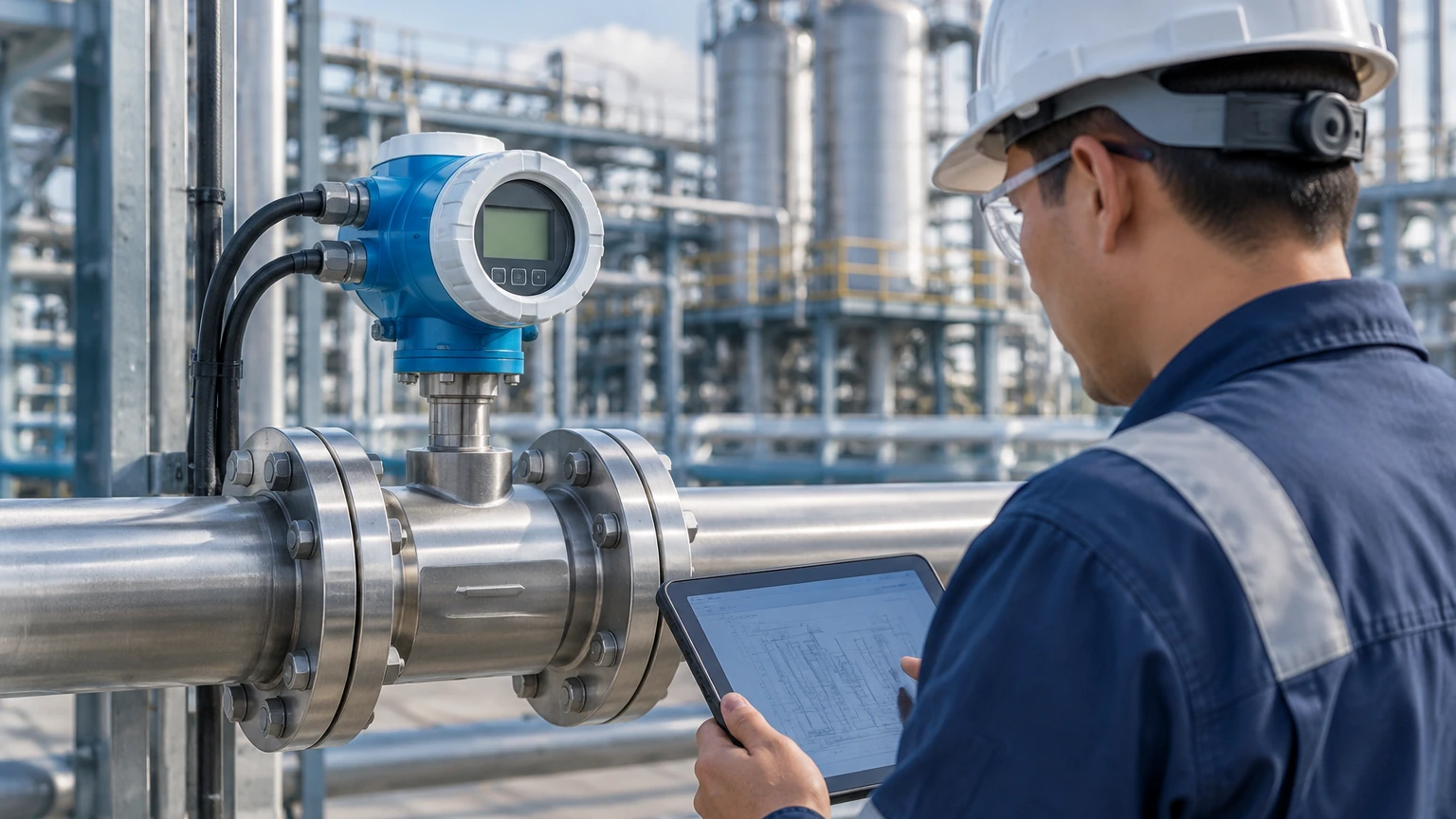
Even the most advanced Endress Hauser flowmeter will fail to provide accurate data if installed incorrectly. Proper mechanical and electrical installation is paramount.
Straight Pipe Runs
Most flow measurement technologies require a stable flow profile. Turbulence caused by valves, pumps, or elbows can distort readings.
* Inlet Run: Generally requires 5 to 10 times the pipe diameter (5D to 10D) of straight pipe before the sensor.
* Outlet Run: Generally requires 2 to 5 times the pipe diameter (2D to 5D) after the sensor.
* *Note: Some modern "0 x DN" electromagnetic meters utilize specialized coil geometries to eliminate these requirements.*
Orientation and Filling
For liquid applications, the pipe must always be completely full.
* Vertical Upward Flow: This is the ideal orientation to ensure the pipe remains full and to prevent air pockets from forming at the sensor.
* Horizontal Flow: The sensor should be installed in a low point of the piping system. Avoid installing at the highest point, as air bubbles will collect there, causing measurement errors.
Grounding and Interference
Electromagnetic flowmeters are sensitive to electrical noise. Proper grounding to the process liquid is essential, often achieved through grounding rings or electrodes, to ensure the tiny voltages generated by the flow are not masked by stray currents in the piping.
Limitations and Common Challenges
While highly reliable, certain conditions can limit the performance of an Endress Hauser flowmeter:
* Entrained Air: In liquid flows, bubbles can cause significant errors in Coriolis and Electromagnetic meters. In Coriolis meters, air can dampen the tube vibration, leading to a "sensor error" or inaccurate density readings.
* Scaling and Buildup: In wastewater or chemical applications, the internal lining or electrodes can become coated with scale or grease. This increases resistance or changes the internal diameter, drifting the calibration.
* Vibration: Coriolis and Vortex meters are sensitive to mechanical vibrations from nearby heavy machinery. Proper pipe support and dampening are required to isolate the instrument.
Complementary Technologies: Level and Flow Integration
In most industrial process loops, flow measurement does not exist in isolation. For comprehensive inventory management and vessel control, flow data is frequently paired with level measurement. While flowmeters track the movement of material through pipes, level instruments provide the "static" balance within tanks and silos.
For engineers designing these systems, reviewing the Main Page of a dedicated level measurement manufacturer is a vital step. Integrating high-quality radar or ultrasonic level sensors with flow data allows for mass balance calculations, leak detection, and automated pump control. For example, in a water treatment facility, the flow rate measured by an electromagnetic meter entering a basin must correlate with the level rise measured by a level transmitter to ensure system integrity.
Frequently Asked Questions (FAQ)
Q: How often should an Endress Hauser flowmeter be calibrated?
A: The frequency depends on the industry and application. For regulated industries like pharmaceuticals or food production, annual calibration is common. Many modern Proline meters feature "Heartbeat Technology," which provides internal self-verification, potentially extending the intervals between external wet calibrations.
Q: Can I use a Coriolis meter for gas measurement?
A: Yes, Coriolis meters are excellent for high-pressure gas measurement. However, because gas is much less dense than liquid, the meter must be sized correctly to ensure the mass flow is sufficient to vibrate the tubes accurately.
Q: What is the difference between Proline 300 and Proline 500?
A: These refer to the transmitter housing. The Proline 300 is a compact version where the transmitter is attached directly to the sensor. The Proline 500 is a remote version, allowing the transmitter to be mounted up to 300 meters (approx. 1000 feet) away from the sensor, which is ideal for inaccessible or high-vibration locations.
Q: Do ultrasonic clamp-on meters work on all pipe materials?
A: They work on most metal and plastic pipes. However, pipes with internal liners (like concrete-lined ductile iron) or severely corroded internal surfaces can scatter the ultrasonic signal, making measurement difficult or impossible.
By adhering to these engineering principles and selection criteria, process professionals can ensure that their flow measurement strategy provides the accuracy and longevity required for modern industrial operations.