Mass Flow Meter Filling
Mass Flow Meter Filling
In the landscape of industrial automation, precision is the primary driver of profitability and regulatory compliance. Mass flow meter filling has emerged as a gold standard for high-speed, high-accuracy dosing and packaging applications across the chemical, food and beverage, pharmaceutical, and oil and gas sectors. Unlike traditional volumetric filling methods, which can be influenced by changes in temperature and pressure, mass flow measurement provides a direct reading of the fluid mass, ensuring consistent product delivery regardless of environmental variables.
For process engineers and plant managers, understanding the mechanics of Coriolis mass flow meters and their integration into filling lines is essential for optimizing throughput and minimizing product giveaway. This guide explores the principles, selection criteria, and installation best practices for mass flow meter filling systems.
Measurement Principles of Coriolis Mass Flow Meters
The most common technology used in mass flow meter filling is the Coriolis meter. To understand its application, one must first understand the underlying physics of the Coriolis effect as applied to fluid dynamics.
The Coriolis Effect
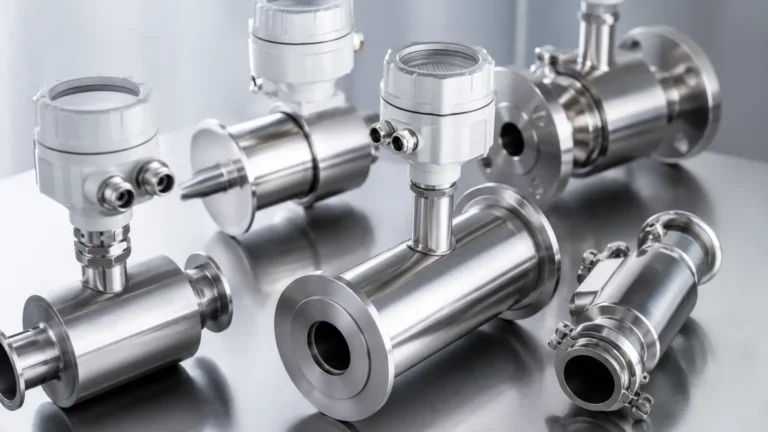
A Coriolis mass flow meter consists of one or more vibrating tubes, usually made of stainless steel or high-grade alloys. An internal drive coil causes the tubes to vibrate at their resonant frequency. When a fluid (liquid or gas) flows through these vibrating tubes, it is forced to take on the vertical momentum of the vibration.
As the fluid moves toward the point of peak vibration, it resists being pushed up by pushing back down on the tube. Conversely, as the fluid leaves the peak vibration point, it resists the decrease in vertical motion by pushing up. This creates a twisting effect on the tube, known as the Coriolis force. The amount of twist is directly proportional to the mass flow rate of the fluid. Sensors (pick-off coils) at the inlet and outlet of the tubes measure the phase shift between the vibrations.
Density and Temperature Compensation
One of the significant advantages of this principle is its ability to measure density simultaneously. The frequency at which the tubes vibrate changes depending on the mass of the fluid inside them. By measuring this frequency, the meter can calculate the fluid's density. Furthermore, integrated RTDs (Resistance Temperature Detectors) monitor the tube temperature to compensate for changes in material elasticity, ensuring that the mass calculation remains accurate to within ±0.1% or better.
Why Mass Flow is Preferred for Filling Applications
Traditional filling systems often rely on piston fillers, gravity fillers, or volumetric flow meters (such as magnetic or turbine meters). While these are effective in stable environments, they face challenges when fluid properties fluctuate.
1. Temperature Independence: Liquids expand and contract with temperature changes. A liter of oil at 15°C contains more mass than a liter of oil at 40°C. Mass flow meter filling eliminates this discrepancy, ensuring the consumer receives the exact weight of the product specified on the label.
2. Viscosity Handling: Coriolis meters are generally unaffected by changes in viscosity. This makes them ideal for filling lines that handle multiple products, such as shampoos, detergents, or honey, where viscosity can vary significantly between batches or during start-up.
3. No Moving Parts in the Fluid Stream: Unlike piston or turbine meters, Coriolis meters have no internal moving parts that can wear out or clog. This reduces maintenance requirements and makes the system suitable for hygienic applications where Clean-in-Place (CIP) or Sterilization-in-Place (SIP) is required.
4. Direct Mass Measurement: In many industries, products are sold by weight but filled by volume. Using mass flow meters allows for direct weight-based filling without the need for a secondary check-weigher to verify every container, though check-weighers are often still used for statistical process control.
Key Evaluation Criteria for Filling Systems
When selecting a mass flow meter for a filling application, several technical parameters must be evaluated to ensure the system meets the required cycle times and accuracy levels.
Selection Table: Mass Flow Meter Specifications
| Feature | Requirement for Filling | Engineering Consideration |
| :— | :— | :— |
| Accuracy | ±0.1% to ±0.2% of rate | Critical for high-value chemicals and pharmaceuticals. |
| Repeatability | ±0.05% | Essential for maintaining batch-to-batch consistency. |
| Turn-down Ratio | 20:1 or higher | Allows the same meter to handle different container sizes. |
| Response Time | < 100 ms | Filling pulses are often short (1-5 seconds); fast electronics are vital. |
| Materials | 316L Stainless Steel / Hastelloy | Must be compatible with the process fluid and cleaning agents. |
| Pressure Rating | Up to 40 bar (standard) | Must withstand pump pressures and potential water hammer. |
Batch Control Integration
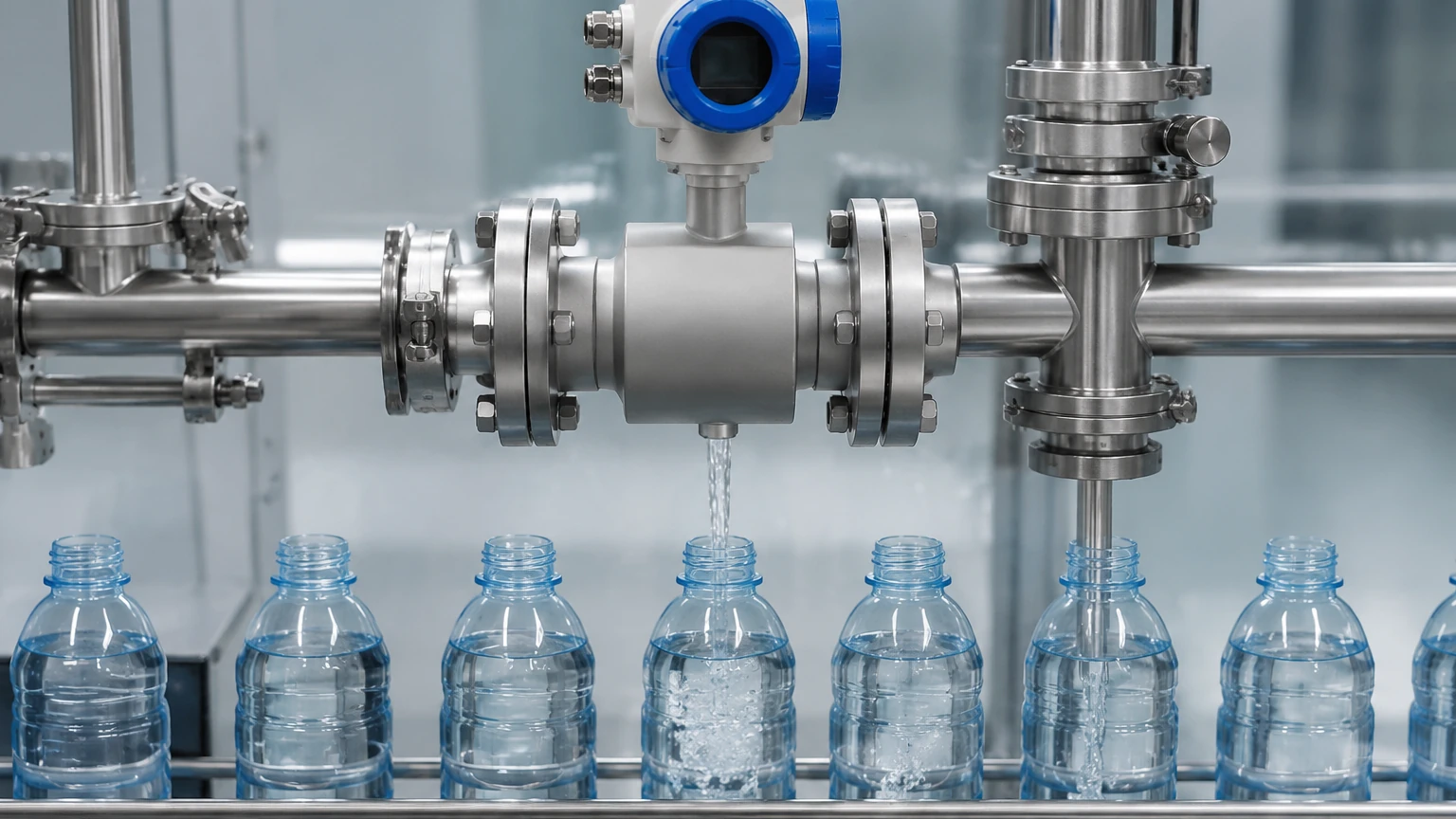
For filling applications, the meter must be paired with a high-speed batch controller. This controller monitors the flow signal and sends a signal to a fast-acting valve to shut off the flow once the target mass is reached. Advanced controllers include "drip compensation" or "pre-act" logic, which accounts for the small amount of fluid that enters the container after the valve receives the close command.
Installation Considerations and Best Practices
Proper installation is the difference between a high-performing filling line and one plagued by inaccuracies. While Coriolis meters are robust, they are sensitive to specific environmental factors.
1. Vibration Isolation
Because Coriolis meters rely on measuring precise tube vibrations, external mechanical vibrations from pumps, conveyors, or heavy machinery can introduce noise into the signal. It is recommended to use flexible couplings or robust mounting brackets to isolate the meter from the rest of the filling machine frame.
2. Avoiding Air Entrainment
The presence of air bubbles in a liquid stream (two-phase flow) is the leading cause of error in mass flow meter filling. Air bubbles change the damping characteristics of the vibrating tubes, leading to "slug flow" errors.
* Solution: Install an air eliminator upstream of the meter. Ensure the system is kept under sufficient back-pressure to keep gases in solution.
3. Orientation
For liquid filling, the meter should ideally be installed in a vertical position with the flow moving upward. This ensures the tubes remain full and prevents the entrapment of air. If horizontal installation is necessary, the tubes should point downward (for liquids) to prevent sediment buildup or upward (for gases) to prevent liquid entrapment.
4. Valve Placement
The shut-off valve should be placed as close to the meter outlet as possible. This minimizes the volume of fluid between the measurement point and the container, which reduces the margin for error caused by fluid compression or line drainage.
Limitations and Common Risks
While mass flow meter filling is highly accurate, it is not a universal solution for every scenario.
* Initial Cost: Coriolis meters are significantly more expensive than magnetic or ultrasonic flow meters. The ROI must be calculated based on reduced product giveaway and lower maintenance costs.
* Pressure Drop: The geometry of Coriolis tubes (often U-shaped or curved) can cause a pressure drop in the line. This must be accounted for in the pump sizing to ensure filling speeds are maintained.
* Entrained Air: As mentioned, significant amounts of air can cause the meter to "stall" or provide erratic readings. In applications like carbonated beverage filling, specialized "dual-phase" algorithms are required.
Integration with Level Measurement Systems
In a complete process plant, flow meters do not operate in isolation. While the mass flow meter handles the precision filling of the end product, level measurement instruments are required to manage the supply tanks (buffer tanks) that feed the filling line.
Maintaining a constant head pressure or level in the buffer tank is crucial for ensuring a steady flow to the mass flow meter. If the level in the supply tank drops too low, it can introduce vortexing and air entrainment, which negatively impacts the filling accuracy. For engineers looking to integrate these systems with comprehensive tank monitoring, reviewing product options and application support on the Main Page for compatible level instrumentation is a recommended step in system design. Technologies such as radar level meters or hydrostatic transmitters are often used in tandem with flow meters to provide a holistic view of the production process.
Frequently Asked Questions (FAQs)
Q: Can mass flow meters handle highly viscous fluids like honey or heavy oils?
A: Yes. Coriolis meters are excellent for high-viscosity fluids because the measurement is based on mass and inertia rather than fluid velocity profiles. However, the system must be designed to handle the resulting pressure drop.
Q: How often do mass flow meters need to be calibrated?
A: In many regulated industries, annual calibration is standard. However, because Coriolis meters have no moving parts, they are remarkably stable. Many modern meters feature "on-board verification" that checks the integrity of the tubes and electronics without removing the meter from the line.
Q: Is mass flow meter filling faster than volumetric filling?
A: Not necessarily faster in terms of raw flow rate, but it is often more efficient. Because it is more accurate, you spend less time adjusting the machine and less time dealing with rejected containers that are under-filled or over-filled.
Q: Can I use one meter for multiple products?
A: Yes. This is one of the primary benefits. Since the meter measures mass directly, you can switch from a low-density fluid to a high-density fluid without recalibrating the meter, provided the wetted materials are compatible with both products.
Conclusion
Mass flow meter filling represents the pinnacle of precision in modern packaging lines. By leveraging the Coriolis principle, manufacturers can achieve unparalleled accuracy, reduce waste, and simplify their processes by eliminating the need for complex temperature compensation. While the initial investment is higher than traditional methods, the long-term benefits in product quality and operational efficiency make it the preferred choice for high-performance industrial applications. When combined with reliable level monitoring from the Main Page, these systems provide the foundation for a fully optimized and automated production environment.