Chlorine Dioxide in Water Analyzer
Chlorine Dioxide in Water Analyzer
Chlorine dioxide (ClO2) has become a preferred disinfectant and oxidant in modern water treatment due to its high efficacy across a broad pH range and its inability to form harmful trihalomethanes (THMs). However, maintaining the precise concentration of ClO2 is essential for both regulatory compliance and operational safety. A chlorine dioxide in water analyzer serves as the primary instrument for real-time monitoring, ensuring that dosing levels remain within the required parameters for applications ranging from municipal drinking water to industrial cooling towers.
This article examines the technical principles, selection criteria, and installation requirements for chlorine dioxide analyzers, while also addressing how these instruments integrate with broader process control systems, including chemical storage level monitoring.
Measurement Principles of Chlorine Dioxide Analyzers
Before selecting an instrument, it is necessary to understand the two primary technologies used to detect and quantify chlorine dioxide in aqueous solutions: amperometric sensing and colorimetric analysis.
Amperometric Sensors
Amperometric measurement is the most common method for continuous, online monitoring. This electrochemical technique relies on a sensor containing a gold or platinum cathode and a silver/silver chloride anode.
In membrane-covered amperometric sensors, a gas-permeable membrane separates the electrodes and electrolyte from the water sample. Chlorine dioxide molecules diffuse through the membrane and are reduced at the cathode. This chemical reduction generates an electric current proportional to the partial pressure of ClO2, which is then converted into a concentration reading (mg/L or ppm).
Advantages of Amperometric Sensors:
* Continuous Output: Provides real-time data for PID control loops.
* No Reagents: Operates without the need for chemical consumables, reducing long-term operational costs.
* Low Maintenance: Modern membrane designs minimize electrode fouling.
Colorimetric (DPD) Analyzers
Colorimetric analyzers utilize the DPD (N,N-diethyl-p-phenylenediamine) method. A pump system draws a water sample into a reaction chamber where reagents are added. If chlorine dioxide is present, the sample turns a shade of pink/red. A spectrophotometer then measures the light absorbance at a specific wavelength (typically 515 nm to 565 nm) to calculate the concentration.
Advantages of Colorimetric Analyzers:
* High Accuracy: Often considered the "gold standard" for laboratory verification.
* Less Sensitive to Flow Changes: Unlike amperometric sensors, colorimetric units are less affected by fluctuations in sample flow velocity.
Key Evaluation Criteria for Industrial Applications
Selecting a chlorine dioxide in water analyzer requires an assessment of the specific process environment. Engineers must evaluate the following factors to ensure long-term reliability.
Sensitivity and Measuring Range
Most industrial applications require a range of 0–2.00 mg/L or 0–5.00 mg/L. For high-concentration dosing systems or pulp bleaching applications, sensors capable of measuring up to 20.0 mg/L or higher may be necessary. The resolution should ideally be 0.01 mg/L to detect subtle process shifts.
Cross-Sensitivity and Interference
In many water systems, ClO2 is used alongside other oxidants. It is critical to confirm if the analyzer is cross-sensitive to:
* Free Chlorine: Many sensors cannot distinguish between ClO2 and Cl2.
* Ozone: Ozone can cause significant positive interference in electrochemical sensors.
* pH Fluctuations: While ClO2 itself is relatively stable across pH 4 to 10, the sensor's electrolyte or membrane performance may be affected by extreme pH levels.
Response Time (T90)
The T90 time—the time it takes for the analyzer to reach 90% of the final value after a step change—is vital for automated dosing. Amperometric sensors typically offer a T90 of less than 60 seconds, whereas colorimetric systems may have a cycle time of 2 to 10 minutes due to the batch nature of the measurement.
Selection Table: Amperometric vs. Colorimetric
| Feature | Amperometric (Membrane) | Colorimetric (DPD) |
| :— | :— | :— |
| Measurement Mode | Continuous | Batch/Interval |
| Reagent Requirement | None | Required (Monthly refill) |
| Response Time | < 60 seconds | 3–10 minutes |
| Installation Complexity | Moderate (Requires flow cell) | High (Requires reagent plumbing) |
| Calibration Frequency | Bi-weekly to Monthly | Monthly |
| Ideal Application | Rapid dosing control | Regulatory reporting/Verification |
Installation and Integration Guidelines
Proper installation is as critical as the sensor technology itself. Inaccurate readings are frequently caused by poor hydraulic setup rather than sensor failure.
Sample Flow Management
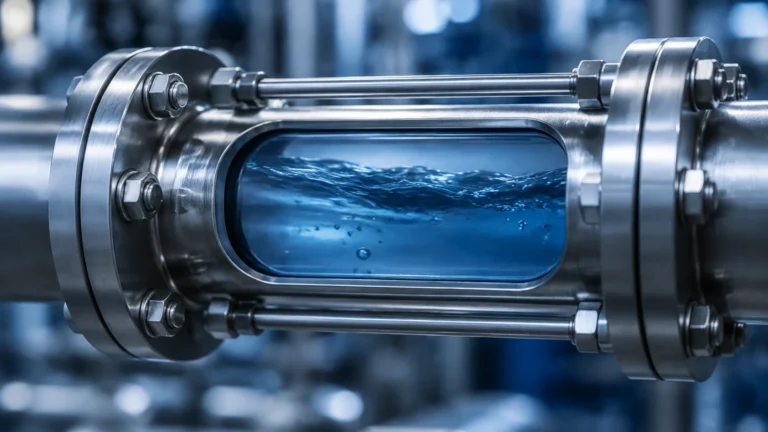
Amperometric sensors are flow-dependent. A constant flow rate, typically between 30 and 60 liters per hour (L/h), must be maintained across the sensor membrane. Most professional setups utilize a specialized flow cell with an integrated flow regulator and a needle valve to ensure stability. If the flow drops too low, the sensor will under-read; if it is too high, the membrane may be damaged or the reading may become noisy.
Pressure and Temperature
Most analyzers are designed to operate at pressures below 1 bar (approx. 14.5 psi) at the outlet. If the sample line is under high pressure, a pressure-reducing valve must be installed upstream. Temperature compensation is also essential, as the diffusion rate through membranes is temperature-dependent. Most modern transmitters include a Pt100 or Pt1000 RTD for automatic compensation.
Positioning in the Process
The analyzer should be installed as close to the sampling point as possible to minimize "lag time" in the sample line. However, it must be sufficiently downstream from the chemical injection point to ensure the chlorine dioxide is fully mixed with the process water.

Limitations and Maintenance Requirements
While highly effective, a chlorine dioxide in water analyzer is not a "set and forget" instrument. Users must be aware of several operational limitations:
1. Membrane Fouling: In wastewater or high-calcium applications, the sensor membrane can become coated with bio-film or scale. This requires periodic cleaning with dilute acid or specialized detergents.
2. Electrolyte Depletion: The internal electrolyte in amperometric sensors is consumed over time. Depending on the concentration of ClO2 and the water temperature, the electrolyte typically needs replacement every 3 to 6 months.
3. Zero-Point Drift: Over time, the sensor's baseline may shift. Regular zero-point calibration using ClO2-free water is recommended to maintain accuracy at low concentrations.
The Synergy Between Quality Analysis and Level Measurement
A chlorine dioxide analyzer monitors the output of a disinfection system, but the reliability of that system also depends on the consistent supply of chemical precursors. Chlorine dioxide is typically generated on-site by reacting sodium chlorite (NaClO2) with an acid (HCl) or chlorine gas.
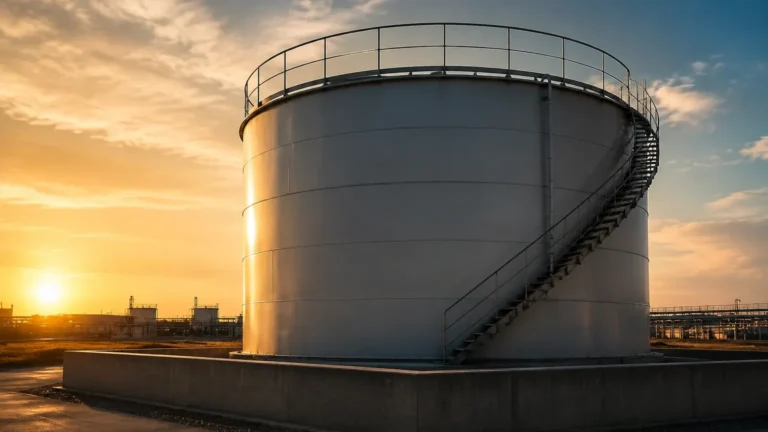
To ensure uninterrupted disinfection, the storage tanks for these precursors must be monitored with high-precision industrial instruments. For instance, ultrasonic or radar level meters are used to track chemical volumes and trigger automated reordering. For a comprehensive overview of the technologies used to monitor these chemical assets, engineers can consult the Main Page of specialized manufacturers like Welk. Integrating level data with water quality data allows plant operators to correlate chemical consumption rates with disinfection efficacy, optimizing the overall process.
Frequently Asked Questions (FAQ)
Q: Can I use a standard free chlorine sensor to measure chlorine dioxide?
A: Generally, no. While some sensors are cross-sensitive, they are calibrated differently. A dedicated chlorine dioxide sensor is designed to account for the specific electrochemical reduction potential of ClO2, which differs from that of hypochlorous acid.
Q: How often should I calibrate my chlorine dioxide analyzer?
A: For most industrial applications, a weekly or bi-weekly calibration check against a handheld DPD photometer is recommended. A full calibration should be performed whenever the membrane or electrolyte is replaced.
Q: What is the impact of air bubbles on the measurement?
A: Air bubbles are a common source of error. If bubbles collect on the sensor membrane, they block the active surface area, leading to artificially low readings. Installing the sensor in a flow cell with an air-bleed valve or at a slight angle can help mitigate this issue.
Q: Does the analyzer require a drain line?
A: Yes. Most online analyzers are "flow-through" devices. The sample water must be directed to a drain or returned to a lower-pressure point in the process. If the water contains high levels of chemicals, it may need to be routed back to a treatment head-works.
By understanding these technical nuances, process engineers can implement a chlorine dioxide in water analyzer that provides the accuracy and stability required for safe water treatment operations.