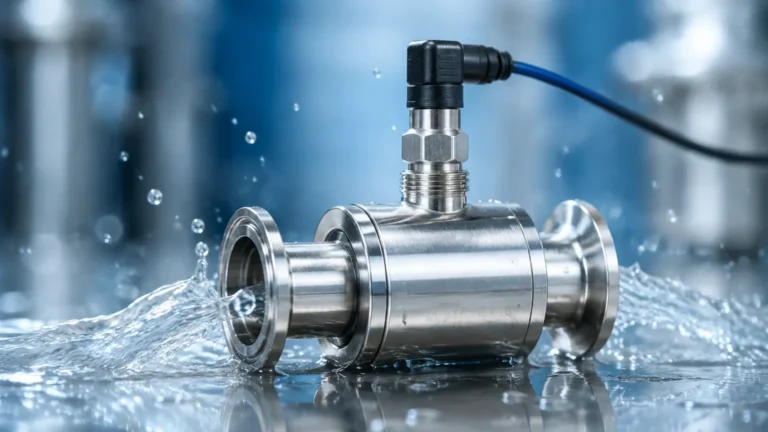
Sludge Level Sensor
Sludge Level Sensor
In industrial wastewater treatment, chemical processing, and mining operations, the ability to accurately monitor the separation of solids from liquids is critical for process efficiency. A sludge level sensor is a specialized instrument designed to detect the interface between the clarified liquid (supernatant) and the settled solids (sludge blanket) in tanks, clarifiers, and thickeners.
By providing real-time data on the sludge blanket's height, these sensors allow operators to optimize pumping cycles, prevent sludge carryover into effluent streams, and reduce chemical coagulant costs. As a professional manufacturer, Welk provides a range of level measurement technologies, including radar, ultrasonic, and hydrostatic solutions, to address the complex demands of industrial automation. This guide explores the principles, selection criteria, and practical applications of sludge level monitoring technology.
Understanding Sludge Level Measurement Principles
Before selecting a sludge level sensor, it is essential to understand the physical principles that allow an instrument to distinguish between two phases of matter within a single vessel. Unlike standard liquid level measurement, interface detection requires the sensor to ignore the top surface of the liquid and focus on the transition zone where solids concentration increases significantly.
Ultrasonic (Sonar) Principle
Ultrasonic or sonar-based sensors are among the most common tools for sludge level detection. These instruments function by emitting a high-frequency sound pulse from a transducer submerged just below the liquid surface. The sound wave travels through the clarified water until it hits the denser sludge blanket, which reflects the signal back to the transducer.
The sensor calculates the distance based on the "time of flight"—the time elapsed between the emission of the pulse and the reception of the echo. Because the speed of sound varies depending on the density and temperature of the medium, advanced sonar sensors incorporate temperature compensation and sophisticated signal processing to filter out noise from floating debris or gas bubbles.
Optical (Turbidity) Principle
Optical sensors utilize light attenuation or backscattering to determine the concentration of suspended solids. An infrared light source is directed into the medium, and a receiver measures how much light is absorbed or scattered by the particles. When the sensor reaches the sludge blanket, the light intensity drops sharply. While often used for point-level detection or portable "sludge judges," continuous optical sensors can be mounted on motorized cable reels to profile the entire depth of a tank.
Microwave and Radar Principles
While standard radar level meters are typically used for the top surface of liquids, specialized high-frequency radar or guided wave radar (GWR) can sometimes detect interfaces if there is a significant difference in the dielectric constant between the liquid and the sludge. However, in many wastewater applications, the dielectric difference is minimal, making ultrasonic sonar the preferred choice for submerged interface tracking.
Hydrostatic Pressure Principle
Hydrostatic transmitters measure the pressure exerted by the column of liquid above the sensor. In applications where the density of the sludge is significantly higher than the liquid, a dual-sensor differential pressure setup can be used to infer the sludge level. This method is more common in heavy industrial thickeners where the sludge is highly compacted.
Key Technologies for Sludge Interface Detection
Choosing the right technology depends on the specific characteristics of the sludge and the mechanical environment of the tank. Below are the primary technologies utilized in modern industrial settings.
1. Submerged Ultrasonic Transducers: These are permanently mounted and provide continuous tracking of the sludge blanket. They are ideal for primary and secondary clarifiers in water treatment plants.
2. Optical Suspended Solids Sensors: These provide high-resolution data on the "fluff layer"—the transition zone where solids are not yet fully settled. They are essential in processes where effluent quality is extremely sensitive to solids carryover.
3. Hydrostatic Level Transmitters: Used primarily for total tank level or in heavy-density sludge applications. Welk offers robust hydrostatic solutions that resist clogging in high-solids environments.
4. Radar Level Meters: Primarily used for monitoring the overall liquid level in the tank to prevent overflows. For comprehensive system overviews, you can Review product options and application support on our main site.
Evaluation Criteria for Sludge Level Sensors
Selecting a sludge level sensor requires a detailed analysis of the process environment. Engineers should evaluate the following factors to ensure long-term reliability:
Sludge Density and Concentration
The "thickness" of the sludge determines how well a signal will reflect. If the sludge is very thin (low solids concentration), an ultrasonic signal might pass through it without a clear echo. Conversely, if the sludge is too dense, it may absorb the signal entirely. Most industrial sonar sensors are designed to detect sludge concentrations ranging from 0.5% to 10% suspended solids.
Vessel Geometry and Internal Obstructions
Clarifiers often contain rotating scrapers, rakes, and baffle walls. The sensor must be positioned where it has a clear "view" of the floor, or it must be synchronized with the scraper's movement to ignore periodic interference. The beam angle of the sensor is a critical specification; a narrower beam (e.g., 6° to 10°) is less likely to hit the sides of the tank or internal hardware.
The "Fluff" or Rag Layer
In many biological treatment processes, there is no sharp line between water and sludge. Instead, there is a "fluff layer" of semi-settled solids. A high-quality sludge level sensor must allow the operator to calibrate the "sensitivity" or "threshold" to define exactly what concentration of solids should be considered the "level."
Practical Selection Table
| Feature | Ultrasonic (Sonar) | Optical (Infrared) | Hydrostatic | Radar (Non-contact) |
| :— | :— | :— | :— | :— |
| Primary Use | Sludge Blanket Level | Solids Concentration | Total Liquid Head | Surface Level |
| Medium | Liquids with settled solids | Suspended solids | Homogeneous liquids | All liquids/solids |
| Accuracy | ±10 mm to 50 mm | High (for concentration) | ±0.1% to 0.5% Span | ±2 mm to 5 mm |
| Maintenance | Low (if self-cleaning) | High (lens fouling) | Low | Very Low |
| Installation | Submerged (Top-down) | Submerged | Bottom or Side | Top-mounted |
| Limitation | Affected by gas bubbles | Requires frequent cleaning | Density must be known | Cannot see through water |

Installation and Maintenance Guidelines
Correct installation is the most significant factor in the success of a sludge level sensor project. Follow these engineering best practices:
* Positioning: Mount the sensor away from the influent (inlet) pipe to avoid turbulence and air entrainment, which can scatter ultrasonic signals.
* Submergence Depth: For ultrasonic sensors, the transducer should be submerged at least 200 mm to 500 mm (approx. 8 to 20 inches) below the water surface to avoid surface foam and floating scum.
* Scraper Avoidance: If the tank has a rotating rake, install the sensor in a location where the rake passes quickly, and use the controller's software to "mask" the signal during those intervals.
* Cleaning Systems: Sludge environments are biologically active. Sensors will eventually suffer from biofouling (algae or bacterial growth). Always specify a sensor with an automatic cleaning system, such as a motorized wiper or a high-pressure air-flush nozzle.
* Calibration: Initial calibration should be performed by taking a physical sample (using a manual sludge judge) to verify the electronic reading against the actual blanket depth.
Common Risks and Limitations in Sludge Monitoring
While modern sensors are highly advanced, certain conditions can challenge their accuracy:
1. Gas Pockets: In anaerobic digesters or certain chemical reactions, gas bubbles rise through the sludge. These bubbles reflect ultrasonic waves, potentially creating "false floors" or noisy data.
2. Temperature Stratification: Significant temperature differences between the top and bottom of a deep tank can bend sound waves (refraction), leading to depth errors. Sensors with integrated temperature probes are required in these scenarios.
3. Heavy Scaling: In mining or lime softening applications, calcium carbonate or other minerals can scale onto the sensor face. Without a wiper, the sensor will eventually lose its ability to transmit or receive signals.
4. Signal Absorption: Very high-frequency sonar may be absorbed by highly flocculated sludge. Lower frequency sensors (e.g., 150 kHz to 300 kHz) are generally better at penetrating thick sludge layers.
Frequently Asked Questions (FAQs)
Q: How often does a sludge level sensor need to be calibrated?
A: Initially, sensors should be checked weekly. Once the process stabilizes and the signal processing parameters are tuned, quarterly verification against a manual measurement is usually sufficient.
Q: Can one sensor measure both the liquid level and the sludge level?
A: Generally, no. A standard non-contact radar or ultrasonic sensor measures the distance to the liquid surface. A sludge level sensor is designed to be submerged or to use a specific frequency that penetrates the liquid to find the solids interface. For comprehensive monitoring, most facilities use a combination of instruments found on our Main Page.
Q: What is the maximum depth these sensors can measure?
A: Most industrial sonar sensors can measure depths up to 30 meters (approx. 100 feet), though accuracy is highest within the 1-meter to 15-meter range.
Q: Does the sensor work in tanks with heavy foam?
A: If the transducer is submerged below the foam layer, it will work perfectly. This is a major advantage of submerged ultrasonic sensors over top-mounted non-contact sensors in foaming applications.
Conclusion
Implementing a reliable sludge level sensor is a foundational step in modernizing wastewater and industrial process control. By understanding the nuances of sonar and optical technologies, and by accounting for mechanical factors like tank scrapers and fluff layers, engineers can ensure accurate, maintenance-free operation. Welk continues to support global industries with robust level measurement solutions, from radar level meters to specialized interface sensors, ensuring that every stage of the process is monitored with precision.