Solid State Ph Sensor
Solid State Ph Sensor
In the landscape of industrial liquid analysis, the transition from traditional glass-bulb electrodes to solid-state technology represents a significant shift in process reliability and safety. For decades, the potentiometric glass electrode has been the standard for pH measurement. However, its inherent fragility and the risks associated with glass breakage in sensitive environments—such as food production or high-pressure chemical reactors—have driven the adoption of the solid state ph sensor. This guide explores the engineering principles, selection criteria, and practical applications of solid-state pH measurement technology within modern industrial automation.
Principles of Solid-State pH Measurement
Unlike traditional electrodes that rely on a thin glass membrane to develop a millivolt potential, a solid state ph sensor typically utilizes Ion-Sensitive Field-Effect Transistor (ISFET) technology. To understand its operation, one must look at the fundamental physics of semiconductors.
The ISFET Mechanism
An ISFET is essentially a modified Metal-Oxide-Semiconductor Field-Effect Transistor (MOSFET). In a standard MOSFET, a metal gate controls the flow of current between a source and a drain. In an ISFET, the metal gate is removed, exposing the underlying gate insulator (typically silicon nitride, aluminum oxide, or tantalum pentoxide) directly to the process liquid.
When the sensor is immersed in a solution, the surface of this insulator layer develops an electrical charge based on the concentration of hydrogen ions (H+) in the liquid. This charge acts as the "gate voltage," modulating the current flowing through the semiconductor channel beneath. Because the current flow is directly proportional to the pH of the solution, the sensor provides a highly responsive and stable electronic signal. This solid-state design eliminates the need for a fragile glass bulb and a high-impedance internal buffer solution, making the sensor significantly more robust.
Reference Systems in Solid-State Sensors
While the sensing element is solid-state, the measurement still requires a complete electrical circuit, which necessitates a reference electrode. In many industrial solid state ph sensors, the reference system is also modernized. Instead of a liquid-filled chamber that requires constant refilling, these sensors often use a solid-polymer electrolyte or a gel-filled reference with a non-clogging PTFE junction. This ensures that the entire sensor assembly remains durable and low-maintenance.
Advantages Over Traditional Glass Electrodes
The move toward solid-state technology is motivated by several technical and operational advantages that directly impact the Total Cost of Ownership (TCO) in industrial facilities.
1. Mechanical Durability: The most obvious benefit is the absence of glass. In industries like food and beverage, a broken glass electrode can lead to entire batch rejections. Solid-state sensors use medical-grade plastics (like PEEK) and stainless steel housings, making them virtually unbreakable under normal process conditions.
2. Dry Storage Capability: Traditional glass electrodes must be kept hydrated to maintain the functionality of the gel layer on the glass surface. If they dry out, they often require lengthy rehydration or become permanently damaged. ISFET sensors can be stored dry for extended periods and returned to service with minimal conditioning.
3. Fast Response Times: Because the ion exchange occurs directly on the surface of the transistor gate rather than through a glass membrane, the response to pH changes is often significantly faster, especially in cold process fluids where glass impedance increases exponentially.
4. Low Temperature Performance: Glass electrodes become sluggish and high-impedance at low temperatures. Solid-state sensors maintain their responsiveness even in near-freezing applications.
Technical Comparison: Solid-State vs. Glass
| Feature | Solid-State (ISFET) | Traditional Glass Electrode |
| :— | :— | :— |
| Sensing Element | Semiconductor Transistor | Glass Membrane |
| Fragility | Extremely Low (No Glass) | High (Fragile Bulb) |
| Storage | Can be stored dry | Must be kept wet |
| Response Speed | Very Fast | Moderate to Slow |
| Calibration Frequency | Moderate | High |
| Max Temperature | Typically up to 110°C | Up to 140°C (Specialized) |
| Pressure Resistance | High (Solid Construction) | Variable (Requires Compensation) |
Selection Criteria for Industrial Applications
Choosing the right solid state ph sensor requires a thorough evaluation of the process environment. Engineers must look beyond the sensor type and consider the integration with existing control systems, such as those found on the Main Page of industrial instrumentation providers.
Chemical Compatibility
The housing material of the sensor must be compatible with the process media. PEEK (Polyether ether ketone) is a common choice for its chemical resistance and thermal stability. For highly aggressive solvents or concentrated acids, tantalum or specialized ceramic coatings may be required for the sensing gate.
Temperature and Pressure Ratings
Industrial processes often operate at elevated pressures and temperatures. A standard solid state ph sensor is typically rated for temperatures up to 100°C or 110°C and pressures up to 10 bar (145 psi). If the process involves Steam-In-Place (SIP) sterilization, the sensor must be specifically rated for these thermal cycles to prevent degradation of the semiconductor junctions.
Mounting and Integration
Consider how the sensor will be installed. Options include:
* In-line Mounting: Using a flow cell or a T-piece for continuous monitoring in a pipe.
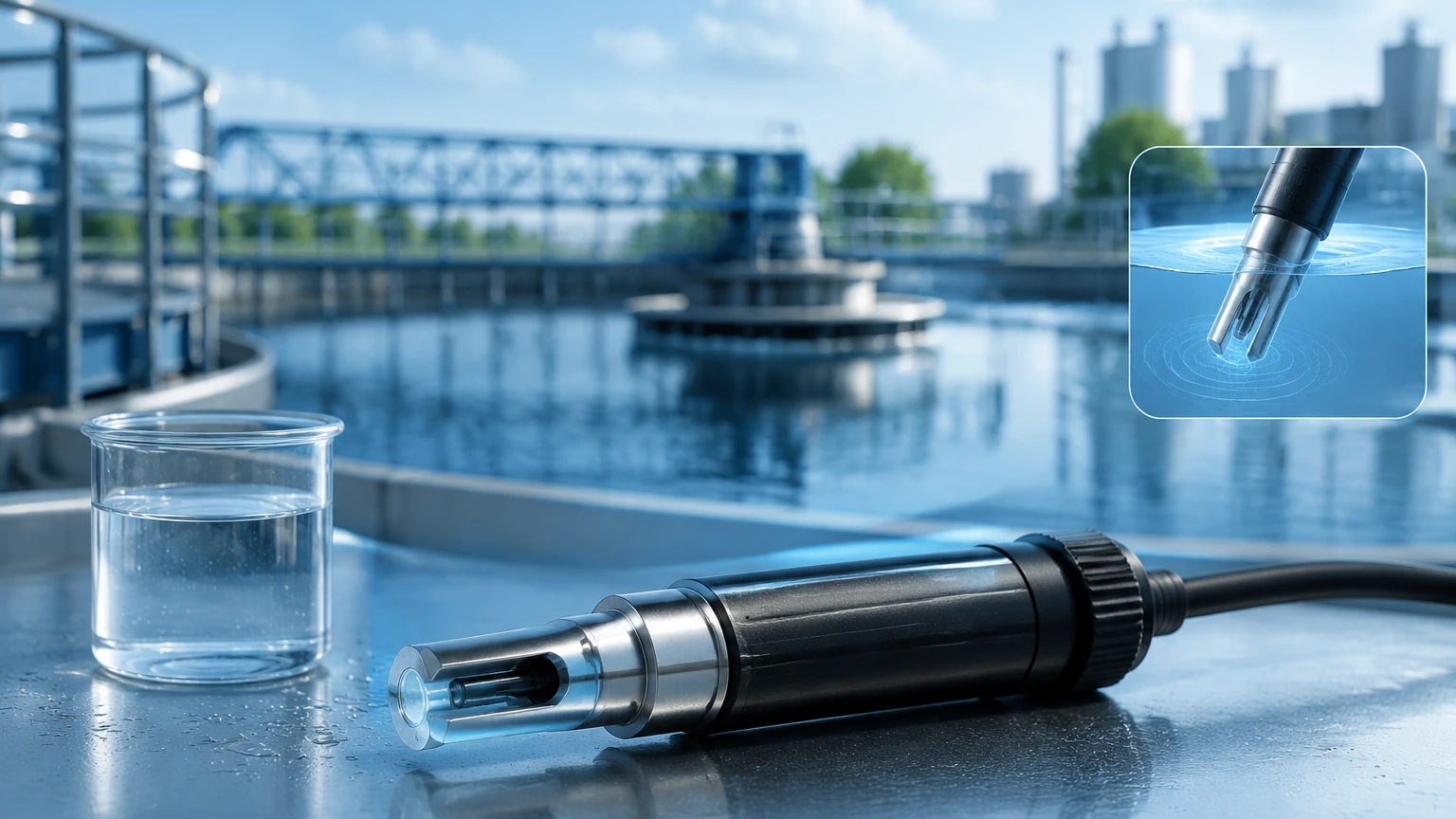
* Immersion Mounting: Using a probe assembly to lower the sensor into a tank or open channel.
* Retractable Assemblies: Allowing the sensor to be removed for cleaning or calibration without shutting down the process line.
Installation and Maintenance Considerations
Correct installation is critical for the longevity of a solid state ph sensor. Unlike level meters that might be mounted at the top of a tank, pH sensors must be in constant contact with the liquid, yet positioned to avoid the accumulation of solids or air bubbles.
Proper Positioning
Sensors should be installed at an angle (typically at least 15° above the horizontal) to ensure that the internal reference electrolyte stays in contact with the junction. In high-velocity flows, the sensing face should be oriented to minimize direct abrasive impact from suspended solids while still ensuring sufficient turbulence to prevent fouling.
Cleaning Protocols
While solid-state sensors are robust, the sensing gate can still become coated with oils, fats, or mineral scales. Fouling will slow the response time and eventually cause measurement drift. Regular cleaning with appropriate agents—such as dilute acids for mineral scale or mild detergents for organic fats—is necessary. Because the ISFET surface is a hard ceramic or oxide, it can often withstand more vigorous cleaning than a delicate glass bulb.
Calibration Requirements
Even the most advanced solid state ph sensor requires periodic calibration. This is usually a two-point calibration using standard buffer solutions (e.g., pH 4.01 and pH 7.00). In automated systems, the transmitter should be able to track the "slope" and "offset" of the sensor to provide predictive diagnostics on when the sensor might need replacement.
Limitations and Prohibitions
While highly versatile, solid-state technology is not a universal solution for every application. Engineers should be aware of the following limitations:
* Light Sensitivity: Because ISFETs are semiconductors, they can be sensitive to intense direct light, which may cause a temporary shift in the signal. Most modern industrial sensors include opaque housings or light-shielding layers to mitigate this.
* Extreme pH Ranges: In extremely acidic (pH < 1) or extremely alkaline (pH > 13) environments, the chemical attack on the gate insulator can shorten the sensor's lifespan significantly compared to specialized heavy-duty glass.
* Electrical Interference: As with all high-precision electronic components, proper grounding and the use of shielded cables are essential to prevent EMI (Electromagnetic Interference) from variable frequency drives or large motors from affecting the signal.
Synergy with Level Measurement
In many industrial automation scenarios, pH monitoring is performed alongside level measurement. For instance, in a chemical neutralization tank, a radar level meter or ultrasonic level sensor provides the volume data necessary to calculate the required dosage of neutralizing agent, while the solid state ph sensor provides the feedback loop to confirm the reaction's progress. Companies like Welk provide a comprehensive suite of Main Page solutions that allow for the integration of these various parameters into a single control architecture, ensuring both safety and efficiency in fluid management.
Frequently Asked Questions (FAQ)
Q: Can a solid state ph sensor be used in hazardous areas?
A: Yes, many solid-state sensors are available with FM, ATEX, or IECEx certifications for use in intrinsically safe circuits, provided they are used with an appropriate isolated barrier or transmitter.
Q: How long does a solid-state sensor typically last?
A: In clean water applications, a sensor can last several years. In harsh industrial processes with frequent cleaning and thermal cycling, a lifespan of 6 to 18 months is more common. The end of life is usually marked by a significant drop in the response slope.
Q: Does the sensor require a special transmitter?
A: Yes. Because the signal from an ISFET is different from the high-impedance voltage of a glass electrode, you must use a transmitter specifically designed to power the transistor and interpret its current output. Many modern universal transmitters support both glass and ISFET inputs.
Q: Is the sensor affected by flow rate?
A: ISFET sensors are generally less sensitive to flow-induced potential changes than glass electrodes, but extremely high velocities can still cause "streaming potentials." It is best to install them in a location with steady, moderate flow.
Conclusion
The solid state ph sensor is a cornerstone of modern process analytical technology. By replacing fragile glass components with robust semiconductor electronics, industrial facilities can achieve higher uptime, reduced contamination risks, and simplified maintenance routines. When integrated with reliable level measurement and automation systems, these sensors provide the critical data needed for precise process control in the water treatment, chemical, and food industries. For those looking to upgrade their liquid analysis capabilities, evaluating the compatibility of ISFET technology with their specific process conditions is a vital step toward operational excellence.