Hydrogen Gas Analysers
Hydrogen Gas Analysers
In the landscape of industrial process control and safety, hydrogen gas analysers represent a critical category of instrumentation. Hydrogen (H2) is a versatile but volatile element used extensively in power generation, petroleum refining, chemical synthesis, and the emerging green energy sector. Because of its high flammability, wide explosive range (4% to 75% in air), and ability to cause metal embrittlement, precise monitoring of hydrogen concentrations is a non-negotiable requirement for operational integrity.
While industrial facilities often focus on liquid level monitoring—utilizing technologies such as radar level meters or magnetic level gauges—the composition of the gas phase in tanks and reactors is equally vital. Effective process automation requires a holistic approach where gas analysis and level measurement work in tandem to ensure safety and efficiency. For engineers looking to integrate these systems, visiting the Main Page of a professional instrumentation provider can offer insights into how various sensors complement one another in complex environments.
Measurement Principles of Hydrogen Gas Analysers
Selecting the correct hydrogen gas analyser begins with understanding the physical or chemical principle used to detect the gas. Hydrogen’s unique properties—specifically its very high thermal conductivity and its small molecular size—allow for several distinct measurement methodologies.
Thermal Conductivity Detection (TCD)
Thermal conductivity is the most common principle for measuring hydrogen in binary or quasi-binary gas mixtures. Hydrogen has the highest thermal conductivity of all common gases (approximately seven times that of air).
In a TCD sensor, a heated filament or thermistor is exposed to the gas stream. As the concentration of hydrogen changes, the rate at which heat is conducted away from the sensor changes, altering its electrical resistance. This change is measured using a Wheatstone bridge circuit. TCD analysers are favored for their robustness and ability to measure hydrogen from 0% to 100% volume. However, they are sensitive to any other gas in the mix that also has a high thermal conductivity, such as helium.
Electrochemical Sensors
Electrochemical hydrogen gas analysers operate by reacting the target gas with an electrode to produce an electrical current proportional to the gas concentration. These sensors are typically used for safety applications, such as detecting leaks in the parts-per-million (ppm) range or lower percentage levels (0-2% LEL). They are highly portable and consume very little power, making them ideal for handheld safety monitors. Their primary limitation is a finite lifespan, usually 2 to 3 years, as the internal electrolyte eventually depletes.
Catalytic Bead (Pellistor)
Catalytic sensors are designed specifically for detecting combustible gases. The sensor consists of two coils of fine platinum wire, one of which is coated with a catalyst. When hydrogen oxidizes on the catalyst, it raises the temperature of the bead, changing the resistance. These are widely used for LEL (Lower Explosive Limit) monitoring but require oxygen to function and can be "poisoned" by silicones or sulfur compounds.
Tunable Laser Diode Absorption Spectroscopy (TDLAS)
TDLAS is an advanced optical technology where a laser is tuned to a specific absorption line of the hydrogen molecule. While H2 does not absorb in the infrared spectrum as strongly as CO2 or CH4, specialized Raman spectroscopy or high-sensitivity TDLAS systems can provide non-contact, high-speed measurements. These are ideal for harsh process environments where the gas may be corrosive or extremely hot.
Industrial Applications and Integration
Hydrogen gas analysers are rarely used in isolation. They are typically part of a broader instrumentation suite that includes pressure, temperature, and level sensors.
Power Plant Generator Cooling
Large utility generators use hydrogen gas to cool the rotor windings because of H2’s high heat capacity and low density (which reduces windage losses). Analysers are used to monitor the purity of the hydrogen (typically maintained above 97%) to prevent the formation of explosive mixtures with air and to ensure maximum cooling efficiency.
Petroleum Refining and Hydrotreating
In hydrocracking and hydrotreating units, hydrogen is used to remove impurities like sulfur from crude oil. Here, hydrogen gas analysers monitor the recycle gas stream. In these high-pressure reactors, maintaining the correct liquid level is critical to prevent "carry-over" of liquids into gas compressors. High-accuracy radar level meters or displacement transmitters are often paired with hydrogen analysers to provide a complete picture of the reactor's internal state.
Hydrogen Production (Electrolysis)
As the world shifts toward green hydrogen, water electrolysis plants are proliferating. Analysers are required to monitor the purity of the produced H2 and, more importantly, to detect "oxygen-in-hydrogen" or "hydrogen-in-oxygen" levels to prevent explosive conditions within the electrolyzer stacks. In the storage phase, where hydrogen is kept in high-pressure tanks or cryogenic vessels, level measurement remains a primary concern for inventory management. You can Review product options and application support for level monitoring in these specialized storage environments.
Selection Criteria for Engineering Specifications
When specifying hydrogen gas analysers for a project, engineers must evaluate several technical parameters to ensure the device is fit for purpose.
| Feature | TCD Analyser | Electrochemical | Pellistor (Catalytic) | TDLAS/Optical |
| :— | :— | :— | :— | :— |
| Measurement Range | 0–100% Vol | 0–2000 ppm / 0–4% Vol | 0–100% LEL | Trace to 100% |
| Accuracy | ±1% of span | ±2–5% of reading | ±3% LEL | ±1% of reading |
| Response Time (T90) | < 10–30 seconds | < 30–60 seconds | < 15 seconds | < 2 seconds |
| Life Expectancy | 5–10 years | 2–3 years | 3–5 years | > 10 years |
| Typical Use | Process Purity | Safety/Leak Detection | Safety/Area Mon. | High-Speed Process |
Key Considerations:
1. Cross-Sensitivity: In complex gas streams (e.g., syngas containing CO, CO2, CH4, and H2), a standard TCD may fail because the other gases interfere with the thermal conductivity reading. In such cases, a gas chromatograph or a multi-sensor analyser is required.
2. Hazardous Area Certification: Since hydrogen is a Group IIC gas (the most easily ignited), all analysers must carry strict ATEX, IECEx, or UL certifications for Zone 0, 1, or 2 environments.
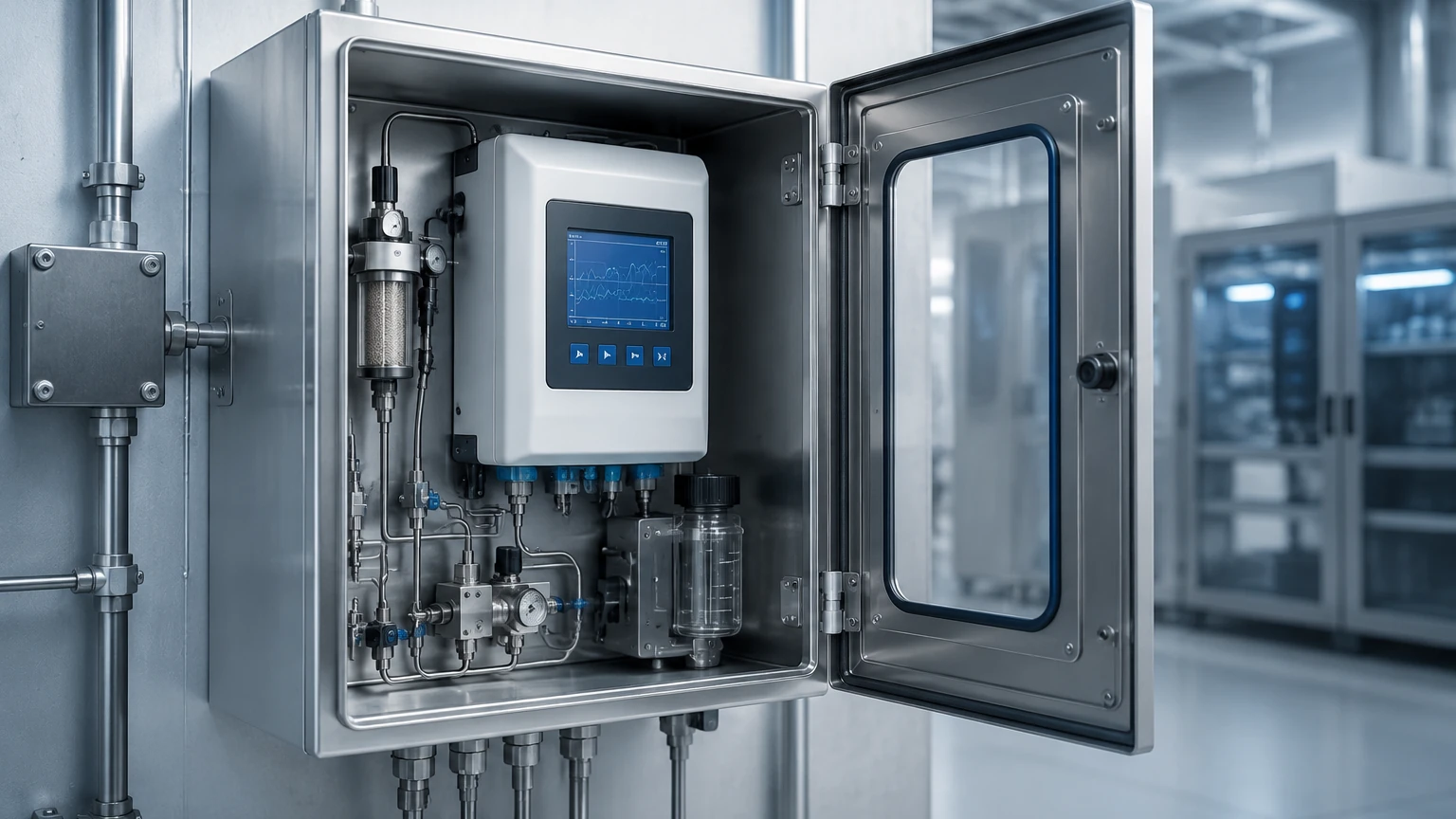
3. Sample Conditioning: Hydrogen gas analysers often require the gas to be clean, dry, and at a stable pressure. Sample conditioning systems (coolers, filters, and pressure regulators) are frequently more expensive than the sensor itself but are vital for long-term reliability.
Installation and Safety Guidelines
Because hydrogen is the lightest element, its behavior in a facility is predictable but dangerous if ignored. Installation of hydrogen gas analysers and sensors must account for the gas's extreme buoyancy.
* Sensor Placement: For ambient leak detection, sensors must be placed at the highest points of the room or enclosure, as hydrogen will rise and pocket in ceilings or roof ridges. This is the opposite of LPG or CO2 sensors, which are placed near the floor.
* Piping and Connections: Hydrogen molecules are small enough to leak through joints that would be airtight for other gases. Use high-quality compression fittings (e.g., 316 Stainless Steel) and minimize the number of threaded connections.
* Calibration Access: Fixed analysers should be installed in locations that are accessible for routine calibration. If a sensor is mounted 10 meters high in a refinery ceiling, consider a remote-calibration system or a sampling line that brings the gas down to an accessible transmitter.
* Integration with Level Gauges: In tanks where hydrogen is stored over a liquid, ensure that the gas sampling point is located well above the maximum high-level alarm point of the liquid level meter to prevent liquid ingress into the gas analyser.
Limitations and Common Risks
While modern hydrogen gas analysers are highly sophisticated, they are not without limitations. Engineers must be aware of the following risks:
1. Pressure Sensitivity: Most gas sensors are partial-pressure dependent. If the process pressure fluctuates significantly without compensation, the analyser will report inaccurate concentration data.
2. Sensor Poisoning: Catalytic bead sensors can be rendered useless by exposure to silicones, which are common in many industrial lubricants and sealants. Once poisoned, the sensor will fail to respond to hydrogen entirely, often without a fault signal (a "silent failure").
3. Condensation: If the sample gas cools below its dew point inside the analyser, liquid droplets can block the sensor membrane or damage the electronics. Heat-traced sample lines are often necessary in outdoor installations.
Frequently Asked Questions (FAQs)
Q: How often should a hydrogen gas analyser be calibrated?
A: For safety applications (LEL monitoring), a "bump test" is recommended monthly, with a full calibration every 3 to 6 months. For process purity analysers (TCD), an annual calibration is often sufficient, provided the sample conditioning system is maintained.
Q: Can I use a standard combustible gas detector for hydrogen?
A: While most combustible gas detectors will react to hydrogen, they must be specifically calibrated for H2. Because hydrogen has a different heat of combustion and diffusion rate than methane, a sensor calibrated for methane will provide an incorrect (and potentially dangerous) reading when exposed to hydrogen.
Q: Does hydrogen affect level measurement instruments?
A: Yes. In high-pressure hydrogen environments, hydrogen can permeate through certain diaphragm materials used in hydrostatic level transmitters or affect the dielectric constant in the vapor space for radar level meters. It is essential to select instruments, such as those found on the Main Page, that are rated for hydrogen service, often utilizing gold-plated diaphragms to prevent hydrogen embrittlement and permeation.
Q: What is the difference between % LEL and % Volume?
A: % LEL (Lower Explosive Limit) refers to the concentration of gas in air required to create an explosion. For hydrogen, 100% LEL is equal to 4% Volume. A reading of 50% LEL means the atmosphere contains 2% hydrogen by volume.
Conclusion
Hydrogen gas analysers are indispensable tools for the modern industrial landscape, providing the data necessary to manage one of the world's most important—and challenging—gases. By understanding the measurement principles, from thermal conductivity to electrochemical reactions, and ensuring proper installation and integration with other process instruments like level meters, engineers can build systems that are both productive and safe. Always confirm the specific gas matrix and environmental conditions with your instrumentation provider before finalizing a selection to ensure long-term accuracy and operational safety.