Industrial Hemp Extraction
Industrial Hemp Extraction
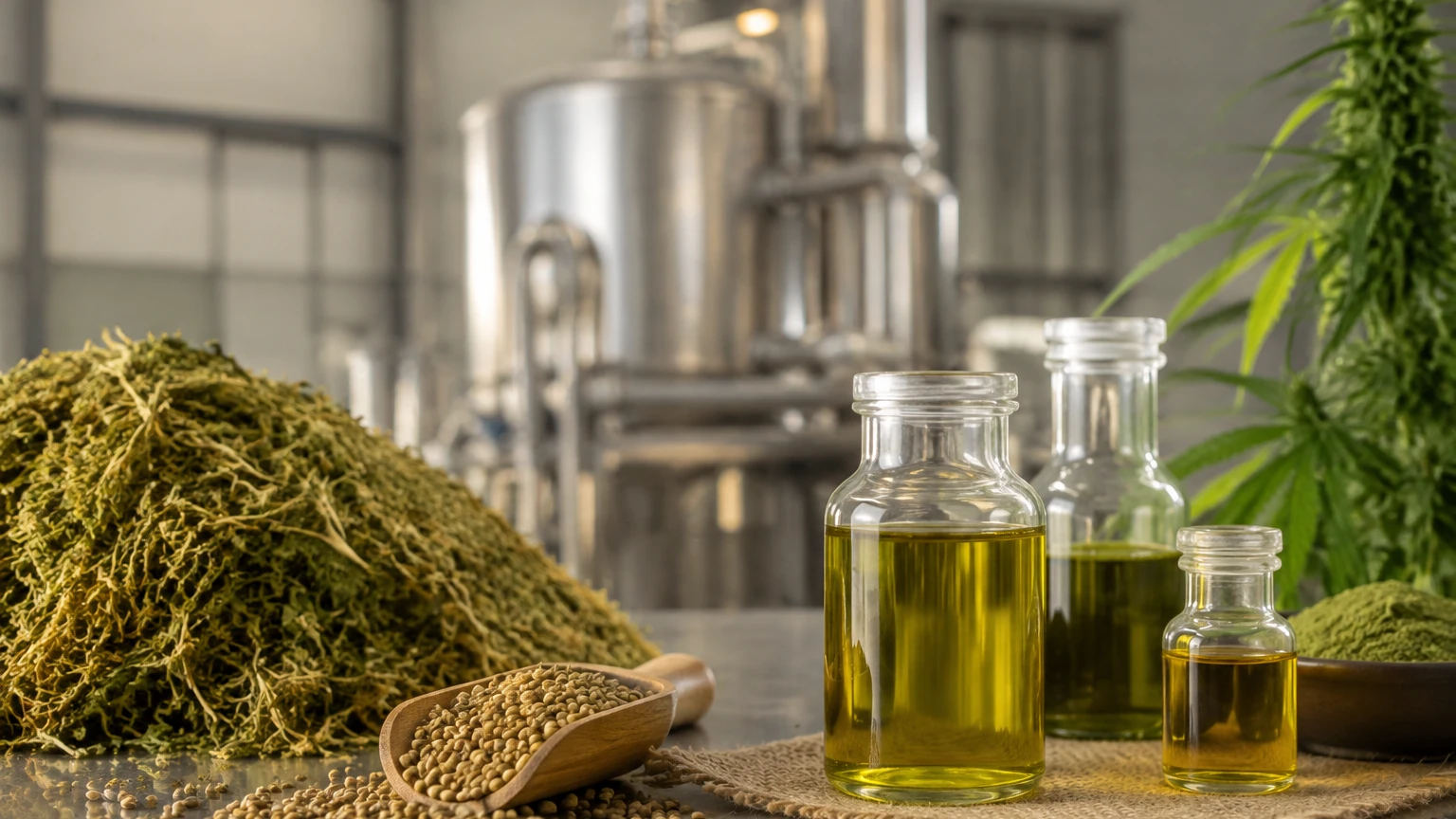
Industrial hemp extraction is a sophisticated process designed to isolate valuable compounds—such as cannabidiol (CBD), terpenes, and minor cannabinoids—from the raw biomass of the *Cannabis sativa* plant. As the global demand for high-purity hemp derivatives grows in the pharmaceutical, cosmetic, and food industries, the scale of production has shifted from laboratory-scale experiments to large-scale industrial facilities.
In these industrial environments, the efficiency and safety of the extraction process depend heavily on precise process control. Level measurement is a critical component of this control, ensuring that solvent tanks, extraction vessels, and storage containers are monitored accurately to prevent overflows, dry runs, and inconsistent batch quality. This guide examines the technical requirements of industrial hemp extraction and the instrumentation necessary to maintain operational excellence.
The Role of Level Measurement in Industrial Hemp Extraction
In a typical industrial hemp extraction facility, fluids move through several stages: solvent storage, primary extraction, filtration, evaporation (solvent recovery), and final product storage. Each stage presents unique challenges for level instrumentation.
1. Solvent Management: Whether using ethanol, CO2, or hydrocarbons (like butane or propane), solvents must be stored in bulk. Accurate level monitoring ensures a steady supply for the extraction line and prevents hazardous overfilling.
2. Extraction Vessels: During the primary extraction phase, biomass is submerged in a solvent. Level sensors must account for the presence of solids (hemp material) and the fluctuating density of the liquid as it becomes saturated with oils.
3. Solvent Recovery: Evaporators and decarboxylation reactors operate at high temperatures and often under vacuum. Level sensors here must withstand these conditions to control the rate of solvent removal.
For engineers designing these systems, reviewing product options and application support on the Welk Main Page provides a foundation for selecting the right instrumentation for these high-stakes environments.
Measurement Principles for Extraction Environments
Before selecting a sensor, it is essential to understand the physics behind the most common level measurement technologies used in industrial hemp extraction.
Radar Level Measurement (ToF)
Radar level meters operate on the Time-of-Flight (ToF) principle. The sensor emits high-frequency microwave pulses (typically in the 26 GHz or 80 GHz range) that travel to the surface of the liquid and reflect back to the receiver. The distance is calculated based on the time it takes for the signal to return.
* Advantages: Non-contact measurement, unaffected by vapor, pressure, or temperature changes. 80 GHz radar, in particular, offers a narrow beam angle, which is ideal for small extraction vessels with internal agitators or baffles.
* Suitability: Excellent for solvent tanks and reactors where high precision is required.
Ultrasonic Level Measurement
Ultrasonic sensors emit sound waves that bounce off the liquid surface. The sensor measures the time interval between the emission and the return of the echo.
* Advantages: Cost-effective and easy to install for non-hazardous, water-based processes.
* Limitations: In industrial hemp extraction, ultrasonic sensors are often limited by the presence of solvent vapors. Because sound travels through the air/vapor space, changes in vapor density can significantly alter the speed of sound, leading to measurement errors.
Hydrostatic Level Measurement
This method measures the pressure exerted by a liquid column at the bottom of a tank. Since pressure is proportional to the height of the liquid and its density, the level can be calculated accurately if the density remains constant.
* Advantages: Simple and reliable for vented tanks.
* Limitations: If the solvent density changes (e.g., as it becomes more concentrated with hemp oils), the sensor must be recalibrated, or a differential pressure setup must be used.
Selection Criteria for Level Instruments
When specifying level meters for industrial hemp extraction, several technical factors must be evaluated to ensure longevity and safety.
Solvent Compatibility and Material Construction
Extraction processes frequently use ethanol or hydrocarbons. All wetted parts of the level sensor—such as the flange, antenna, or diaphragm—must be chemically resistant. 316L stainless steel is the industry standard, often paired with PTFE (Teflon) or PEEK for seals and antennas to ensure no leaching or corrosion occurs.
Hazardous Area Classifications
Due to the flammable nature of the solvents used in industrial hemp extraction, most extraction rooms are classified as hazardous areas (e.g., Class I, Division 1 or 2; ATEX Zone 0, 1, or 2). Level sensors must be intrinsically safe or explosion-proof to meet local fire and safety codes.
Temperature and Pressure Extremes
* Cryogenic Ethanol Extraction: Often performed at temperatures as low as -40°C to -80°C to prevent the extraction of unwanted waxes and chlorophyll.
* CO2 Extraction: Operates at high pressures, sometimes exceeding 70 bar (1,015 psi).
Instrumentation must be rated for these specific ranges to prevent seal failure or electronic malfunction.
Practical Selection Table for Level Instrumentation
| Technology | Best Use Case | Accuracy | Chemical Resistance | Pressure/Temp Handling |
| :— | :— | :— | :— | :— |
| 80 GHz Radar | Reactor vessels, volatile solvents | ±1 mm | Excellent (PTFE/316L) | High (up to 40 bar / 200°C) |
| Ultrasonic | Water treatment, non-volatile storage | ±0.25% of range | Good (Plastic/PVDF) | Low (Atmospheric) |
| Hydrostatic | Bulk solvent storage (vented) | ±0.1% to 0.5% | Excellent (Stainless) | Moderate |
| Magnetic Gauge | Visual bypass for large tanks | ±5 mm | Excellent | High |
Installation Considerations and Best Practices
Proper installation is as important as selecting the right technology. For industrial hemp extraction systems, consider the following:
1. Nozzle Geometry: For radar sensors, ensure the nozzle height and diameter do not interfere with the microwave beam. A tall, narrow nozzle can cause "ringing" or false echoes if not properly configured.
2. Agitator Interference: Many extraction reactors use internal mixers. Radar sensors should be mounted in a position where the beam avoids the path of the blades, or software-based "false echo suppression" should be used to ignore the moving parts.
3. Vapor and Condensation: In solvent recovery, condensation can build up on the sensor face. Choosing a radar sensor with a drip-off antenna design or a PTFE lens can prevent signal attenuation caused by droplets.
4. Mounting Location: Avoid mounting sensors directly above the fill inlet. The turbulence and splashing from incoming liquid can cause erratic readings and physical wear on the sensor.
Limitations and Process Challenges
Despite the advanced technology available, certain conditions in industrial hemp extraction can challenge even the best sensors:
* Foaming: During evaporation or decarboxylation, the hemp extract may foam. High-frequency radar can sometimes penetrate thin foam, but thick, dense foam may reflect the signal prematurely. In these cases, a guided wave radar (GWR) or a mechanical float-based system may be more reliable.
* Coating and Build-up: Hemp resins are incredibly sticky. If the resin coats a non-contact sensor's lens, it may eventually degrade the signal. Regular maintenance or the use of air purging systems can mitigate this risk.
* Vacuum Conditions: In solvent recovery, systems operate under vacuum. Ensure that hydrostatic sensors are of the absolute pressure type or that differential pressure transmitters are used to compensate for the vacuum pressure above the liquid.
Frequently Asked Questions (FAQs)
Q: Can I use a single level sensor for both ethanol and CO2 extraction?
A: Generally, no. The physical requirements—specifically the pressure ratings—are vastly different. CO2 extraction requires high-pressure rated flanges and sensors, whereas ethanol extraction focuses more on chemical compatibility and low-temperature performance.
Q: How often should level sensors in a hemp facility be calibrated?
A: For critical process tanks, an annual calibration check is recommended. However, if the density of the hemp-oil-and-solvent mixture changes significantly between batches, hydrostatic sensors may require more frequent zero-point adjustments.
Q: Is non-contact radar better than guided wave radar for extraction?
A: Non-contact radar is often preferred because it is easier to clean (CIP/SIP compliant) and does not have a probe that can be damaged by agitators. However, guided wave radar is superior if there is heavy foam or if the tank has a very low dielectric constant.
Summary of Engineering Best Practices
Successful industrial hemp extraction requires a rigorous approach to process instrumentation. By prioritizing chemical compatibility, hazardous area safety, and the physical principles of measurement, operators can ensure high yields and consistent product quality.
For engineers and facility managers looking to optimize their level control systems, it is vital to consult with manufacturers who understand the nuances of industrial automation. Detailed technical specifications and robust sensor options can be explored on the Welk Main Page, ensuring that every vessel in the extraction line—from the largest solvent silo to the smallest recovery flask—is monitored with precision and reliability.