Wireless Level Transmitter
Wireless Level Transmitter
In the landscape of modern industrial automation, the wireless level transmitter has emerged as a pivotal solution for monitoring liquid and solid levels in environments where traditional cabling is either cost-prohibitive or physically impossible. By eliminating the need for extensive signal wiring and power infrastructure, these devices facilitate rapid deployment and scalable data acquisition for sectors ranging from municipal water treatment to remote oil and gas storage. This guide provides a technical overview of wireless level measurement technologies, their operating principles, and the criteria necessary for selecting the appropriate system for industrial applications.
Understanding the Wireless Level Transmitter
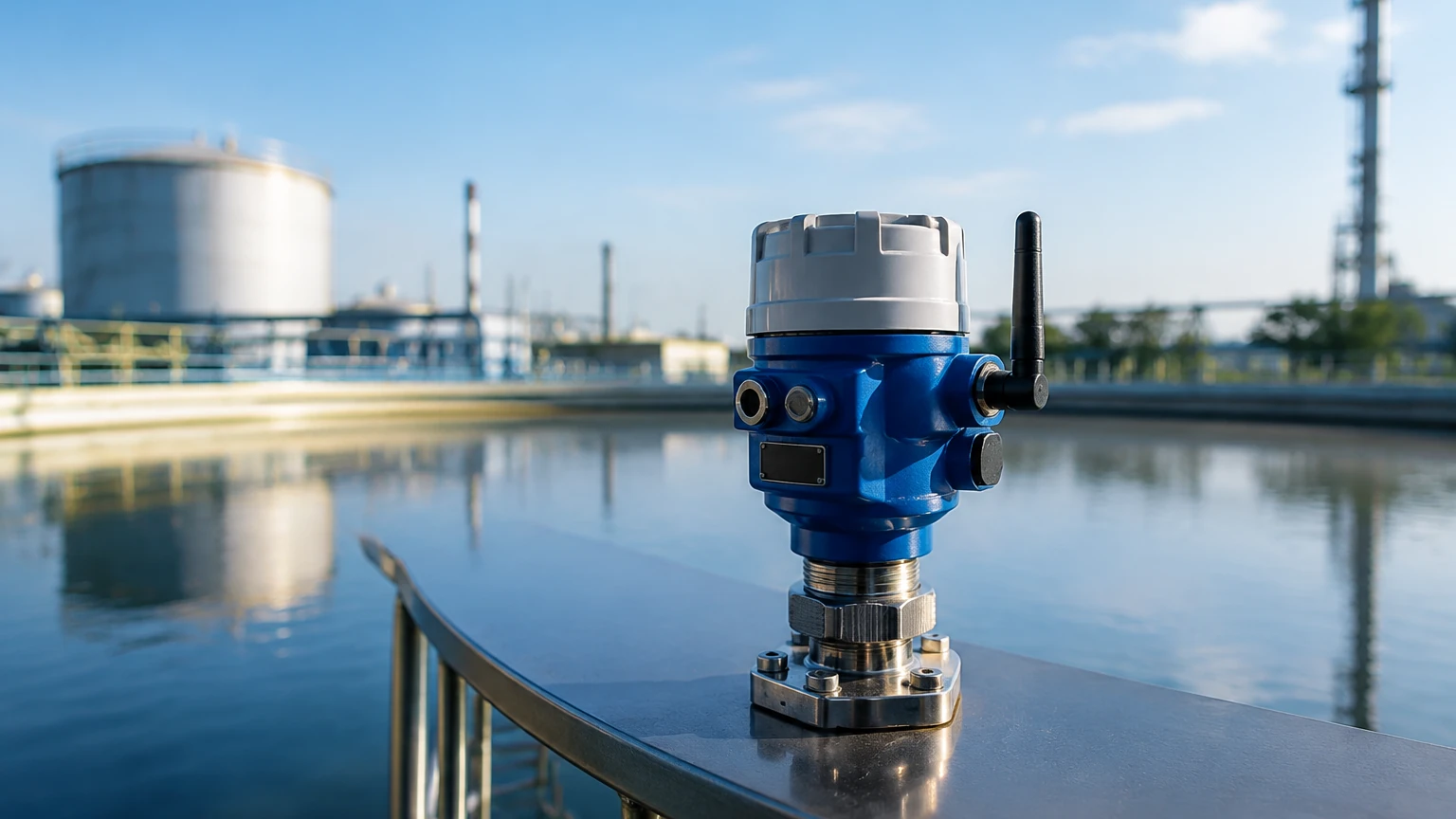
A wireless level transmitter is an integrated instrument that combines a level-sensing element (such as radar, ultrasonic, or pressure sensors) with a wireless communication module and an autonomous power source, typically a high-capacity lithium battery or a solar-rechargeable system.
Unlike traditional 4-20mA or Modbus-wired sensors, a wireless level transmitter transmits data via radio frequency (RF) to a gateway or base station. This architecture is particularly beneficial for "brownfield" projects where adding new cable trays and conduit to an existing facility is logistically complex. Furthermore, in remote monitoring scenarios—such as river level monitoring or distributed tank farms—the cost savings associated with removing trenching and wiring can exceed 60% of the total project expenditure.
Core Measurement Principles in Wireless Systems
Before selecting a wireless communication protocol, it is essential to understand the underlying measurement physics. The most common sensing technologies integrated into wireless platforms include radar, ultrasonic, and hydrostatic pressure.
Radar Level Measurement (ToF)
Radar level transmitters utilize Time of Flight (ToF) technology. The device emits high-frequency microwave pulses (typically in the 26GHz or 80GHz range). These pulses reflect off the surface of the medium and return to the sensor. The distance is calculated based on the time interval between emission and reception.
- Advantages: Unaffected by temperature, pressure, or dust. High precision (up to ±2mm).
- Wireless Integration: Modern 80GHz radar sensors have significantly reduced power consumption, making them compatible with battery-powered wireless modules.
Ultrasonic Level Measurement
Ultrasonic sensors emit acoustic pressure waves. The time taken for the echo to return from the surface is used to determine the level.
- Advantages: Non-contact and cost-effective for water-based liquids.
- Limitations: Sensitive to surface foam, heavy vapors, and extreme temperature fluctuations, which affect the speed of sound. In wireless configurations, temperature compensation algorithms are critical to maintaining accuracy.
Hydrostatic Level Measurement
Hydrostatic transmitters measure the pressure exerted by a liquid column. The pressure is proportional to the height of the liquid based on its density.
- Advantages: Ideal for deep wells, vented tanks, and submersible applications.
- Wireless Integration: These are often paired with a wireless node located at the top of the well or tank, connected via a vented cable to the submerged probe.
For a detailed comparison of these sensing elements and to explore specific hardware configurations, engineers should refer to the Main Page for technical specifications and application support.
Wireless Communication Protocols and Standards
The choice of wireless protocol determines the range, battery life, and data update frequency of the wireless level transmitter. The following are the most prevalent standards in industrial environments:
1. LoRaWAN (Long Range Wide Area Network)
LoRaWAN is a low-power, wide-area network protocol designed for battery-operated things. It offers an exceptional range—up to 15 km (9.3 miles) in rural areas and 2-5 km (1.2-3.1 miles) in dense industrial zones.
- Best for: Remote tank monitoring, environmental sensing.
- Battery Life: Can last 5-10 years depending on the transmission interval.
2. NB-IoT (Narrowband Internet of Things)
NB-IoT is a cellular-based protocol that utilizes existing mobile networks. It provides excellent penetration through walls and underground structures.
- Best for: Urban infrastructure, smart cities, and locations with existing cellular coverage.
- Requirement: Requires a SIM card and a subscription to a telecom provider.
3. WirelessHART and ISA100.11a
These are mesh-networking protocols specifically designed for process automation. Each wireless level transmitter can act as a repeater, passing data from other sensors to the gateway.
- Best for: Dense chemical plants or refineries where high reliability and data security are paramount.
- Reliability: Self-healing mesh networks ensure data reaches the gateway even if one path is obstructed.
Technical Selection Criteria for Industrial Applications
Selecting a wireless level transmitter requires balancing the physical properties of the media with the constraints of the wireless environment. Engineers should confirm the following parameters:
1. Media Characteristics: Is the material liquid, slurry, or solid? For corrosive chemicals, a non-contact radar with a PTFE-coated antenna is preferred. For clean water, ultrasonic or hydrostatic sensors are often sufficient.
2. Update Interval: Wireless devices save power by "sleeping" between measurements. If the process level changes rapidly (e.g., a small buffer tank), a high update frequency is needed, which will reduce battery life. For bulk storage, an update every 15 to 60 minutes is usually adequate.
3. Transmission Distance and Obstructions: Evaluate the Line of Sight (LOS) between the transmitter and the gateway. Heavy steel structures and concrete walls attenuate RF signals. In such cases, high-gain antennas or mesh-capable transmitters may be required.
4. Hazardous Area Certification: Many industrial sites require ATEX, IECEx, or UL Class I Div 1 certifications. Ensure the entire wireless assembly, including the battery pack, meets the site's safety ratings.
Comparison Table: Wireless Level Sensing Technologies
| Technology | Typical Range (Sensing) | Accuracy | Best Application | Power Consumption |
| :— | :— | :— | :— | :— |
| 80GHz Radar | 0.1m – 30m (4" – 98') | ±2mm | Corrosive liquids, solids, high-precision storage | Moderate (Optimized) |
| Ultrasonic | 0.3m – 15m (1' – 49') | ±0.25% FS | Water tanks, open channels, sumps | Low |
| Hydrostatic | 1m – 200m (3.2' – 656') | ±0.5% FS | Deep wells, lift stations, fuel tanks | Low |
| Laser | 0.1m – 50m (4" – 164') | ±10mm | Narrow silos, non-reflective solids | High |
Installation and Commissioning Best Practices
Successful deployment of a wireless level transmitter depends heavily on proper physical installation and network configuration.
Antenna Placement and Fresnel Zone
To ensure a stable wireless link, the antenna should be mounted as high as possible, away from large metal surfaces that cause signal reflection. Engineers must consider the "Fresnel Zone"—an elliptical area around the line of sight between the transmitter and receiver. Obstructions within this zone can cause phase shifts and signal cancellation, even if the direct line of sight is clear.
Mounting Considerations
- Radar/Ultrasonic: Must be mounted perpendicular to the liquid surface. Avoid mounting near the tank wall or near the fill inlet to prevent false echoes from internal structures or turbulent inflow.
- Hydrostatic: Ensure the sensor is not resting in the silt or sludge at the bottom of a tank. Use a protective cage or stilling well if high turbulence is present.
Power Management
Before deployment, calculate the expected battery life based on the intended reporting interval. Most manufacturers provide software tools to estimate longevity. If the application requires 1-minute updates, consider an external solar panel kit to augment the internal battery.
Limitations and Operational Risks
While highly versatile, wireless level transmitters are not suitable for every application. Engineers must be aware of the following risks:
* Latency: Wireless systems are inherently slower than wired systems. They are generally unsuitable for high-speed safety instrumented systems (SIS) or rapid-response pump control loops where millisecond latency is required.
* Signal Interference: The 2.4GHz ISM band (used by some proprietary wireless protocols) is crowded with Wi-Fi and Bluetooth signals. Using sub-GHz frequencies like LoRa (868/915 MHz) can mitigate this risk.
* Cybersecurity: Wireless transmissions must be encrypted (e.g., AES-128) to prevent unauthorized data interception or spoofing. Ensure the chosen gateway supports robust security protocols.
* Maintenance Cycles: Unlike wired sensors that draw power from a loop, wireless sensors require battery replacements. This introduces a long-term maintenance task that must be logged and scheduled.
Frequently Asked Questions (FAQs)
Q: Can a wireless level transmitter be used in pressurized tanks?
A: Yes, specifically radar transmitters. Since radar uses electromagnetic waves, it can penetrate non-metallic sight glasses or be mounted on high-pressure nozzles. However, the wireless electronics housing must be rated for the external environment.
Q: How do I handle signal loss if a new building is constructed between the sensor and the gateway?
A: If using a mesh network (WirelessHART), adding an intermediate wireless node can reroute the signal. For point-to-point systems like LoRaWAN, you may need to relocate the gateway or use a higher-gain directional antenna.
Q: Is it possible to integrate wireless data into an existing PLC/SCADA system?
A: Yes. Most wireless gateways output data via standard industrial protocols such as Modbus TCP/IP, EtherNet/IP, or OPC UA, allowing seamless integration into existing control architectures.
Conclusion
The implementation of a wireless level transmitter offers a strategic advantage for industrial facilities looking to enhance their data visibility without the prohibitive costs of traditional wiring. By understanding the physics of the measurement—whether radar, ultrasonic, or hydrostatic—and matching it with a robust wireless protocol like LoRaWAN or WirelessHART, organizations can achieve reliable, long-term monitoring in diverse environments.
For technical assistance in selecting the right sensor and wireless configuration for your specific project, you can Review product options and application support on our main site. Proper planning regarding signal propagation, battery life, and hazardous area requirements will ensure a successful and low-maintenance installation.