Remote Monitoring Tank Level Software
Remote Monitoring Tank Level Software
In modern industrial environments, the transition from manual tank gauging to automated systems is no longer a luxury but a necessity for operational efficiency and safety. Remote monitoring tank level software serves as the central intelligence hub, aggregating data from field sensors to provide real-time visibility into inventory, process status, and potential hazards. For engineers and facility managers, selecting the right software involves understanding the underlying physics of level measurement and how that data is translated into actionable insights.
Welk, as a professional manufacturer of industrial level measurement instruments, provides the hardware foundation—including radar, ultrasonic, and hydrostatic sensors—that feeds these software systems. This guide explores the technical requirements, measurement principles, and selection criteria for implementing a robust remote monitoring solution.
Fundamental Measurement Principles for Remote Systems
Before deploying remote monitoring tank level software, it is essential to understand how data is generated at the source. The accuracy of the software is directly dependent on the measurement principle of the sensor installed on the tank. There are four primary technologies used in industrial level monitoring:
1. Radar Level Measurement (Non-Contact)
Radar level meters, such as those produced by Welk, operate on the Time-of-Flight (ToF) principle. The sensor emits high-frequency microwave pulses (typically at 26 GHz or 80 GHz). These pulses reflect off the surface of the medium and return to the antenna. The software calculates the distance based on the time interval between emission and reception.
* 80 GHz Radar: Offers a narrow beam angle, making it ideal for tanks with internal obstructions or narrow nozzles. It provides high precision (up to ±2 mm) and is unaffected by temperature, pressure, or dust.
* 26 GHz Radar: A versatile option for standard industrial liquid and solid storage, offering a balance between cost and performance.
2. Ultrasonic Level Measurement (Non-Contact)
Ultrasonic sensors emit high-frequency sound waves. Like radar, they use the ToF principle but rely on sound instead of electromagnetic waves. While cost-effective, ultrasonic measurement is sensitive to air temperature, foam, and heavy vapors. Software integration for ultrasonic sensors often requires temperature compensation algorithms to maintain accuracy.
3. Hydrostatic Level Measurement (Contact)
Hydrostatic transmitters measure the pressure exerted by the liquid column. The principle is based on the formula: $P = \rho \cdot g \cdot h$, where $P$ is pressure, $\rho$ is density, $g$ is gravity, and $h$ is the height of the liquid. These sensors are ideal for deep wells, open reservoirs, and vented tanks. The software must be calibrated to the specific gravity of the liquid to ensure accurate height conversion.
4. Magnetic Level Gauges and Switches
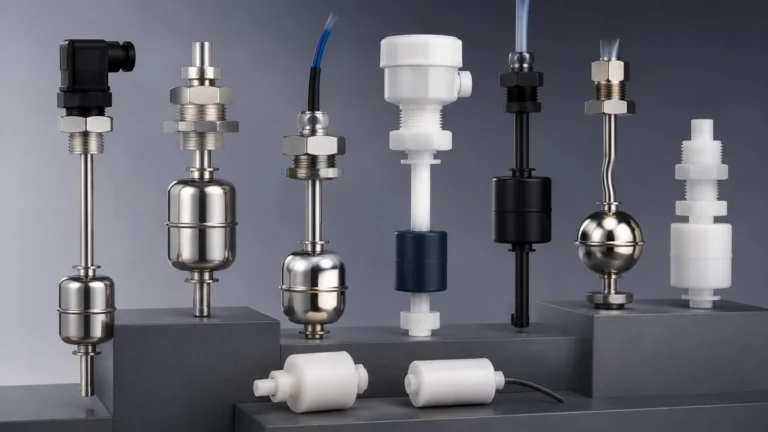
For high-pressure or high-temperature applications where visual confirmation is required alongside digital data, magnetic level gauges are used. A float containing a magnet moves with the liquid level, actuating a series of reed switches or a continuous transmitter (typically 4-20mA) that sends data to the remote software.
The Role of Remote Monitoring Tank Level Software
Remote monitoring tank level software acts as the interface between the physical sensor and the end-user. Its primary functions include:
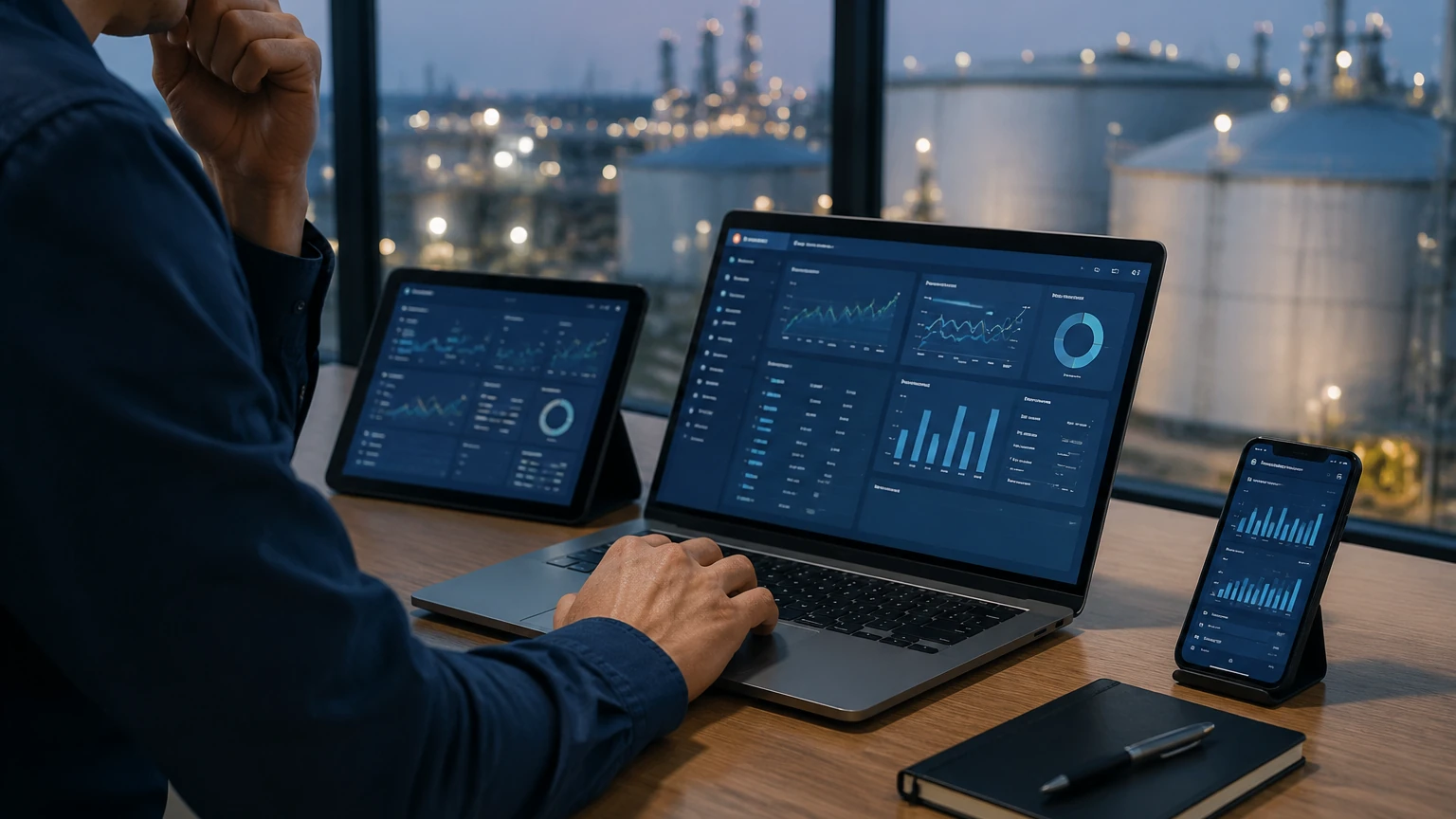
* Data Acquisition and Visualization: The software converts raw signals (4-20mA, RS485, or HART) into digital units (meters, liters, or percentage). It provides a graphical dashboard showing real-time levels across multiple sites.
* Historical Logging and Trend Analysis: By storing data over time, the software allows engineers to analyze consumption patterns, detect slow leaks, and optimize supply chain logistics.
* Alarm Management: Users can configure high-level and low-level alerts. When a threshold is crossed, the software triggers notifications via SMS, email, or localized sirens to prevent overflows or dry-run conditions.
* Inventory Management: For B2B operations, the software can calculate the volume of complex tank shapes (e.g., horizontal cylindrical tanks with dished ends) and convert levels into mass or volume based on lookup tables.
Technical Selection and Compatibility Matrix
Choosing the right combination of sensor and software depends on the medium, the environment, and the required communication protocol. The following table provides a practical reference for selection.
| Feature | Radar (80 GHz) | Ultrasonic | Hydrostatic | Magnetic Gauge |
| :— | :— | :— | :— | :— |
| Accuracy | ±2 mm | ±0.25% of range | ±0.5% of span | ±5 mm to ±10 mm |
| Max Range | 120 meters (393 ft) | 20 meters (65 ft) | 200 meters (656 ft) | 6 meters (20 ft) |
| Medium Types | Liquids, Solids, Corrosives | Clean liquids, Sludge | Water, Oil, Chemicals | High-temp/High-pressure |
| Software Connectivity | HART, Modbus, 4-20mA | RS485, 4-20mA | 4-20mA, LoRaWAN | 4-20mA, Reed Switch |
| Best Application | Chemical reactors, Silos | Water treatment tanks | Deep wells, Fuel tanks | Boiler drums, LPG tanks |
Key Features of Remote Monitoring Tank Level Software
When evaluating software solutions, industrial users should prioritize the following technical capabilities:
Multi-Protocol Support
Industrial sites often use a mix of legacy and modern equipment. The software should support various communication protocols such as Modbus RTU/TCP, MQTT for IoT applications, and HART for advanced diagnostics. This ensures that a Welk radar meter can coexist with other instrumentation on the same dashboard.
Scalability and Cloud Integration
For enterprises with multiple locations, cloud-based remote monitoring tank level software allows for centralized management. Whether monitoring ten tanks or a thousand, the software architecture must support horizontal scaling without significant latency increases.
Cybersecurity and Data Integrity
In B2B environments, data security is paramount. Software should feature end-to-end encryption (TLS/SSL), multi-factor authentication (MFA), and role-based access control (RBAC) to prevent unauthorized access to critical process data.
API and Third-Party Integration
To maximize the value of level data, the software should offer API access (RESTful APIs) to push data into ERP systems like SAP or Oracle. This enables automated reordering of chemicals or fuels when levels drop below a certain threshold.
Installation and Connectivity Considerations
The physical installation of the sensors and the setup of the communication gateway are critical for software performance.
1. Signal Transmission: In remote areas where wiring is impractical, wireless gateways (4G/5G or LoRaWAN) are used to transmit data from the sensor to the software. For local plant monitoring, RS485 (Modbus) is often preferred for its robustness against electromagnetic interference.
2. Power Supply: Sensors in remote locations may rely on battery or solar power. The software should include features to monitor the battery health of the field devices to prevent data gaps.
3. Sensor Positioning: For non-contact sensors like radar or ultrasonic, the software will only be as accurate as the installation. Sensors must be mounted away from the tank wall and filling inlets to avoid false echoes. Welk's radar meters often include "false echo suppression" features that can be configured via the software interface to ignore internal tank structures.
4. Environmental Protection: In chemical or oil and gas applications, sensors must meet specific ATEX or IECEx ratings. The software should be configured to handle the specific safety parameters of these environments.
Limitations and Operational Risks
While remote monitoring tank level software significantly improves oversight, users must be aware of its limitations:
* Connectivity Latency: In wireless setups, there is a delay between the physical level change and the software update. This makes remote software less suitable for high-speed emergency shutdown (ESD) loops, which should remain hard-wired.
* Medium Changes: If the dielectric constant (for radar) or density (for hydrostatic) of the liquid changes significantly without updating the software parameters, the readings will become inaccurate.
* Environmental Interference: Heavy foam can absorb ultrasonic and radar signals, leading to a "loss of echo." Advanced software filtering can mitigate this, but it remains a physical constraint of the technology.
Frequently Asked Questions (FAQ)
Q: Can I use the same software for both liquids and solids?
A: Yes, provided the sensors feeding the software are appropriate for the medium. Radar is generally preferred for solids due to its ability to handle dust and uneven surfaces.
Q: How often does the software update the level reading?
A: This depends on the configuration. For wired Modbus systems, updates can be sub-second. For battery-powered IoT systems, updates are typically scheduled every 15 to 60 minutes to conserve power.
Q: Is it possible to monitor tanks in underground locations?
A: Yes. Hydrostatic transmitters are commonly used for underground tanks. If wireless transmission is needed, an external antenna or a gateway placed above ground is required to maintain a signal to the software.
Q: Does the software calculate volume for non-standard tank shapes?
A: Most professional-grade software includes a "strapping table" or volume calculation tool where you can input tank dimensions and geometry to get accurate volume readings.
Conclusion
Implementing a remote monitoring system requires a synergy between high-quality field instrumentation and intelligent software. By understanding the measurement principles of radar, ultrasonic, and hydrostatic sensors, and ensuring the software meets the necessary connectivity and security standards, industrial operators can achieve unprecedented levels of process control.
For a comprehensive overview of available hardware and software solutions, visit the Main Page of our product catalog. Welk continues to provide reliable, accurate, and cost-effective level measurement solutions, supported by advanced technology and customized OEM/ODM services to meet the specific needs of water treatment, chemical, and oil and gas industries worldwide.