Ultrasonic Liquid Level Sensors
Ultrasonic Liquid Level Sensors
Ultrasonic liquid level sensors represent a critical technology in modern industrial process control, offering a non-contact method for monitoring fluid volumes in tanks, pits, and open channels. As industries move toward greater automation and more stringent safety standards, the demand for reliable, maintenance-free measurement solutions has positioned ultrasonic technology as a preferred choice for a wide range of applications, from water treatment to chemical processing.
This guide provides a technical overview of how ultrasonic liquid level sensors function, their selection criteria, installation best practices, and the environmental factors that influence their performance. For engineers and procurement professionals, understanding these parameters is essential for ensuring long-term accuracy and operational efficiency. For a comprehensive look at available instrumentation, users can refer to the Main Page of Welk's product catalog.
Measurement Principle: How Ultrasonic Technology Works
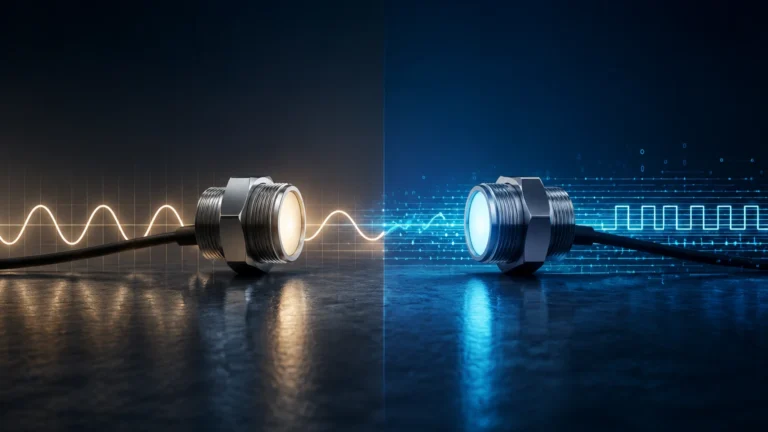
The operation of ultrasonic liquid level sensors is based on the "Time of Flight" (ToF) principle. The sensor, typically mounted at the top of a vessel, contains a piezoelectric transducer that converts electrical energy into mechanical vibrations. These vibrations generate high-frequency sound waves—usually in the range of 20 kHz to 200 kHz—which are directed downward toward the liquid surface.
The Pulse-Echo Cycle
1. Emission: The sensor emits a short burst of ultrasonic pulses.
2. Propagation: The sound waves travel through the air or gas space (ullage) toward the target liquid.
3. Reflection: Upon hitting the liquid surface, a portion of the sound energy is reflected back toward the sensor as an echo.
4. Detection: The transducer receives the returning echo and converts it back into an electrical signal.
5. Calculation: The internal microprocessor measures the time interval between the emission of the pulse and the reception of the echo.
The distance from the sensor to the liquid surface is calculated using the formula:
Distance = (Speed of Sound × Time) / 2
Since the height of the tank (the distance from the sensor to the bottom) is a known constant, the sensor subtracts the measured distance to the liquid from the total tank height to determine the actual liquid level or volume.
The Role of Temperature Compensation
The speed of sound is not constant; it varies based on the temperature of the medium through which it travels (typically air). In air, the speed of sound changes by approximately 0.17% per degree Celsius. To maintain accuracy, high-quality ultrasonic liquid level sensors include an integrated temperature sensor to provide real-time compensation for these fluctuations. Without this feature, a temperature shift of 20°C could result in a measurement error of over 3%.
Key Advantages of Ultrasonic Measurement
* Non-Contact Nature: Because the sensor never touches the liquid, it is not subject to corrosion, coating, or fouling by the process medium. This makes it ideal for acids, wastewater, and slurries.
* No Moving Parts: Unlike float switches or mechanical gauges, ultrasonic sensors have no components that wear out or jam, significantly reducing maintenance requirements.
* High Accuracy: Modern digital processing allows for accuracies typically ranging from 0.25% to 0.5% of the measured span.
* Versatility: These sensors can be used for both liquid level measurement and volume calculation in tanks of various shapes, as well as flow measurement in open channels (using flumes or weirs).
Technical Selection Criteria
Choosing the right sensor requires a detailed analysis of the process environment. Engineers must evaluate the following factors to ensure the selected instrument meets the application's demands.
1. Measuring Range
Ultrasonic sensors are available in various ranges, typically from 0.1 meters (4 inches) up to 30 meters (98 feet). It is vital to select a sensor with a range that covers the maximum depth of the tank while accounting for the "dead zone."
2. The Dead Zone (Blocking Distance)
The dead zone is a small area directly beneath the transducer face where the sensor cannot accurately measure. This occurs because the transducer cannot switch from "transmit" to "receive" mode instantaneously. If the liquid level enters this zone, the sensor will provide erratic readings or a "lost echo" error. Typical dead zones range from 0.2m to 0.6m (8 to 24 inches) depending on the frequency of the sensor.
3. Chemical Compatibility
While the measurement is non-contact, the transducer face and housing are exposed to the tank's atmosphere, which may contain corrosive vapors. Standard housings are often made of ABS or PVC, but for aggressive chemical environments, PVDF (Polyvinylidene Fluoride) or PTFE (Teflon) coated transducers are required.
4. Output and Communication
Industrial integration requires specific output signals. Common options include:
* 4-20 mA Analog: The industry standard for PLC and DCS integration.
* HART Protocol: Allows for digital communication over the analog loop for remote configuration.
* RS485/Modbus: Ideal for networking multiple sensors over long distances.
Selection Table: Typical Specifications
| Feature | Standard Industrial | Long-Range / Heavy Duty | Chemical Resistant |
| :— | :— | :— | :— |
| Range | 0.4m – 10m | 0.6m – 30m | 0.25m – 8m |
| Dead Zone | 0.3m – 0.4m | 0.6m – 0.8m | 0.25m |
| Accuracy | ±0.25% of range | ±0.5% of range | ±0.2% of range |
| Housing Material | ABS / Nylon | Aluminum / Stainless Steel | PVDF / PTFE |
| Operating Temp | -20°C to +60°C | -40°C to +80°C | -30°C to +70°C |
| Output | 4-20mA / Modbus | 4-20mA / HART | 4-20mA / RS485 |
Installation Considerations and Best Practices
Correct installation is the most influential factor in the performance of ultrasonic liquid level sensors. Even the most advanced sensor will fail if it is poorly positioned.
Mounting Position
* Perpendicularity: The sensor must be mounted perfectly perpendicular to the liquid surface. If the sensor is tilted, the sound waves will reflect away from the transducer rather than back to it, resulting in a weak or lost signal.
* Avoid the Center: In cylindrical tanks with domed tops, do not mount the sensor in the exact center. This can create a "parabolic" effect that amplifies unwanted echoes. Position the sensor at 1/2 or 1/3 of the tank radius.
* Clearance from Walls: Ensure the beam angle of the sensor does not intersect with the tank wall. If the beam hits the wall, it will reflect off the rough surface or welds, causing false readings.
Avoiding Obstructions
Internal tank structures such as ladders, heating coils, agitators, or inlet pipes can interfere with the ultrasonic signal. Modern sensors often feature "False Echo Suppression" software, which allows the user to map out these fixed obstructions so the sensor ignores them. However, it is always best to choose a mounting location with a clear line of sight to the liquid.
Nozzle Design
If the sensor is mounted on a standpipe or nozzle, the diameter and height of the nozzle must be considered. If the nozzle is too narrow or too long, the ultrasonic pulse may reflect off the internal edges of the pipe before reaching the liquid. As a rule of thumb, the nozzle should be as short as possible, and the transducer face should ideally extend slightly below the bottom of the nozzle.

Limitations and Environmental Challenges
While highly versatile, ultrasonic liquid level sensors are not suitable for every environment. Understanding these limitations prevents costly misapplications.
1. Heavy Foam: Surface foam acts as an acoustic insulator, absorbing the ultrasonic pulse rather than reflecting it. If the foam is thick and dense, the sensor may lose the signal entirely. In such cases, radar or hydrostatic transmitters are better alternatives.
2. Vapor and Dust: Dense vapors (like those from boiling water or concentrated solvents) or heavy dust can change the density of the air, affecting the speed of sound and measurement accuracy. If the vapor is inconsistent, the measurement will drift.
3. Vacuum and High Pressure: Ultrasonic waves require a medium (air/gas) to travel. They cannot function in a vacuum. Furthermore, very high pressures can change the acoustic impedance of the gas, making it difficult for the transducer to couple its energy into the medium.
4. Turbulence: Violent agitation or surface waves can scatter the ultrasonic signal. While digital filtering can smooth out some of this noise, extreme turbulence may require the use of a stilling well to provide a calm surface for measurement.
Applications in Industry
Water and Wastewater Treatment
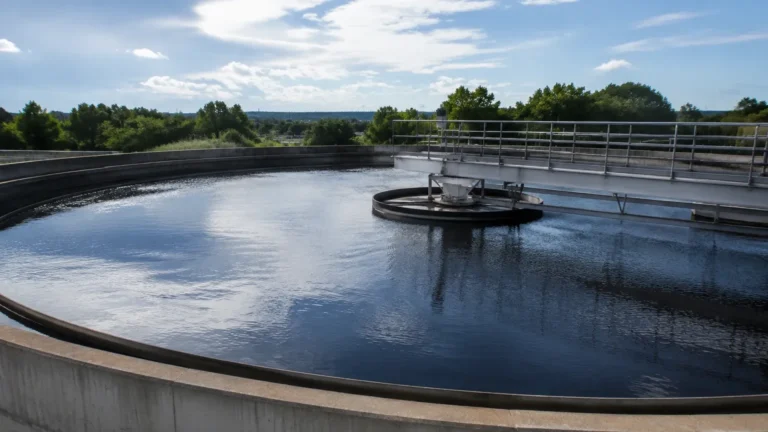
Ultrasonic liquid level sensors are the standard for monitoring water levels in reservoirs, lift stations, and chemical dosing tanks. Their ability to measure flow in open channels makes them indispensable for influent and effluent monitoring.
Chemical Processing
In the storage of acids, bases, and additives, the non-contact nature of ultrasonic sensors ensures that the instrument is not destroyed by the corrosive nature of the fluids. PVDF-housed sensors are frequently used for sulfuric acid, sodium hydroxide, and hydrochloric acid storage.
Food and Beverage
For non-hygienic storage (such as ingredient water or wastewater pits), ultrasonic sensors provide a cost-effective solution. In hygienic applications, specialized sensors with stainless steel housings and sanitary fittings are used to ensure CIP (Clean-in-Place) compatibility.
Frequently Asked Questions (FAQ)
Q: Can ultrasonic sensors measure the level of solids?
A: Yes, but with limitations. Solids (like grain, sand, or plastic pellets) do not reflect sound as efficiently as liquids. They often have an angle of repose that scatters the signal. For solids, sensors with higher power and lower frequencies are typically required.
Q: How do I handle a tank with an agitator?
A: First, try to mount the sensor away from the agitator blades. If that is not possible, use the sensor's "False Echo Suppression" or "Masking" feature to tell the sensor to ignore the echoes returning from the blades at specific distances.
Q: Does the color of the liquid affect the measurement?
A: No. Unlike optical or laser sensors, ultrasonic technology is completely unaffected by the color, transparency, or opacity of the liquid.
Q: What is the maximum temperature an ultrasonic sensor can handle?
A: Most standard industrial ultrasonic sensors are rated up to 60°C or 80°C. Beyond this, the piezoelectric crystals and internal electronics can be damaged. For higher temperatures, radar level meters are generally recommended.
Conclusion
Ultrasonic liquid level sensors provide a robust, accurate, and cost-effective solution for a vast majority of liquid level monitoring needs. By eliminating contact with the process medium, they reduce the total cost of ownership and improve system reliability. However, successful implementation depends on careful consideration of the tank geometry, the physical properties of the liquid, and the environmental conditions of the installation site.
For engineers seeking to optimize their process control systems, selecting a high-quality instrument from a reputable manufacturer is the first step. Welk offers a variety of configurations tailored to specific industrial challenges, ensuring that every application receives a precise and durable measurement solution. To explore the full range of ultrasonic, radar, and hydrostatic measurement technologies, visit the Main Page for detailed product specifications and application support.