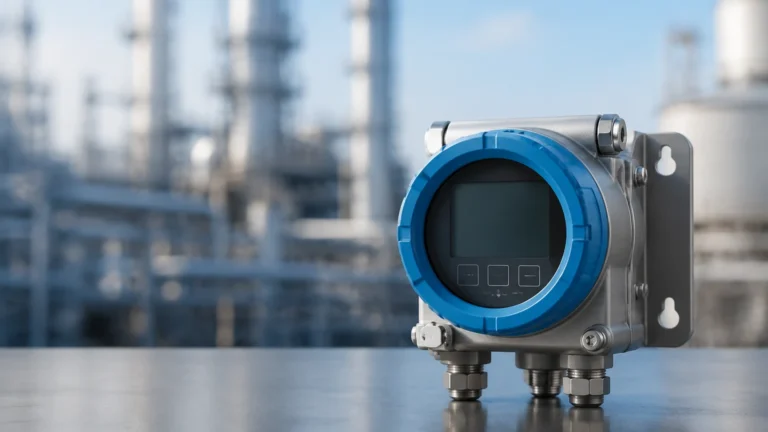
Capacitive Oil Level Sensor
Capacitive Oil Level Sensor
In the landscape of industrial automation and fluid management, the capacitive oil level sensor represents a critical tool for monitoring non-conductive liquids. Unlike water or aqueous solutions, oils possess unique electrical properties—specifically a low dielectric constant—that require specialized sensing approaches. For engineers and facility managers, selecting a capacitive oil level sensor involves understanding the intersection of fluid physics, electrode design, and the specific demands of the process environment.
Industrial applications for these sensors range from monitoring hydraulic reservoirs and fuel storage tanks to ensuring the lubrication levels in heavy machinery. By providing continuous, real-time data without the moving parts associated with mechanical floats, capacitive sensors offer high reliability and reduced maintenance requirements. This guide examines the technical foundations, selection criteria, and practical deployment of capacitive technology in oil-based systems.
Measurement Principles of Capacitive Sensing
The operation of a capacitive oil level sensor is based on the fundamental physics of a capacitor. In its simplest form, a capacitor consists of two conductive plates separated by an insulating material known as a dielectric. The ability of this setup to store an electrical charge is defined as capacitance ($C$), which is determined by the formula:
$$C = \epsilon_0 \cdot \epsilon_r \cdot \frac{A}{d}$$
Where:
* $\epsilon_0$ is the permittivity of free space.
* $\epsilon_r$ is the relative permittivity (dielectric constant) of the material between the plates.
* $A$ is the area of the plates.
* $d$ is the distance between the plates.
The Sensor as a Variable Capacitor
In industrial level measurement, the sensor probe acts as one electrode, while the tank wall (if metallic) or a secondary reference sleeve acts as the second electrode. The space between these electrodes is filled with either air (when the tank is empty) or the process oil (as the level rises).
Because air has a dielectric constant of approximately 1.0 and most industrial oils have a dielectric constant between 1.8 and 5.0, the total capacitance of the system changes as the oil displaces the air. The sensor's electronics convert this measured change in capacitance into a proportional electrical signal, typically a 4-20mA current loop or a digital output (such as RS485 or Modbus), representing the fluid level.
Sensitivity to Non-Conductive Fluids
Oils are non-conductive (insulating) fluids. This is a significant advantage for capacitive sensing because the fluid does not short-circuit the electrodes. However, because the dielectric constant of oil is relatively low compared to water (which is approximately 80), the change in capacitance per millimeter of level change is smaller. Modern sensors, such as those developed by Welk, utilize high-resolution electronics to detect these subtle shifts, ensuring accuracy even in fluids with very low permittivity.
Key Evaluation Criteria for Industrial Oil Applications
When evaluating a capacitive oil level sensor for a specific project, several technical factors must be considered to ensure long-term stability and accuracy.
Dielectric Stability
The most critical factor is the stability of the oil's dielectric constant. If the chemical composition of the oil changes—due to oxidation, heavy contamination, or the mixing of different oil grades—the sensor may report an inaccurate level because it interprets the change in permittivity as a change in height. For applications where oil properties fluctuate, sensors with built-in compensation or regular calibration intervals are required.
Temperature and Pressure
Industrial processes often involve high temperatures and pressures. Standard capacitive sensors may be rated for temperatures up to 80°C (176°F), but specialized high-temperature versions can withstand 200°C (392°F) or more. Similarly, pressure ratings must match the vessel requirements, particularly in hydraulic systems where pressures can exceed 10 MPa (1450 PSI). High temperatures can also slightly alter the dielectric constant of the oil, a factor that should be accounted for in precision applications.
Probe Construction Materials
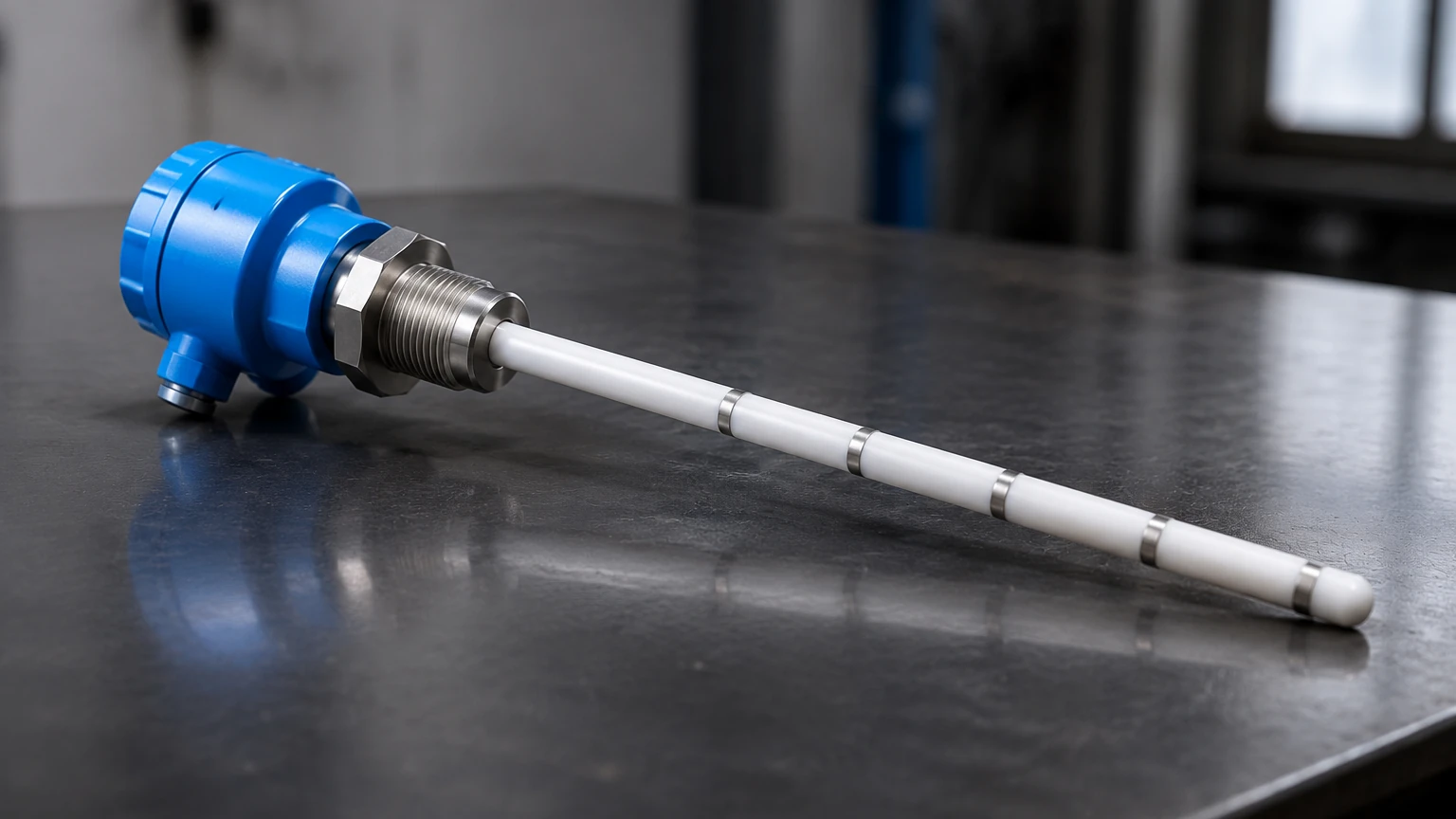
The probe must be chemically compatible with the oil. While most oils are non-corrosive to stainless steel (304 or 316L), the insulation material on the probe (usually PTFE or PFA) must be able to withstand the specific additives found in synthetic oils or fuels. For food-grade applications, the materials must meet FDA or equivalent regulatory standards.
Selection Guide and Technical Specifications
Choosing the right sensor configuration depends on the tank geometry and the fluid type. The following table provides a general reference for selecting capacitive sensor types based on common industrial scenarios.
| Application Detail | Recommended Probe Type | Key Benefit |
| :— | :— | :— |
| Metallic Tanks (Small/Medium) | Single Rod Probe | Uses tank wall as reference; cost-effective. |
| Non-Metallic/Plastic Tanks | Coaxial (Tube) Probe | Provides an internal reference electrode; independent of tank material. |
| Deep Underground Tanks | Flexible Cable Probe | Can be coiled for transport; reaches depths up to 20m (65.6 ft). |
| High Turbulence/Agitation | Coaxial Probe | The outer tube acts as a stilling well to stabilize the reading. |
| Highly Viscous/Dirty Oils | Large Diameter Rod | Minimizes the risk of oil bridging between electrodes. |
Technical Specification Checklist
* Measuring Range: From 100 mm to 3000 mm (4 in to 118 in) for rigid probes; up to 20 m (66 ft) for cable probes.
* Output Signal: 4-20mA, 0-5V, 0-10V, or RS485.
* Accuracy: Typically ±0.5% to ±1% of the full scale.
* Process Connection: Threaded (e.g., G1/2", 1" NPT) or Flanged (DN25, DN50).
* Power Supply: Standard 12-24V DC.
For more detailed technical data and customized configurations, engineers should Review product options and application support to match specific industrial requirements.
Installation Guidelines and Best Practices
Proper installation is essential for the capacitive oil level sensor to function correctly. Because the measurement relies on the electrical field between electrodes, the physical orientation and grounding of the sensor are paramount.
1. Vertical Alignment: Probes should be installed vertically. If an angled installation is unavoidable, the sensor must be calibrated in situ to account for the non-linear relationship between fluid volume and probe submergence.
2. Avoid Obstructions: The probe should be placed away from internal tank structures like ladders, agitators, or heating coils. A minimum clearance of 50 mm (2 in) from the tank wall is generally recommended for single-rod probes to avoid interference with the capacitive field.
3. Grounding: In metallic tanks, ensure a low-resistance electrical connection between the sensor housing and the tank. This establishes the tank as a stable reference ground. In plastic tanks, a coaxial probe or a dual-electrode probe must be used to provide the necessary reference.
4. Dead Zones: Be aware of the "dead zones" at the top and bottom of the probe. Typically, the sensor cannot measure the very bottom 20-50 mm (0.8-2 in) of the tank due to the mounting assembly and the insulation at the tip.
Limitations and Operational Risks
While capacitive technology is robust, it is not universal. Understanding its limitations prevents field failures.
* Moisture Contamination: Water has a dielectric constant (~80) much higher than oil (~2). If water settles at the bottom of an oil tank or becomes emulsified, a capacitive sensor will report a significantly higher level than actually exists. In systems where water ingress is common, oil-water interface sensors or desiccant breathers should be used.
* Coating and Build-up: Although capacitive sensors are better at handling coatings than some other technologies, heavy, conductive sludge build-up between the probe and the reference electrode can cause "bridging," leading to false high readings. Periodic cleaning may be necessary for heavy crude or recycled oil applications.
* Vapor Phase Interference: In high-pressure gas-blanketed tanks, the dielectric constant of the vapor space may change slightly, though this effect is usually negligible in standard oil storage.
Frequently Asked Questions (FAQs)
Q: Can a capacitive oil level sensor be used for different types of oil without recalibration?
A: Generally, no. If you switch from a light hydraulic oil ($\epsilon_r \approx 2.1$) to a heavy gear oil ($\epsilon_r \approx 3.5$), the sensor will need to be recalibrated to the new dielectric constant to maintain accuracy.
Q: What is the advantage of a capacitive sensor over an ultrasonic sensor for oil?
A: Capacitive sensors are unaffected by surface foam, heavy vapors, or vacuum conditions, all of which can interfere with ultrasonic sound waves. They are also typically more compact for small tank applications.
Q: How do I handle a tank with a non-conductive (plastic) wall?
A: Use a coaxial probe (a rod inside a tube). The outer tube serves as the ground reference, making the measurement independent of the tank material.
Q: Is the sensor safe for flammable oils like diesel or kerosene?
A: Yes, provided the sensor is certified as Intrinsically Safe (Ex ia) or Flameproof (Ex d) according to ATEX, IECEx, or local hazardous area standards.
Conclusion
The capacitive oil level sensor is a versatile and precise instrument for modern industrial fluid management. By leveraging the dielectric properties of oils, these sensors provide a solid-state solution for continuous level monitoring in diverse environments. Success in deployment relies on accurate dielectric assessment, appropriate probe selection—such as the high-performance models offered by Welk—and adherence to strict installation protocols. For professionals seeking to optimize their level measurement strategy, visiting the Main Page provides access to a comprehensive suite of industrial instruments designed for accuracy and durability in the field.