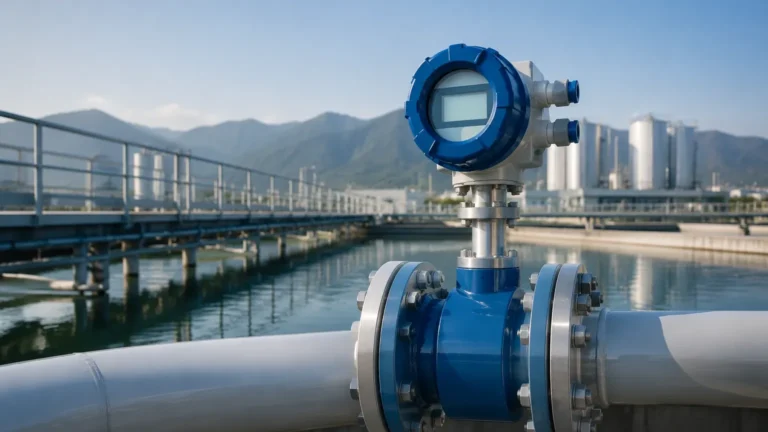
Stormwater Monitoring Equipment
Stormwater Monitoring Equipment
Effective stormwater management is a critical requirement for modern industrial facilities, municipal infrastructure, and environmental protection agencies. As urbanization increases and weather patterns become more volatile, the ability to accurately measure and record runoff levels is essential for regulatory compliance, flood prevention, and infrastructure design. Stormwater monitoring equipment encompasses a variety of sensors and data acquisition systems designed to operate in challenging outdoor environments, providing the real-time data necessary to manage peak flow events and prevent system overflows.
For engineers and facility managers, selecting the right instrumentation requires an understanding of the physical principles of measurement, the specific environmental constraints of the site, and the long-term maintenance requirements of the technology. This guide examines the primary technologies used in stormwater level and flow monitoring, providing a technical framework for equipment selection and installation.
Principles of Level Measurement in Stormwater Applications
Before selecting stormwater monitoring equipment, it is necessary to understand how different sensors interact with the water surface and the surrounding environment. In stormwater applications, level measurement is typically the primary data point, which is then used to calculate flow rates through known hydraulic structures like weirs or flumes.
Ultrasonic Level Measurement (Non-Contact)
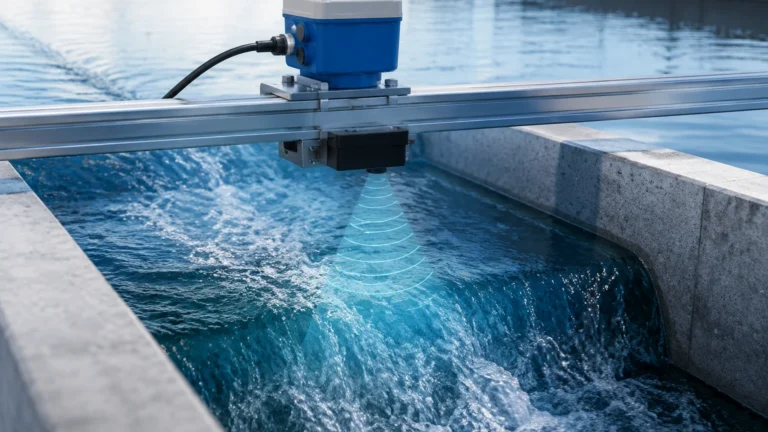
Ultrasonic sensors operate by emitting high-frequency sound pulses toward the water surface. The sensor measures the time it takes for the echo to return. Since the speed of sound in air is known (approximately 343 m/s at 20°C), the distance to the water can be calculated.
* Advantages: Non-contact measurement prevents fouling from debris or corrosive runoff. It is generally cost-effective for standard open-channel applications.
* Limitations: Because sound speed changes with air temperature, integrated temperature compensation is required. Furthermore, heavy foam, steam, or significant wind can disperse the sound waves, leading to signal loss.
Radar Level Measurement (Non-Contact)
Radar sensors utilize Frequency Modulated Continuous Wave (FMCW) or pulsed microwave technology. These sensors emit electromagnetic waves that reflect off the water surface. Unlike ultrasonic waves, microwaves are unaffected by air temperature, pressure, or vapor.
* Advantages: High precision (often within ±2 mm) and exceptional reliability in extreme weather. Radar is unaffected by wind or ambient noise, making it the preferred choice for critical flood warning systems.
* Limitations: Generally carries a higher initial investment than ultrasonic technology, though the total cost of ownership is often lower due to reduced maintenance.
Hydrostatic Pressure Measurement (Contact)
Hydrostatic transmitters are submersible sensors that measure the pressure exerted by the liquid column above them. Based on the principle that pressure is proportional to the height of the liquid (P = ρgh), these sensors provide a direct level reading.
* Advantages: Ideal for deep sumps, underground storage tanks, or locations where a clear line of sight from above is not possible. They are immune to surface foam or floating debris.
* Limitations: As a contact-based method, the sensor is susceptible to fouling, sediment buildup, and damage from high-velocity debris during storm events.
Key Components of Stormwater Monitoring Systems
A complete suite of stormwater monitoring equipment extends beyond the primary level sensor. To provide actionable data, several components must work in unison:
1. Primary Level Sensors: As described above (Radar, Ultrasonic, or Hydrostatic), these provide the raw elevation data of the water.
2. Data Loggers and RTUs: Remote Terminal Units (RTUs) collect data from sensors at defined intervals. In stormwater applications, "event-based" logging is common, where the frequency of data collection increases once a certain level threshold is crossed.
3. Telemetry and Communication: Since most stormwater assets are located in remote areas, cellular (4G/5G/NB-IoT) or satellite telemetry is used to transmit data to a central SCADA system or cloud platform.
4. Power Supply: Solar panels paired with rechargeable lead-acid or lithium batteries are standard for powering equipment in locations without grid access.
5. Rain Gauges: Tipping bucket rain gauges are often integrated into the system to correlate rainfall intensity with the resulting runoff levels.
Selection Criteria for Stormwater Instrumentation
Choosing the appropriate equipment depends on the specific hydraulic conditions and the physical layout of the monitoring site. The following table provides a comparison of the most common technologies used in the field.
Technology Comparison Table
| Feature | Ultrasonic Sensors | Radar Level Meters | Hydrostatic Transmitters |
| :— | :— | :— | :— |
| Measurement Type | Non-contact (Sound) | Non-contact (Microwave) | Contact (Pressure) |
| Accuracy | ±0.25% of range | ±2 mm to ±5 mm | ±0.1% to ±0.5% of span |
| Weather Sensitivity | High (Temp/Wind) | Negligible | None |
| Debris Resistance | Excellent | Excellent | Poor (Subject to clogging) |
| Typical Range | 0.5 m – 15 m | 0.3 m – 35 m+ | 1 m – 200 m |
| Maintenance Req. | Low | Very Low | Moderate (Cleaning needed) |
| Ideal Application | Standard flumes/weirs | Critical flood bridges | Deep wells and tanks |
When evaluating providers, engineers should consult a professional manufacturer to ensure the chosen instrument meets the specific chemical and physical demands of the site. For detailed technical specifications on industrial-grade sensors, you may Review product options and application support to align equipment capabilities with project requirements.
Installation Considerations and Best Practices
The reliability of stormwater monitoring equipment is often determined more by the quality of the installation than by the sensor's theoretical accuracy. Engineers should adhere to the following guidelines:
Mounting and Positioning
For non-contact sensors (Radar and Ultrasonic), the beam must have a clear, unobstructed path to the water surface. Any internal bracing, ladders, or pipes within the "beam angle" will cause false reflections. Sensors should be mounted perfectly vertical to ensure the signal returns directly to the receiver.
The Dead Zone (Blocking Distance)
Every non-contact sensor has a "dead zone"—a minimum distance from the sensor face where measurement is impossible. For example, if an ultrasonic sensor has a 0.3 m (approx. 12 inches) dead zone, it must be mounted at least 0.3 m above the maximum expected flood level to avoid signal loss during peak events.
Stilling Wells
In applications where the water surface is extremely turbulent or covered in heavy foam, a stilling well (a vertical pipe with a small inlet at the bottom) can be used. This creates a calm surface for the sensor to measure, though it requires regular cleaning to prevent sediment buildup from affecting the interior level.
Lightning and Surge Protection
Because stormwater equipment is often the highest point in an open area or is connected to long cable runs, it is highly susceptible to lightning strikes. Proper grounding and the use of surge protection devices (SPDs) on signal lines are mandatory for long-term survival.
Limitations and Common Risks
While modern instrumentation is highly advanced, certain environmental factors can still compromise data integrity:
* Fouling and Biological Growth: In stagnant water or nutrient-rich runoff, algae and barnacles can grow on submerged hydrostatic sensors, drifting the calibration or blocking the pressure port entirely.
* Extreme Temperature Gradients: For ultrasonic sensors, rapid changes in air temperature (e.g., a cold rain falling into a warm concrete vault) can create temperature layers that distort the sound wave speed, leading to errors of several centimeters.
* Signal Interference: In urban environments, high-power radio equipment or heavy machinery can occasionally interfere with unshielded sensor cables. Using twisted-pair shielded cabling and proper conduit is essential.
* Vandalism and Theft: Remote monitoring stations are often targets for vandalism. Using reinforced, lockable enclosures and burying cables in conduit can mitigate these risks.
Frequently Asked Questions (FAQ)
Q: How often should stormwater level sensors be calibrated?
A: For regulatory compliance, most agencies require a physical offset check every 6 to 12 months. This involves manually measuring the distance to the water with a tape or staff gauge and comparing it to the sensor output.
Q: Can one sensor measure both level and flow?
A: A level sensor measures height. To provide flow data (e.g., Liters per second or Gallons per minute), the sensor or the connected data logger must be programmed with a "Level-to-Flow" conversion table (Rating Curve) based on the geometry of the weir or flume it is monitoring.
Q: Is radar always better than ultrasonic for stormwater?
A: Radar is superior in terms of accuracy and environmental resistance. However, for simple applications like monitoring a small indoor retention pit where temperature is stable, ultrasonic sensors remain a highly cost-effective and reliable solution.
Q: What is the typical power consumption of a remote monitoring site?
A: Most modern industrial level meters operate on a 4-20mA loop or RS485 Modbus. When used with a data logger that powers the sensor only during the measurement cycle (e.g., for 10 seconds every 15 minutes), the average power draw is very low, often less than 1Ah per day, making solar power highly feasible.
Conclusion
Selecting the appropriate stormwater monitoring equipment is a balance between precision requirements, environmental challenges, and budget constraints. By understanding the underlying measurement principles—whether radar, ultrasonic, or hydrostatic—and implementing rigorous installation standards, engineers can ensure their monitoring networks provide the reliable data necessary for safe and compliant water management. As the industry moves toward smarter, more integrated watersheds, the role of robust, high-accuracy level instrumentation will only continue to grow in importance.