Level Liquid Sensor
Level Liquid Sensor
In the landscape of industrial automation and process control, the level liquid sensor serves as a critical component for ensuring operational safety, efficiency, and inventory management. Whether managing a water treatment facility, a chemical processing plant, or an oil refinery, the ability to accurately determine the volume of liquid within a tank or vessel is fundamental. A level liquid sensor is a device designed to monitor, maintain, and measure liquid levels by converting physical height or volume into an electrical signal for monitoring or control systems.
Selecting the appropriate technology requires a deep understanding of the physical properties of the liquid, the environmental conditions of the storage vessel, and the specific requirements of the control loop. This guide provides a comprehensive overview of the measurement principles, selection criteria, and installation best practices for modern industrial level liquid sensors.
Measurement Principles of Level Liquid Sensors
Industrial level measurement is generally categorized into two types: point level measurement (detecting if a liquid has reached a specific height) and continuous level measurement (providing a real-time tracking of the liquid level across a range). Understanding the underlying physics of these sensors is the first step in successful implementation.
Radar Level Measurement (ToF)
Radar sensors utilize Time-of-Flight (ToF) technology. High-frequency microwave pulses (typically at 26GHz or 80GHz) are emitted from the sensor antenna, reflected off the liquid surface, and received back. The distance is calculated based on the time taken for the pulse to travel. Radar is highly valued because it is non-contact and largely unaffected by changes in temperature, pressure, or vapor space composition.
Ultrasonic Level Measurement
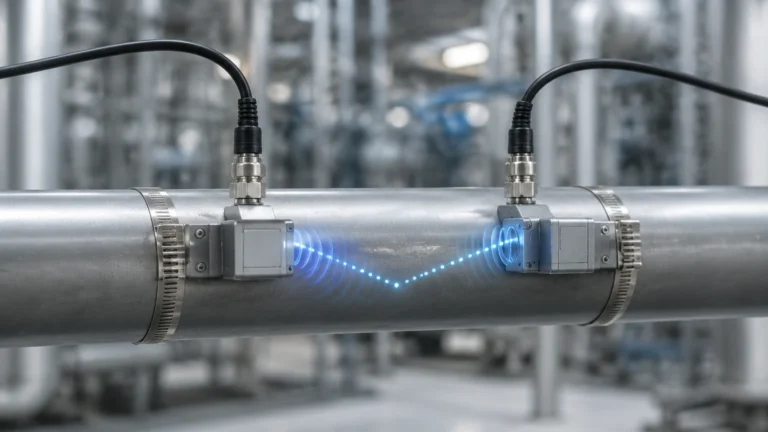
Similar to radar, ultrasonic sensors use ToF but rely on sound waves rather than electromagnetic waves. A transducer emits an ultrasonic pulse that bounces off the liquid surface. Because the speed of sound is influenced by air temperature, these sensors usually include an integrated temperature sensor to compensate for variations. They are cost-effective for water-based applications but struggle in vacuum or high-pressure environments where sound cannot travel effectively.
Hydrostatic Level Measurement
This principle relies on the relationship between the height of a liquid column and the pressure it exerts at the base of the tank ($P = \rho gh$). A pressure transmitter installed at the bottom of the vessel measures the "head pressure." By knowing the density (specific gravity) of the liquid, the system calculates the level. This is a robust, contact-based method widely used in open tanks and reservoirs.
Magnetic Level Gauges and Switches
Magnetic sensors often use a float containing a permanent magnet. As the liquid level changes, the float moves along a guide tube or alongside an external chamber. This movement triggers magnetic reed switches or interacts with a magnetostrictive wire to provide a continuous signal. These are highly reliable for high-pressure and high-temperature applications where visual indication is also required.
Technology Selection and Comparison
Choosing the right level liquid sensor depends on the media characteristics and the vessel geometry. The following table provides a general comparison of the most common technologies used in industrial settings.
| Technology | Media Suitability | Best For | Limitations |
| :— | :— | :— | :— |
| Radar (80GHz) | Most liquids, corrosive media | High precision, narrow tanks | Higher initial cost |
| Ultrasonic | Water, wastewater, acids | Non-contact, budget-friendly | Affected by foam, steam, and vacuum |
| Hydrostatic | Water, oils, chemicals | Deep wells, vented tanks | Requires constant liquid density |
| Magnetic Gauge | Fuels, high-pressure liquids | Visual check + electronic output | Moving parts; prone to scaling |
| Capacitance | Conductive & non-conductive | Small tanks, high temp | Requires calibration for different media |
Selection Criteria for Engineering Teams
When evaluating a level liquid sensor, engineers must confirm the following parameters:
1. Chemical Compatibility: Ensure the wetted parts (e.g., PTFE, Stainless Steel 316L, or PVDF) are resistant to the process liquid.
2. Measurement Range: Determine the total height of the vessel. Ultrasonic sensors have "dead zones" (blocking distances) at the top where they cannot measure.
3. Process Conditions: Identify the maximum operating pressure (in bar or PSI) and temperature (in °C or °F).
4. Output Signal: Standard industrial outputs include 4-20mA HART, RS485 Modbus, or Profibus.
For a detailed overview of specific hardware configurations and technical specifications, you can Review product options and application support on our main page.
Installation Considerations and Best Practices
Correct installation is as vital as selecting the right sensor. Even the most advanced level liquid sensor will provide inaccurate data if mounted incorrectly.
Positioning and Obstructions
For non-contact sensors like radar and ultrasonic, the sensor must have a clear "line of sight" to the liquid surface. Internal tank structures such as agitators, heating coils, or ladders can cause false reflections (parasitic echoes).
* The 1/3 Rule: Generally, sensors should be mounted at a distance of 1/3 the tank radius from the tank wall to avoid wall interference while staying clear of the center-tank vortex if an agitator is present.
* Nozzle Height: Ensure the mounting nozzle is short enough so it does not interfere with the sensor’s beam angle.
Avoiding Turbulence and Foam
Heavy turbulence can scatter the signal of a ToF sensor. In such cases, a stilling well (a pipe installed vertically in the tank) can be used to provide a calm surface for measurement. Foam is another significant challenge; dense foam can absorb ultrasonic signals entirely. Radar, particularly higher frequency 80GHz models, is better at penetrating light foam, but heavy, thick foam may still require a contact-based solution like a hydrostatic or magnetic sensor.
Environmental Protection
For outdoor installations, sensors should be equipped with sunshades to prevent extreme temperature fluctuations from affecting the electronics. In hazardous areas (oil & gas, chemical), the sensor must carry appropriate certifications such as ATEX or IECEx for explosion-proof or intrinsically safe operation.
Limitations and Common Risks
While modern sensors are highly advanced, they are not infallible. Understanding the limitations helps in designing a redundant and safe system.
1. Density Variations: Hydrostatic sensors are calibrated based on a specific liquid density. If the process involves mixing different liquids or if the temperature changes significantly (altering the density), the level reading will drift.
2. Vapor and Condensation: In ultrasonic sensors, heavy steam or chemical vapors change the speed of sound, leading to errors. Condensation on the sensor face can also "blind" the transducer. Many high-end radar sensors feature drip-off antenna designs to mitigate this.
3. Build-up and Scaling: For contact-based sensors, the accumulation of solids or scales on the probe or float can lead to mechanical failure or signal attenuation. Regular maintenance or the use of non-contact sensors is recommended for coating-prone media.
Practical Industrial Applications
Water and Wastewater Treatment
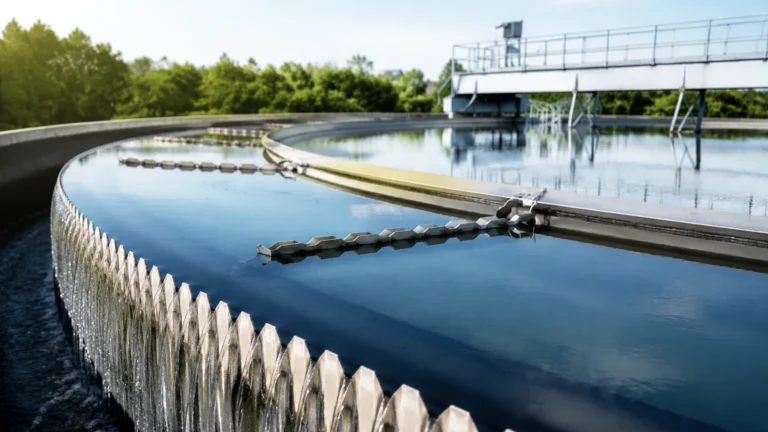
In this sector, ultrasonic sensors are the standard for monitoring levels in open channels, wet wells, and chemical storage tanks. They provide a reliable, low-maintenance solution for measuring water levels without contacting the potentially corrosive or dirty media.
Chemical Processing
Chemical plants often deal with aggressive acids and bases. Here, radar level liquid sensors with PTFE-coated antennas are preferred. The non-contact nature ensures the sensor longevity, while the high frequency allows for measurement through plastic tank walls (top-down) without needing a hole in the tank.
Oil and Gas
Safety and precision are paramount in fuel storage. Magnetic level gauges are frequently used for high-pressure separators, while guided wave radar (GWR) is used for interface measurement—detecting the boundary between oil and water in the same tank.
Frequently Asked Questions (FAQ)
Q: What is the difference between a level switch and a continuous level liquid sensor?
A: A level switch (point level) only detects if the liquid has reached a specific point (e.g., high-level alarm or low-level pump dry-run protection). A continuous sensor provides an ongoing measurement of the exact level across the entire range of the tank.
Q: Can I use an ultrasonic sensor in a vacuum tank?
A: No. Ultrasonic waves require a medium (air or gas) to travel. In a vacuum, there are no molecules to transmit the sound, so the sensor will not function. Radar is the preferred choice for vacuum applications.
Q: How often should a level liquid sensor be calibrated?
A: Calibration frequency depends on the technology and the criticality of the application. Hydrostatic sensors may need annual checks to account for sensor drift, while many modern radar sensors are "calibrate for life" under stable conditions, requiring only periodic functional verification.
Q: How do I handle measurement in a tank with an agitator?
A: You can use a radar sensor with a "false echo suppression" feature that allows the software to ignore reflections from the blades. Alternatively, installing the sensor inside a stilling well will shield it from the turbulence and the agitator's physical movement.
Conclusion
The selection of a level liquid sensor is a balance between technical requirements and cost-effectiveness. By understanding the measurement principles—from the robust simplicity of hydrostatic pressure to the high-precision capabilities of 80GHz radar—engineers can ensure their processes remain safe and efficient. Always consider the physical environment, including the presence of foam, vapors, and internal obstructions, before finalizing a sensor choice.
For those seeking to implement these technologies, it is essential to work with a manufacturer that provides both high-quality hardware and technical expertise. To explore specific models and find the right fit for your industrial application, visit the Main Page for comprehensive product data and engineering support.