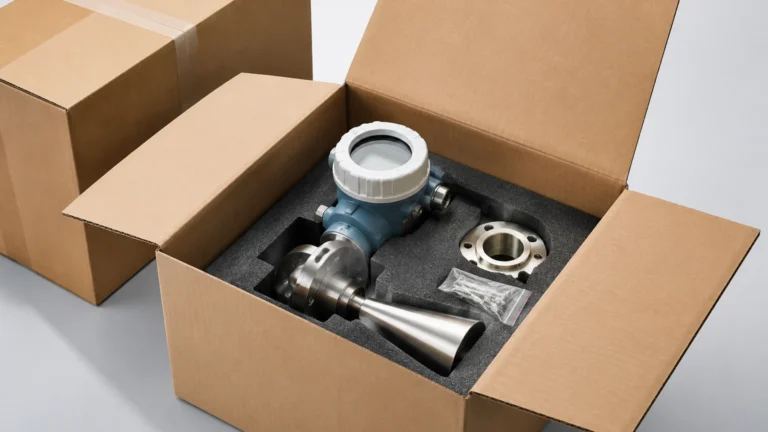
Vibrating Rod Level Switch
Vibrating Rod Level Switch
In the landscape of industrial automation and process control, point level detection remains a critical requirement for preventing vessel overfills, ensuring pump protection, and managing inventory in silos and hoppers. Among the various technologies available, the vibrating rod level switch has emerged as a highly reliable and versatile solution, particularly for bulk solids and granular materials.
Unlike traditional mechanical switches or complex continuous measurement systems, the vibrating rod level switch offers a robust, "fit-and-forget" approach to level sensing. This article provides a comprehensive technical overview of the technology, its operating principles, selection criteria, and practical installation guidelines for engineering professionals.
Measurement Principles of Vibrating Rod Sensors
The fundamental operation of a vibrating rod level switch is based on the damping of mechanical oscillations. The instrument consists of an electronic housing and a sensing probe—typically a single stainless steel rod—that extends into the process vessel.
Inside the sensor head, a piezoelectric crystal assembly is used to excite the rod at its natural resonance frequency. In free air (when the vessel level is below the sensor), the rod vibrates freely at this specific frequency. When the process material (such as powder, grain, or pellets) rises and comes into contact with the rod, the mechanical vibration is dampened or stopped entirely.
An internal electronic circuit continuously monitors the vibration amplitude and frequency. Once the damping effect crosses a predefined threshold, the electronics trigger a change in the output state—usually a relay contact, a transistor (PNP/NPN), or a 4-20mA signal. When the material level drops and the rod is no longer covered, the vibration resumes, and the switch returns to its normal state.
One of the primary advantages of this principle is its immunity to changes in the material's dielectric constant, moisture content, or electrical conductivity. This makes it significantly more stable than capacitive or conductive sensors in varied process conditions.
Technical Advantages of Single-Rod Design
When evaluating vibration-based level switches, engineers often choose between the "tuning fork" design and the "single-rod" design. The vibrating rod level switch offers several distinct advantages in specific industrial environments:
1. Elimination of Material Bridging: In tuning fork designs, the two tines can sometimes trap granular material between them, leading to a false "full" signal. The single-rod design eliminates this gap, making it ideal for materials that tend to clog or bridge.
2. Ease of Cleaning: The smooth, cylindrical surface of the rod is easier to clean and less likely to accumulate buildup, which is essential in food processing or chemical applications where cross-contamination must be avoided.
3. High Sensitivity: Modern vibrating rod sensors are engineered to detect extremely low-density materials, sometimes as light as 20 g/L (0.02 kg/dm³).
4. Robustness: The solid construction of the rod provides higher mechanical resistance against the impact of heavy bulk solids compared to thinner tuning fork tines.
For engineers looking to integrate these sensors into a broader process control system, you can Review product options and application support at the Welk Main Page to determine the best configuration for your specific material density.
Key Selection Criteria and Technical Specifications
Selecting the correct vibrating rod level switch requires an understanding of both the process material and the environmental conditions of the vessel. The following table outlines the typical parameters considered during the engineering phase:
Table 1: Typical Selection Parameters for Vibrating Rod Level Switches
| Parameter | Standard Range / Specification | Considerations |
| :— | :— | :— |
| Material Density | 20 g/L to 2,000 g/L | Lower densities require higher sensitivity settings. |
| Process Temperature | -40°C to +150°C (Standard) | High-temp versions available up to 250°C. |
| Process Pressure | up to 25 bar (2.5 MPa) | Higher pressure ratings require specialized seals. |
| Probe Length | 200 mm to 3,000 mm | Extended probes are used for top-mounting applications. |
| Material of Construction | 304 or 316L Stainless Steel | Essential for corrosive or food-grade environments. |
| Power Supply | 24V DC or 85-265V AC | Wide-range power supplies simplify inventory. |
| Output Options | Relay (DPDT), PNP/NPN, or NAMUR | Depends on the PLC or control system interface. |
Material Density and Sensitivity
The sensitivity of the vibrating rod is often adjustable. For heavy materials like sand or cement, the sensitivity is lowered to prevent false triggers from dust. For light materials like expanded polystyrene or fine sawdust, the sensitivity is increased to ensure the damping effect is correctly registered.
Industrial Applications
The versatility of the vibrating rod level switch allows it to be utilized across a wide spectrum of industries. Its primary use case is the detection of powders and bulk solids in silos, hoppers, and bins.
* Food and Beverage: Used for monitoring levels of flour, sugar, grain, and animal feed. The stainless steel construction ensures compliance with hygiene standards.
* Construction Materials: Reliable detection of cement, sand, lime, and gypsum. The robust rod design withstands the abrasive nature of these materials.
* Plastics Industry: Monitoring plastic pellets, granules, and regrind in injection molding hoppers and storage silos.
* Chemical and Pharmaceutical: Level control for fine powders and chemical flakes where precise point detection is required to prevent process interruptions.
* Mining and Minerals: Detection of crushed ore, coal, and fly ash in harsh environmental conditions.

Installation and Mounting Best Practices
Proper installation is paramount to the longevity and accuracy of a vibrating rod level switch. Failure to follow engineering best practices can lead to mechanical damage or intermittent signal errors.
Orientation
* Side Mounting: This is the most common installation for high-level or low-level alarms. The switch should be mounted at a slight downward angle (approximately 15 to 20 degrees) to allow material to slide off the rod, preventing buildup.
* Top Mounting: Used for high-level detection. In these cases, extended probes are often required to reach the desired switching point. It is critical to ensure the probe is not positioned directly in the path of the material inflow.
Protection from Material Flow
If the sensor must be installed in an area where material falls directly onto the probe, a protective shield (typically an inverted V-shaped metal plate) should be installed approximately 150 mm to 200 mm above the rod. This shield deflects the impact of heavy falling solids, protecting the rod from mechanical stress and preventing false triggers.
Cable Entry and Sealing
Always install the sensor with the cable glands pointing downwards to prevent moisture from entering the housing via the cable. The use of a "drip loop" in the cabling is recommended. For outdoor silos, ensuring the housing cover is tightened to the specified torque is essential to maintain the IP66/IP67 weather protection rating.
Limitations and Operational Constraints
While highly versatile, the vibrating rod level switch is not a universal solution for every application. Engineers should be aware of the following limitations:
1. Extremely Sticky Materials: If a material is exceptionally sticky (like wet clay or certain resins), it may form a thick coating on the rod that does not fall off when the level drops. This can "choke" the vibration and cause the switch to remain in the dampened state.
2. Large Particle Sizes: In applications involving very large rocks or heavy debris (larger than 50 mm), the physical impact can bend or break the rod. In such cases, heavy-duty rotary paddle switches or non-contact radar may be more appropriate.
3. Liquid Applications: While some vibrating rods can work in liquids, they are primarily designed for solids. For liquid level switching, tuning fork designs are generally preferred due to their specific frequency tuning for fluid densities.
4. High Turbulence: In pneumatic conveying lines, high-velocity air and material can cause excessive wear on the probe if not shielded correctly.
Frequently Asked Questions (FAQ)
Q: Can the vibrating rod level switch be used for interface detection?
A: Generally, no. These switches are designed to detect the presence or absence of a single material. They are not suited for detecting the interface between two different solids or a solid and a liquid unless there is a very significant density difference and the application is specifically tested.
Q: How do I test if the switch is working without filling the silo?
A: Most vibrating rod switches allow for a manual test. You can simply touch the vibrating rod with your hand (while the vessel is empty and safe to access). The damping of the vibration by your hand should trigger the relay/output, confirming the electronics and piezoelectric elements are functional.
Q: Does the rod need to be calibrated for different materials?
A: In most cases, no calibration is required. However, there is usually a sensitivity adjustment (often a jumper or a potentiometer) inside the housing. This allows you to fine-tune the sensor for extremely light or extremely heavy materials.
Q: What happens during a power failure?
A: Most industrial vibrating rod switches are designed to be "fail-safe." This means you can configure the relay to be energized in the "safe" condition. If power is lost, the relay de-energizes, which the control system interprets as an alarm state.
Conclusion
The vibrating rod level switch represents a pinnacle of reliability for point level detection in the bulk solids industry. By understanding the underlying piezoelectric principles and adhering to strict installation guidelines, process engineers can significantly reduce maintenance downtime and prevent costly overfill incidents. Whether managing fine powders in a pharmaceutical plant or abrasive aggregates in a quarry, selecting a high-quality sensor tailored to the material's density and temperature is key to operational success.
For further technical guidance on selecting the appropriate level measurement technology for your facility, including radar and ultrasonic options, visit the Main Page for detailed product specifications and engineering support.