Remote Water Tank
Remote Water Tank
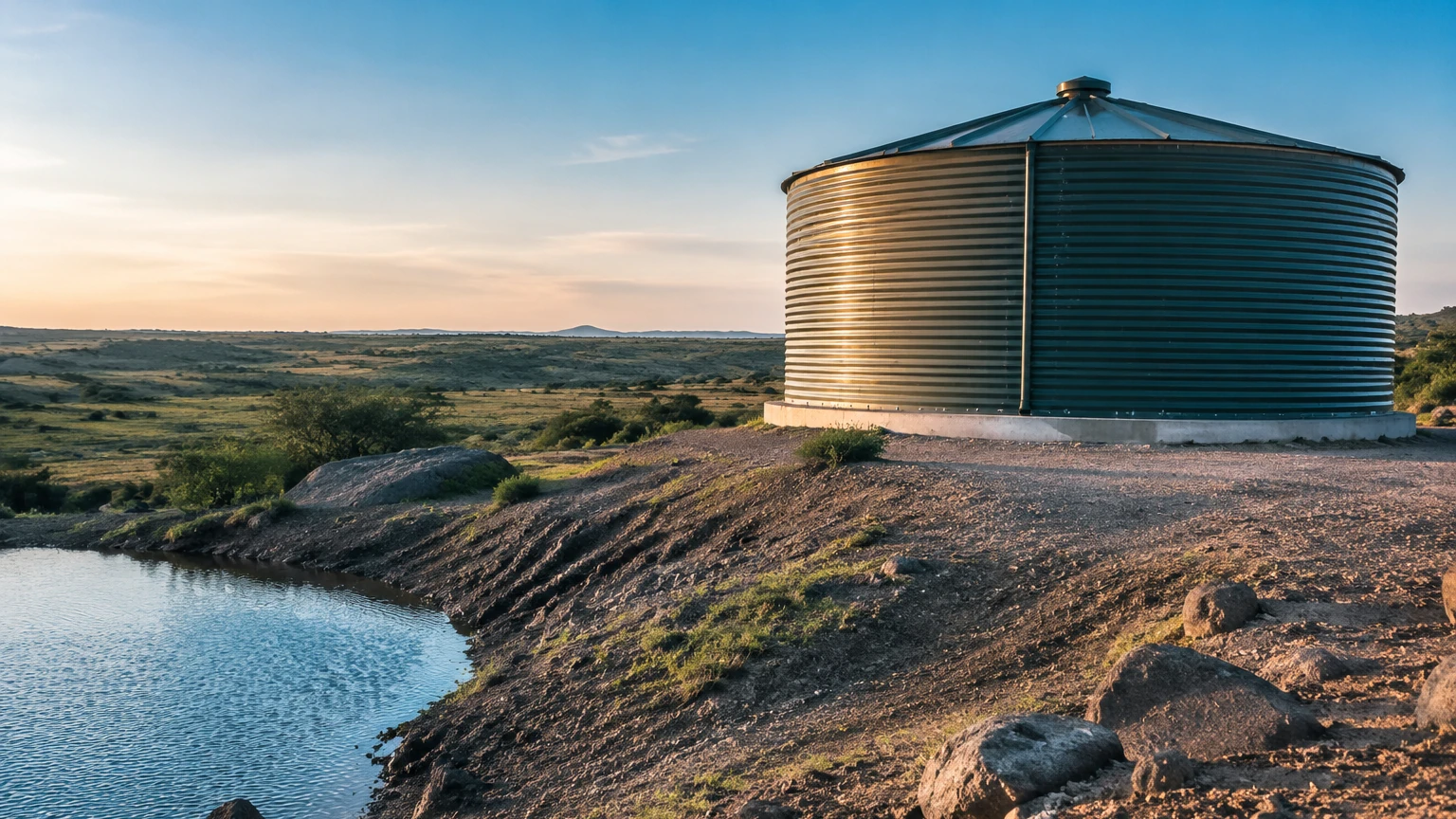
In modern industrial and municipal infrastructure, the management of a remote water tank presents unique engineering challenges. Unlike tanks located within a central plant facility, remote assets—such as mountain reservoirs, agricultural cisterns, or decentralized cooling towers—require robust, autonomous, and highly accurate level measurement systems to prevent overflows, ensure supply continuity, and optimize pump operations.
Welk, a professional manufacturer of industrial level measurement instruments, provides a range of technologies designed to meet these requirements. This guide explores the fundamental measurement principles, selection criteria, and installation best practices for monitoring water levels in remote locations, ensuring that engineers can select the most reliable solution for their specific application.
Measurement Principles for Remote Level Monitoring
Selecting the appropriate sensor for a remote water tank begins with an understanding of the underlying physics of measurement. Different environments and tank geometries dictate which technology will provide the most stable signal over long periods without manual intervention.
Ultrasonic Level Sensors
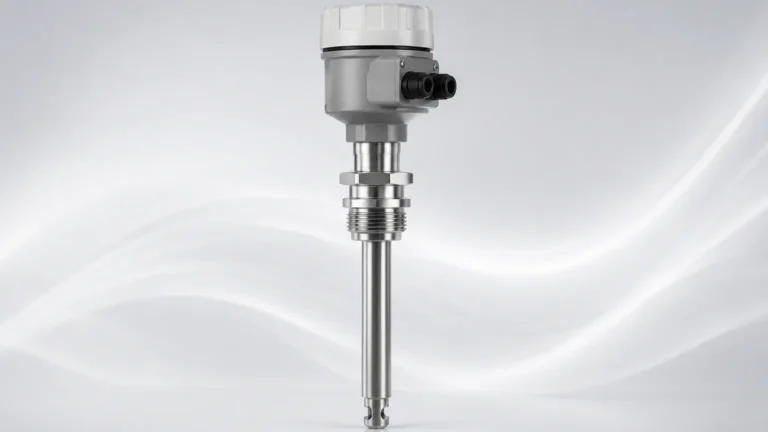
Ultrasonic sensors are a standard choice for remote water monitoring due to their non-contact nature and cost-effectiveness. The device emits high-frequency sound waves that travel through the air, reflect off the water surface, and return to the transducer. The sensor calculates the distance based on the time-of-flight (ToF).
* Advantages: No moving parts, easy to install, and immune to liquid properties like density or conductivity.
* Considerations: Accuracy can be affected by significant temperature fluctuations or heavy steam, which alters the speed of sound. In remote outdoor tanks, sun shields are often required to prevent the sensor body from overheating and skewing temperature compensation data.
Radar Level Meters (80GHz and 26GHz)
Radar technology, particularly Frequency Modulated Continuous Wave (FMCW) radar, has become the gold standard for high-precision remote monitoring. These instruments emit electromagnetic pulses that are unaffected by air temperature, pressure, or vacuum conditions.
* Advantages: Extreme precision (up to ±1mm), narrow beam angles that avoid internal tank obstructions, and the ability to penetrate foam or light vapor.
* Considerations: While more expensive than ultrasonic alternatives, the long-term reliability and lack of maintenance make them highly suitable for critical remote infrastructure. You can Review product options and application support to determine which frequency is best suited for your tank height.
Hydrostatic Level Transmitters
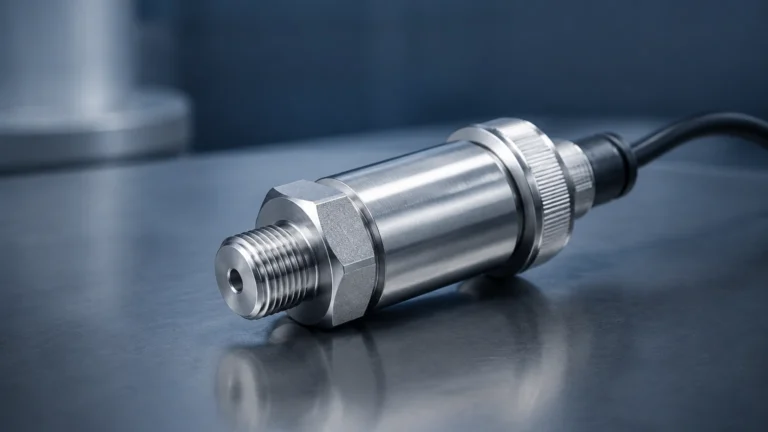
Hydrostatic sensors are contact-based instruments that measure the pressure exerted by the liquid column above the sensor. Based on the principle that $P = \rho gh$ (where $P$ is pressure, $\rho$ is density, $g$ is gravity, and $h$ is height), the sensor converts the weight of the water into a level reading.
* Advantages: Ideal for deep wells or very tall tanks where top-mounting a non-contact sensor is impractical. They are generally the most economical solution for deep-water applications.
* Considerations: Because they are submerged, they are susceptible to silt buildup and require vented cables to compensate for atmospheric pressure changes.
Technical Selection Criteria
When specifying a system for a remote water tank, engineers must evaluate the environment as much as the tank itself. The following table provides a comparison of the most common technologies used in these scenarios.
Selection Comparison Table
| Feature | Ultrasonic Sensor | Radar Level Meter | Hydrostatic Transmitter |
| :— | :— | :— | :— |
| Measurement Range | 0.3m to 20m | 0.1m to 120m | 1m to 200m+ |
| Accuracy | ±0.25% to ±0.5% | ±1mm to ±3mm | ±0.1% to ±0.5% |
| Contact Type | Non-contact | Non-contact | Submerged (Contact) |
| Maintenance Level | Low | Very Low | Moderate (Cleaning required) |
| Power Consumption | Low | Moderate | Very Low |
| Best Application | Standard open tanks | Precision/Process tanks | Deep wells/Reservoirs |
Connectivity and Data Transmission for Remote Sites
The "remote" nature of these tanks necessitates a reliable communication backbone. A sensor is only as useful as the data it can transmit to the SCADA system or cloud platform. Common integration methods include:
1. 4-20mA / RS485 Modbus: Best for tanks located within 1,000 meters of a control room where cabling is feasible.
2. LoRaWAN / NB-IoT: Ideal for extremely remote water tanks where cellular coverage is sparse or power is limited. These protocols allow for battery-powered sensors to transmit data over several kilometers.
3. 4G/LTE Cellular Gateways: Used when real-time, high-frequency data updates are required and cellular infrastructure is available.
For comprehensive system architectures and integrated wireless modules, visiting the Main Page provides insights into how Welk instruments interface with modern IoT gateways.
Installation Considerations and Best Practices
Correct installation is the most significant factor in reducing signal noise and ensuring the longevity of the instrument in a remote water tank environment.
Positioning and Dead Zones
Every non-contact sensor (ultrasonic or radar) has a "dead zone" or "blocking distance" directly beneath the transducer where measurements are impossible. For a 10-meter tank, a typical ultrasonic dead zone might be 0.3m to 0.5m. The sensor must be mounted high enough so that the maximum water level never enters this zone.
Avoiding Internal Obstructions
Remote tanks often contain ladders, inflow pipes, or internal bracing. Sensors should be installed at a distance from the tank wall (typically 1/6th of the tank diameter) and away from the filling inlet to avoid turbulence and false echoes.
Environmental Protection
For outdoor remote water tanks, instruments are exposed to the elements.
* Lightning Protection: Remote sites are prone to surges. Using surge protectors on the signal line and ensuring proper grounding of the sensor housing is mandatory.
* Condensation Management: In humid environments, droplets can form on the sensor face. Radar meters with PTFE or drip-off lens designs are preferred here to prevent signal attenuation.
Limitations and Risk Mitigation
While modern instrumentation is highly reliable, certain limitations must be acknowledged to prevent system failure in the field.
* Power Constraints: Many remote tanks rely on solar power. It is critical to select low-power sensors (e.g., 2-wire loop-powered units) to ensure the system remains operational during consecutive cloudy days.
* Signal Interference: In metal tanks, multiple reflections (multipath interference) can occur. Choosing a sensor with a narrow beam angle (e.g., 80GHz radar with a 3° beam) minimizes this risk.
* Media Build-up: In untreated water tanks, algae or mineral scaling can occur. Submersible hydrostatic sensors must be checked periodically to ensure the sensing diaphragm is not obstructed by debris.
Frequently Asked Questions (FAQ)
Q: Can I use an ultrasonic sensor if my remote water tank is in a very cold climate?
A: Yes, but you must use a sensor with integrated temperature compensation. Furthermore, if the water surface freezes, the sensor will measure the top of the ice, not the liquid level below it. For freezing conditions, a hydrostatic sensor placed below the frost line is often more reliable.
Q: How often do radar level meters need calibration?
A: Radar meters are generally "fit and forget" devices. Once calibrated during commissioning to the tank's zero and span points, they rarely require re-calibration unless the tank geometry is altered.
Q: What is the maximum distance for a hydrostatic sensor cable?
A: Standard vented cables can extend up to 500-1,000 meters depending on the signal output (4-20mA is more resilient to distance than voltage outputs). However, for distances beyond this, wireless transmission is recommended to maintain signal integrity.
Q: How do I protect the sensor from birds or insects in remote areas?
A: Using a protective shroud or mounting the sensor within a short standpipe can prevent wildlife from nesting on the transducer face or damaging the wiring.
Conclusion
Monitoring a remote water tank requires a balance between precision, power efficiency, and environmental resilience. Whether utilizing the non-contact advantages of radar and ultrasonic sensors or the robust simplicity of hydrostatic transmitters, the key to success lies in matching the technology to the specific tank conditions. By following rigorous installation standards and selecting the appropriate communication protocol, operators can achieve seamless visibility into their remote assets, reducing the need for costly site visits and improving overall water management efficiency. For detailed specifications and technical support on selecting the right instrument for your project, visit the Main Page to explore the full range of Welk industrial solutions.