Petrol Tank Level Sensor
Petrol Tank Level Sensor
In industrial fuel management and retail petroleum distribution, the petrol tank level sensor is a critical component for inventory control, leak detection, and operational safety. Unlike standard water level monitoring, measuring petrol (gasoline) requires specialized instrumentation capable of handling volatile organic compounds (VOCs), varying vapor pressures, and strict explosion-proof requirements.
Selecting the correct sensing technology involves understanding the physical properties of the fuel, the geometry of the storage vessel, and the regulatory environment. This guide examines the primary measurement principles used in modern fuel systems, provides selection criteria for engineering teams, and outlines best practices for installation and maintenance.
Measurement Principles for Petrol Level Sensing
Before selecting a petrol tank level sensor, it is essential to understand the underlying physics of how different instruments interact with the medium. Petrol is a non-conductive hydrocarbon with a low dielectric constant (typically between 1.9 and 2.2), which influences how electronic signals behave.
1. Radar Level Measurement (Non-Contact and Guided)
Radar technology is widely considered the gold standard for petrol storage due to its high accuracy and immunity to vapor space conditions.
* Non-Contact Radar: These sensors emit high-frequency microwave pulses (typically 26GHz or 80GHz). The pulses reflect off the surface of the petrol and return to the sensor. The time-of-flight is used to calculate the distance. Because microwaves travel at the speed of light and do not require a medium, they are unaffected by the dense petrol vapors that often accumulate in the tank headspace.
* Guided Wave Radar (GWR): GWR uses a physical probe (rod or cable) to guide the microwave pulse to the liquid surface. This is particularly effective for petrol because the probe concentrates the signal, allowing for reliable measurement even with the low dielectric constant of the fuel. GWR is often used in smaller process tanks or where internal obstructions might cause interference for non-contact units.
2. Magnetostrictive Level Sensing
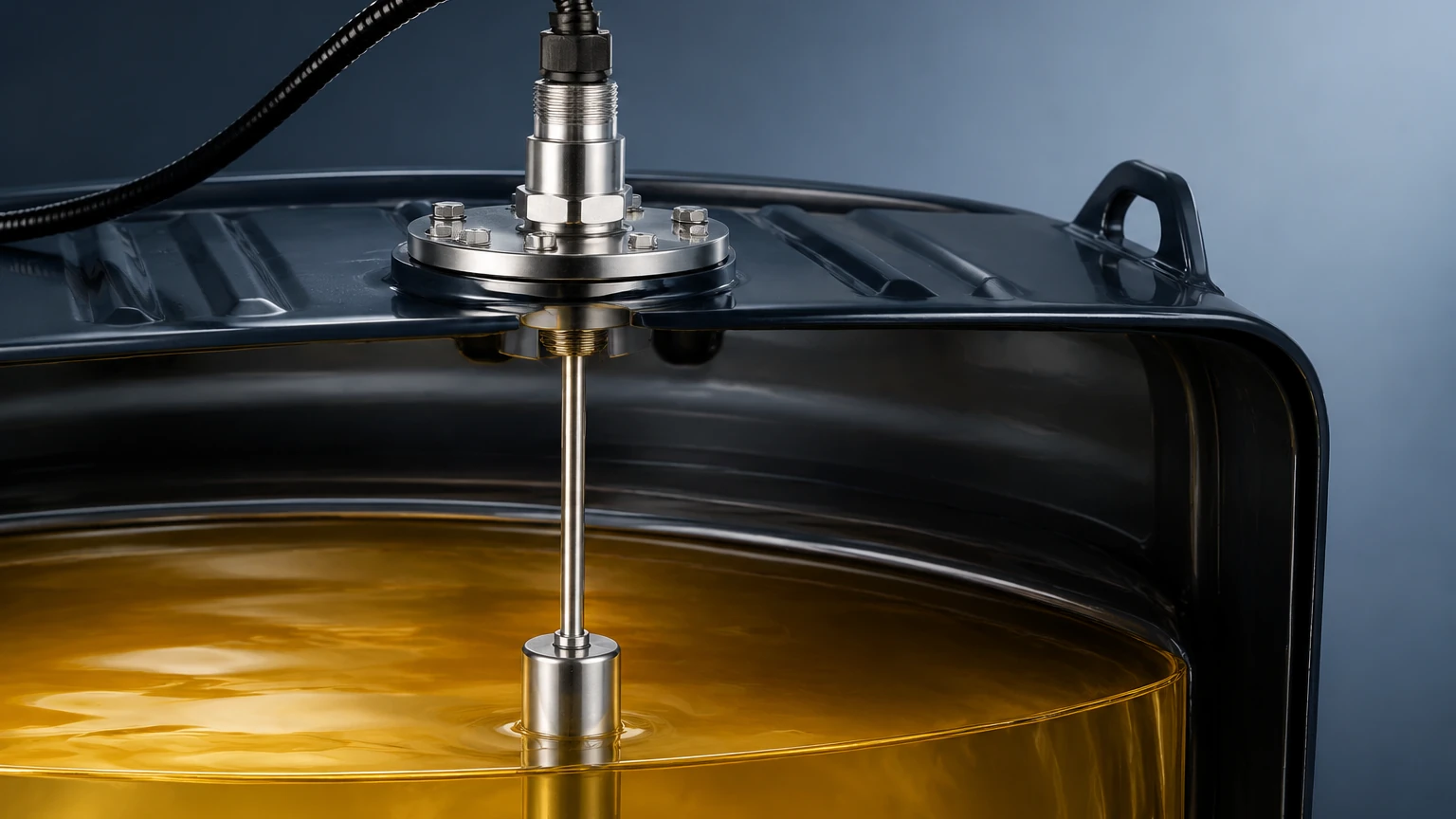
Magnetostrictive sensors are the industry standard for high-precision inventory at retail gas stations and smaller commercial depots. The sensor consists of a ferromagnetic wire inside a probe and a float containing a permanent magnet.
When the sensor's electronics send a current pulse down the wire, it creates a magnetic field that interacts with the float's magnetic field. This interaction creates a torsional strain wave that travels back up the wire. By measuring the time it takes for this wave to return, the system determines the level with sub-millimeter precision. This technology is also capable of detecting the water interface at the bottom of a petrol tank, which is vital for fuel quality management.
3. Hydrostatic Pressure Measurement
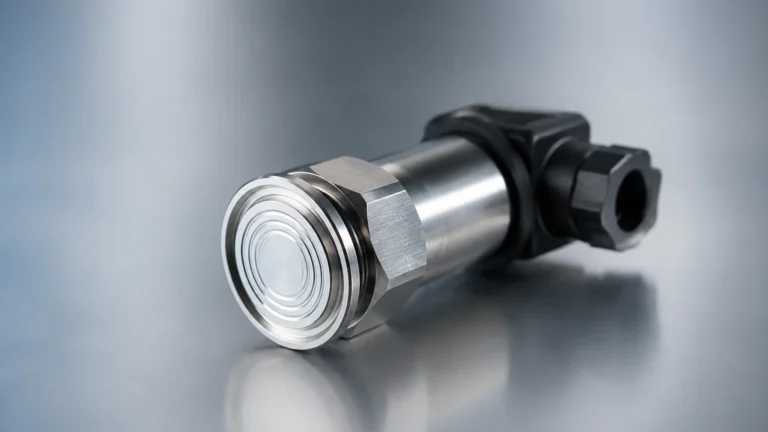
Hydrostatic sensors measure the pressure exerted by the column of liquid above a sensing diaphragm. Since pressure is directly proportional to the height of the liquid and its density ($P = \rho gh$), the level can be calculated accurately if the density is known. For petrol, which can expand or contract with temperature changes, hydrostatic systems often require temperature compensation to maintain accuracy. These sensors are typically mounted at the bottom of the tank or submerged via a cable.
4. Ultrasonic Level Sensors
Ultrasonic sensors use sound waves to measure distance. While cost-effective for water, they are generally less recommended for petrol. The speed of sound changes significantly depending on the concentration of petrol vapors in the air, which can lead to measurement errors of several centimeters unless the sensor is specifically calibrated for the vapor mix and temperature. Furthermore, many ultrasonic sensors lack the necessary explosion-proof ratings required for Class I, Division 1 environments.
Technical Selection Criteria
Choosing a petrol tank level sensor requires a balanced evaluation of accuracy requirements, tank configuration, and budget. For a comprehensive look at industrial measurement options, engineers can visit the Main Page to compare specific model specifications.
Precision and Accuracy Requirements
* Inventory Control: If the goal is high-accuracy fiscal billing or leak detection (as required by environmental agencies), magnetostrictive or high-frequency radar sensors are necessary. These offer accuracies in the range of ±1mm to ±3mm.
* Process Monitoring: For general high/low level alerts or automated pump control, hydrostatic or lower-frequency radar sensors may be sufficient, offering accuracies around ±5mm to ±10mm.
Safety and Certification
Petrol is highly flammable. Any sensor installed in or near the tank must carry appropriate hazardous area certifications, such as ATEX (Europe), IECEx (International), or UL/FM (North America).
* Intrinsically Safe (Ex ia): The equipment is designed to operate with such low energy that it cannot ignite an explosive atmosphere.
* Explosion-Proof/Flameproof (Ex d): The equipment is housed in an enclosure that can withstand an internal explosion and prevent it from spreading to the external atmosphere.
Selection Comparison Table
| Technology | Accuracy | Ideal Application | Limitations |
| :— | :— | :— | :— |
| 80GHz Radar | Excellent (±1mm) | Tall tanks, narrow nozzles | High initial cost |
| Guided Wave Radar | Very Good (±2mm) | Small tanks, bypass chambers | Probe can accumulate debris |
| Magnetostrictive | Superior (<1mm) | Retail fuel tanks, water interface | Limited probe lengths (usually <6m) |
| Hydrostatic | Good (±0.1% FS) | Underground storage, vented tanks | Sensitive to density changes |
| Level Switch | N/A (Point) | Overfill protection | No continuous level data |
Installation Considerations
Proper installation is as critical as selecting the right technology. Poorly installed sensors can lead to signal loss, false echoes, or safety hazards.
1. Dead Zones (Blocking Distance): Every petrol tank level sensor has a "dead zone" near the top (and sometimes the bottom) where it cannot measure. Ensure the sensor is mounted high enough that the maximum fill level does not enter this zone.
2. Nozzle Interference: For radar sensors, the mounting nozzle should be short and smooth. If the nozzle is too long or has internal welds, it can create "ringing" or parasitic reflections that obscure the actual fuel level signal.
3. Stilling Wells: In tanks with significant turbulence or internal structures (like heating coils or ladders), installing the sensor inside a stilling well (a vertical pipe) can stabilize the liquid surface and provide a cleaner signal.
4. Grounding and Static: Petrol flowing into a tank can generate static electricity. Ensure the sensor and the tank are properly bonded and grounded to prevent spark discharges.
Limitations and Operational Risks
While modern sensors are highly reliable, certain environmental factors can impact performance:
* Vapor and Condensation: In high-temperature environments, petrol evaporates rapidly. If this vapor condenses on the sensor face (especially with ultrasonic or non-contact radar), it can attenuate the signal. High-frequency radar (80GHz) is less susceptible to this due to its smaller wavelength and specialized lens antennas.
* Temperature Stratification: Petrol density changes by approximately 0.1% per degree Celsius. In large above-ground storage tanks (ASTs), the temperature at the top may differ from the bottom. Multi-point temperature probes are often used alongside level sensors to calculate "Standard Volume" at 15°C or 60°F.
* Foaming: During high-speed filling, petrol can foam. Most radar sensors can be configured with software filters to ignore foam and track the true liquid surface, but this must be calibrated during commissioning.
Maintenance and Calibration
For B2B operations, downtime is costly. A robust maintenance schedule for a petrol tank level sensor should include:
* Annual Verification: Comparing the sensor reading against a manual dip tape measurement.
* Seal Inspection: Checking the integrity of cable glands and flange gaskets to prevent VOC leaks.
* Diagnostics Review: Modern digital sensors (HART, Modbus, or Profibus) provide signal strength diagnostics. A dropping signal-to-noise ratio often indicates buildup on the sensor or a failing component before a total breakdown occurs.
Frequently Asked Questions (FAQ)
Q: Can I use a standard water level sensor for petrol?
A: Generally, no. Petrol is chemically aggressive to many plastics used in water sensors and requires explosion-proof ratings that standard sensors lack. Additionally, the lower density and dielectric constant of petrol require different calibration.
Q: How do I measure the water at the bottom of my petrol tank?
A: Use a magnetostrictive sensor with two floats: one weighted for the density of petrol (approx. 0.74 kg/L) and one weighted for water (1.0 kg/L). This allows for simultaneous monitoring of fuel and bottom-water levels.
Q: Is radar better than hydrostatic for underground tanks?
A: For underground tanks, magnetostrictive sensors are often preferred for their precision. However, if the tank is very deep or has a complex shape, radar is a highly reliable alternative that requires less maintenance since it has no moving parts.
Q: What is the impact of ethanol-blended petrol (E10/E85) on sensors?
A: Ethanol increases the dielectric constant and is more corrosive than pure petrol. When selecting a petrol tank level sensor for blended fuels, ensure the wetted materials (316L stainless steel, PTFE) are compatible with alcohol and that the sensor's electronics can handle the higher dielectric range.
By following these engineering guidelines and selecting a sensor tailored to the specific chemical and physical environment of the storage facility, operators can ensure long-term accuracy and safety in their fuel management systems.