Level Detector Sensor
Level Detector Sensor
In the landscape of industrial automation and process control, the ability to accurately monitor the volume or height of materials within a vessel is fundamental. A level detector sensor is a specialized instrument designed to provide either continuous measurement or point-level detection of liquids, slurries, and granular solids. For engineers and procurement professionals, selecting the correct sensing technology is critical to ensuring plant safety, reducing waste, and optimizing production efficiency.
Industrial level measurement is not a one-size-fits-all field. Each application—whether it involves aggressive chemicals in a processing plant, wastewater in a treatment facility, or fuel in a storage tank—presents unique challenges. Factors such as temperature, pressure, vapor presence, and the physical properties of the media (such as dielectric constant or density) dictate which level detector sensor will perform reliably over the long term. This guide provides a technical overview of the primary sensing technologies, selection criteria, and installation best practices used in modern industrial environments.
Understanding the Principles of Level Detection
Before selecting a level detector sensor, it is essential to understand the physics behind the most common measurement principles. Modern instruments generally fall into two categories: non-contact and contact-based measurement.
Radar Level Measurement (Non-Contact)
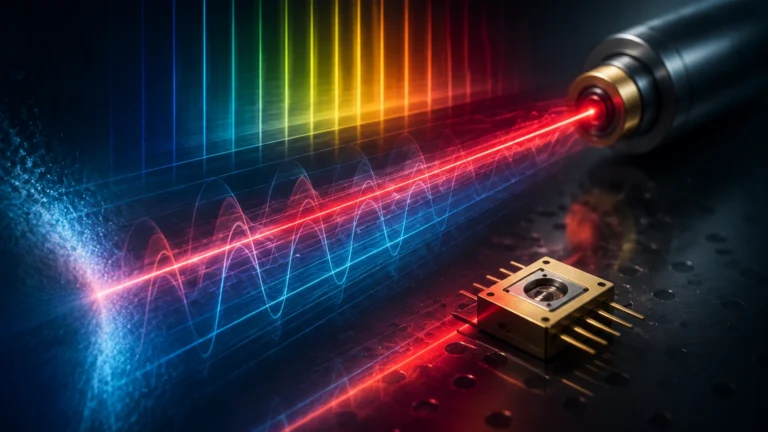
Radar sensors utilize electromagnetic waves, typically in the microwave frequency range. There are two primary types: Pulse Radar and Frequency Modulated Continuous Wave (FMCW) radar.
* Principle: The sensor emits a microwave signal toward the material surface. The signal reflects off the surface and returns to the sensor. By measuring the time-of-flight (ToF) or the frequency shift of the returned signal, the sensor calculates the distance to the product.
* Advantages: Radar is largely unaffected by changes in temperature, pressure, or the presence of vapors and dust. It is highly accurate and suitable for long-range measurements (up to 70 meters or more in some industrial configurations).
Ultrasonic Level Measurement (Non-Contact)
Ultrasonic sensors function similarly to radar but use sound waves instead of electromagnetic waves.
* Principle: A piezoelectric crystal within the sensor head converts electrical energy into high-frequency sound pulses. These pulses travel through the air, bounce off the target media, and return to the transducer. The device calculates the level based on the speed of sound.
* Advantages: This is a cost-effective solution for many liquid applications, particularly in water and wastewater treatment. However, because sound requires a medium to travel through, its accuracy can be affected by air temperature fluctuations and heavy foam on the liquid surface.
Hydrostatic Level Measurement (Contact)
Hydrostatic transmitters are pressure-based sensors that determine the level by measuring the weight of the liquid column above the sensor.
* Principle: Based on the formula $P = \rho \cdot g \cdot h$ (where $P$ is pressure, $\rho$ is density, $g$ is gravity, and $h$ is height), the sensor measures the force exerted by the liquid. In vented tanks, a gauge pressure sensor is used; in pressurized tanks, a differential pressure (DP) setup is required.
* Advantages: These sensors are robust and reliable for deep tanks or wells. They are particularly effective in applications where the liquid surface is turbulent or covered in foam, which might interfere with non-contact sensors.
Magnetic Level Gauges and Switches
Magnetic level gauges provide both a visual indication and a signal output through magnetic coupling.
* Principle: A float containing a permanent magnet moves up and down with the liquid level inside a bypass chamber. Outside the chamber, a series of magnetic flags or a transmitter responds to the float’s position.
* Advantages: They provide a clear, local visual reference without requiring power, and can be outfitted with reed switches or transmitters for remote monitoring.
Key Evaluation Criteria for Industrial Applications
Choosing a level detector sensor requires a systematic evaluation of the process environment. Engineers should confirm the following parameters before finalizing a specification:
1. Media Characteristics: Is the material a liquid, solid, or slurry? For radar, the dielectric constant (εr) is crucial; low-dielectric materials like oils reflect signals more weakly than high-dielectric materials like water. For hydrostatic sensors, the specific gravity must remain relatively constant for accurate readings.
2. Process Temperature and Pressure: Standard ultrasonic sensors are often limited to temperatures below 80°C and pressures below 3 bar. In contrast, specialized radar level meters can handle temperatures exceeding 250°C and pressures up to 40 bar or higher.
3. Tank Geometry: The presence of internal obstructions such as agitators, ladders, or heating coils can create "false echoes" for radar and ultrasonic sensors. Selecting a sensor with a narrow beam angle or advanced software for "false echo suppression" is necessary in these environments.
4. Accuracy Requirements: For inventory management and custody transfer, high-precision radar (accuracy of ±1mm to ±3mm) is often required. For simple pump control or overflow protection, a less expensive ultrasonic or float switch may suffice.
Practical Selection Table
The following table summarizes the typical application ranges and limitations for common level detector sensor technologies.
| Technology | Best Suited For | Limitations | Typical Accuracy |
| :— | :— | :— | :— |
| Radar (80GHz) | Small tanks, corrosive liquids, solids | High initial cost vs. ultrasonic | ±1 mm to ±3 mm |
| Ultrasonic | Open channels, water tanks, sumps | Affected by foam, vacuum, and wind | ±0.25% of range |
| Hydrostatic | Deep wells, vented tanks, fuel storage | Requires constant density | ±0.1% to ±0.5% |
| Magnetic Gauge | High-pressure boilers, oil/water tanks | Moving parts can wear; bypass required | ±5 mm to ±10 mm |
| Level Switch | Overfill protection, pump run-dry | Point level only (no continuous data) | N/A (Repeatability ±2mm) |
Installation Best Practices and Engineering Considerations
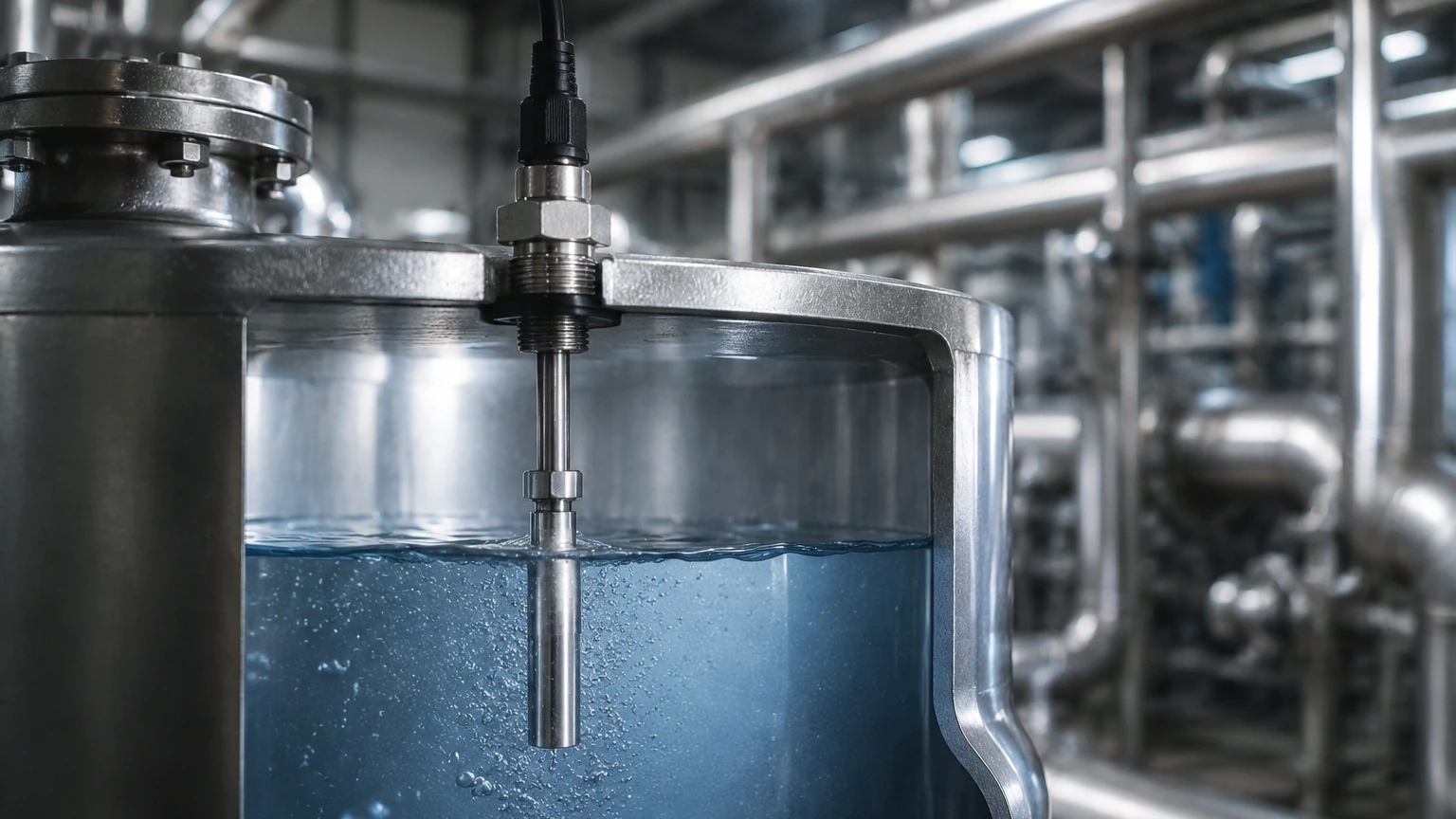
Correct installation is as important as selecting the right technology. Even the most advanced level detector sensor will fail if it is poorly positioned.
Dead Zones and Blocking Distances
Every non-contact sensor has a "dead zone" (also known as a blocking distance) directly beneath the sensor face. For ultrasonic sensors, this is typically between 0.2m and 0.5m. If the liquid level rises into this zone, the sensor will provide an error or an incorrect reading. Always mount the sensor high enough to ensure the maximum liquid level never enters the dead zone.
Beam Angle and Wall Interference
Radar and ultrasonic sensors emit signals in a cone shape. If the sensor is mounted too close to the tank wall, the signal may reflect off the wall or weld seams, leading to inaccurate data. As a rule of thumb, the sensor should be mounted at least 200mm from the tank wall for every 1 meter of tank height, depending on the specific beam angle of the device.
Stilling Wells and Bypass Chambers
In applications with heavy turbulence, such as tanks with high-speed agitators, non-contact sensors may struggle to get a stable reading. In these cases, installing the sensor inside a stilling well (a vertical pipe with vent holes) can provide a calm surface for measurement. Similarly, magnetic level gauges are mounted in a bypass chamber outside the main vessel, which protects the float from turbulence.
Overcoming Common Operational Challenges
Industrial environments are rarely ideal. A professional level detector sensor must be able to handle various process disturbances.
* Foam and Turbulence: Foam can absorb ultrasonic signals entirely. If foam is a persistent issue, radar (especially higher frequency 80GHz radar) or hydrostatic transmitters are preferred. Hydrostatic sensors are immune to surface foam because they measure pressure from the bottom.
* Vapor and Condensation: Condensation on the sensor face can attenuate ultrasonic pulses. Many modern radar sensors feature "drip-off" antenna designs that prevent water droplets from accumulating on the emitting surface, ensuring signal integrity even in high-humidity environments.
* Build-up and Scaling: In applications involving wastewater or lime milk, material can build up on the probe or sensor face. Non-contact sensors are generally better here, as they do not touch the media. If using a contact sensor, it should be specified with a flush diaphragm or a non-stick coating (like PTFE).
Frequently Asked Questions (FAQs)
Q: How often does a level detector sensor need calibration?
A: This depends on the technology. Hydrostatic sensors may drift over time and usually require annual calibration. Radar and ultrasonic sensors are digital and generally do not drift, but they should be verified periodically as part of a standard maintenance schedule.
Q: Can a single sensor be used for both liquid and solid level detection?
A: Some high-end radar sensors are versatile enough for both, but the signal processing requirements differ. Solids often have an uneven surface (angle of repose) and lower reflectivity, requiring a sensor specifically optimized for solids measurement.
Q: What communication protocols are available?
A: Most industrial sensors provide a standard 4-20mA analog output. For more complex integration, protocols like HART, Modbus RS485, and Profibus are common, allowing for remote diagnostics and multi-parameter data transmission.
Conclusion
Selecting the right level detector sensor is a balance of technical requirements, environmental constraints, and budget. By understanding the measurement principles—from the electromagnetic precision of radar to the reliable simplicity of hydrostatic pressure—engineers can specify solutions that minimize downtime and maximize accuracy. For those seeking professional-grade instrumentation, Welk offers a comprehensive range of solutions including radar level meters, ultrasonic sensors, and magnetic gauges, backed by expert technical support and customized OEM/ODM services.
To explore specific models and technical data sheets for your next project, please visit the Main Page to review product options and application support.