In Line Flow Meter Water
In Line Flow Meter Water
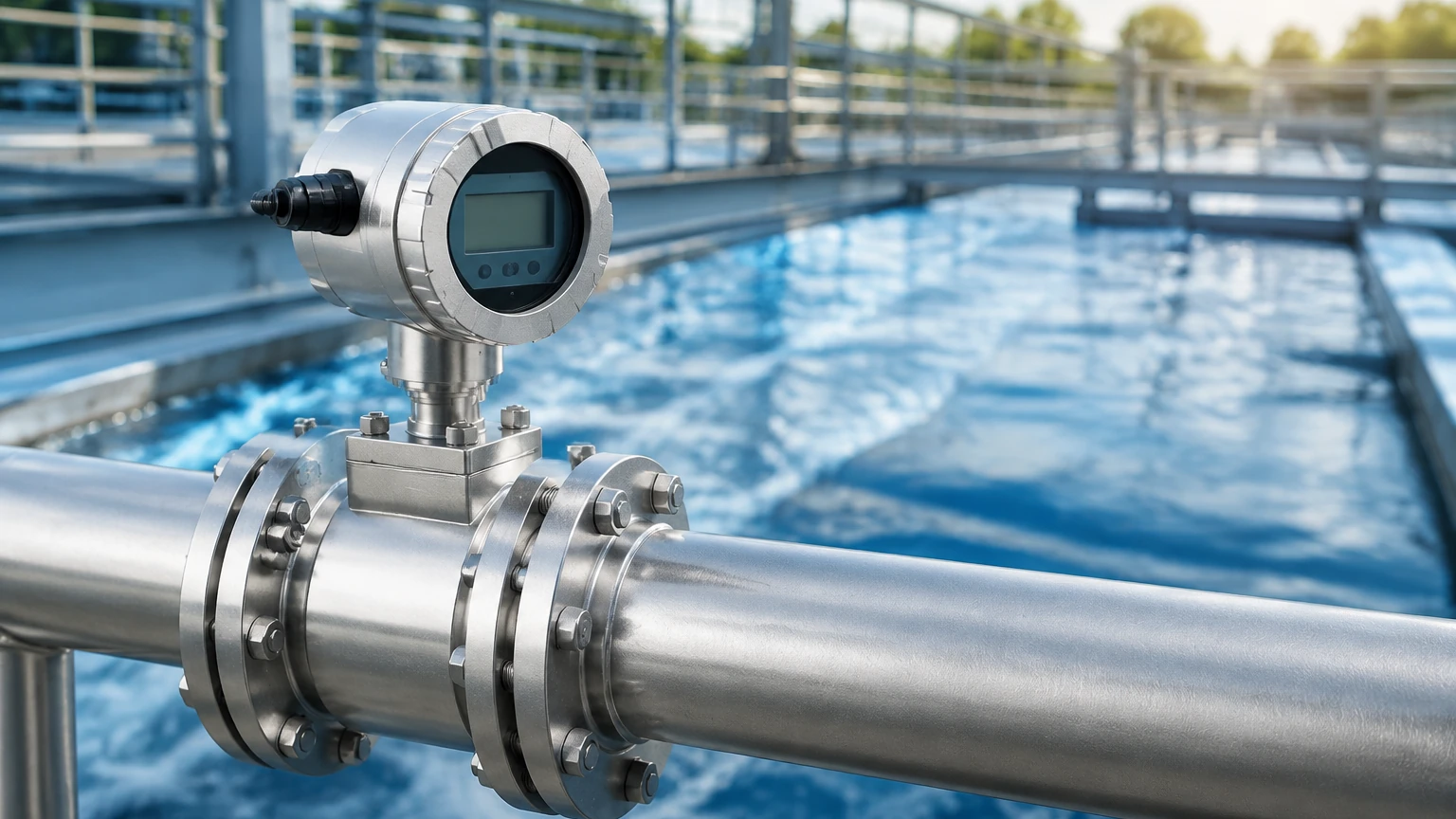
In industrial process control and water management, the ability to accurately quantify fluid movement is fundamental to operational efficiency and regulatory compliance. An in line flow meter water system refers to a device installed directly into a piping network to measure the volume or mass of water passing through a specific point. Unlike clamp-on sensors, inline meters become a physical part of the plumbing, ensuring that the sensor is in direct contact with the medium, which typically results in higher accuracy and stability for long-term monitoring.
Selecting the correct in line flow meter water technology requires an understanding of the fluid's characteristics, the hydraulic conditions of the piping, and the specific requirements of the application, whether it involves raw water intake, chemical dosing, or wastewater discharge. This guide examines the primary measurement principles, selection criteria, and installation best practices for industrial inline water flow meters.
Measurement Principles for Inline Water Flow Meters
Before selecting a meter, engineers must understand the physics behind how different sensors detect flow. Each technology offers distinct advantages depending on the water's conductivity, turbidity, and temperature.
Electromagnetic Flow Meters (Magmeters)
Electromagnetic meters operate on Faraday’s Law of Electromagnetic Induction. When a conductive liquid, such as water, flows through a magnetic field generated by the meter, it creates a voltage proportional to its velocity.
* Requirement: The water must have a minimum conductivity (usually >5 μS/cm).
* Advantages: No moving parts, zero pressure drop, and high resistance to solids.
* Applications: Wastewater, cooling water, and industrial process water.
Ultrasonic Inline Flow Meters
Inline ultrasonic meters typically use the "transit-time" principle. Two transducers, mounted inside the flow body, send ultrasonic signals back and forth. The signal traveling with the flow moves faster than the one traveling against it. The difference in time is directly proportional to the flow velocity.
* Requirement: Best suited for clean water with minimal aeration or suspended solids.
* Advantages: Extremely high accuracy and wide turndown ratios.
* Applications: Potable water distribution and high-precision industrial billing.
Turbine Flow Meters
Turbine meters utilize a multi-bladed rotor suspended in the fluid stream. As water flows through the meter, it imparts kinetic energy to the rotor, causing it to spin. The rotational speed is sensed electronically and converted into a flow rate.
* Requirement: Requires clean, non-corrosive water to prevent mechanical wear.
* Advantages: Fast response time and excellent repeatability.
* Applications: High-pressure water injection and deionized water monitoring.
Vortex Flow Meters
Vortex meters work on the Karman Vortex Street principle. An obstruction (bluff body) is placed in the flow path, creating alternating vortices. The frequency at which these vortices are shed is proportional to the fluid velocity.
* Requirement: Requires a minimum Reynolds number to maintain a stable vortex pattern.
* Advantages: Highly durable and capable of handling high temperatures.
* Applications: Boiler feed water and high-temperature process water.
Selection Criteria for Industrial Applications
Choosing an in line flow meter water solution involves balancing performance requirements with the physical constraints of the facility. The following factors are critical during the specification phase:
1. Pipe Size and Flow Range: Meters are sized based on flow velocity, not necessarily the existing pipe diameter. For example, if a 100 mm (4-inch) pipe has a very low flow rate, a 80 mm (3-inch) meter with reducers may provide better accuracy.
2. Accuracy and Repeatability: While municipal billing might require ±0.5% accuracy, simple pump protection might only need ±2.0%.
3. Material Compatibility: Standard water applications often use 304 or 316 stainless steel. However, for corrosive brackish water or chemical-heavy wastewater, liners like PTFE (Teflon) or electrodes made of Hastelloy may be necessary.
4. Output and Communication: Modern industrial automation relies on digital integration. Common requirements include 4-20mA analog signals, pulse outputs for totalizing, or digital protocols like Modbus RS485 and HART.
Technology Comparison Table
| Technology | Typical Accuracy | Fluid Condition | Pressure Drop | Moving Parts |
| :— | :— | :— | :— | :— |
| Electromagnetic | ±0.5% | Conductive / Dirty | None | No |
| Ultrasonic | ±0.5% to ±1.0% | Clean | None | No |
| Turbine | ±0.25% to ±0.5% | Very Clean | Moderate | Yes |
| Vortex | ±1.0% | Clean / Steam | Low | No |
Installation Considerations
Proper installation is the most significant factor in ensuring the long-term reliability of an in line flow meter water system. Even the most expensive meter will fail to provide accurate data if the hydraulic conditions are poor.
Straight Pipe Requirements
Flow meters require a "fully developed" flow profile to measure accurately. Turbulence caused by valves, elbows, or pumps can create swirls and eddies.
* Upstream: Typically requires 5 to 10 times the pipe diameter (5D to 10D) of straight pipe.
* Downstream: Typically requires 2 to 5 times the pipe diameter (2D to 5D).
If these distances cannot be met, flow conditioners or vanes may be required.
Orientation and Full Pipe Condition
Meters must be installed in a location where the pipe remains completely full of water at all times.
* Vertical Upward Flow: This is the ideal orientation as it ensures the pipe is full and helps air bubbles pass through without settling on the sensors.
* Horizontal Flow: The meter should be placed at a low point in the piping. Avoid installing meters at the highest point of a system where air pockets can accumulate.
Grounding
For electromagnetic meters, proper grounding is essential. The fluid, the meter body, and the adjacent piping must be at the same electrical potential to prevent stray currents from interfering with the low-voltage signal generated by the sensor.
Limitations and Common Risks
While inline meters are robust, they are not immune to environmental and process-related challenges:
* Scaling and Buildup: In hard water applications, calcium carbonate or other minerals can build up on the internal walls or electrodes. This changes the internal diameter and affects the calibration. Regular inspection or the use of ultrasonic cleaning electrodes can mitigate this.
* Cavitation: If the pressure drops too low at the meter's throat, vapor bubbles can form and collapse (cavitation). This can damage turbine blades and cause significant measurement errors in ultrasonic and vortex meters.
* Air Entrainment: Small air bubbles in the water can reflect ultrasonic signals or cause "noise" in electromagnetic meters. Always ensure the system is properly vented.
* Conductivity Limits: If using a magmeter for purified or deionized water, the conductivity may be too low for the sensor to function. In these cases, ultrasonic or turbine meters are the preferred alternatives.
Frequently Asked Questions (FAQ)
Q: How often should an in line flow meter water be calibrated?
A: For most industrial applications, annual calibration is recommended. However, for critical billing or high-precision dosing, semi-annual checks may be required by local regulations or quality standards.
Q: Can these meters measure flow in both directions?
A: Electromagnetic and ultrasonic meters are inherently bi-directional, though they must be configured in the software to track forward and reverse totals. Turbine and vortex meters are typically uni-directional.
Q: What is the difference between a flow meter and a flow switch?
A: A flow meter provides a continuous measurement of the flow rate (e.g., liters per minute). A flow switch only detects whether flow is above or below a specific set point, usually to trigger an alarm or shut down a pump.
Q: Do inline meters require external power?
A: Most industrial inline meters require a 24V DC or 110/220V AC power supply to drive the electronics and signal outputs. However, battery-powered versions are available for remote locations where cabling is not feasible.
Conclusion and Technical Support
Selecting an in line flow meter water system is a technical decision that impacts the efficiency of the entire water circuit. By matching the measurement principle to the specific water quality and ensuring rigorous adherence to installation standards, facilities can achieve high-precision monitoring with minimal maintenance requirements.
Welk provides a comprehensive range of industrial measurement instruments designed to withstand the rigors of water treatment, chemical processing, and industrial automation. For comprehensive technical specifications and to explore the full range of industrial measurement instrumentation, visit the Main Page of our product catalog. Our engineering team is available to assist with custom OEM/ODM requirements and site-specific selection advice to ensure your project achieves its accuracy and reliability goals.