Drinking Water Storage
Drinking Water Storage
Effective management of drinking water storage is a cornerstone of municipal infrastructure and industrial process safety. Maintaining a reliable supply of potable water requires not only high-capacity reservoirs and tanks but also precision instrumentation to monitor inventory, prevent overflows, and ensure consistent pressure across distribution networks. In the context of modern water management, the selection of level measurement technology is critical to operational efficiency and regulatory compliance.
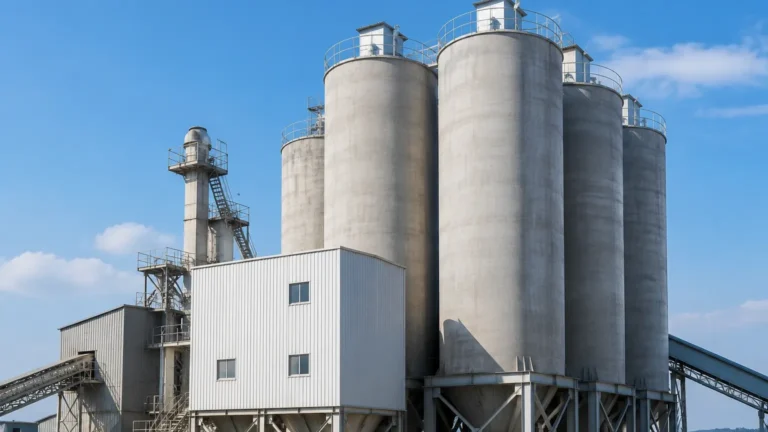
Drinking water storage systems range from small-scale atmospheric tanks in food processing plants to massive municipal ground reservoirs and elevated water towers. Regardless of the scale, the primary objective remains the same: ensuring a continuous supply of clean water while protecting the integrity of the storage vessel and the surrounding environment. This guide explores the technical principles, selection criteria, and installation best practices for level measurement in potable water applications.
Principles of Level Measurement in Water Storage
Before selecting a specific instrument for drinking water storage, it is essential to understand the physical principles that govern different measurement technologies. Most industrial applications utilize one of three primary methods: ultrasonic, radar, or hydrostatic pressure.
1. Ultrasonic Level Measurement (Non-Contact)
Ultrasonic sensors operate on the Time-of-Flight (ToF) principle. The sensor, mounted at the top of the tank, emits a high-frequency sound pulse toward the water surface. This pulse reflects off the surface and returns to the sensor. By measuring the time it takes for the echo to return and knowing the speed of sound in air, the device calculates the distance to the water level.
* Advantages: Since the sensor does not touch the water, there is no risk of contamination or corrosion of the sensing element. It is a cost-effective solution for many standard atmospheric tanks.
* Considerations: The speed of sound is affected by air temperature; therefore, high-quality ultrasonic sensors include integrated temperature compensation. They are best suited for stable environments without significant steam or heavy foam.
2. Radar Level Measurement (Non-Contact)
Radar sensors also use the ToF principle but utilize electromagnetic waves (microwaves) rather than sound waves. These waves travel at the speed of light and reflect off the water surface due to the change in dielectric constant between air and water.
* Advantages: Radar is highly accurate and virtually unaffected by temperature fluctuations, pressure changes, or the presence of vapors. It is ideal for deep reservoirs or tanks where high precision is required.
* Considerations: While typically more expensive than ultrasonic sensors, the decreasing cost of 80GHz high-frequency radar has made it a preferred choice for many modern drinking water storage projects due to its narrow beam angle and reliability.
3. Hydrostatic Level Measurement (Contact)
Hydrostatic transmitters measure the pressure exerted by the column of liquid above the sensor. The principle is based on the formula $P = \rho gh$, where $P$ is pressure, $\rho$ is the density of the water, $g$ is gravity, and $h$ is the height of the liquid. A submersible pressure transducer is lowered to the bottom of the tank or reservoir.
* Advantages: This method is highly reliable for very deep wells or underground reservoirs where top-mounting a sensor is impractical. It provides a direct measurement of the liquid head.
* Considerations: The sensor is in constant contact with the water, so it must be constructed from food-grade materials (such as 316L stainless steel) to maintain the safety of the drinking water storage.
Key Evaluation Criteria for Sensor Selection
When designing or upgrading a drinking water storage facility, several factors must influence the choice of level instrumentation. Engineers must look beyond simple cost comparisons to ensure long-term reliability.
Accuracy and Resolution
For municipal billing or large-scale inventory management, high accuracy (often within ±2mm to ±5mm) is necessary. Radar sensors typically offer the highest resolution, followed by ultrasonic and hydrostatic options. In elevated towers where small changes in level represent thousands of liters of water, precision is paramount.
Tank Geometry and Obstructions
The physical layout of the storage vessel significantly impacts sensor performance. Internal structures such as ladders, pipes, or reinforcement beams can cause false echoes for ultrasonic and radar sensors. Sensors with narrow beam angles (e.g., 80GHz radar) are better at "avoiding" these obstructions. For extremely narrow or irregularly shaped tanks, a hydrostatic sensor or a radar unit with a stilling well may be required.
Environmental Conditions
Drinking water storage tanks located outdoors are subject to extreme temperature swings. In cold climates, ice formation on the water surface can interfere with non-contact measurements. In hot, humid environments, condensation may form on the sensor face. Selecting a sensor with a high Ingress Protection (IP) rating (IP68) and anti-condensation features is vital for outdoor reliability.
Material Compatibility and Certification
Any instrument in contact with potable water must comply with local and international health standards, such as NSF/ANSI 61 or equivalent European standards. This ensures that no lead, heavy metals, or harmful chemicals leach into the water supply. Submersible cables for hydrostatic sensors should be made of materials like PE (polyethylene) or FEP, which are resistant to bacterial growth.
Practical Selection Table
The following table provides a general comparison of technologies used in drinking water storage applications:
| Technology | Typical Range | Accuracy | Contact Type | Best For |
| :— | :— | :— | :— | :— |
| Ultrasonic | 0.3m – 15m (1ft – 49ft) | ±0.25% | Non-contact | Small to medium atmospheric tanks |
| Radar (80GHz) | 0.1m – 30m+ (0.3ft – 98ft+) | ±2mm | Non-contact | Deep reservoirs, precision monitoring |
| Hydrostatic | 1m – 200m (3ft – 656ft) | ±0.5% | Contact (Submerged) | Deep wells, underground basins |
| Magnetic Gauge | 0.5m – 6m (1.6ft – 20ft) | ±5mm | Contact (Bypass) | Visual local indication on small tanks |
For a comprehensive overview of available technologies and specific model specifications, you may visit our Main Page.
Installation Considerations for Drinking Water Storage
Proper installation is just as important as selecting the right sensor. Even the most advanced radar unit will fail if it is positioned incorrectly. Engineers should adhere to the following guidelines:
1. Avoid Inflow Turbulence: Never install a level sensor directly above or near an inlet pipe. The turbulence and splashing caused by incoming water will create "noise" in the signal, leading to erratic readings. If possible, install the sensor in a quiet zone of the tank.
2. Dead Zone Management: All non-contact sensors have a "dead zone" or "blocking distance" (typically 0.2m to 0.5m) directly below the sensor face where measurement is impossible. Ensure the sensor is mounted high enough that the maximum water level never enters this zone.
3. Vertical Alignment: For ultrasonic and radar sensors, the device must be mounted perfectly perpendicular to the water surface. A tilt of just a few degrees can cause the signal to reflect away from the receiver, resulting in a "lost echo" error.
4. Stilling Wells: In tanks with significant surface agitation or internal obstructions, a stilling well (a vertical pipe that acts as a buffer) can be used to provide a calm surface for the sensor to measure. This is particularly useful for radar and ultrasonic applications in drinking water storage.
5. Venting for Hydrostatic Sensors: Submersible pressure sensors require a vent tube in the cable to compensate for changes in atmospheric pressure. Ensure this vent is protected by a moisture filter to prevent internal condensation, which can damage the electronics.
Common Risks and Limitations
While modern level meters are highly robust, certain conditions can challenge their accuracy in drinking water storage environments:
* Condensation: In closed tanks, water vapor can condense on the transducer face of ultrasonic sensors, dampening the signal. Radar sensors are less affected by this, but heavy droplets can still cause minor interference.
* Foam: While rare in pure drinking water, certain treatment processes may introduce foam. Foam absorbs ultrasonic signals and can scatter radar waves. If foam is present, a hydrostatic transmitter is often the most reliable choice.
* Signal Interference: In municipal settings, electromagnetic interference (EMI) from large pumps or motors can affect sensor electronics. Using shielded cables and ensuring proper grounding is essential to maintain signal integrity.
Frequently Asked Questions (FAQs)
Q: How often should level sensors in drinking water storage be calibrated?
A: Most digital radar and ultrasonic sensors are factory-calibrated and do not drift significantly. However, a manual check (using a dip tape) is recommended every 6 to 12 months to verify accuracy and account for any physical changes in the tank environment.
Q: Can I use a standard industrial sensor for drinking water?
A: Only if the materials in contact with the water or the headspace meet potable water safety standards. Always check for certifications like NSF/ANSI 61 before installation.
Q: What happens if the water freezes?
A: Non-contact sensors will measure the top of the ice layer rather than the liquid water. Hydrostatic sensors may be damaged if the water freezes around them. In cold climates, heaters or bubbler systems may be necessary to maintain a liquid surface for measurement.
Q: Is wireless transmission suitable for water level monitoring?
A: Yes, many modern drinking water storage sites use LoRaWAN or cellular (NB-IoT) transmission to send level data to a central SCADA system, especially in remote reservoir locations where running cables is cost-prohibitive.
Conclusion
Selecting the right instrumentation for drinking water storage is a balance between technical requirements, environmental constraints, and budget. By understanding the principles of ultrasonic, radar, and hydrostatic measurement, water engineers can design systems that provide accurate, real-time data for years to come. Reliable level monitoring not only prevents the waste of a precious resource but also ensures that communities have access to a safe and consistent water supply. For further technical assistance and to review product options and application support, please consult our Main Page.