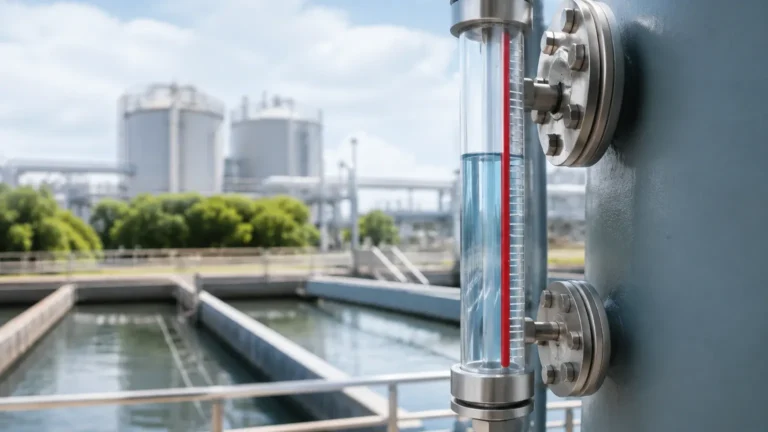
Nonincendive
Nonincendive
In the landscape of industrial automation and process control, ensuring safety in hazardous environments is a primary engineering concern. For facilities dealing with flammable gases, vapors, or liquids, the selection of level measurement instrumentation requires a deep understanding of protection methods. One of the most critical, yet often misunderstood, designations is the "nonincendive" rating. This protection concept allows for the use of electronic equipment in specific hazardous locations without the need for the bulky, expensive explosion-proof housings or the complex barrier systems required by intrinsic safety in certain zones.
For engineers and project managers evaluating solutions on the Main Page of instrumentation catalogs, understanding the technical boundaries of nonincendive (NI) equipment is essential for balancing cost-efficiency with rigorous safety compliance.
Understanding Nonincendive Protection in Level Measurement
The term nonincendive refers to a protection technique applied to electrical equipment such that, under normal operating conditions, the device is incapable of causing ignition of a specified flammable gas-air or vapor-air mixture. Unlike "explosion-proof" designs, which are built to contain an internal explosion, or "intrinsically safe" designs, which limit energy even under fault conditions, nonincendive equipment focuses on safety during standard performance.
Hazardous Area Classification Context
In North American standards (NEC and CEC), hazardous locations are divided into Classes, Divisions, and Groups. Nonincendive equipment is specifically designed for use in Class I, Division 2 locations.
* Class I: Locations where flammable gases or vapors are present.
* Division 2: Locations where hazardous concentrations are not likely to exist under normal operating conditions, but may occur during accidental rupture or system breakdown.
In these environments, the likelihood of a flammable atmosphere is low. Therefore, the safety standard dictates that as long as the equipment does not produce sparks or reach high temperatures (T-ratings) during its normal routine, it is safe for use. This is the core principle of nonincendive level meters.
Measurement Principles for Hazardous Area Level Meters
Before selecting a nonincendive instrument, it is vital to understand the underlying measurement physics. Different technologies interact with hazardous media in various ways, influencing their suitability for Division 2 environments.
Radar Level Measurement (FMCW and Pulse)
Radar level meters, such as those found on the Welk Main Page, operate by emitting electromagnetic waves toward the product surface.
1. Pulse Radar: Sends short microwave pulses and measures the Time of Flight (ToF) for the signal to return.
2. FMCW (Frequency Modulated Continuous Wave): Emits a continuous signal with a varying frequency. The difference in frequency between the emitted and received signal is proportional to the distance.
Radar is ideal for nonincendive applications because it is non-contact. There are no moving parts to create mechanical sparks, and the electronic energy levels are generally low, making it easier for manufacturers to achieve NI certification.
Ultrasonic Level Sensors
Ultrasonic sensors use sound waves (typically 20 kHz to 200 kHz) to detect the level. The sensor measures the time interval between the emission of the ultrasonic pulse and the reception of the echo. While highly effective for water treatment and chemical storage, ultrasonic sensors in hazardous areas must be carefully evaluated for their "nonincendive" status, particularly regarding the transducer's surface temperature and the potential for static buildup on plastic faces.
Hydrostatic Level Transmitters
Hydrostatic measurement relies on the principle that the pressure at a specific depth is proportional to the liquid column height above it ($P = \rho \cdot g \cdot h$). These sensors are submerged or mounted at the bottom of a tank. In a nonincendive configuration, the transmitter's internal circuitry is designed to ensure no high-temperature spots or sparking occurs at the sensing diaphragm or within the 4-20mA loop during normal operation.
Nonincendive vs. Intrinsically Safe: Key Differences
While both nonincendive and intrinsically safe (IS) methods aim to prevent ignition, their engineering requirements and application zones differ significantly.
| Feature | Nonincendive (NI) | Intrinsically Safe (IS) |
| :— | :— | :— |
| Hazardous Zone | Class I, Division 2 (Zone 2) | Class I, Division 1 & 2 (Zone 0, 1, 2) |
| Fault Tolerance | No fault considered | Up to two simultaneous faults |
| Safety Barrier | Generally not required (depends on wiring) | Requires a galvanic isolator or Zener barrier |
| Wiring Method | Nonincendive Field Wiring or Conduit | IS Wiring (often simple blue cable) |
| Cost | Moderate | Higher (due to barrier and certification) |
Nonincendive equipment is often preferred in Division 2 because it eliminates the need for expensive IS barriers in the control room, provided the field wiring follows specific "nonincendive field wiring" (NIFW) parameters. This reduces both the complexity of the cabinet and the overall system cost.
Practical Selection Criteria for Industrial Level Meters
When selecting a nonincendive level meter for your project, consider the following technical parameters to ensure the device meets both process and safety requirements.
1. Process Medium and Dielectric Constant
For radar meters, the dielectric constant ($ε_r$) of the liquid is critical. Flammable hydrocarbons often have low dielectric constants ($ε_r < 2.0$), which can weaken the reflected signal. Ensure the radar chosen is sensitive enough to detect these surfaces reliably without requiring high-power emissions that might conflict with NI energy limits.
2. Temperature Ratings (T-Codes)
Every nonincendive device is assigned a Temperature Class (T-Code), ranging from T1 (≤ 450°C) to T6 (≤ 85°C). This rating indicates the maximum surface temperature the equipment can reach under normal operation. You must ensure the T-Code of the level meter is lower than the Auto-Ignition Temperature (AIT) of the gases present in the environment.
3. Enclosure Protection
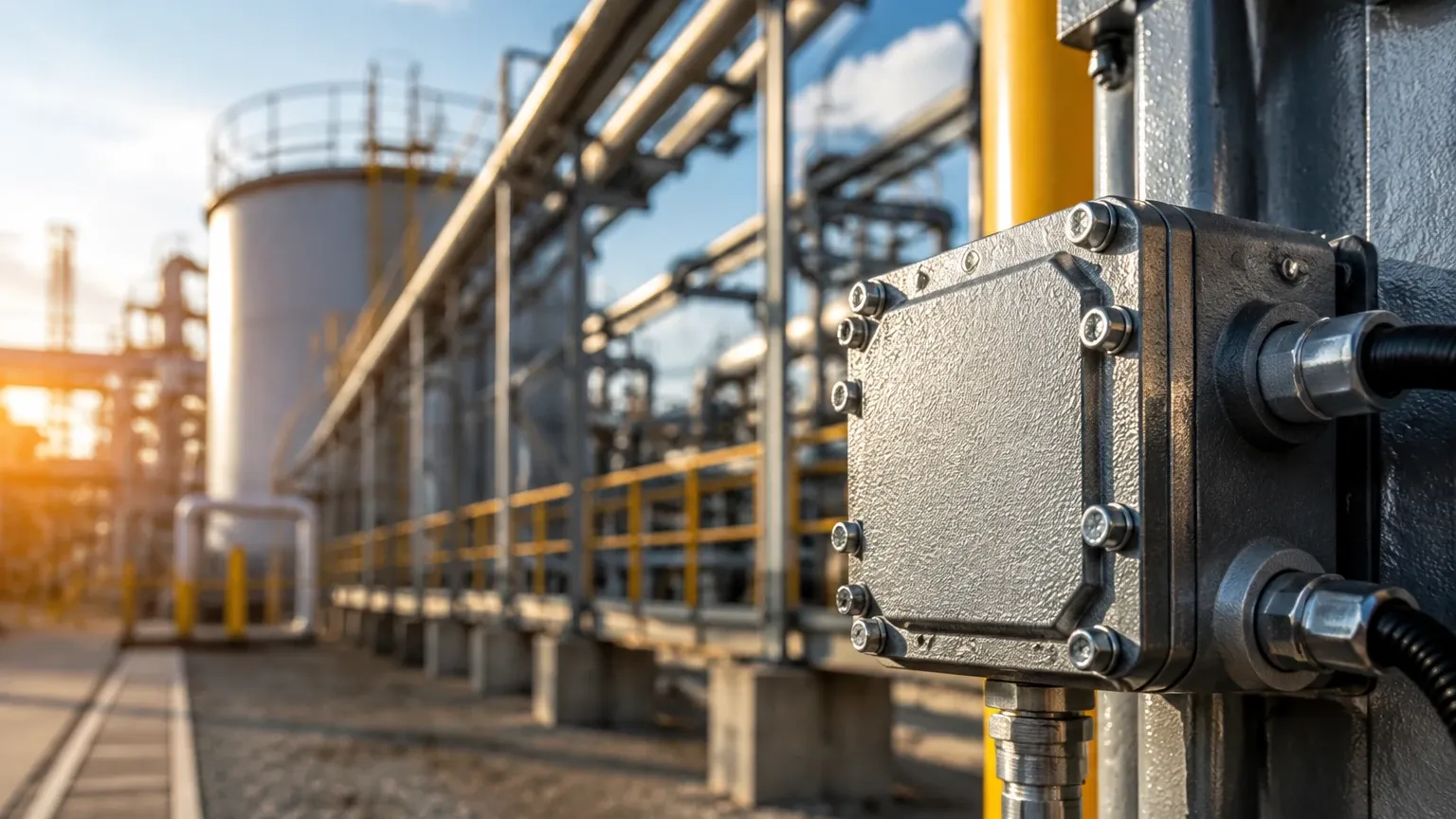
In Division 2 areas, environmental protection is as important as electrical safety. Look for enclosures rated NEMA 4X or IP66/IP67. These protect the nonincendive circuits from moisture, dust, and corrosive vapors, which could otherwise lead to premature component failure and potential safety risks.
4. Mounting and Mechanical Isolation
For magnetic level gauges equipped with nonincendive switches or transmitters, the mechanical isolation provided by the bypass chamber offers an extra layer of safety. The electronic components are located outside the process pressure boundary, further reducing the risk of ignition even if a component were to fail.
Practical Selection Table
| Technology | Typical Range | Accuracy | Best For… |
| :— | :— | :— | :— |
| 80GHz Radar | Up to 120m | ±1mm | Small tanks, volatile liquids, high precision |
| Ultrasonic | 0.3m to 15m | ±0.25% | Open sumps, water-based chemicals |
| Hydrostatic | 1m to 200m | ±0.1% | Deep wells, vented fuel tanks |
| Level Switch | Point detection | ±2mm | Overfill protection in Division 2 storage |
For specific model comparisons and OEM/ODM customization options, engineers should consult the technical data sheets available on the Welk Main Page.
Installation and Wiring Considerations
The safety of a nonincendive system depends heavily on correct installation. Failure to follow the manufacturer’s "Control Drawing" can void the safety rating of the entire loop.
Nonincendive Field Wiring (NIFW)
The NIFW concept allows for the interconnection of nonincendive apparatus with associated nonincendive apparatus using conventional wiring methods (like Tray Cable) instead of rigid conduit. However, this is only permissible if the parameters ($V_{max}$, $I_{max}$, $C_i$, $L_i$) of the level meter are compatible with the source parameters ($V_{oc}$, $I_{sc}$, $C_a$, $L_a$).
Sealing Requirements
While Division 2 requirements are less stringent than Division 1, explosion-proof seals may still be required if the conduit enters an enclosure that contains "make-or-break" contacts (like a standard relay) that are not themselves nonincendive. Most modern level transmitters use solid-state electronics, which often simplifies these sealing requirements.
Grounding and Bonding
Proper grounding is essential to prevent static discharge, especially in tanks containing non-conductive flammable liquids. The level meter housing must be bonded to the plant's equipotential grounding system to ensure no voltage differentials exist between the instrument and the tank wall.
Limitations and Safety Risks
While nonincendive level meters offer significant advantages, they are not universal solutions. Engineers must be aware of their limitations:
* No Division 1 Use: A nonincendive device cannot be installed in a Division 1 (Zone 0/1) area unless it also carries an Intrinsically Safe or Explosion-Proof rating. Division 1 areas are those where hazardous mixtures are expected to be present during normal operation.
* Normal Operation Only: The NI rating only guarantees safety during *normal* operation. If a component fails in a way that creates a spark, and a flammable atmosphere happens to be present (even if unlikely), the NI rating does not provide the same level of protection as an IS circuit.
* Maintenance Restrictions: You cannot open the enclosure of a nonincendive device while the circuit is energized if a flammable atmosphere is present. This is a critical procedural difference from IS equipment, which can often be maintained "live."
Frequently Asked Questions (FAQs)
Q: Can I replace an explosion-proof level transmitter with a nonincendive one?
A: Only if the area is classified as Division 2. If the area is Division 1, an explosion-proof or intrinsically safe instrument is mandatory. Always verify the area classification before changing the protection method.
Q: Does a nonincendive radar meter require a Zener barrier?
A: Generally, no. Nonincendive equipment is designed to be connected to standard PLC or DCS analog inputs without a barrier, provided the installation complies with the manufacturer's control drawings and the NIFW parameters.
Q: What happens if the process temperature exceeds the T-Code of the sensor?
A: This is a safety violation. If the process temperature is higher than the T-Code, the sensor itself could become an ignition source. In such cases, you must use cooling extensions or select a different measurement technology (like a magnetic level gauge with a remote-mounted transmitter).
Q: Is "Nonincendive" the same as "Type n"?
A: They are similar but originate from different standards. Nonincendive is a North American term (NEC), while "Type n" (Ex n) is the IECEx/ATEX equivalent for Zone 2. Many modern instruments carry both certifications to allow for global deployment.
For professionals seeking reliable and cost-effective level measurement solutions, the nonincendive approach provides a robust middle ground for Division 2 applications. By selecting the right technology—whether radar, ultrasonic, or hydrostatic—and adhering to strict installation guidelines, facilities can maintain high safety standards while optimizing their instrumentation budget. Explore the full range of certified industrial level meters at the Main Page to find the ideal fit for your specific process requirements.