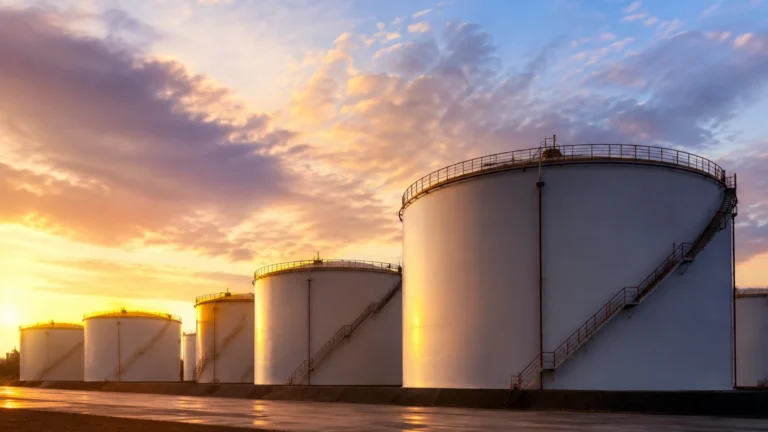
Bulk Fuel Tank Monitoring System
Bulk Fuel Tank Monitoring System
In industrial environments, the management of large-scale fuel reserves is a critical operational requirement. Whether supporting backup power generators, fueling logistics fleets, or supplying chemical processes, a robust bulk fuel tank monitoring system is essential for maintaining inventory accuracy, ensuring safety, and optimizing supply chain logistics. These systems transition fuel management from manual, error-prone measurements to automated, high-precision data acquisition.
Implementing an effective monitoring solution requires a deep understanding of the underlying measurement technologies, the physical properties of the fuel being stored, and the environmental constraints of the installation site. This guide examines the primary measurement principles, selection criteria, and engineering considerations for modern fuel level instrumentation.
Core Measurement Principles for Fuel Level Detection
To select the appropriate components for a bulk fuel tank monitoring system, engineers must first understand how different sensors interact with the liquid and the tank environment. Fuel storage presents unique challenges, such as the presence of volatile vapors, varying dielectric constants, and temperature-induced density changes.
Radar Level Measurement (Non-Contact)
Radar level meters are widely considered the gold standard for bulk fuel applications. They operate by emitting high-frequency electromagnetic waves (typically in the 26GHz or 80GHz range) toward the fuel surface. The time taken for the signal to reflect back to the sensor is used to calculate the distance.
* FMCW (Frequency Modulated Continuous Wave): Modern systems often use FMCW radar, which continuously transmits a signal with a changing frequency. The difference between the transmitted and received frequency is proportional to the distance. This method offers extreme precision, often within ±1mm to ±3mm.
* Advantages: Since radar waves do not require a medium for travel, they are unaffected by vacuum, pressure, or the heavy vapor layers often found in gasoline or diesel tanks.
Ultrasonic Level Measurement
Ultrasonic sensors utilize sound waves rather than electromagnetic waves. The sensor emits an ultrasonic pulse that bounces off the fuel surface and returns to the transducer. The "Time of Flight" (ToF) is measured and converted into level data.
* Considerations: Ultrasonic waves are mechanical and depend on the air density within the tank. In fuel tanks, temperature fluctuations can change the speed of sound, necessitating integrated temperature compensation. Furthermore, heavy fuel vapors can sometimes attenuate the sound signal, making ultrasonic more suitable for stable fuels like heavy oils or lubricants in vented tanks.
Hydrostatic Pressure Measurement
Hydrostatic transmitters measure the pressure exerted by the liquid column at the bottom of the tank. The principle is based on the formula: $P = \rho \cdot g \cdot h$, where $P$ is pressure, $\rho$ is the liquid density, $g$ is gravity, and $h$ is the height of the liquid.
* Application: These sensors are typically submerged or mounted via a flange at the tank base. They are highly reliable for vented tanks but require density compensation if the fuel type or temperature changes significantly, as density variations will affect the pressure reading regardless of the actual volume.
Magnetic Level Gauges
Magnetic level gauges are side-mounted to the tank. A float containing a permanent magnet moves with the fuel level inside a bypass chamber. Outside the chamber, a series of magnetic flaps or a continuous transmitter tracks the float's position.
* Durability: This is a purely mechanical-magnetic interface, providing a clear visual indication without power, while also allowing for electronic output via a reed-chain or magnetostrictive transmitter for remote monitoring.
Comparison of Level Measurement Technologies
Choosing the right technology for a bulk fuel tank monitoring system depends on the specific requirements of the application, such as tank height, fuel volatility, and budget.
| Technology | Accuracy | Media Compatibility | Environmental Sensitivity | Typical Application |
| :— | :— | :— | :— | :— |
| Radar (80GHz) | Excellent (±1mm) | All fuels, including high-vapor | Low sensitivity to dust/vapor | High-precision custody transfer |
| Ultrasonic | Good (±0.25% FS) | Non-volatile oils/lubricants | Sensitive to vapor and foam | Small to medium storage tanks |
| Hydrostatic | Moderate (±0.5% FS) | All liquids | Sensitive to density changes | Deep underground tanks |
| Magnetic | Good (±5mm) | Clean fuels | Unaffected by foam/vapor | Visual backup and process tanks |
System Integration and Data Transmission
A bulk fuel tank monitoring system is more than just a sensor; it is an integrated network that processes and communicates data to stakeholders. For comprehensive oversight, users often visit the Main Page of instrumentation providers to review how different sensors integrate into broader control architectures.
Signal Outputs and Protocols
* 4-20mA / HART: The industry standard for analog transmission, allowing for basic level data and diagnostic information to be sent over a single pair of wires.
* RS485 / Modbus RTU: A digital protocol that facilitates the connection of multiple tanks to a single PLC (Programmable Logic Controller) or SCADA system, reducing wiring complexity.
* IoT and Remote Telemetry: In remote locations, such as cellular tower backup sites, fuel levels are often transmitted via GSM, LoRaWAN, or satellite links to a cloud-based dashboard. This allows fuel suppliers to optimize delivery routes based on real-time depletion rates.
Local Display and Alarms
Every system should include local high-level and low-level alarms. High-level alarms are critical for overfill prevention, often tied to an automatic shut-off valve, while low-level alarms ensure that operations are not interrupted by a dry tank.
Installation Guidelines for Industrial Fuel Tanks
Proper installation is as important as sensor selection. Even the most advanced radar meter will fail if it is poorly positioned.
1. Avoid Internal Obstructions: Sensors should be installed away from ladders, heating coils, or agitators. These structures can create false echoes (for radar and ultrasonic) or physical interference (for floats).
2. Nozzle Height and Diameter: For radar and ultrasonic sensors, the mounting nozzle must be short and wide enough to prevent the signal from reflecting off the nozzle walls before it enters the tank. This is known as the "near-field" or "dead zone."
3. Positioning: Sensors should generally not be mounted in the exact center of a tank with a domed roof, as this can concentrate reflected signals and cause interference. Ideally, the sensor is placed at 1/2 to 1/3 of the tank radius.
4. Stilling Wells: In tanks with high turbulence or foam, a stilling well (a vertical pipe) can be used to provide a calm surface for the sensor to measure. This is common in fuel tanks where rapid filling might cause splashing.

Operational Limitations and Safety Compliance
When designing a bulk fuel tank monitoring system, engineers must account for several operational risks and regulatory requirements.
Hazardous Area Classifications
Fuel is inherently flammable. Instrumentation must be rated for hazardous areas (e.g., ATEX, IECEx, or UL Class I, Div 1). This usually involves using intrinsically safe (IS) circuits or explosion-proof (XP) housings to prevent the electronics from becoming an ignition source.
Temperature and Expansion
Fuel expands and contracts with temperature. A tank that is "full" at 10°C may overflow at 30°C. Advanced monitoring systems use multi-point temperature sensors to calculate "temperature-compensated volume," providing a standardized volume at 15°C or 20°C for accounting purposes.
Maintenance and Calibration
While non-contact sensors like radar require minimal maintenance, they should still be checked annually for buildup on the antenna. Hydrostatic sensors may require periodic recalibration to account for sensor drift or changes in fuel density if the fuel source varies.
Frequently Asked Questions (FAQ)
Q: Can one system monitor different types of fuel?
A: Yes, but the system must be configured for the specific gravity and dielectric constant of the fuel. Radar is generally more versatile across different fuel types without needing recalibration.
Q: How does a monitoring system detect leaks?
A: Leak detection is usually achieved through "static leak testing," where the system monitors the level over a period of no activity (e.g., overnight). If the level drops without a corresponding discharge command, an alarm is triggered.
Q: What is the maximum tank height for these systems?
A: Modern radar level meters can measure tanks up to 70 meters (approx. 230 feet) or more, making them suitable for the largest refinery storage spheres.
Q: Are wireless systems reliable for fuel monitoring?
A: Wireless systems are highly reliable when designed with industrial-grade protocols like WirelessHART. They are particularly cost-effective for retrofitting existing tank farms where trenching for cables is prohibitively expensive.
Conclusion
A professional bulk fuel tank monitoring system is a vital investment for any facility managing significant fuel volumes. By prioritizing measurement accuracy through radar or hydrostatic technologies and ensuring seamless data integration, operators can significantly reduce the risks of stockouts, overfills, and environmental incidents. For those looking to specify a system, consulting technical documentation on the Main Page of a specialized manufacturer is the recommended next step to ensure all site-specific variables are addressed.