Ultrasonic Level Sensor Egypt
Ultrasonic Level Sensor Egypt: A Comprehensive Engineering Guide
Industrial development in Egypt has seen significant acceleration through initiatives like the Suez Canal Economic Zone and the New Administrative Capital. As infrastructure for water treatment, petrochemical processing, and food manufacturing expands, the demand for precise instrumentation has grown. For many process engineers and procurement specialists, selecting an ultrasonic level sensor egypt involves balancing high-performance technical specifications with the unique environmental challenges of the region, such as extreme ambient temperatures and high dust concentrations.
This guide provides a technical overview of ultrasonic level measurement, practical selection criteria for the Egyptian industrial market, and installation strategies to ensure long-term reliability.
Understanding the Principle of Ultrasonic Level Measurement
Before selecting an instrument, it is essential to understand the physics of the measurement. Ultrasonic Level Meters operate on the "Time of Flight" (ToF) principle.
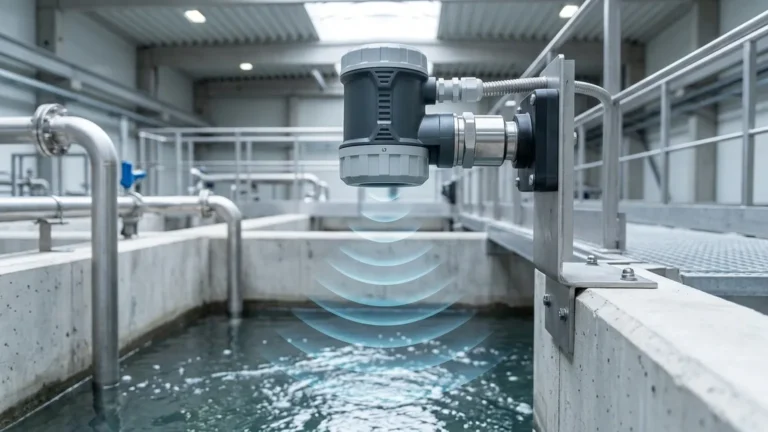
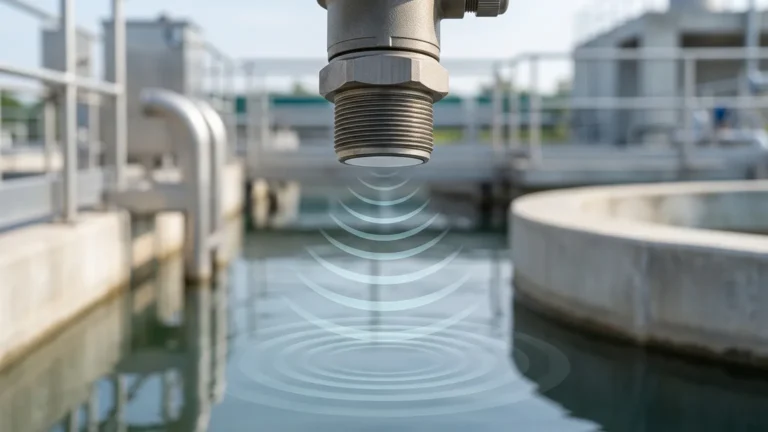
The sensor's transducer contains a piezoelectric crystal that converts electrical energy into mechanical pulses. These ultrasonic pulses travel through the air or gas space in a tank, reflect off the surface of the material (liquid or solid), and return to the transducer. The instrument measures the time interval between the emission of the pulse and the reception of the echo.
The Calculation Formula
Distance is calculated using the following basic equation:
D = (C × T) / 2
Where:
* D is the distance from the sensor to the material surface.
* C is the speed of sound in the medium (typically air).
* T is the total transit time (ToF).
Because the speed of sound varies significantly with temperature—changing approximately 0.17% per degree Celsius—modern Ultrasonic Level Meters must include integrated temperature compensation. This is particularly critical in Egypt, where daytime temperatures in industrial facilities can fluctuate from 15°C in winter to over 45°C in summer.
Industrial Applications for Ultrasonic Level Meters in Egypt
In the Egyptian market, ultrasonic technology is favored for its non-contact nature, which reduces maintenance and prevents contamination of the measured medium. Key sectors include:
1. Water and Wastewater Treatment: Egypt’s massive investment in desalination and wastewater reclamation (such as the Bahr El-Baqar plant) relies on ultrasonic sensors for monitoring open channel flow, sump levels, and chemical storage tanks.
2. Chemical Processing: Non-contact measurement is ideal for corrosive acids and bases used in the textile and fertilizer industries in Alexandria and the Nile Delta.
3. Food and Beverage: Sanitary applications require sensors that do not touch the product, ensuring hygiene compliance in dairy and beverage production.
4. Irrigation Management: Monitoring canal levels and pump station efficiency across the agricultural sector.
Key Selection Criteria for an Ultrasonic Level Sensor Egypt
When sourcing an ultrasonic level sensor egypt, engineers must look beyond the basic measuring range. The following factors determine the success of the installation in local conditions:
1. Measuring Range and "Blind Zone"
Every ultrasonic sensor has a minimum distance it cannot measure, known as the "dead zone" or "blind zone." This is the distance required for the transducer membrane to stop vibrating after the pulse is sent so it can listen for the echo. For a 10-meter range sensor, the blind zone is typically between 0.25m and 0.5m. If the tank is filled into this zone, the sensor will provide an error or a false reading.
2. Beam Angle
The ultrasonic pulse spreads out in a cone shape. A narrower beam angle (e.g., 5° to 8°) is preferable for narrow tanks or tanks with internal obstructions like ladders, agitators, or heating coils. A wider beam angle may cause "false echoes" from the tank walls.
3. Environmental Protection (IP Rating)
Given the dusty environment in many Egyptian industrial zones, a high Ingress Protection (IP) rating is mandatory. For outdoor or wash-down environments, IP67 or IP68 is recommended to prevent dust and moisture from damaging the electronics.
4. Output and Communication
Standard 4-20mA analog outputs are common, but many modern Egyptian projects require digital integration via RS485 (Modbus RTU) or HART protocols for remote monitoring and integration into SCADA systems.
Technical Comparison: Ultrasonic vs. Alternative Technologies
Choosing the right technology requires comparing ultrasonic sensors against other common methods used in the region.
| Feature | Ultrasonic Level Meter | Radar (GWR/Non-Contact) | Hydrostatic Transmitter |
| :— | :— | :— | :— |
| Measurement Type | Non-contact (Sound) | Non-contact (Microwave) | Contact (Pressure) |
| Ideal Medium | Liquids & some solids | All liquids/solids | Liquids only |
| Effect of Vacuum | Cannot function | Works perfectly | Not applicable |
| Effect of Foam | High signal absorption | Moderate absorption | No effect |
| Cost | Cost-effective | Higher | Moderate |
| Maintenance | Very Low | Low | Moderate (cleaning required) |
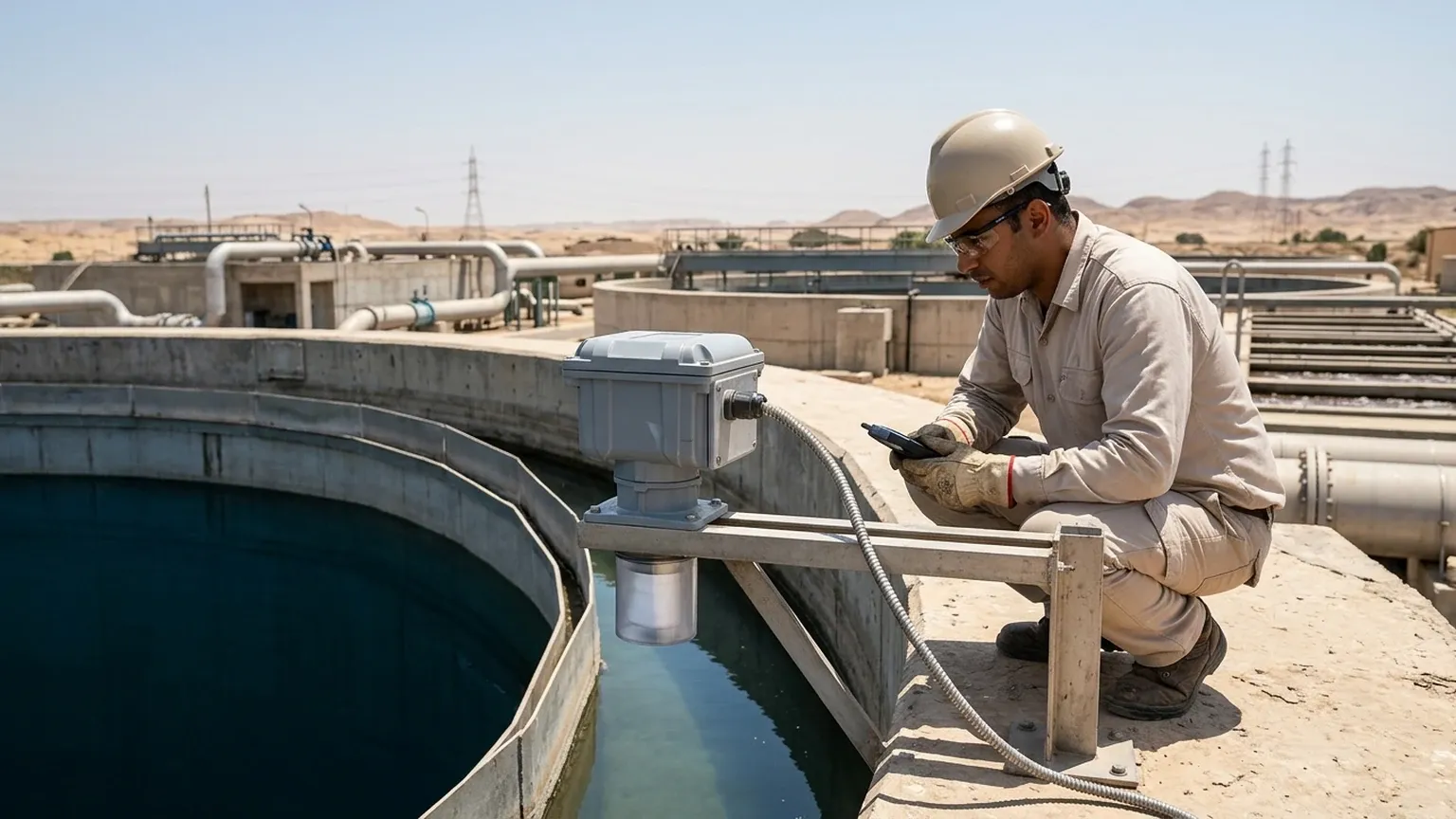
Installation Best Practices and Environmental Considerations
To ensure an ultrasonic level sensor egypt performs accurately, the physical installation must account for both the vessel geometry and the local climate.
Avoiding Obstructions
The sensor must be installed in a location where the ultrasonic beam path is clear of obstructions. If a ladder or pipe is within the beam cone, the sensor may lock onto that fixed object rather than the liquid surface. Advanced sensors allow for "false echo suppression," where the software is taught to ignore these static reflections.
Mounting Position
* Perpendicularity: The sensor must be mounted perfectly perpendicular to the liquid surface. Even a small tilt can cause the echo to bounce away from the transducer rather than back to it, resulting in signal loss.
* Avoid the Center: In round tanks, avoid mounting the sensor in the exact center, as this can create parabolic focal points that amplify unwanted noise.
* Avoid the Fill Stream: Never install the sensor directly above the point where the tank is filled. The turbulence and the falling liquid will disrupt the signal.
Dealing with Heat and Sunlight
In Egypt, sensors installed outdoors are subject to intense UV radiation and heat.
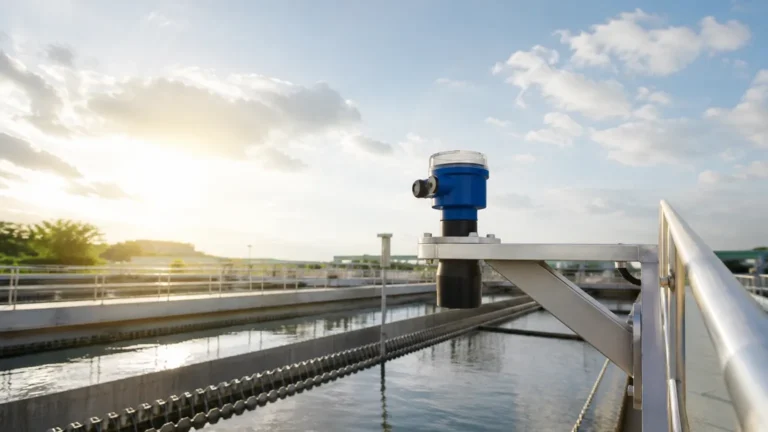
* Sunshields: Always install a protective sunshield over the sensor body. This prevents the housing from overheating, which can distort the internal temperature compensation and shorten the lifespan of the electronics.
* Nozzle Length: If mounting on a nozzle (standpipe), ensure the nozzle is short enough that the transducer face extends into the tank, or that the nozzle diameter is wide enough to prevent internal reflections.
Limitations and Maintenance Requirements
While Ultrasonic Level Meters are highly versatile, they have specific physical limitations:
* Vacuum Conditions: Sound requires a medium to travel. Therefore, ultrasonic sensors cannot work in a vacuum.
* Heavy Foam: Thick, dense foam on the surface of a liquid acts as an acoustic absorber. In these cases, the signal may not return to the sensor. Radar or hydrostatic sensors are usually preferred for heavy foam applications.
* Extreme Turbulence: Rapidly agitating surfaces can scatter the sound waves. Using a stilling well (a pipe inserted into the liquid) can help provide a stable surface for measurement.
* High Pressure/Temperature: Standard ultrasonic transducers are usually limited to pressures below 3 bar and temperatures below 80°C. For high-pressure steam or boiling liquids, radar technology is the standard alternative.
Maintenance Tip: Periodically check the transducer face for condensation or dust buildup. While many sensors are self-cleaning to an extent due to vibration, a manual wipe with a soft cloth can prevent signal attenuation in extremely dusty environments.
Frequently Asked Questions (FAQ)
Q: Can I use an ultrasonic level sensor for solids like grain or cement in Egypt?
A: Yes, but with caveats. Solids do not reflect sound as efficiently as liquids and often have an angle of repose (a sloped surface). You must select a sensor specifically rated for solids, which usually features a higher power output and a lower frequency to penetrate dust.
Q: How does humidity in coastal cities like Alexandria affect the sensor?
A: High humidity changes the density of the air, which slightly affects the speed of sound. However, most high-quality Ultrasonic Level Meters with integrated temperature compensation can handle these variations without significant loss of accuracy.
Q: What is the typical lifespan of an ultrasonic sensor in an industrial setting?
A: With proper installation and UV protection, a professional-grade sensor should last 7 to 10 years. The primary failure point is usually the degradation of the piezoelectric crystal or the electronics due to extreme heat exposure.
For engineers looking to optimize their process control, selecting the right ultrasonic level sensor egypt requires a partner who understands both the technical requirements and the environmental rigors of the Middle East. By following these guidelines, facilities can ensure accurate, maintenance-free level monitoring for years to come.