Ultrasonic Level Measurement Cannot Be Used
Ultrasonic Level Measurement Cannot Be Used: A Guide to Application Limits
In industrial process control, selecting the correct instrumentation is critical for operational safety and efficiency. Ultrasonic Level Meters are among the most popular non-contact measurement solutions due to their ease of installation, lack of moving parts, and cost-effectiveness. However, they are not a universal solution. Understanding the specific scenarios where ultrasonic level measurement cannot be used is essential for engineers to avoid costly downtime and inaccurate data.
This guide examines the principles of ultrasonic technology, identifies the environmental and physical barriers that impede its performance, and provides practical selection criteria for alternative technologies when ultrasonic sensors reach their limits.
Measurement Principles of Ultrasonic Level Meters
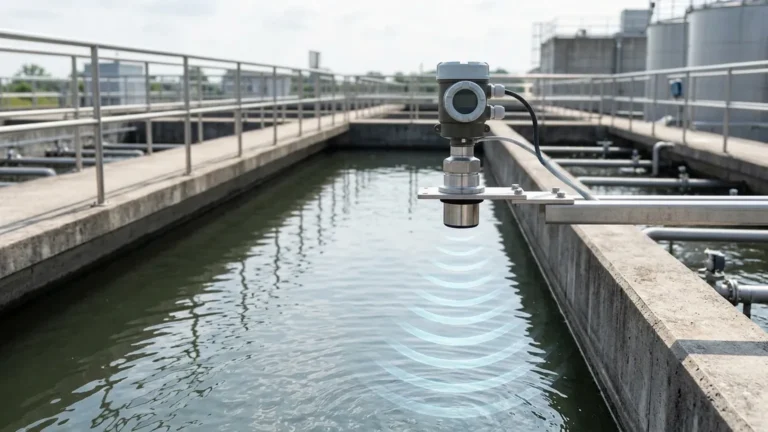
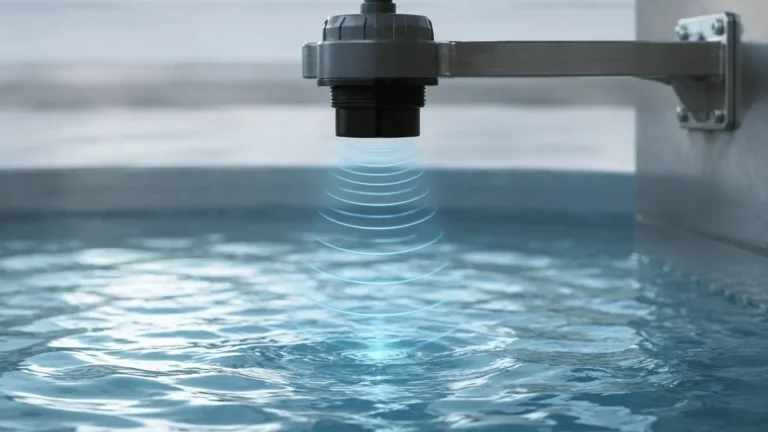
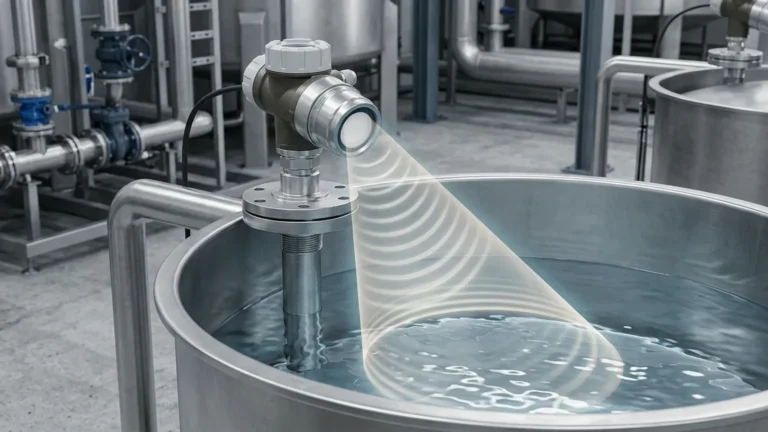
Before discussing limitations, it is necessary to understand how these instruments function. Ultrasonic level meters operate on the "Time-of-Flight" (ToF) principle. The sensor's transducer emits a high-frequency acoustic pulse (typically between 20 kHz and 200 kHz). This sound wave travels through the air or gas space in a vessel, hits the surface of the medium (liquid or solid), and reflects back to the transducer.
The instrument measures the time interval between the emission of the pulse and the reception of the echo. Since the speed of sound in air is known (approximately 343 m/s at 20°C), the distance to the surface is calculated using the formula:
Distance = (Speed of Sound × Time) / 2
The level of the material is then determined by subtracting this distance from the total height of the vessel. Because this method relies entirely on the propagation of mechanical sound waves through a gaseous medium, any factor that alters the speed of sound or interferes with the wave's path will directly impact accuracy.
Primary Scenarios Where Ultrasonic Level Measurement Cannot Be Used
While highly effective in many water treatment and chemical storage applications, there are several distinct conditions where ultrasonic technology fails or provides unreliable results.
1. Vacuum Conditions
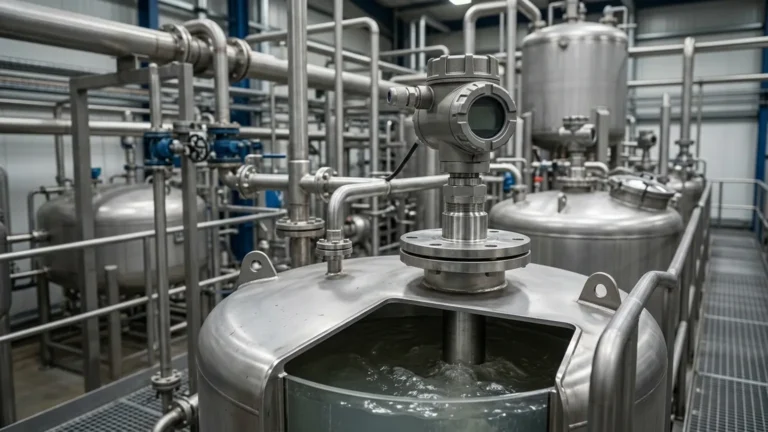
Sound is a mechanical wave that requires a medium (gas, liquid, or solid) to propagate. In a vacuum or near-vacuum environment, there are no air molecules to transmit the vibration of the transducer. Consequently, ultrasonic level measurement cannot be used in vacuum tanks or degassing chambers. For these applications, technologies that do not require a medium, such as Guided Wave Radar (GWR) or non-contact radar, are required.
2. High Pressure and Varying Gas Compositions
The speed of sound is highly dependent on the density of the medium it travels through. In high-pressure environments, the density of the gas phase increases significantly, which alters the speed of sound. Furthermore, if the gas composition in the tank changes—for example, if a nitrogen blanket is replaced by carbon dioxide or solvent vapors—the speed of sound will shift. Unless the instrument is specifically calibrated for that exact gas mixture and maintained at a constant pressure, the level reading will be significantly inaccurate.
3. Extreme Temperatures and Temperature Gradients
Most ultrasonic level meters include built-in temperature compensation because the speed of sound changes by approximately 0.17% per degree Celsius. However, this compensation usually relies on a sensor located at the transducer. In large outdoor tanks or heated process vessels, significant temperature gradients can exist between the liquid surface and the sensor. If the air temperature is not uniform, the calculated distance will be wrong. Additionally, most standard ultrasonic transducers are limited to operating temperatures below 80°C or 100°C due to the physical limits of the piezoelectric crystals and housing materials.
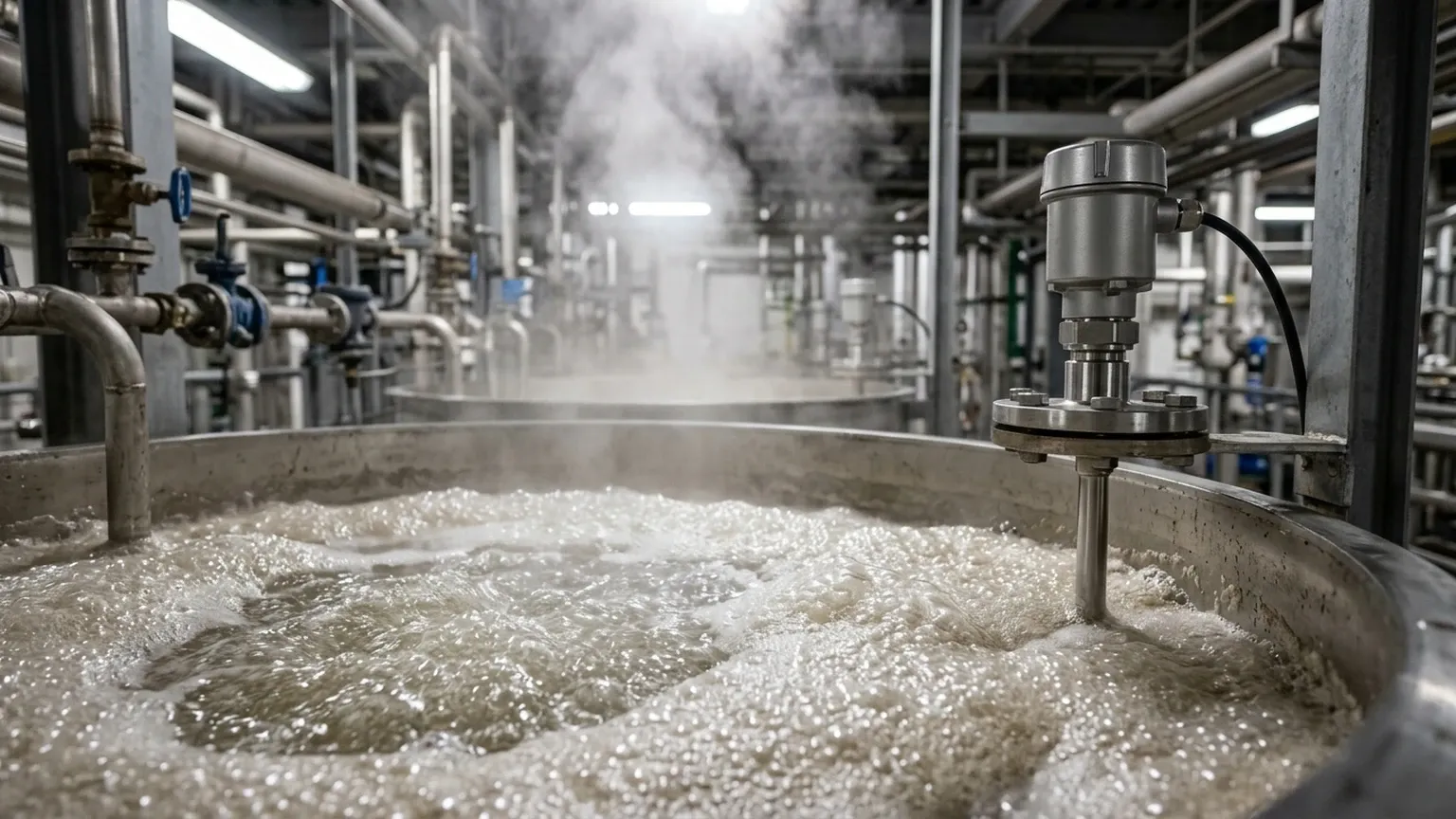
4. Heavy Foam and Surface Turbulence
Foam is one of the most common challenges for ultrasonic sensors. Depending on its density and thickness, foam can react in two ways:
* Absorption: Light, airy foam often absorbs the acoustic pulse entirely, resulting in a "Loss of Echo" (LOE) error.
* False Reflection: Dense, thick foam may reflect the sound wave, causing the sensor to report the top of the foam layer rather than the actual liquid level.
Similarly, extreme turbulence or boiling surfaces can scatter the sound pulse in different directions, preventing a clear echo from returning to the transducer.
5. High Dust and Heavy Steam
In many bulk solid applications, such as grain silos or cement storage, the filling process creates high concentrations of dust. These particles can attenuate the sound signal, reducing the effective range of the sensor. In liquid applications, heavy steam or vapor clouds can act similarly to foam, refracting or absorbing the sound waves. While some high-power ultrasonic sensors can penetrate light dust, they generally struggle compared to radar-based systems in these environments.
Technical Limitations: The Dead Zone
Every ultrasonic level meter has a "Dead Zone" (also known as the blocking distance). This is a small area directly beneath the transducer face where the sensor cannot receive an echo. This occurs because the transducer needs a few milliseconds to stop vibrating after emitting a pulse before it can switch to receiving mode.
Typically, the dead zone ranges from 0.2 meters to 0.5 meters depending on the frequency of the sensor. If the liquid level rises into this zone, the meter will provide an erratic or frozen reading. When designing a system, engineers must ensure the transducer is mounted high enough so that the maximum liquid level never enters the dead zone.
Selection Table: Ultrasonic vs. Alternatives
To assist in the engineering phase, the following table outlines when to utilize ultrasonic technology and when to consider alternatives.
| Condition | Ultrasonic Suitability | Recommended Alternative |
| :— | :— | :— |
| Open Water/Sumps | Excellent | N/A |
| Vacuum Tanks | Impossible | Radar / Hydrostatic |
| Heavy Foam | Poor | Guided Wave Radar / Displacement |
| High Dust (Silos) | Moderate (Short range) | 80GHz Radar |
| Corrosive Acids | Excellent (with PVDF/PTFE) | N/A |
| High Temp (>150°C) | Poor | Radar / Magnetic Level Gauge |
| Pressure > 3 Bar | Limited | Radar / Guided Wave Radar |
| Simple Storage Tanks| Excellent | N/A |
Installation Considerations for Success
Even when an application is suitable for ultrasonic measurement, improper installation can lead to failure. To ensure reliable performance from Ultrasonic Level Meters, follow these guidelines:
1. Avoid the Center of Domed Tanks: Mounting a sensor in the exact center of a domed or spherical tank can create a "parabolic" effect, where multiple echoes converge and confuse the sensor electronics.
2. Stay Away from Fill Streams: Never install the sensor directly over the path of the incoming material. The falling liquid or solids will obstruct the signal and provide a false high-level reading.
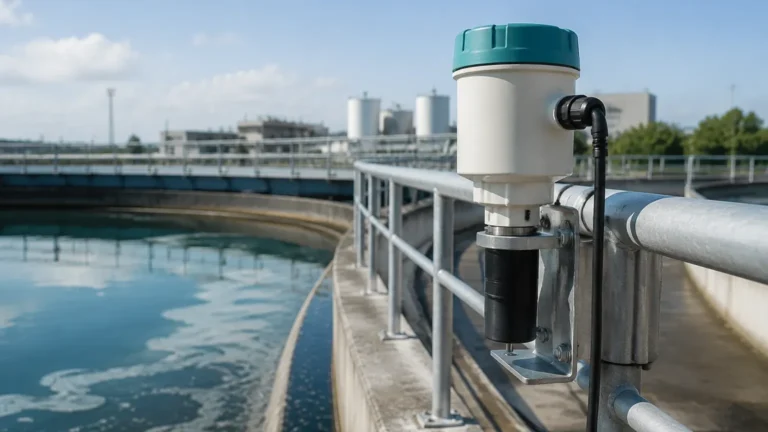
3. Beam Angle Clearance: Ultrasonic pulses spread out in a cone shape (typically 5° to 12°). Ensure there are no internal obstructions like ladders, pipes, or agitator blades within this beam cone. If obstructions are unavoidable, many Welk instruments offer "False Echo Suppression" to digitally ignore these fixed objects.
4. Perpendicular Alignment: The transducer face must be mounted perfectly parallel to the liquid surface. Even a few degrees of tilt can cause the signal to bounce off the surface and hit the tank wall rather than returning to the sensor.
Frequently Asked Questions (FAQs)
Can ultrasonic level meters be used for solids?
Yes, but with limitations. Solids like grain, sand, or plastic pellets have an "angle of repose" (a sloped surface). This slope tends to scatter the sound pulse. Therefore, sensors used for solids must typically be higher-powered and have a larger measuring range than those used for liquids.
How does wind affect outdoor ultrasonic sensors?
Strong wind can "blow" the sound pulse away from its vertical path, especially over long distances (e.g., measuring the level of a river from a bridge). In such cases, using a stilling well or a higher-frequency sensor with a narrower beam is recommended.
Is ultrasonic measurement safe for flammable liquids?
Ultrasonic sensors are available with Intrinsically Safe (IS) or Explosion-Proof (Ex-d) ratings. However, because they are non-contact, they are generally safer than contact methods as long as the housing material is compatible with the vapors present.
What is the maximum range of an ultrasonic level meter?
Standard industrial ultrasonic sensors typically reach up to 15 to 30 meters. For distances beyond 30 meters, the signal attenuation in the air becomes too great for reliable measurement, and radar or laser systems are usually preferred.
Conclusion
Ultrasonic level measurement remains a cornerstone of industrial automation due to its reliability in clean, atmospheric applications. However, as established, ultrasonic level measurement cannot be used in vacuums, high-pressure environments, or processes with heavy foam and extreme temperatures. By recognizing these factual boundaries, engineers can select the most appropriate Welk instrumentation for their specific needs, ensuring long-term accuracy and reduced maintenance costs. For standard liquid storage, wastewater management, and chemical dosing, Ultrasonic Level Meters continue to provide one of the best returns on investment in the level measurement market.
Download Ultrasonic Level Measurement Cannot Be Used as a PDF