Ultrasonic Level Sensor Lorawan
Ultrasonic Level Sensor LoRaWAN: A Technical Guide for Remote Industrial Monitoring
In the landscape of industrial automation and the Internet of Things (IoT), the ability to monitor liquid and solid levels in remote or inaccessible locations has become a critical requirement. The integration of Ultrasonic Level Meters with LoRaWAN (Long Range Wide Area Network) technology offers a robust solution for these challenges. This guide explores the technical foundations of the ultrasonic level sensor lorawan, its selection criteria, and the practical considerations for deployment in professional B2B environments.
Understanding the Measurement Principle
Before evaluating the connectivity benefits of LoRaWAN, it is essential to understand the underlying physics of ultrasonic measurement. An ultrasonic level sensor operates on the "Time of Flight" (ToF) principle.
The Transducer and Sound Waves
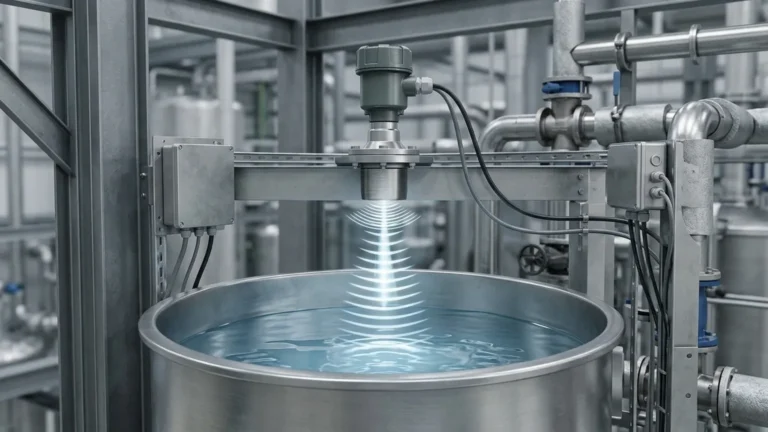
The core of the device is a piezoelectric transducer. When energized, this transducer vibrates at a high frequency (typically between 20 kHz and 200 kHz), emitting a pulse of ultrasonic sound waves. These waves travel through the air medium toward the target material—whether it is water in a reservoir, chemicals in a tank, or grain in a silo.
Reflection and Calculation
Once the sound waves hit the surface of the material, they are reflected back toward the sensor. The transducer then acts as a receiver, capturing the returning echo. The internal electronics of the sensor measure the exact time interval between the emission of the pulse and the reception of the echo.
Using the known speed of sound in air (approximately 343 meters per second at 20°C), the sensor calculates the distance to the surface using the formula:
Distance = (Speed of Sound × Time of Flight) / 2
The division by two accounts for the round-trip travel of the pulse. By subtracting this distance from the total height of the vessel (the "tank height"), the sensor determines the actual level of the material.
The Importance of Temperature Compensation
Because the speed of sound is highly dependent on air temperature, professional-grade Ultrasonic Level Meters include integrated temperature sensors. These sensors allow the device to automatically adjust the calculation based on ambient conditions, ensuring accuracy remains within specified tolerances (typically ±0.25% to ±0.5% of the measured range).
Why Integrate LoRaWAN with Ultrasonic Sensors?
LoRaWAN is a Low Power, Wide Area Network protocol designed to wirelessly connect battery-operated "things" to the internet in regional, national, or global networks. For level measurement, the ultrasonic level sensor lorawan provides several distinct advantages over traditional wired or cellular alternatives.
1. Long Range Connectivity: LoRaWAN can transmit data over distances of up to 5 km (3 miles) in urban environments and up to 15 km (9 miles) in rural areas with a clear line of sight.
2. Low Power Consumption: These sensors are designed for years of operation on a single battery, as the LoRaWAN protocol is optimized for infrequent transmissions of small data packets.
3. Cost-Effectiveness: By eliminating the need for extensive cabling or expensive cellular data plans, the total cost of ownership (TCO) for remote monitoring is significantly reduced.
4. Scalability: A single LoRaWAN gateway can support thousands of end-node sensors, making it ideal for large-scale industrial facilities or smart city water management projects.
Practical Selection Criteria
Selecting the right ultrasonic level sensor lorawan requires an analysis of both the process environment and the communication requirements. Engineers should evaluate the following parameters:
Measurement Range and Dead Zone
Every ultrasonic sensor has a maximum range (e.g., 5m, 10m, or 15m) and a minimum distance requirement known as the "dead zone" (or blocking distance). The dead zone is the area immediately in front of the transducer where the sensor cannot accurately measure because the transducer is still vibrating from the initial pulse when the echo returns.
Beam Angle
The ultrasonic pulse is not a laser beam; it spreads out in a cone shape. A narrower beam angle (e.g., 8° to 12°) is generally preferred for narrow tanks or vessels with internal obstructions like ladders or agitators, as it reduces the risk of false echoes from the tank walls.
Environmental Protection
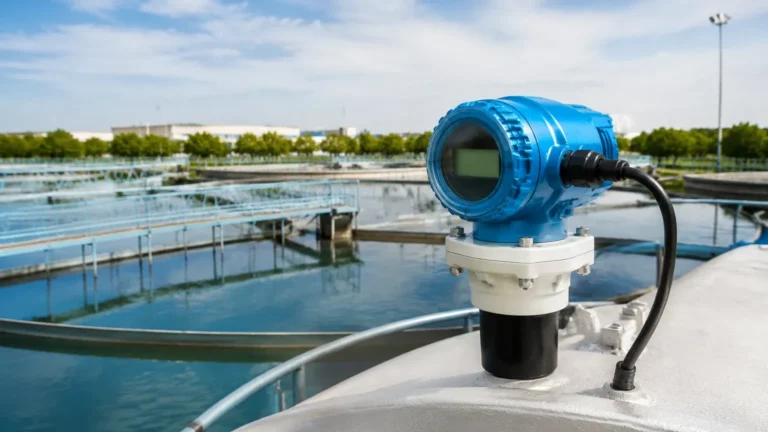
For outdoor or harsh industrial environments, the sensor housing must be robust. Look for IP67 or IP68 ratings to ensure the device is dust-tight and protected against water immersion.
Selection Table for Ultrasonic LoRaWAN Sensors
| Feature | Standard Industrial Model | High-Range / Heavy Duty Model |
| :— | :— | :— |
| Measurement Range | 0.3m to 5m (1ft to 16.4ft) | 0.5m to 15m (1.6ft to 49.2ft) |
| Dead Zone | 0.25m (0.8ft) | 0.5m (1.6ft) |
| Accuracy | ±0.25% FS | ±0.5% FS |
| Beam Angle | 10° – 12° | 8° – 10° |
| Power Source | Internal 3.6V Lithium Battery | Internal 19000mAh Battery |
| Housing Material | ABS / Polycarbonate | PVDF / Stainless Steel |
| LoRaWAN Frequency | EU868 / US915 / AS923 | EU868 / US915 / AS923 |
Installation Considerations and Best Practices
Proper installation is the most critical factor in ensuring the reliability of an ultrasonic level sensor lorawan. Even the most advanced sensor will fail if placed incorrectly.
1. Vertical Alignment
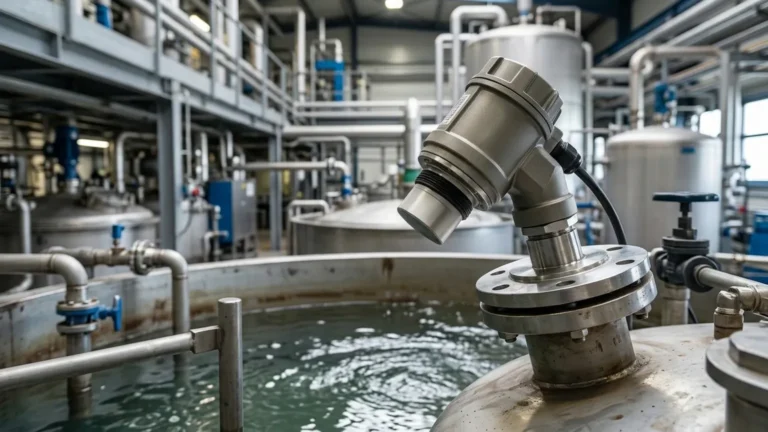
The sensor must be mounted perfectly perpendicular to the liquid surface. If the sensor is tilted, the ultrasonic pulse will reflect away from the transducer rather than back toward it, resulting in a "lost signal" or erratic readings.
2. Avoiding Obstructions
The "beam path" must be kept clear of any physical obstructions. If a ladder, pipe, or bracket enters the ultrasonic cone, the sensor may lock onto that object and report a constant, incorrect level. When obstructions are unavoidable, many Welk ultrasonic meters offer "false echo suppression" software to ignore these static reflections.
3. Positioning Relative to Inlets
Never install the sensor directly above the tank's fill inlet. The turbulence and splashing caused by incoming liquid will scatter the ultrasonic signal and create significant noise in the data.
4. Distance from Walls
To avoid interference from wall reflections, the sensor should be placed at a distance from the tank wall that is at least 1/10th of the total tank height. For example, in a 10-meter tank, the sensor should be at least 1 meter away from the side wall.
Limitations and Environmental Factors
While ultrasonic technology is versatile, it has specific physical limitations that engineers must account for during the project planning phase.
* Foam and Turbulence: Heavy foam on the surface of a liquid acts as an acoustic absorber, soaking up the sound waves and preventing an echo. In such cases, radar level meters or hydrostatic transmitters may be more appropriate.
* Vacuum and Pressure: Ultrasonic waves require a medium (air/gas) to travel. They cannot function in a vacuum. Furthermore, high pressure can change the density of the air, affecting the speed of sound and measurement accuracy.
* Dust and Vapor: Dense dust or heavy steam can attenuate the ultrasonic signal. While ultrasonic sensors can handle moderate amounts of dust, extreme conditions may require a high-power transducer or a different technology altogether.
* Temperature Gradients: If there is a significant temperature difference between the sensor and the liquid surface (e.g., in a heated chemical tank), the resulting air stratification can refract the sound waves, leading to errors.
Applications in Modern Industry
The combination of ultrasonic precision and LoRaWAN connectivity has enabled new use cases across various sectors:
* Smart Water Management: Monitoring water levels in remote reservoirs, rivers, and open channels for flood early-warning systems.
* Chemical Storage: Tracking the inventory of IBC (Intermediate Bulk Container) tanks across a large facility without manual inspections.
* Waste Management: Installing sensors on the lids of commercial waste bins to optimize collection routes based on actual fill levels.
* Agriculture: Monitoring liquid fertilizer tanks or livestock water troughs in rural areas where cellular coverage is non-existent.
Frequently Asked Questions (FAQ)
Q: How long does the battery last in a typical LoRaWAN ultrasonic sensor?
A: Battery life depends on the reporting interval. If the sensor transmits data once per hour, a high-capacity lithium battery can last between 5 to 10 years. Increasing the frequency to every 5 minutes will significantly shorten this lifespan.
Q: Can these sensors be used for solids like sand or grain?
A: Yes, but with caveats. Solids often have an uneven surface (an angle of repose), which can scatter the ultrasonic signal. For solids, it is recommended to use a sensor with a higher power output and to expect a slightly reduced effective range compared to liquids.
Q: Is LoRaWAN secure for industrial data?
A: Yes. LoRaWAN employs two layers of security: a Network Session Key (NetSKey) to ensure the authenticity of the node in the network, and an Application Session Key (AppSKey) for end-to-end encryption of the data payload.
Q: What happens if the LoRaWAN gateway goes offline?
A: Most professional-grade sensors will continue to attempt to join the network or may have internal logging capabilities. However, real-time data will be unavailable until the gateway connection is restored. Redundant gateways are recommended for critical industrial applications.
Conclusion
The ultrasonic level sensor lorawan represents a significant leap forward in remote monitoring technology. By combining the reliable physics of Ultrasonic Level Meters with the long-range, low-power capabilities of LoRaWAN, industrial operators can achieve unprecedented visibility into their processes. When selecting a solution, prioritize sensors that offer robust temperature compensation, narrow beam angles, and the durability required for your specific environmental conditions. For organizations looking to digitize their level monitoring, these devices provide a scalable and cost-effective entry point into the Industrial Internet of Things (IIoT).