Ultrasonic Level Sensor Luc M10
A Technical Guide to the Ultrasonic Level Sensor LUC M10 and Industrial Level Measurement
In the landscape of industrial automation, non-contact level measurement has become the standard for reliability and hygiene. Among the various technologies available, ultrasonic measurement remains one of the most cost-effective and versatile solutions for both liquid and solid applications. Specifically, the ultrasonic level sensor LUC M10 represents a benchmark for compact, integrated transmitters designed for straightforward process monitoring.
This guide explores the engineering principles behind Ultrasonic Level Meters, the specific technical attributes of the LUC-M10 series, and the critical selection criteria that engineers must consider when implementing these sensors in industrial environments.
Understanding the Measurement Principle
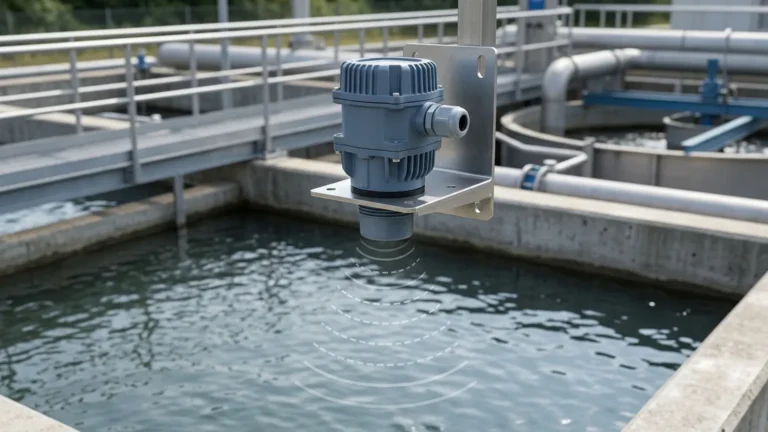
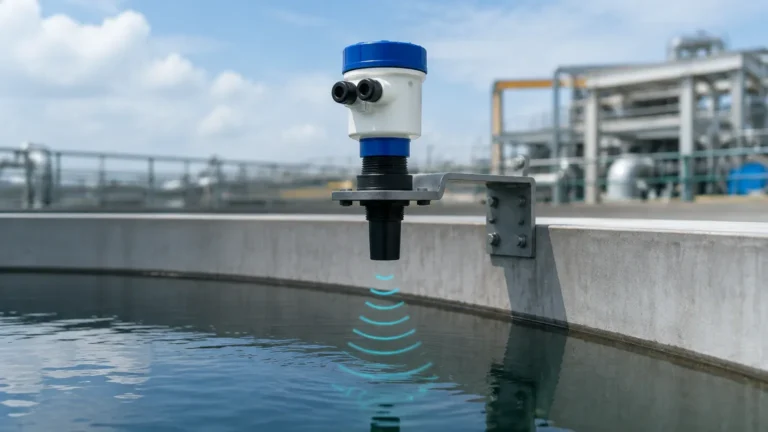
Ultrasonic level measurement is based on the "Time-of-Flight" (ToF) principle. The sensor, typically mounted at the top of a vessel, emits a series of high-frequency ultrasonic pulses. These sound waves travel through the air or gas space above the medium, reflect off the surface of the product, and return to the sensor membrane.
The Calculation of Distance
The sensor’s internal electronics measure the time interval ($t$) between the emission of the pulse and the reception of the echo. Since the speed of sound ($v$) in air is a known constant—approximately 340 meters per second (1,115 ft/s) at 20°C—the distance ($D$) to the surface is calculated using the formula:
$$D = \frac{v \times t}{2}$$
By knowing the total height of the tank (the calibration zero point), the transmitter subtracts the measured distance from the vessel height to determine the actual level or volume of the medium.
Temperature Compensation
A critical factor in ultrasonic measurement is that the speed of sound changes with air temperature (approximately 0.17% per degree Celsius). To maintain accuracy, high-quality instruments like the ultrasonic level sensor LUC M10 include an integrated temperature sensor. This allows the device to automatically compensate for temperature fluctuations in the vapor space, ensuring the measurement remains stable even as environmental conditions change.
Technical Overview: The Ultrasonic Level Sensor LUC M10
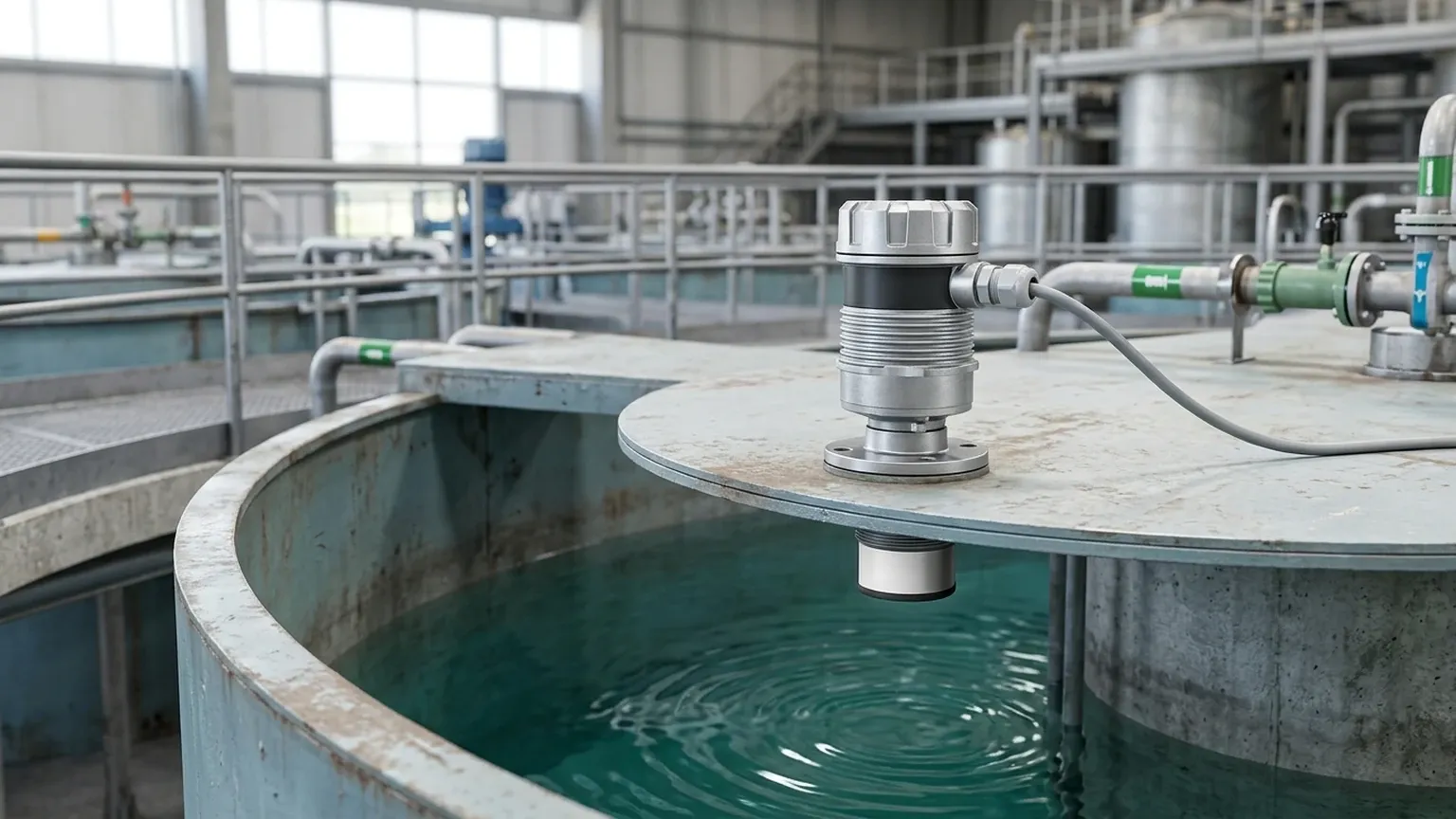
The LUC-M10 is a compact, two-wire or four-wire transmitter designed for non-contact level measurement in small vessels or open channels. It is particularly valued in water treatment and chemical storage for its ability to provide a maintenance-free alternative to mechanical floats or pressure sensors.
Key Features of the LUC-M10 Series
1. Integrated Design: The transducer and electronics are housed in a single unit, simplifying installation and reducing the footprint.
2. Chemical Resistance: Often constructed with PVDF (Polyvinylidene fluoride) or high-grade polymers, the sensor face is resistant to many corrosive chemicals.
3. Communication Protocols: Most versions support 4…20mA analog outputs, often with HART protocol for remote configuration and diagnostics.
4. Signal Processing: Advanced algorithms are used to filter out "false echoes" caused by internal tank obstructions like ladders or agitators.
Practical Selection Criteria
Choosing the right ultrasonic sensor requires a detailed understanding of the application's physical and chemical environment. While the LUC-M10 is highly versatile, it is not a universal solution. Engineers should evaluate the following parameters:
Measuring Range and Blocking Distance
Every ultrasonic sensor has a "blocking distance" (also known as a dead zone). This is a region directly below the sensor face where measurement is impossible because the transducer is still vibrating from the pulse emission when the echo returns. For a compact sensor like the LUC-M10, this distance is typically around 0.25 meters (0.82 ft) to 0.4 meters (1.31 ft). If the liquid level enters this zone, the reading will become erratic or fail.
Selection Table for Ultrasonic Sensors
| Feature | LUC-M10 (Compact) | Standard Industrial Meter | High-Range Solid Meter |
| :— | :— | :— | :— |
| Max Range (Liquids) | 5 m (16.4 ft) | 15 m (49.2 ft) | 40 m (131 ft) |
| Max Range (Solids) | 2 m (6.5 ft) | 7 m (23 ft) | 20 m (65.6 ft) |
| Process Connection | G 1½" or NPT 1½" | Flange / Threaded | Large Flange / Aiming Kit |
| Accuracy | ± 0.25% of range | ± 0.2% of range | ± 0.5% of range |
| Housing Material | Plastic (PBT/PVDF) | Aluminum / Stainless Steel | Aluminum |
Installation Guidelines for Optimal Performance
Correct mounting is the most significant factor in the success of an ultrasonic level installation. Failure to follow geometric constraints often leads to signal loss or "ghost" readings.
1. Avoid the Fill Stream
Never mount the sensor directly above the point where the tank is filled. The turbulence of the incoming liquid and the entrained air can scatter the ultrasonic pulse, leading to a complete loss of signal.
2. Vertical Alignment
The sensor must be mounted perfectly perpendicular to the liquid surface. Even a slight tilt of a few degrees can cause the echo to reflect away from the sensor membrane rather than back to it, especially in tall, narrow tanks.
3. Nozzle Geometry
If mounting the sensor on a nozzle, the diameter and height of the nozzle must be considered. If the nozzle is too narrow or too long, the ultrasonic beam will hit the edges of the pipe before reaching the tank, creating a massive false echo at the top of the range. Ideally, the sensor face should protrude slightly into the vessel or be recessed in a nozzle that meets the manufacturer's diameter-to-length ratio requirements.
4. Distance from Walls
To prevent interference from wall reflections, the sensor should be placed at a distance from the tank wall equal to at least 1/6th of the total tank height. For a 6-meter tank, the sensor should be at least 1 meter from the wall.
Limitations and Environmental Constraints
While Ultrasonic Level Meters are robust, certain physical conditions interfere with sound wave propagation. In these scenarios, alternative technologies like Guided Wave Radar (GWR) or through-air radar may be required.
* Foam: Heavy, thick foam acts as an acoustic absorber. The sound pulse enters the foam and is dissipated rather than reflected. If your process involves significant foaming, ultrasonic sensors may provide unreliable data.
* Vacuum: Sound requires a medium (air or gas) to travel. In a vacuum, ultrasonic pulses cannot propagate, making these sensors useless for vacuum-rated vessels.
* High Pressure/Temperature: The speed of sound is heavily influenced by gas density. At very high pressures or in the presence of heavy vapors (like high concentrations of CO2 or solvents), the speed of sound changes so drastically that standard temperature compensation is insufficient.
* Heavy Dust: In solid applications, extreme dust during filling can attenuate the signal. While high-power ultrasonic sensors can handle some dust, radar is generally preferred for cement or flour silos.
Maintenance and Troubleshooting
One of the primary benefits of the ultrasonic level sensor LUC M10 is that it has no moving parts, making it largely maintenance-free. However, certain issues can arise in specific environments:
* Condensation: In humid environments, water droplets can form on the sensor face. While many modern sensors have a self-cleaning effect due to the vibration of the membrane, heavy condensation can attenuate the signal. Using a sensor with a PTFE or PVDF face can help moisture bead off more easily.
* Build-up: If the medium is prone to splashing and drying (like wastewater or lime slurry), material may build up on the transducer. This should be cleaned periodically with a soft cloth and mild detergent; never use a metal scraper as it can damage the sensitive membrane.
Frequently Asked Questions (FAQ)
Q: Can the LUC-M10 be used for solids?
A: Yes, but with a reduced range. Sound reflects less efficiently off solids than liquids. Typically, the effective range for solids is about 40-50% of the liquid range. It is best suited for coarse grains or pellets rather than fine, dusty powders.
Q: How do I handle internal obstructions like agitator blades?
A: Most modern Ultrasonic Level Meters feature an "Echo Mapping" or "Suppression" function. During a period when the tank is empty, you can program the sensor to recognize static echoes from internal structures as "background noise," allowing it to ignore them and focus only on the moving level signal.
Q: Is the LUC-M10 suitable for outdoor use?
A: Yes, provided the housing is rated (typically IP66/67 or NEMA 4X). However, it is recommended to use a sunshade to prevent the integrated temperature sensor from being overheated by direct sunlight, which could cause an inaccurate temperature compensation calculation.
Conclusion
The ultrasonic level sensor LUC M10 provides a reliable, non-contact solution for a wide variety of industrial level monitoring tasks. By understanding the physics of sound propagation and adhering to strict installation guidelines, engineers can implement a system that offers high accuracy and low total cost of ownership. For applications exceeding the range or environmental limits of compact ultrasonic devices, exploring the broader range of industrial level measurement technologies is recommended to ensure process safety and efficiency.