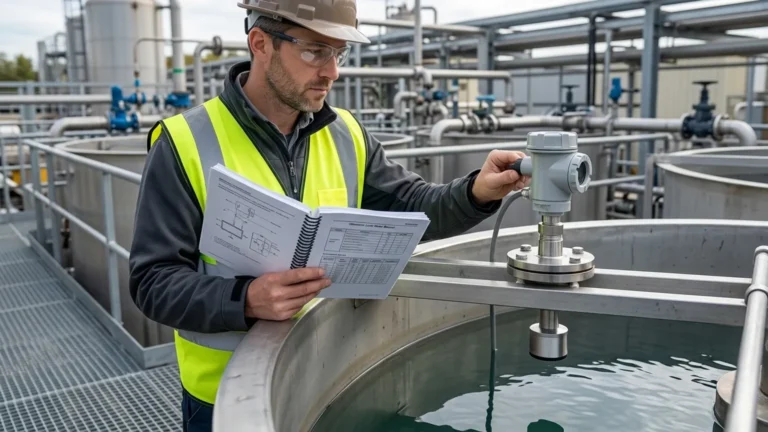
Ultrasonic Level Sensor Siemens
Ultrasonic Level Sensor Siemens: A Technical Guide to Non-Contact Level Measurement
In the landscape of industrial automation, non-contact level measurement has become the standard for managing liquids and bulk solids across diverse sectors such as water treatment, chemical processing, and food production. Among the industry leaders, the ultrasonic level sensor Siemens range—specifically the SITRANS brand—has established a benchmark for reliability and signal processing sophistication.
For engineers and procurement specialists, selecting the right instrumentation requires a deep understanding of how ultrasonic technology interacts with process variables. This guide explores the fundamental principles of ultrasonic measurement, evaluates the technical specifications of Siemens-style sensors, and provides practical selection and installation criteria for modern industrial applications.
Understanding Ultrasonic Measurement Principles
Ultrasonic level measurement is based on the "Time-of-Flight" (ToF) principle. The sensor’s transducer emits a high-frequency acoustic pulse (typically between 20 kHz and 70 kHz) toward the surface of the material being measured. This pulse travels through the air, hits the medium, and reflects back to the transducer.
The Calculation Formula
The distance between the sensor and the material surface is calculated using the following formula:
D = (V × T) / 2
Where:
* D is the distance to the surface.
* V is the velocity of sound in the air (approximately 343 m/s at 20°C).
* T is the total time elapsed from pulse emission to return.
Because the pulse travels to the surface and back, the result is divided by two. The level of the material is then derived by subtracting this distance from the total height of the vessel.
The Role of Temperature and Pressure
The speed of sound is not constant; it fluctuates based on the temperature of the medium through which it travels (usually air). A change of 1°C can result in a 0.17% error in distance measurement. Professional-grade Ultrasonic Level Meters almost always incorporate an internal temperature sensor to provide real-time compensation. However, in applications with significant temperature gradients, external temperature sensors may be required to maintain accuracy.
Evaluating the Ultrasonic Level Sensor Siemens Portfolio
When discussing an ultrasonic level sensor Siemens provides several tiers of technology designed for different complexities. Understanding these benchmarks helps in comparing them with other industrial solutions like those from Welk.
1. SITRANS Probe LU240: This is a common choice for water and wastewater applications. It is a 2-wire, loop-powered transmitter that combines the transducer and electronics into a single unit. It is often used for liquid level, volume, and flow measurement in open channels.
2. SITRANS LU150/LU180: These are short-range, integrated transmitters suitable for small tanks containing liquids or slurries. They are designed for simple applications where a range of up to 5 meters (16.4 ft) is sufficient.
3. MultiRanger and HydroRanger: These are more complex systems consisting of a remote controller and a separate transducer (such as the XPS series). These systems are capable of monitoring multiple points and offer advanced relay logic for pump control and differential level measurement.
Siemens sensors are frequently cited for their "Sonic Intelligence" signal processing, which helps the device distinguish between the true material echo and false echoes generated by internal tank obstructions like ladders or agitators.
Key Selection Criteria for Industrial Applications
Choosing between an integrated sensor and a remote system depends on the environment and the required functionality. The following table summarizes the primary considerations when evaluating ultrasonic level meters.
Selection Table: Integrated vs. Remote Systems
| Feature | Integrated Transmitters (e.g., Welk UL Series) | Remote Controller Systems |
| :— | :— | :— |
| Installation | Simple, single-point mounting | Requires wiring between transducer and controller |
| Range | Typically up to 15m (49 ft) | Can extend up to 40m (131 ft) with powerful transducers |
| Environment | Best for standard outdoor/indoor tanks | Best for hazardous zones (controller kept in safe area) |
| Output | 4-20mA, HART, Modbus | Multiple relays, 4-20mA, Profibus, Modbus |
| Maintenance | Single unit replacement | Separate components allow for modular repair |
| Cost | Cost-effective for single points | Higher initial investment for multi-point control |
Technical Limitations and Environmental Factors
While ultrasonic technology is versatile, it is not a "one-size-fits-all" solution. Several factors can attenuate the acoustic signal or cause measurement errors:
* The Dead Zone (Blocking Distance): Every ultrasonic sensor has a minimum distance (near the transducer face) where it cannot measure. This is because the transducer cannot receive an echo while it is still vibrating from the emission. Typically, this zone ranges from 0.2m to 0.5m (8 in to 20 in). If the liquid enters this zone, the sensor will report an error or an incorrect "full" reading.
* Heavy Foam: Dense, thick foam acts as an acoustic insulator, absorbing the pulse rather than reflecting it. In such cases, a hydrostatic pressure transmitter or a radar level meter may be more appropriate.
* Vacuum Conditions: Sound requires a medium to travel. Ultrasonic sensors will not function in a vacuum.
* Vapor and Dust: While light dust is manageable, heavy steam or dense chemical vapors can change the speed of sound or scatter the signal, leading to inaccuracies.
Installation Considerations for Maximum Accuracy
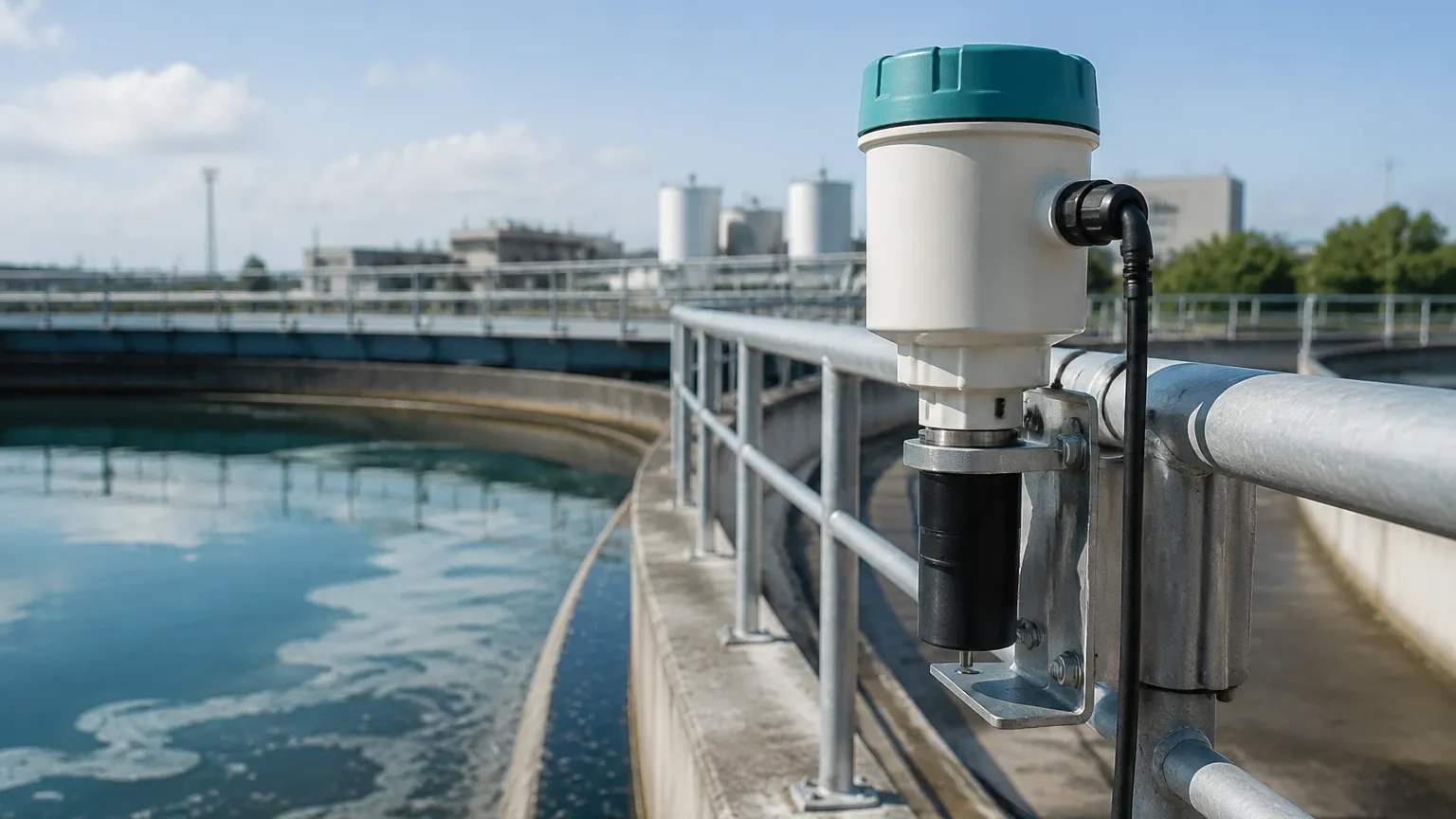
Correct installation is the most critical factor in the performance of an ultrasonic level sensor Siemens or any equivalent industrial meter. Engineers should follow these guidelines to ensure signal integrity:
1. Perpendicular Alignment: The transducer face must be perfectly parallel to the liquid surface. Even a few degrees of tilt can cause the reflected signal to miss the receiver, especially at longer ranges.
2. Beam Angle Awareness: Ultrasonic pulses spread out in a cone shape (usually 5° to 12°). Ensure that no internal obstructions—such as pipes, weld seams, or cooling coils—intersect this beam path. If obstructions are unavoidable, use a sensor with "False Echo Suppression" software to map out these static reflections.
3. Avoid the Fill Stream: Never mount the sensor directly above the point where the tank is being filled. The turbulence and the falling material will interfere with the acoustic pulse.
4. Nozzle Height: If the sensor is mounted on a nozzle (standpipe), the nozzle must be wide enough and short enough so that the beam does not hit the edges of the pipe before exiting into the tank. Generally, the transducer face should protrude slightly into the vessel.
Welk: Reliable Alternatives for Level Measurement
For facilities looking for high-performance alternatives to the ultrasonic level sensor Siemens line, Welk offers a comprehensive range of Ultrasonic Level Meters. Welk instruments are designed to meet the rigorous demands of industrial automation with a focus on cost-effectiveness and ease of integration.
Welk’s ultrasonic solutions feature:
* Advanced Signal Processing: Algorithms that filter out noise and handle turbulent surfaces.
* Durable Materials: Transducer faces available in PVDF or PTFE for resistance against corrosive chemicals.
* User-Friendly Interfaces: Simplified calibration and setup procedures that reduce commissioning time.
* Global Support: Solutions tailored for water treatment, chemical storage, and oil and gas applications.
Frequently Asked Questions (FAQ)
Q: Can ultrasonic sensors measure solids?
A: Yes, but with limitations. Solids like grain or plastic pellets often have an angled surface (angle of repose) that scatters the sound pulse. Sensors for solids typically require higher power and lower frequencies to achieve a reliable reading.
Q: How does wind affect outdoor installations?
A: Strong wind can "blow" the acoustic pulse away from its vertical path, especially over long distances. For outdoor reservoirs, it is recommended to use a sensor with a higher signal strength or a protective stilling well.
Q: What is the difference between ultrasonic and radar level meters?
A: Ultrasonic sensors use sound waves (mechanical energy), while radar uses electromagnetic waves. Radar is unaffected by air temperature, vacuum, or heavy dust, making it better for extreme process conditions, whereas ultrasonic is typically more cost-effective for standard water and chemical applications.
Q: How often do these sensors need calibration?
A: In stable environments, ultrasonic sensors are virtually maintenance-free. However, it is good practice to verify the accuracy annually, especially if the medium produces vapors that could cause buildup on the transducer face.
Conclusion
Whether utilizing an ultrasonic level sensor Siemens or a specialized solution from Welk, the success of a level measurement project hinges on matching the sensor's technical capabilities to the specific environment. By accounting for the speed of sound variables, respecting the dead zone, and ensuring precise physical installation, industrial operators can achieve reliable, non-contact monitoring that enhances process safety and efficiency. For those seeking a balance of advanced technology and value, exploring the range of Ultrasonic Level Meters from Welk provides a robust path forward for modern automation needs.