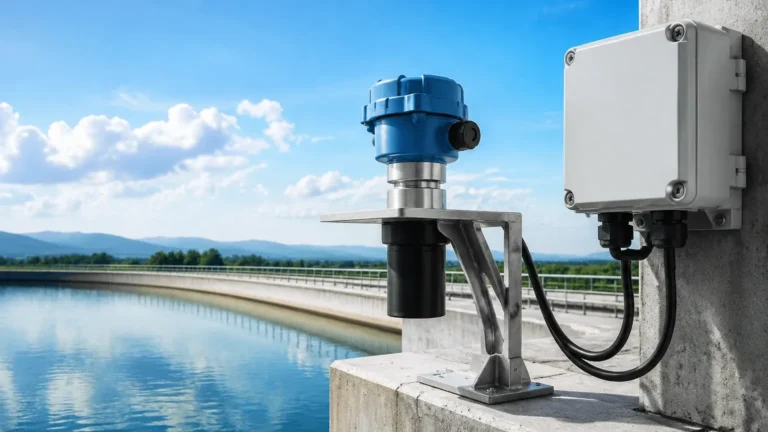
Ultrasonic Level Sensor for Diesel Tank
Ultrasonic Level Sensor for Diesel Tank: A Comprehensive Engineering Guide
In industrial and commercial operations, diesel fuel serves as the lifeblood for backup power systems, heavy machinery, and transport fleets. Accurate inventory management is not merely a matter of operational efficiency; it is a critical requirement for safety, regulatory compliance, and cost control. Among the various technologies available for monitoring fuel levels, the use of an ultrasonic level sensor for diesel tank applications has become a standard due to its non-contact nature, reliability, and ease of integration into modern automation systems.
This guide explores the technical principles, selection criteria, and installation best practices for utilizing Ultrasonic Level Meters in diesel storage environments, providing engineers and facility managers with the data needed to optimize their fuel monitoring infrastructure.
Understanding the Measurement Principle
Ultrasonic level measurement is based on the "Time-of-Flight" (ToF) principle. The sensor, typically mounted at the top of the diesel tank, contains a piezoelectric transducer that emits high-frequency sound pulses—usually in the range of 20 kHz to 200 kHz. These sound waves travel through the air space (ullage) above the diesel and reflect off the liquid surface back to the sensor.
The Calculation Process
The sensor’s internal electronics measure the time interval between the emission of the pulse and the reception of the echo. The distance from the sensor to the fuel surface is calculated using the formula:
D = (c × t) / 2
Where:
* D is the distance to the liquid surface.
* c is the velocity of sound in the medium (air/vapor).
* t is the measured time-of-flight.
Since the total height of the tank (H) is a known constant, the actual level of the diesel (L) is determined by subtracting the measured distance (D) from the total height: L = H – D. Advanced Ultrasonic Level Meters can then convert this level into volume based on the tank's geometry (cylindrical, rectangular, or spherical).
Temperature Compensation
The speed of sound is significantly influenced by the temperature of the medium it travels through. In a diesel tank, air temperature can fluctuate due to ambient weather or the warmth of recently delivered fuel. Most professional-grade sensors, such as those manufactured by Welk, include an integrated temperature sensor to automatically adjust the calculation of 'c', ensuring accuracy remains within specified tolerances (typically ±0.25% to ±0.5% of the measured range).
Why Use an Ultrasonic Level Sensor for Diesel Tank Monitoring?
Diesel presents specific challenges and advantages for level measurement. Unlike water, diesel is a hydrocarbon with relatively low volatility at room temperature, which makes it a stable target for ultrasonic waves.
1. Non-Contact Measurement: Because the sensor never touches the fuel, there is no risk of mechanical wear, corrosion of the sensing element, or contamination of the diesel. This significantly reduces maintenance requirements compared to float-type or pressure-based sensors.
2. Ease of Retrofitting: Most ultrasonic sensors can be installed via a standard threaded NPT or BSP connection on the top of the tank, making them ideal for upgrading existing diesel storage without emptying the tank.
3. Versatility: These sensors are effective for both stationary storage tanks and, when properly configured, mobile diesel bowsers or generator base tanks.
4. Solid-State Reliability: With no moving parts, the sensors are resistant to the vibrations often found near industrial generators.
Technical Selection Criteria
Selecting the correct ultrasonic level sensor for diesel tank applications requires evaluating the specific environment and tank geometry. The following table outlines the primary considerations for different diesel storage scenarios.
Selection Table: Ultrasonic Sensor Specifications
| Feature | Small Generator Base Tank | Standard Horizontal Storage | Large Vertical Bulk Tank |
| :— | :— | :— | :— |
| Measurement Range | 0.2m to 2.0m | 0.3m to 5.0m | 0.5m to 15.0m |
| Beam Angle | Narrow ( < 8°) | Standard (10° – 12°) | Standard (10° – 12°) |
| Output Signal | 4-20mA / 0-5V | 4-20mA / RS485 Modbus | 4-20mA / HART / RS485 |
| Power Supply | 12V DC / 24V DC | 24V DC | 24V DC / 220V AC |
| Material | PVDF / ABS | PVDF / Stainless Steel | PVDF / PTFE |
| Accuracy | ±3mm to ±5mm | ±0.25% of range | ±0.2% of range |
Key Considerations for Diesel Environments
* Chemical Compatibility: While diesel is not highly aggressive, the sensor housing and face should ideally be made of PVDF (Polyvinylidene fluoride) or a high-grade plastic to withstand long-term exposure to diesel vapors.
* Hazardous Area Certification: If the diesel tank is located in an area where explosive vapors may accumulate (Class I, Div 1 or 2; ATEX Zone 0 or 1), an intrinsically safe or explosion-proof sensor is mandatory.
* Dead Zone (Blocking Distance): Every ultrasonic sensor has a "dead zone" immediately below the transducer where it cannot measure. For shallow diesel tanks, a sensor with a small dead zone (e.g., 20cm or less) is essential to monitor the tank when it is nearly full.
Installation Best Practices
Proper installation is the single most important factor in ensuring the reliability of an ultrasonic level sensor for diesel tank setups. An incorrectly mounted sensor will produce "lost echoes" or erratic readings.
Positioning
* Avoid the Center: In cylindrical tanks with domed tops, do not mount the sensor in the exact center, as this can create a focal point for multiple reflections, leading to interference.
* Avoid the Wall: Mount the sensor at least 20cm to 50cm away from the tank wall (depending on the beam angle) to prevent the sound wave from hitting the wall and returning a false echo.
* Clear Path: Ensure there are no internal obstructions, such as ladders, heating coils, or support struts, within the ultrasonic beam's path.
Orientation
The sensor face must be perfectly parallel to the liquid surface. If the sensor is tilted, the sound wave will reflect away from the transducer rather than back to it, resulting in a signal loss. In tanks where the mounting surface is angled, adjustable flanges should be used to level the sensor.
Turbulence and Filling
Do not install the sensor directly above the diesel inlet pipe. The turbulence and splashing during a fuel delivery will scatter the ultrasonic signal and cause temporary reading errors. If the tank is frequently filled while the sensor is active, consider using a stilling well (a vertical pipe) to provide a calm surface for measurement.

Limitations and Environmental Factors
While Ultrasonic Level Meters are highly effective, they are not universal solutions. Engineers must be aware of the following limitations:
1. Foaming: Diesel can foam during high-speed filling. Foam absorbs ultrasonic waves rather than reflecting them, which can cause the sensor to "lose" the level. If heavy foaming is expected, a stilling well or a different technology (like guided wave radar) may be required.
2. Pressure: Ultrasonic sensors are generally designed for atmospheric or low-pressure tanks. In high-pressure storage, the change in air density alters the speed of sound beyond what standard temperature compensation can correct.
3. Vapor Concentration: While diesel vapor is generally low, extreme heat can increase vapor density. If the vapor becomes thick enough to change the medium's acoustic impedance, accuracy may be affected.
4. Vacuum: Sound waves require a medium to travel. Therefore, ultrasonic sensors cannot function in a vacuum.
Comparison with Alternative Technologies
In the context of diesel monitoring, it is helpful to compare ultrasonic sensors with other common methods:
* Hydrostatic Pressure: These sensors measure the weight of the fuel column. They are excellent for deep tanks but are contact-based and can be affected by changes in fuel density (e.g., switching between summer and winter diesel blends).
* Radar (FMCW): Radar uses electromagnetic waves, which are unaffected by temperature or air density. However, radar is typically more expensive and may be overkill for standard diesel storage where ultrasonic performance is sufficient.
* Magnetic Level Gauges: These provide a visual indication and can be equipped with transmitters. They are highly reliable but require side-mounting on the tank, which involves more complex mechanical installation.
Frequently Asked Questions (FAQ)
Q: Can I use an ultrasonic sensor for diesel on a moving vehicle?
A: It is possible, but challenging. Sloshing fuel causes the echo to scatter. To use an ultrasonic level sensor for diesel tank monitoring on a vehicle, you must use a sensor with advanced signal damping software and ideally install it within a stilling well to minimize surface movement.
Q: How do I calibrate the sensor for a non-standard tank shape?
A: Most Welk ultrasonic meters allow you to input a "strapping table" or select a tank geometry (e.g., horizontal cylinder) via the RS485 interface or the built-in keypad. The sensor then automatically calculates volume based on the measured height.
Q: Does the color of the diesel affect the measurement?
A: No. Ultrasonic technology relies on the physical surface of the liquid to reflect sound. The optical properties (color, transparency, or opacity) of the diesel have no impact on the measurement.
Q: What maintenance is required?
A: Maintenance is minimal. Periodically check the transducer face for any condensation or dust buildup. If the diesel is stored in a very humid environment, a light wipe with a soft cloth every few months is usually sufficient.
Conclusion
The implementation of an ultrasonic level sensor for diesel tank management provides a balance of accuracy, cost-effectiveness, and low maintenance. By understanding the acoustic principles and adhering to strict installation guidelines—specifically regarding dead zones and beam paths—industrial operators can ensure a reliable supply of fuel for their most critical systems. For complex applications involving high temperatures or narrow tanks, consulting with a technical specialist at Welk can help in selecting the optimized Ultrasonic Level Meters for the task.