Keyboard Switches Noise Level
Keyboard Switches Noise Level
In the sphere of industrial automation and process control, the term "noise" carries multiple definitions depending on the operational context. For engineers designing control rooms and human-machine interfaces (HMIs), the keyboard switches noise level is a critical ergonomic factor that influences operator fatigue and communication clarity. Simultaneously, in the field, "noise" refers to the mechanical vibrations and electrical interference that can compromise the reliability of point level detection.
Understanding the acoustic profile of control interfaces alongside the signal integrity of industrial Level Switches is essential for building a cohesive, high-performance industrial environment. This guide explores the technical nuances of noise levels in switching components, from the tactile feedback of a control console to the high-frequency resonance of a tuning fork level sensor.
Understanding Keyboard Switches Noise Level in Control Rooms
Industrial control rooms are the nerve centers of manufacturing plants, water treatment facilities, and refineries. Operators spend long shifts interacting with keyboards and control panels. Here, the keyboard switches noise level is measured in decibels (dB) and is categorized by the switch's internal mechanics.
Mechanical Switch Categories and Acoustic Profiles
1. Clicky Switches: These are designed with a deliberate "click" sound upon actuation. In a quiet office, these might register between 55 dB and 65 dB. In an industrial control room with high ambient noise, they provide excellent auditory confirmation of a command, though they can be distracting in multi-operator environments.
2. Tactile Switches: These provide a physical bump at the actuation point without the loud click. Their noise level typically ranges from 45 dB to 55 dB. They offer a balance between feedback and quiet operation.
3. Linear Switches: These move smoothly from top to bottom. They are the quietest, often falling below 45 dB, especially when equipped with internal dampeners (silent switches). These are preferred in high-concentration environments where minimizing the keyboard switches noise level is a priority.
Factors Influencing Acoustic Output
Beyond the switch itself, the noise level is influenced by the "bottoming out" force—the sound produced when the keycap hits the switch housing or the keyboard plate. In industrial ruggedized keyboards, steel or aluminum backplates can amplify this sound, necessitating the use of O-rings or internal foam to dampen the acoustic energy.
Transitioning to Field Instrumentation: Noise in Level Detection
While keyboard noise affects the operator, mechanical and electrical noise in the field affects the sensor. Industrial level switches are used to detect the presence or absence of material at a specific height in a tank or vessel. Just as an operator needs to distinguish a keypress from background chatter, a level switch must distinguish a material's presence from process-induced noise.
Measurement Principles of Point Level Switches
Before selecting a device, it is vital to understand the physical principles that govern their operation and how they interact with environmental noise.
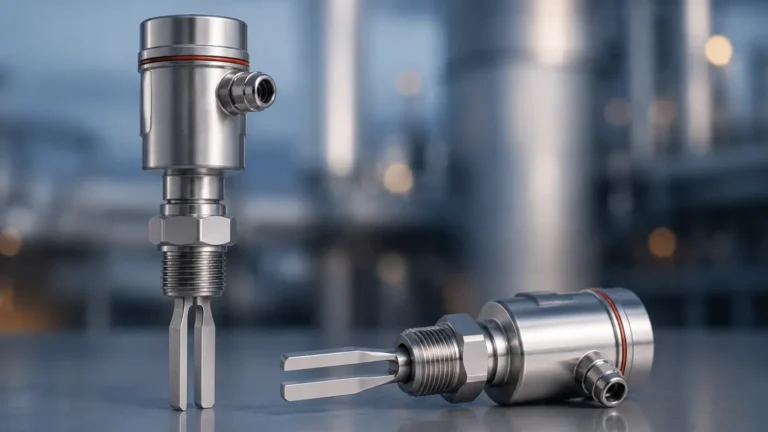
1. Vibrating Tuning Fork Switches
These switches utilize a piezoelectric crystal to vibrate a metal fork at its natural resonant frequency (typically around 1,200 Hz to 1,400 Hz). When the fork is immersed in a liquid or solid, the frequency shifts or the amplitude drops. This change is detected by the electronics to trigger a switch.
Noise Consideration: Mechanical vibration from heavy machinery or pumps can mimic the resonance of the fork, leading to false "full" or "empty" signals. Selecting a switch with a frequency far removed from the plant's ambient vibration is critical.
2. Ultrasonic Level Switches
Ultrasonic switches emit a high-frequency sound pulse (typically 40 kHz or higher) across a small gap. If liquid fills the gap, the sound travels efficiently; if air is present, the signal is attenuated.
Noise Consideration: Acoustic noise from high-pressure steam leaks or pneumatic exhausts can interfere with the ultrasonic pulse, requiring shielded housings or frequency-tuned sensors.
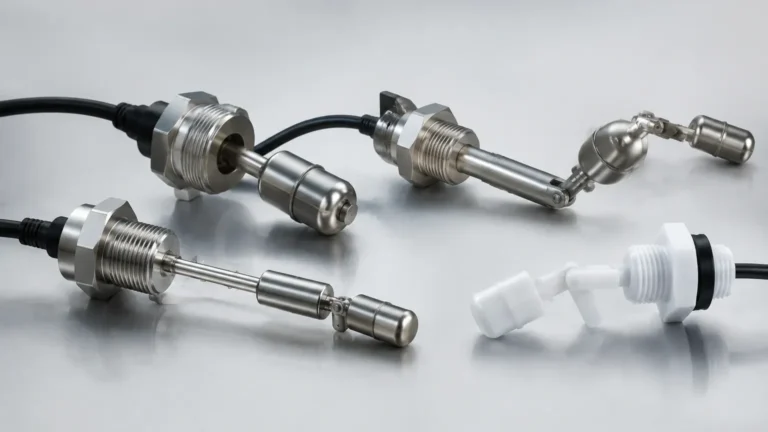
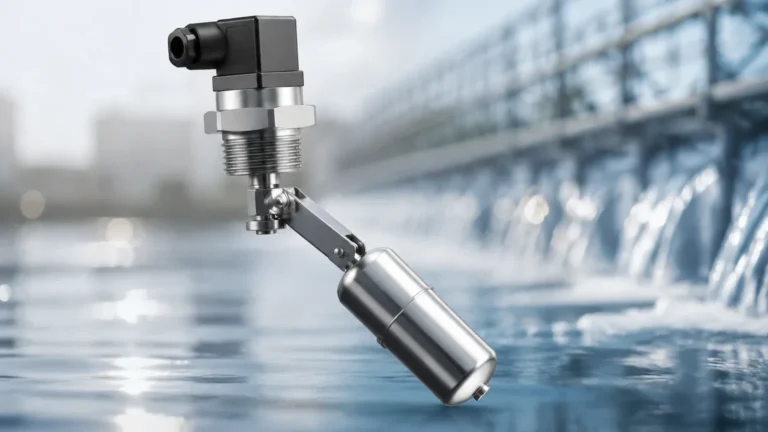
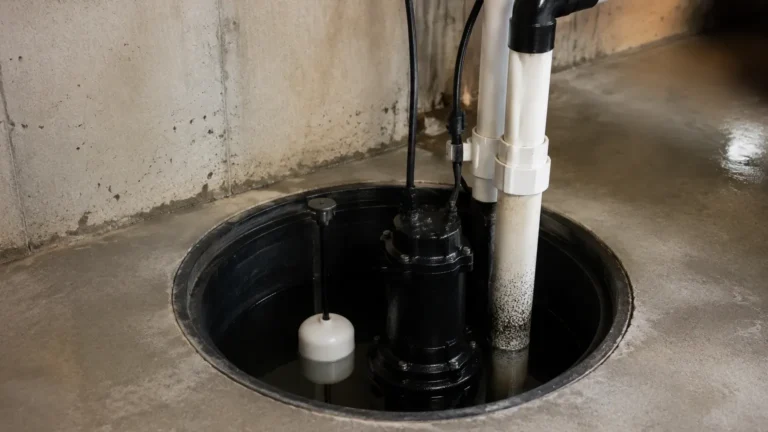
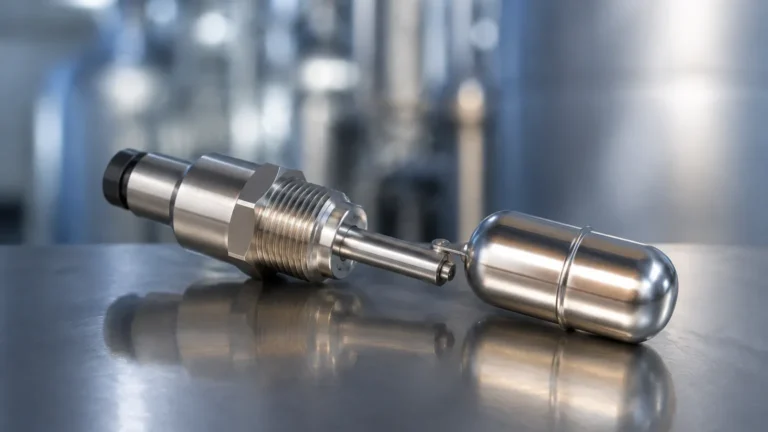
3. Float Level Switches
These operate on the principle of buoyancy. A float containing a magnet moves with the liquid level, actuating a reed switch or microswitch inside a sealed stem.
Noise Consideration: "Noise" here is physical—turbulence or sloshing in the tank. This is usually managed through mechanical stilling wells or electronic time-delays (damping).
Detailed Analysis of Industrial Level Switch Technologies
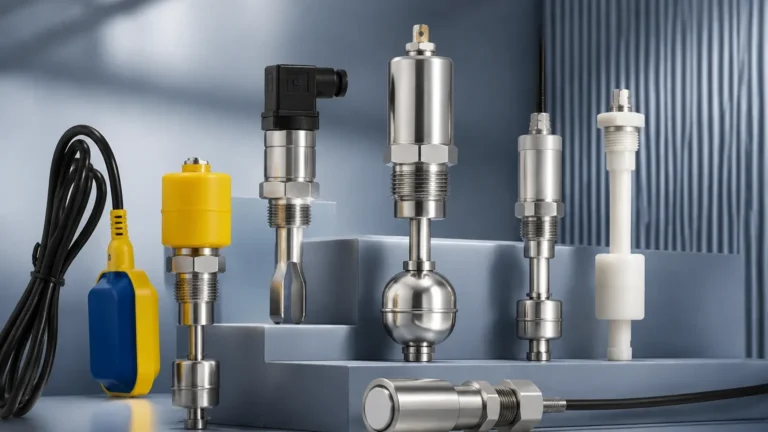
To ensure process safety, engineers must match the technology to the specific "noise" profile of the application. Below is a comparative analysis of common industrial Level Switches.
Comparison Table: Level Switch Performance and Noise Sensitivity
| Technology | Operating Principle | Primary "Noise" Challenge | Best For | Typical Mounting |
| :— | :— | :— | :— | :— |
| Tuning Fork | Frequency Resonance | Mechanical Vibration | Liquids, Powders | Side or Top |
| Float Switch | Buoyancy/Magnetism | Turbulence/Sloshing | Clean Liquids | Top or Side |
| Ultrasonic | Acoustic Transmission | Ambient Acoustic Noise | Non-contact/Corrosive | Top |
| Capacitance | Dielectric Change | Electrical Interference | Slurries, Interface | Side |
| Rotary Paddle | Mechanical Resistance | Material Impact | Bulk Solids | Side |
Selection Criteria for Level Switches in High-Noise Environments
When specifying a level switch for a site where mechanical or electrical noise is prevalent, consider the following factors:
1. Frequency Differentiation: For tuning fork switches, ensure the operating frequency does not harmonize with the RPM of nearby motors or pumps. Most industrial forks operate at frequencies that avoid standard 50/60 Hz electrical noise and its lower harmonics.
2. Damping and Time Delays: If the process involves agitation or turbulence (physical noise), select switches with adjustable time delays. A delay of 1 to 5 seconds can prevent the switch from "chattering" as waves pass the sensor.
3. Signal Shielding: In environments with high electromagnetic interference (EMI)—often referred to as electrical noise—capacitance and ultrasonic switches must use shielded cables and grounded metal housings to protect the signal integrity.
4. Hysteresis: This is the difference between the point where the switch turns on and where it turns off. A wider hysteresis is useful in noisy applications to prevent rapid cycling of pumps or valves.

Installation Guidelines and Best Practices
Proper installation is the most effective way to mitigate the impact of environmental noise on level measurement instruments.
* Avoid the Inflow Stream: Never install a level switch directly under a fill pipe. The kinetic energy and turbulence of the falling material act as extreme mechanical noise, causing premature failure or false readings.
* Stilling Wells: For float switches in agitated tanks, a stilling well (a vertical pipe with vent holes) provides a calm area for the float to operate, effectively filtering out surface noise.
* Mounting Orientation: Tuning forks should be mounted so that the blades are oriented vertically (edge-on to the flow) to prevent material buildup and reduce the impact of horizontal vibrations.
* Distance from Walls: Ultrasonic and radar-based switches require a clear path. Mounting too close to a tank wall can cause "clutter" or parasitic reflections, which are a form of signal noise.
Limitations and Technical Constraints
While modern Level Switches are robust, certain limitations must be acknowledged:
* Viscosity Limits: Tuning fork switches may struggle with extremely viscous liquids (e.g., molasses or heavy crude) because the fluid dampens the vibration so effectively that the switch cannot distinguish between the liquid and a mechanical failure.
* Coating and Buildup: Capacitance switches are sensitive to material buildup on the probe. While many have "active shield" technology to ignore this, extreme coating can be seen as a permanent "noise" signal that obscures the actual level.
* Temperature Gradients: In ultrasonic switches, significant temperature fluctuations change the speed of sound, which can introduce measurement error if not properly compensated by an internal thermistor.
Frequently Asked Questions (FAQ)
Q: Does the keyboard switches noise level in the control room affect the performance of the field sensors?
A: No. Acoustic noise from keyboards is far too low in energy and frequency to affect industrial field sensors. However, both represent different aspects of "noise management" in industrial design—one for human ergonomics and the other for signal reliability.
Q: How do I reduce the noise level of a mechanical keyboard in a quiet control room?
A: You can use "Silent" linear switches, install rubber O-rings under the keycaps to dampen the bottom-out sound, or use a desk mat to absorb vibrations. Choosing a keyboard with internal sound-dampening foam is also highly effective.
Q: Can I use a tuning fork switch in a tank with a heavy agitator?
A: Yes, but it should be installed away from the agitator blades. If the agitator causes significant tank wall vibration, you may need a vibration-dampened mounting or a different technology like a capacitance probe.
Q: What is the difference between a level switch and a level transmitter?
A: A level switch is a point-detection device (On/Off) used for high/low alarms. A level transmitter provides continuous measurement (e.g., 0-100% full) using technologies like radar or hydrostatic pressure.
Conclusion
Whether you are optimizing the keyboard switches noise level for an operator's workstation or selecting a tuning fork switch for a high-vibration chemical reactor, the goal remains the same: distinguishing the desired signal from the surrounding noise. By understanding the measurement principles and environmental limitations of Level Switches, engineers can ensure accurate detection, prevent costly overflows, and maintain a productive industrial environment. For specialized applications, consulting with a manufacturer like Welk ensures that the selected instrument is tuned to the specific acoustic and mechanical profile of your process.