R Type Switch Review
R Type Switch Review
In the landscape of industrial automation and process control, point level detection remains a critical requirement for preventing tank overflows, ensuring pump protection, and managing inventory in silos. Among the various technologies available, the rotary paddle level switch—often referred to in technical specifications as an R-type switch—is a fundamental tool for handling bulk solids. This R type switch review examines the mechanical principles, application suitability, and technical evaluation criteria necessary for engineers and procurement professionals to make informed decisions.
Understanding the Operating Principle of R-Type Level Switches
The R-type or rotary paddle switch operates on a relatively simple yet highly reliable mechanical principle. The unit consists of a low-speed synchronous motor that drives a rotating paddle. This paddle extends into the vessel where the material level is to be monitored.
When the paddle is unobstructed by material, the motor rotates freely. However, as the bulk solids (such as grain, plastic pellets, or cement) rise to the level of the paddle, the material restricts the rotation. This resistance creates a torque that causes the motor to shift within the housing, subsequently triggering one or two internal microswitches.
The first microswitch typically cuts power to the motor to prevent burnout and mechanical wear, while the second microswitch changes the state of the output contact (SPDT or DPDT) to signal a high or low level to the control system. Once the material level drops below the paddle, a spring return mechanism pulls the motor back into its original position, restarting the rotation and resetting the signal.
Key Technical Specifications for Evaluation
When conducting an r type switch review for a specific project, several technical parameters must be prioritized to ensure long-term reliability. Unlike non-contact sensors, R-type Level Switches are intrusive and must withstand the physical characteristics of the medium.
1. Sensitivity and Torque Adjustment
Not all bulk solids have the same density. A switch calibrated for heavy gravel may not trigger when submerged in light sawdust. Most professional-grade R-type switches feature an adjustable spring mechanism. By changing the spring tension, the torque required to trigger the switch can be fine-tuned to match the bulk density of the material.
2. Process Temperature and Pressure
Standard rotary switches are often rated for temperatures up to 80°C (176°F). However, in chemical or power plant applications, temperatures can exceed 200°C (392°F). In these cases, a high-temperature version with a thermal decoupler or extended shaft is required to protect the motor and electronics from heat soak.
3. Material of Construction (MoC)
The paddle and shaft are in constant contact with the process media. Stainless steel (SS304 or SS316L) is the industry standard for corrosion resistance and food-grade applications. For highly abrasive materials, specialized coatings or hardened alloys may be necessary to prevent premature erosion of the paddle blades.
Selection Table: R-Type Switch Suitability
| Material Type | Typical Density (kg/m³) | Recommended Paddle Shape | Sensitivity Setting |
| :— | :— | :— | :— |
| Plastic Pellets | 450 – 600 | Standard Scimitar | Medium |
| Cement / Fly Ash | 1000 – 1500 | Four-Vane Paddle | High |
| Grain / Corn | 600 – 800 | Double-Vane | Medium |
| Sawdust / Perlite | 50 – 150 | Large Surface Area Paddle | Low (High Sensitivity) |
| Crushed Stone | 1600+ | Heavy Duty Single Vane | High (Low Sensitivity) |
Application Engineering: Where R-Type Switches Excel
While ultrasonic and radar sensors provide continuous level data, the R-type switch is preferred for point level detection in specific scenarios due to its immunity to certain environmental factors:
* Dust and Fumes: Unlike optical or some ultrasonic sensors, the mechanical rotation of an R-type switch is unaffected by heavy dust clouds, which are common during the pneumatic filling of silos.
* Dielectric Variations: The switch relies on physical resistance rather than electrical properties, making it ideal for materials with low dielectric constants (like plastic powders) where capacitance probes might fail.
* Cost-Efficiency: For simple high/low alarm functions, the R-type switch offers one of the lowest total costs of ownership in the industrial market.
Installation Considerations and Best Practices
Proper installation is the most significant factor in preventing premature failure of a rotary level switch. During an r type switch review of a site plan, engineers should consider the following:
1. Mounting Position: R-type switches can be mounted horizontally (side-mounted) or vertically (top-mounted). If top-mounted, an extension shaft is often required to reach the desired switching point. For side mounting, the switch should be installed at an angle or with a protective baffle if the material flow falls directly onto the paddle.
2. The Protective Baffle: In silos where heavy materials are dropped from a significant height, the impact force can bend the paddle shaft. Installing a V-shaped metal baffle above the switch diverts the material flow, protecting the mechanical integrity of the device.
3. Cable Entry: To prevent moisture ingress, the cable glands should always point downward. This creates a drip loop that prevents rainwater or washdown liquid from entering the housing.
4. Shaft Seals: In pressurized silos or applications involving very fine powders (like flour or talc), a high-quality mechanical seal or dust seal is essential to prevent particles from entering the motor housing.
Comparative Analysis: R-Type vs. Vibrating Fork
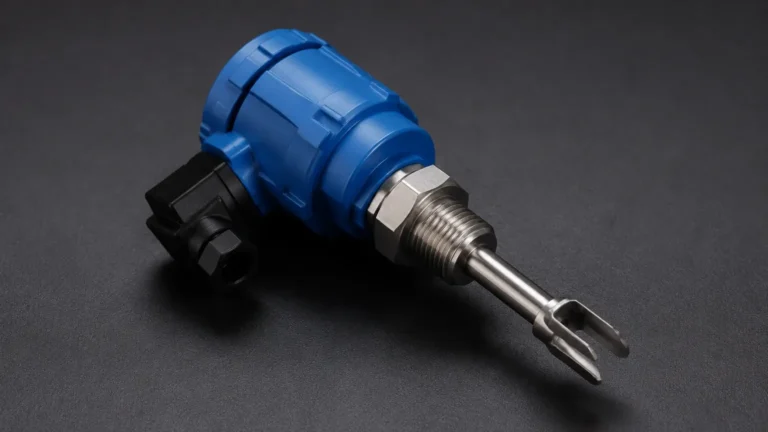
A common question in r type switch reviews is whether to use a rotary paddle or a vibrating fork (tuning fork) level switch.
* Mechanical Wear: R-type switches have moving parts (the motor and gearbox), which eventually wear out. Vibrating forks have no moving parts and generally offer a longer service life in high-cycle applications.
* Material Buildup: Vibrating forks can sometimes give false readings if material "bridges" between the tines. The rotary paddle is generally more robust against heavy coating, as the motor's torque can often break through minor buildup.
* Granule Size: R-type switches are better suited for large, irregular chunks of material that might jam the tines of a vibrating fork.
Maintenance and Troubleshooting
Routine maintenance for R-type switches is minimal but necessary. A biannual inspection should include:
* Paddle Integrity: Check for signs of bending, erosion, or material accumulation.
* Seal Inspection: Ensure no dust has bypassed the shaft seal into the motor compartment.
* Motor Function: Verify the motor starts and stops smoothly without excessive noise, which could indicate gearbox wear.
Common failure modes identified in r type switch reviews often involve "stalling" due to bearing seizure or motor burnout. If a switch fails to signal, the first check should be the supply voltage and the condition of the internal microswitch contacts.
Limitations of the Technology
While versatile, the R-type switch is not a universal solution. It is generally not recommended for:
* Sticky or Adhesive Materials: Highly viscous or sticky substances can clog the rotating mechanism, leading to permanent stall conditions.
* Liquid Level Measurement: The torque required to stall the motor is typically too high for standard liquids, and the housing is rarely designed for full submersion.
* High-Speed Filling Zones: If placed directly in the path of high-velocity material intake, the mechanical stress will lead to rapid shaft fatigue.
Conclusion
The R-type switch remains a staple of bulk solids management because of its mechanical simplicity and reliability in dusty environments. By selecting the appropriate paddle design, adjusting the torque sensitivity for the specific material density, and ensuring the unit is protected from direct material impact, process facilities can achieve dependable point level control. For complex installations involving various media, reviewing the full range of Level Switches is recommended to ensure the technology matches the physical demands of the process.
Frequently Asked Questions (FAQ)
Q: Can an R-type switch be used for very light materials?
A: Yes, but it requires a large-surface-area paddle (often called a "cloverleaf" or "large vane" paddle) and the internal spring must be set to the highest sensitivity (lowest torque) setting.
Q: What is the maximum extension length for a top-mounted R-type switch?
A: Standard rigid extensions can reach up to 3000 mm (approx. 10 feet). For longer distances, wire rope (flexible) extensions are used to prevent the shaft from bending under the weight of the material.
Q: Is a power supply always required?
A: Yes, because the motor must rotate constantly to detect the absence of material. Common voltages include 24V DC, 110V AC, and 230V AC.
Q: How do I handle hazardous environments?
A: For applications involving combustible dust (like grain or coal), it is mandatory to use an R-type switch with ATEX or IECEx explosion-proof certification to ensure the internal motor and switches cannot ignite the atmosphere.