Level Switch Unspsc Code
Level Switch Unspsc Code
In industrial procurement and asset management, the ability to accurately categorize equipment is essential for maintaining supply chain efficiency. For engineers and procurement specialists, identifying the correct level switch unspsc code is a critical step in streamlining the acquisition of point-level detection instruments. The United Nations Standard Products and Services Code (UNSPSC) provides a global hierarchy for classifying products, ensuring that a "Level Switch" specified in one region is recognized identically in another.
Level switches are fundamental components in industrial automation, used to detect the presence or absence of liquids, powders, or granulates at specific heights within a vessel. Unlike continuous level transmitters that provide a constant signal of the volume, level switches act as on/off triggers for alarms, pumps, or valves. This guide examines the classification, measurement principles, and selection criteria for these essential devices.
Understanding the UNSPSC Classification for Level Switches
The UNSPSC system is a four-level hierarchy: Segment, Family, Class, and Commodity. Each level is represented by two digits, forming an eight-digit code. For Level Switches, the classification typically falls under the category of measuring and observing instruments.
Primary Codes
* Segment 41: Laboratory and Measuring and Observing and Testing Equipment
* Family 4111: Measuring and observing and testing instruments
* Class 411124: Liquid and gas level measuring and controlling instruments
* Commodity 41112401: Level switches
Using the specific level switch unspsc code (41112401) allows organizations to automate spend analysis, simplify search queries in ERP systems like SAP or Oracle, and ensure that technical specifications meet the standardized category requirements. While 41112401 is the most common, variations may exist if the switch is integrated into a specific system, such as fire protection (46191505) or specialized laboratory equipment.
Measurement Principles of Level Switches
Before selecting a switch based on its procurement code, it is vital to understand the underlying technology. Different media and environmental conditions require specific physical principles to ensure reliable switching.
1. Float and Magnetic Level Switches
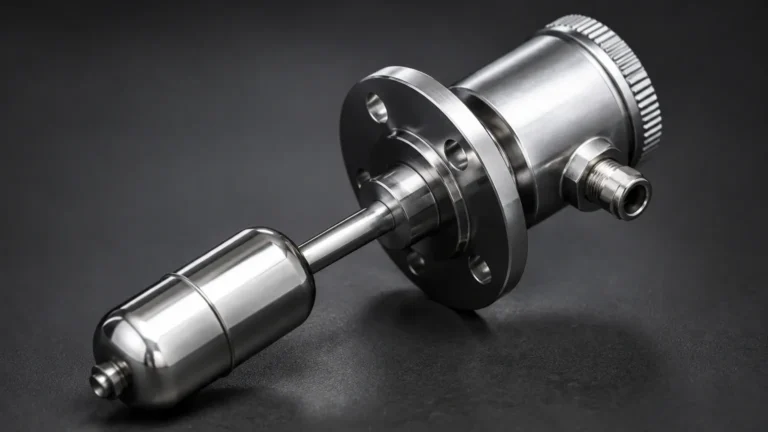
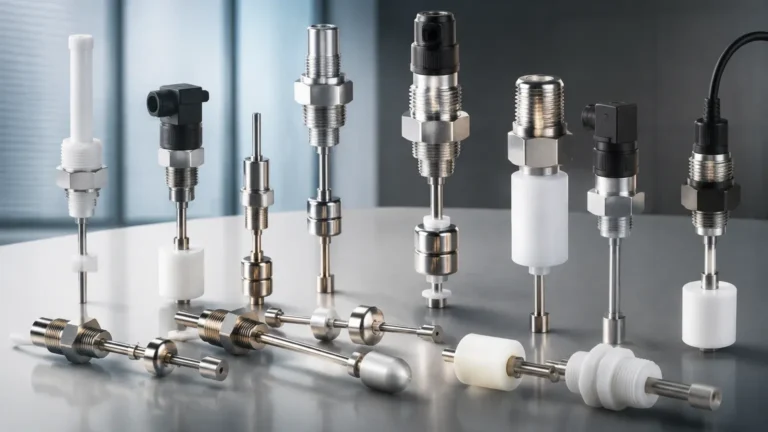
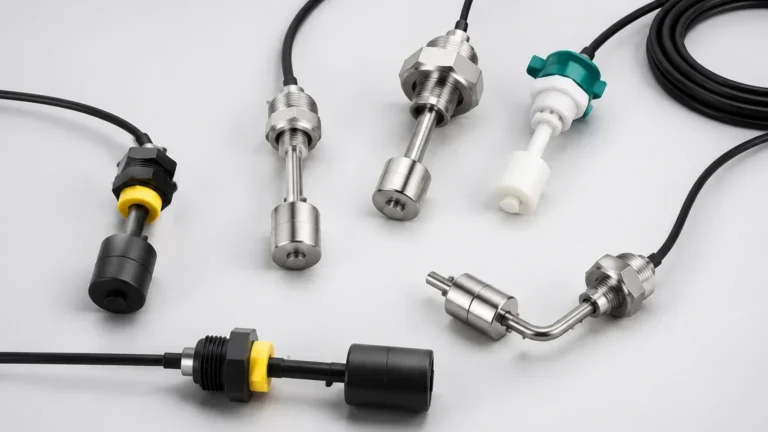
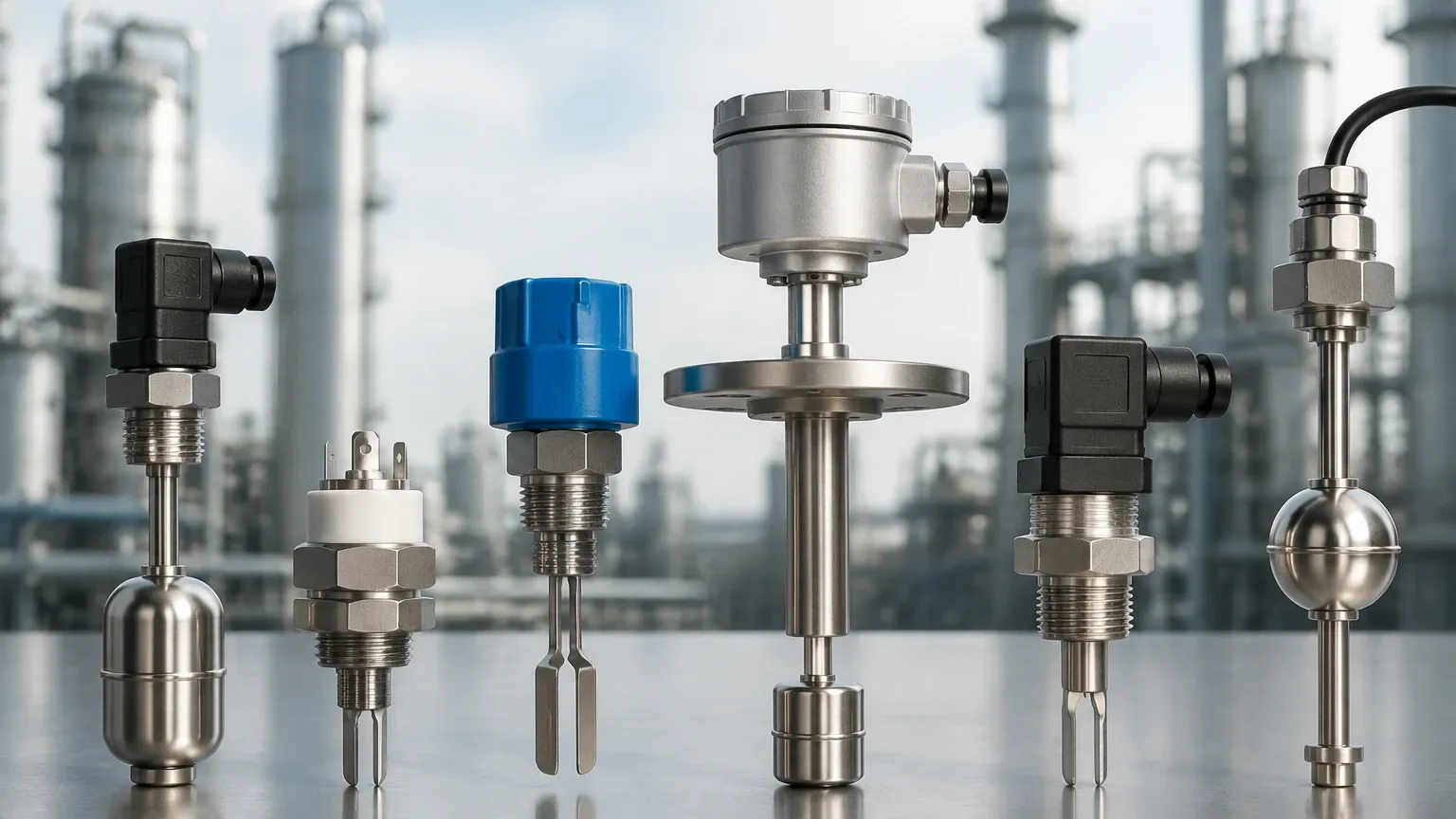
Float switches operate on the principle of buoyancy. A float containing a permanent magnet moves with the liquid level. When the float reaches a predetermined point, the magnetic field actuates a reed switch or a microswitch located within the stationary stem. These are widely used for water treatment and simple oil tank applications due to their low cost and mechanical simplicity.
2. Vibrating Tuning Fork Switches
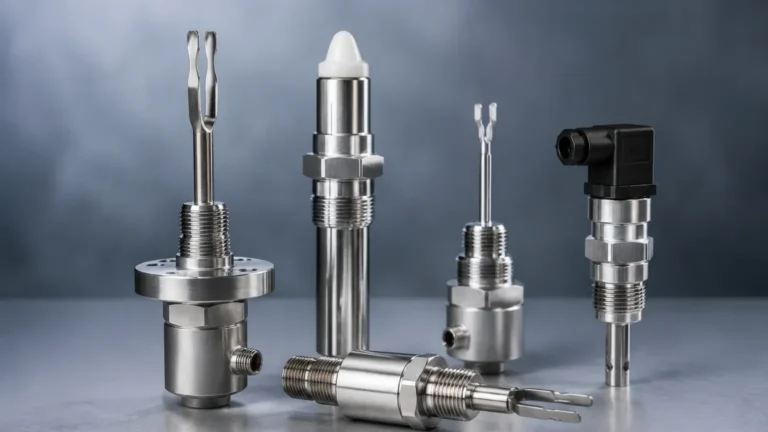
The sensor consists of a tuning fork that is piezoelectrically energized to vibrate at its natural resonance frequency in the air. When the fork is covered by a liquid or solid medium, the frequency shifts or the vibration is damped. The electronic circuit detects this change and converts it into a switching signal. This technology is highly resistant to changes in pressure, temperature, and foam.
3. Capacitive Level Switches
Capacitive sensors treat the probe and the tank wall (or a reference electrode) as two plates of a capacitor. The medium acts as the dielectric. As the level rises and covers the probe, the capacitance increases because most media have a higher dielectric constant than air. This change triggers the switch. These are excellent for powders and bulk solids but require calibration for the specific material.
4. Ultrasonic Level Switches
These switches emit high-frequency sound waves. In a gap-type ultrasonic switch, the signal is transmitted across a gap in the sensor head. When liquid fills the gap, the sound waves travel efficiently to the receiver, triggering the switch. Because they have no moving parts, they are suitable for corrosive or viscous fluids.
5. Optical Level Switches
Optical switches use an infrared LED and a light receiver. Within a triangular prism at the sensor tip, light is reflected back to the receiver when the tip is in the air. When submerged in liquid, the light is refracted into the medium, and the receiver detects the loss of signal. These are extremely compact and ideal for leak detection in small pipes.
Selection Criteria and Technical Specifications
Choosing the right instrument involves more than just identifying the level switch unspsc code. Engineers must match the switch technology to the process conditions. The following table provides a comparison of common technologies used in industrial applications.
Level Switch Technology Comparison
| Technology | Suitable Media | Max Pressure (Typical) | Temp Range (Typical) | Key Advantage |
| :— | :— | :— | :— | :— |
| Float | Clean liquids | 40 bar (4.0 MPa) | -40°C to 200°C | Low cost, no power required |
| Tuning Fork | Liquids, powders | 64 bar (6.4 MPa) | -50°C to 150°C | Maintenance-free, foam resistant |
| Capacitive | Solids, liquids | 25 bar (2.5 MPa) | -40°C to 125°C | Detects through non-metallic walls |
| Ultrasonic | Viscous liquids | 20 bar (2.0 MPa) | -30°C to 100°C | No moving parts, high reliability |
| Conductive | Conductive liquids | 10 bar (1.0 MPa) | -20°C to 100°C | Simple, multi-point detection |
Installation Considerations
Correct installation is paramount to preventing false triggers and mechanical failure. Regardless of the UNSPSC classification, the physical mounting must account for the following:
* Turbulence and Agitation: In tanks with mixers, float switches can be damaged by mechanical force. Vibrating forks or capacitive probes are generally preferred in agitated vessels. If a float must be used, a stilling well (a perforated pipe) should be installed to protect the sensor.
* Orientation: Most switches can be mounted horizontally (side-wall) or vertically (top-tank). However, tuning forks must be oriented so that the blades are vertical to the flow of material to prevent "bridging" or buildup between the forks.
* Nozzle Length: For side-mounted switches, the nozzle length must not interfere with the sensor's active zone. If the nozzle is too long, material may collect inside it, causing the switch to remain in the "on" state even after the level has dropped.
* Electrical Connection: Ensure the cable entry points downwards to prevent moisture from entering the housing via capillary action. Use appropriate cable glands and conduits to maintain the IP (Ingress Protection) rating, typically IP65 or IP67 for industrial environments.
Limitations and Potential Risks
While level switches are robust, they are not universal solutions. Understanding their limitations prevents process downtime.
1. Coating and Buildup: Capacitive and tuning fork switches can fail if the medium is highly viscous or sticky, leading to a permanent coating on the sensor. Some advanced tuning forks have "active shield" technology to ignore buildup, but regular cleaning may still be required.
2. Dielectric Constant (Dk): Capacitive switches require a minimum Dk difference between the air and the medium. If the Dk of the material is too low (e.g., certain dry oils or plastic pellets), the switch may not detect the level change.
3. Specific Gravity: Float switches are dependent on density. If the liquid density changes significantly due to temperature fluctuations, a float designed for water (SG 1.0) might sink in a lighter hydrocarbon (SG 0.7).
4. Aeration and Foam: Ultrasonic and optical switches can be confused by heavy foam, either triggering prematurely or failing to detect the liquid surface beneath the foam layer.
Practical Procurement Guide
When generating a Request for Quotation (RFQ) or a Purchase Order (PO) using the level switch unspsc code, include the following technical details to ensure the supplier provides a compatible instrument:
* Wetted Materials: Specify 316 Stainless Steel, PP, PVDF, or PTFE based on chemical compatibility.
* Process Connection: Threaded (e.g., G1/2", 1" NPT) or Flanged (e.g., DN50 PN16, 2" ANSI 150lb).
* Output Type: Relay (SPDT/DPDT), Transistor (PNP/NPN), or Two-wire (8/16mA).
* Certifications: Hazardous area ratings (ATEX, IECEx) are mandatory for oil and gas or chemical processing environments.
Frequently Asked Questions (FAQs)
Q: Can I use the same UNSPSC code for both liquid and solid level switches?
A: Yes, 41112401 is the general commodity code for level switches. However, in detailed procurement systems, you may add descriptors to specify "Solids Level Switch" or "Liquid Level Switch" to assist the technical evaluation team.
Q: How do I choose between a tuning fork and a float switch?
A: Choose a float switch for simple, non-powered applications in clean liquids. Choose a tuning fork for applications involving vibration, turbulence, or where high reliability and a long service life without maintenance are required.
Q: What is the standard metric unit for level switch pressure ratings?
A: In international engineering, pressure is typically measured in Bar or Megapascals (MPa). 1 Bar is approximately equal to 14.5 PSI. Most Welk level switches are rated for at least 10 to 40 bar depending on the model.
Q: Does the UNSPSC code change if the switch has a digital display?
A: Generally, no. The code 41112401 covers the functional category. If the device is primarily a transmitter with a switch output, it might be classified under 41112404 (Level transmitters).
Conclusion
Accurate classification using the level switch unspsc code 41112401 is the foundation of a professional B2B procurement process. By combining this standardized coding with a deep understanding of measurement principles—such as buoyancy, vibration, and capacitance—engineers can select the most reliable instrumentation for their specific application. Whether managing water treatment facilities or complex chemical reactors, choosing the correct level switch ensures safety, efficiency, and long-term operational success. For those requiring customized OEM/ODM services or high-precision industrial instruments, Welk provides a comprehensive range of solutions tailored to global industrial standards.