Level Switch Dpdt
Level Switch Dpdt
In industrial automation and process control, the reliability of point-level detection is paramount. Whether preventing a tank overflow in a chemical plant or ensuring a pump does not run dry in a water treatment facility, the choice of instrumentation determines the safety and efficiency of the entire operation. Among the various configurations available, the level switch DPDT (Double Pole Double Throw) stands out as a critical component for engineers requiring redundant signaling or the simultaneous control of two independent circuits from a single sensing point.
Selecting the right Level Switches involves understanding both the mechanical sensing technology and the electrical output configuration. This guide examines the principles, applications, and technical considerations of DPDT level switches in modern industrial environments.
Understanding Measurement Principles and Switch Logic
Before focusing on the electrical output, it is essential to understand how different technologies detect the presence or absence of a medium. Level switches are "point-level" sensors, meaning they trigger a change in state when the material reaches a specific height.
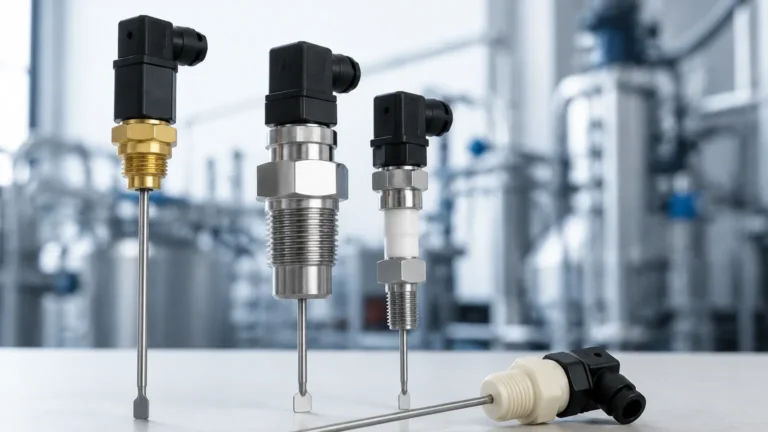
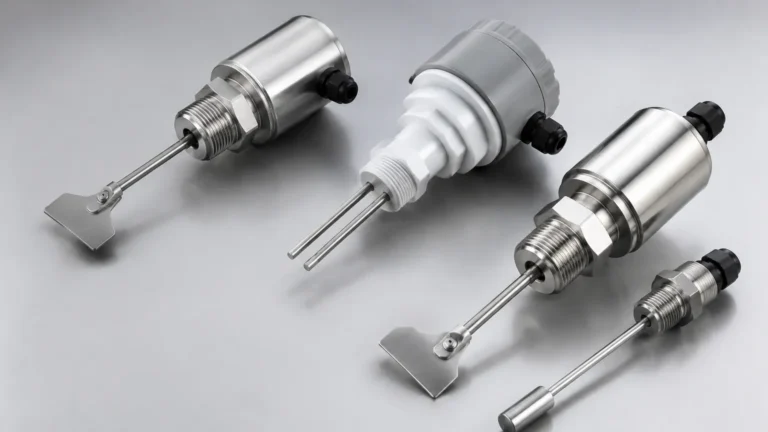
Vibrating Tuning Fork Level Switches
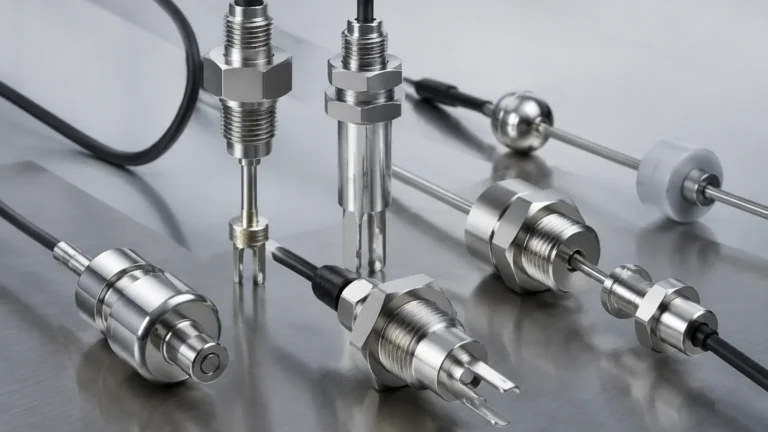
These switches utilize a tuning fork-shaped element that vibrates at its natural resonant frequency using piezoelectric crystals. When the fork is submerged in a liquid or solid, the frequency changes or the vibration is damped. The internal electronics detect this shift and trigger the relay. This technology is highly resistant to changes in flow, turbulence, bubbles, and foam.
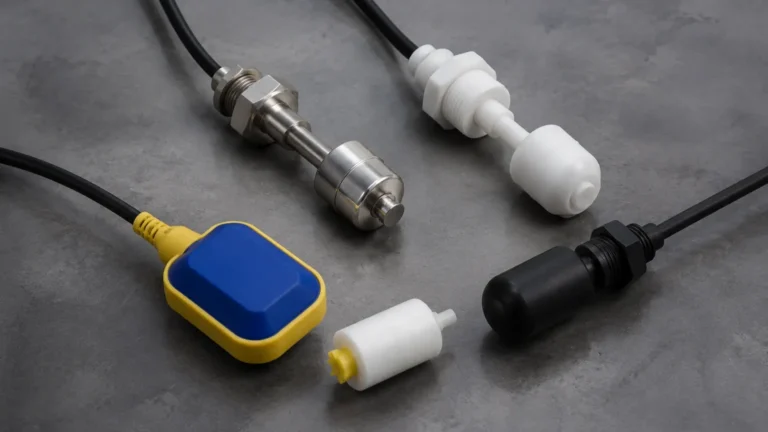
Float and Magnetic Level Switches
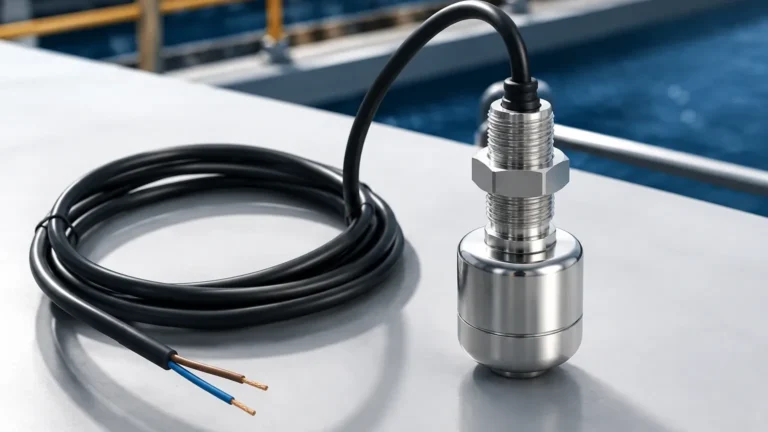
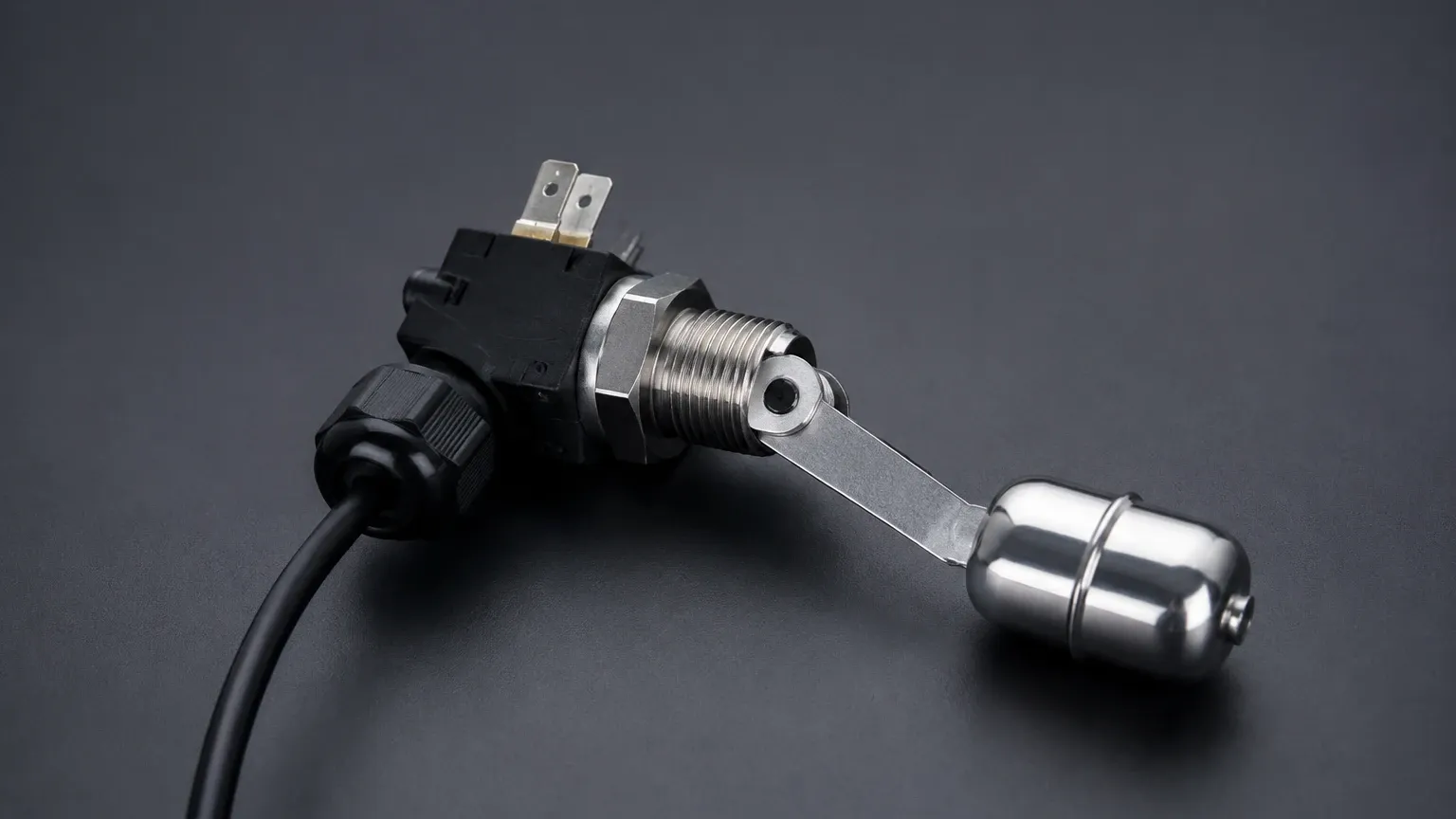
Operating on the principle of buoyancy, a float moves along a stem as the liquid level rises or falls. Inside the float is a magnet that actuates a reed switch or a microswitch within the stem. For DPDT configurations, the movement typically triggers a mechanical microswitch capable of handling higher current loads than standard reed switches.
Ultrasonic Level Switches
These use a pair of ultrasonic transducers separated by a gap. When the gap is filled with liquid, ultrasonic waves travel across; when empty, the waves are attenuated. This solid-state approach is ideal for clean liquids where mechanical moving parts might fail due to scaling or mechanical wear.
Capacitance Level Switches
The sensor and the tank wall (or a reference probe) act as two plates of a capacitor. As the level rises, the dielectric constant of the medium between the plates changes, altering the capacitance. Once a preset threshold is crossed, the switch changes state. This is effective for both liquids and bulk solids.
The Significance of the DPDT Configuration
The term "DPDT" refers to the internal relay logic. To appreciate its value, one must compare it to the more common SPDT (Single Pole Double Throw) configuration.
* SPDT (Single Pole Double Throw): Features one common terminal and two contact points (Normally Open and Normally Closed). It can control one circuit, switching between two paths.
* DPDT (Double Pole Double Throw): Essentially consists of two SPDT switches that are mechanically linked and actuate simultaneously. It has two common terminals, two Normally Open (NO) contacts, and two Normally Closed (NC) contacts.
Why Use a Level Switch DPDT?
The primary advantage of a level switch DPDT is the ability to control two separate electrical circuits that may operate at different voltages or perform different functions. For example:
1. Redundancy and Safety: One pole can be wired to a Programmable Logic Controller (PLC) for standard process monitoring, while the second pole is wired to a hard-wired emergency siren or a physical pump cutoff. This ensures that even if the PLC fails, the safety shutdown remains functional.
2. Local and Remote Signaling: A DPDT switch can simultaneously light a local indicator lamp on the tank and send a signal to a remote control room.
3. Circuit Isolation: Because the two poles are galvanically isolated, you can switch a 230V AC pump motor with one pole and a 24V DC digital input for a control system with the other, without any risk of cross-interference.
Technical Selection Criteria
When specifying a level switch DPDT, engineers must look beyond the electrical output and consider the physical environment of the application. The following table provides a comparison of common technologies used in B2B industrial settings.
Selection Table: DPDT Level Switch Technologies
| Technology | Suitable Media | Max Pressure (Approx.) | Max Temperature | Key Advantage |
| :— | :— | :— | :— | :— |
| Vibrating Fork | Liquids, Powders, Granules | 40 bar (4.0 MPa) | -50°C to +150°C | No calibration required; unaffected by foam. |
| Float Switch | Clean Liquids | 30 bar (3.0 MPa) | Up to +200°C | Simple, low-cost, and reliable for high-temp. |
| Capacitance | Liquids, Slurries, Solids | 25 bar (2.5 MPa) | Up to +250°C | Handles high temperatures and aggressive media. |
| Ultrasonic | Clean, non-aerated liquids | 10 bar (1.0 MPa) | -40°C to +100°C | No moving parts; very compact. |
| Displacer | Heavy oils, high pressure | 100+ bar (10 MPa) | Up to +400°C | Extreme pressure and temperature stability. |
Installation and Wiring Considerations
Correct installation is vital to prevent false triggering and ensure the longevity of the DPDT relay contacts.
Mechanical Mounting
* Orientation: Most vibrating fork and ultrasonic switches can be mounted horizontally or vertically. However, float switches are often orientation-specific. Ensure that the "swing" or travel path of the float is not obstructed by tank internals like baffles or agitators.
* Nozzle Length: For side-mounted switches, the nozzle length should not exceed the manufacturer's specification (typically 50 mm to 100 mm) to prevent the medium from getting trapped in the nozzle, which could cause the switch to remain in the "covered" state even after the level drops.
Electrical Wiring
A DPDT switch typically has six terminals (two Common, two NO, two NC) plus a ground.
1. Cable Selection: Use shielded cables for signals going to PLCs to prevent Electromagnetic Interference (EMI).
2. Contact Protection: If the DPDT switch is directly controlling an inductive load (such as a solenoid valve or a small motor), back-EMF can cause arcing across the contacts. Installing a snubber circuit (RC network) for AC loads or a flyback diode for DC loads is highly recommended to extend the life of the relay.
3. Voltage Ratings: Ensure the supply voltage to the switch's electronics matches the site power (e.g., 24V DC or 110/230V AC) and that the relay contacts are rated for the load they will carry.
Limitations and Common Risks
While DPDT level switches are robust, they are not universal solutions. Engineers should be aware of the following limitations:
* Contact Pitting: Over time, mechanical relay contacts in a DPDT switch can wear out, especially if switching high currents frequently. For high-cycle applications, consider using the DPDT switch to trigger an external heavy-duty contactor rather than driving the load directly.
* Coating and Buildup: In applications involving viscous liquids or sticky solids, material can build up on the sensing element. While some vibrating forks have "coat-rejection" logic, excessive buildup will eventually lead to a false positive.
* Turbulence: In tanks with high-speed agitators, mechanical switches like floats may suffer from premature fatigue. In such cases, a non-contact or solid-state vibrating switch is preferred.
* Minimum Load: Some gold-plated contacts in high-end DPDT switches require a "wetting current" to keep the contacts clean. If the current is too low (e.g., micro-amps), the contact resistance might increase over time.
Practical Industrial Applications
Water and Wastewater Treatment
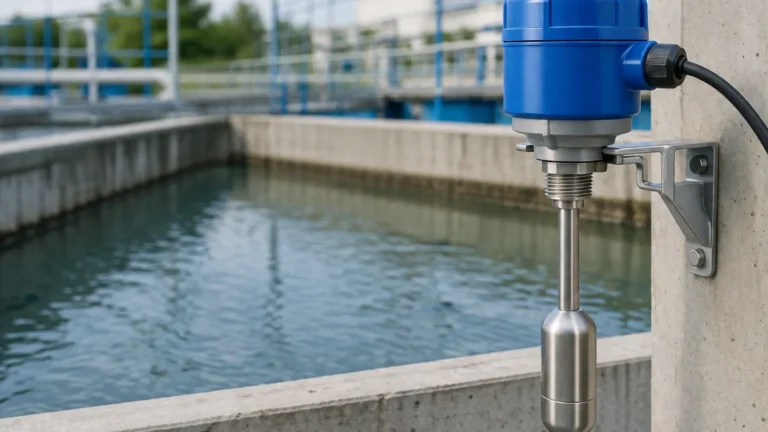
In pump lift stations, a DPDT float or vibrating fork switch is often used for high-level protection. One pole signals the SCADA system to log the event, while the second pole provides a direct interlock to shut down the upstream pumps, preventing a spill even if the telemetry system is offline.
Chemical Processing
For storage tanks containing corrosive acids, a capacitance-based level switch DPDT with a PTFE-coated probe is common. The DPDT output allows for the simultaneous control of a feed valve and a local alarm strobe.
Food and Beverage
In hygienic applications, vibrating forks with polished stainless steel (Ra < 0.8 µm) surfaces are used. The DPDT configuration is useful here for managing the transition between filling cycles and Cleaning-in-Place (CIP) processes, where different control logic may be required for each phase.
Frequently Asked Questions (FAQ)
Q: Can I use a DPDT switch as an SPDT switch?
A: Yes. You can simply use one set of contacts (one pole) and leave the other disconnected. This is often done to standardize spare parts across a facility.
Q: What is the difference between a DPDT relay and a DPDT switch?
A: In the context of level measurement, the "switch" refers to the entire instrument (sensor + electronics), while the "relay" is the specific electrical component inside that provides the DPDT output.
Q: How do I test a DPDT level switch?
A: Most modern switches have a "test" button or a magnetic test point on the housing. Actuating this should cause both poles of the relay to flip. You can verify this using a multimeter set to continuity mode across the NO/NC and Common terminals.
Q: Is DPDT better for fail-safe applications?
A: Yes, because it allows you to wire one pole in a "Fail-Safe High" configuration and use the other for independent monitoring, providing a higher Safety Integrity Level (SIL) for the installation.
Conclusion
The level switch DPDT remains a cornerstone of industrial process safety and automation. By providing two independent outputs from a single detection point, it offers unparalleled flexibility in circuit design and redundancy. When selecting a switch, engineers must balance the physical requirements of the media—such as temperature, pressure, and viscosity—with the electrical requirements of the control system.
For those seeking reliable, accurate, and cost-effective solutions for complex level measurement challenges, exploring a range of high-quality Level Switches is the first step toward a more secure and efficient facility. Always consult with a technical specialist to ensure that the chosen technology and contact configuration align with your specific application parameters and safety standards.