Vegadif 85
Vegadif 85
In the landscape of industrial process automation, differential pressure (DP) measurement remains a cornerstone technology for determining level, flow, and interface. The Vegadif 85 represents a high-precision solution within this category, designed to meet the rigorous demands of the chemical, oil and gas, and water treatment industries. This article provides a comprehensive technical overview of the Vegadif 85, its operating principles, and its application in modern industrial environments, while comparing it to other technologies available on the Main Page.
Understanding the Measurement Principle
Differential pressure transmitters like the Vegadif 85 operate on the principle of measuring the pressure difference between two points. In level measurement applications, this is particularly useful for pressurized vessels where the internal gas pressure would interfere with a standard hydrostatic pressure reading.
The Physics of Level via DP
For an open tank, the level is calculated using the formula:
P = ρ · g · h
Where:
- P is the hydrostatic pressure.
- ρ (rho) is the density of the liquid.
- g is the gravitational constant.
- h is the height of the liquid.
However, in a closed, pressurized vessel, the total pressure at the bottom is the sum of the liquid's hydrostatic pressure and the gas pressure above it. To isolate the liquid level, the transmitter must subtract the gas pressure from the total pressure. The Vegadif 85 utilizes two pressure ports (high pressure and low pressure sides) to perform this subtraction mechanically or electronically, providing an accurate representation of the liquid height regardless of the vessel's internal pressure.
The Metallic Measuring Cell
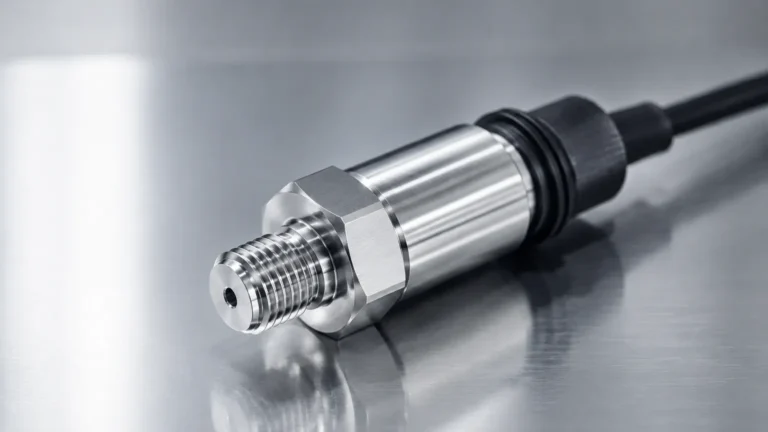
The Vegadif 85 is equipped with a metallic measuring cell. Unlike ceramic cells which are often used for abrasive media, metallic cells utilize a thin diaphragm (often 316L stainless steel, Hastelloy, or Tantalum) that deflects under pressure. This deflection is transmitted via a fill fluid (usually silicone oil or inert oil) to a piezoresistive sensor. This design allows for high overpressure resistance and excellent long-term stability, even in fluctuating temperature environments.
Technical Specifications and Features
The Vegadif 85 is engineered for versatility. Its performance characteristics make it suitable for safety-critical applications, including those requiring SIL 2/3 certification.
Key Performance Metrics
- Accuracy: Standard accuracy levels of 0.065%, with options for even higher precision in specialized laboratory or custody transfer applications.
- Measurement Ranges: Capable of measuring very low differential pressures (from 0.01 bar / 1 kPa) up to high ranges (up to 40 bar / 4000 kPa).
- Static Pressure: It can withstand high static pressures, often up to 160 bar or 400 bar, depending on the flange and housing configuration.
- Materials: Wetted parts are available in a variety of alloys to resist corrosion, including 316L, Hastelloy C276, Monel, and Tantalum.
Communication and Integration
Modern industrial automation requires seamless data integration. The Vegadif 85 supports various communication protocols:
- 4…20 mA/HART: The industry standard for analog signaling with digital diagnostics.
- Profibus PA: Ideal for complex plant architectures requiring digital bus communication.
- Foundation Fieldbus: Used in highly integrated control systems.
Application Scenarios for the Vegadif 85
While the Vegadif 85 is a specialized differential pressure transmitter, its utility extends across several measurement tasks.
1. Level Measurement in Pressurized Vessels
In industries such as chemical processing or liquid gas storage, tanks are often pressurized to maintain the product in a liquid state. The Vegadif 85 connects the "High Pressure" side to the bottom of the tank and the "Low Pressure" side to the gas space at the top. This cancels out the static pressure, leaving only the hydrostatic head of the liquid.
2. Flow Measurement (DP Flow)
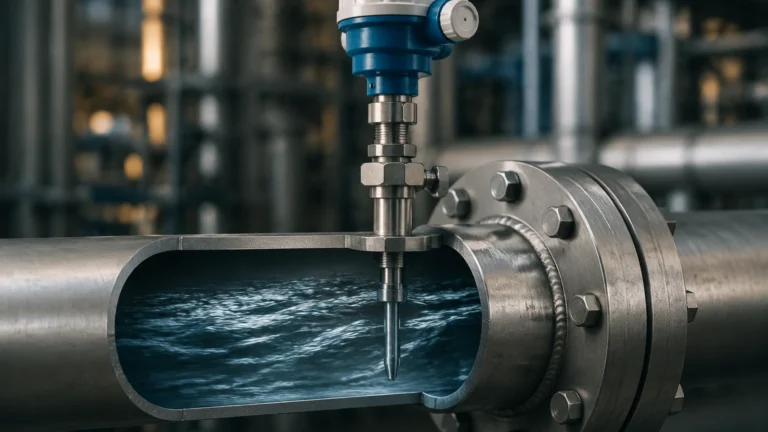
By using an orifice plate, Venturi tube, or Pitot tube, the Vegadif 85 can measure the flow rate of gases, vapors, and liquids. The transmitter measures the pressure drop across the restriction in the pipe, which is proportional to the square of the flow velocity.
3. Interface Measurement
In separators where two immiscible liquids (like oil and water) coexist, the Vegadif 85 can be used to track the interface level. This requires the total level to remain constant or be measured independently, as the DP reading will change based on the proportion of the higher-density fluid versus the lower-density fluid.
4. Filter Monitoring
In large-scale water treatment or oil filtration systems, the Vegadif 85 monitors the pressure drop across filter elements. An increasing differential pressure signals that the filter is becoming clogged and requires backwashing or replacement.
Selection Criteria: DP vs. Other Technologies
Choosing the right instrument involves comparing the Vegadif 85 against other technologies like radar or ultrasonic sensors. Each has specific advantages depending on the medium and vessel conditions.
| Feature | Vegadif 85 (DP) | Radar (Non-contact) | Ultrasonic |
| :— | :— | :— | :— |
| Measurement Type | Contact (via diaphragm) | Non-contact | Non-contact |
| Accuracy | Very High (0.065%) | High (2mm – 5mm) | Moderate (0.25% of range) |
| Pressure Limit | Very High (up to 400 bar) | High (up to 160 bar) | Low (typically < 3 bar) |
| Temperature Limit | Up to 400°C (with seals) | Up to 450°C | Typically < 80°C |
| Density Impact | High (Requires constant density) | None | None |
| Foam Impact | None | Minimal (Frequency dependent) | High (Absorbs signal) |
For a broader look at these technologies, engineers should consult the Main Page to evaluate which physical principle aligns best with their specific process media.
Installation Considerations and Best Practices
The reliability of a Vegadif 85 installation depends heavily on the correct setup of impulse lines or chemical seals.
Impulse Lines
Impulse lines are small-bore pipes that connect the process tapping points to the transmitter.
- Slope: Lines should be sloped (at least 1:12) to allow gas bubbles to escape back into the tank (for liquid measurement) or condensate to drain (for gas measurement).
- Length: Keep impulse lines as short as possible to reduce response time and minimize the risk of clogging or freezing.
- Heat Tracing: In outdoor installations or with high-viscosity media, impulse lines may require insulation or steam/electric heat tracing.
Chemical Seals (Remote Seals)
When the process medium is highly corrosive, viscous, or prone to polymerization, a chemical seal is used. This involves a flexible diaphragm at the process connection, connected to the Vegadif 85 via a capillary tube filled with transmission fluid.
- Temperature Compensation: Long capillaries can be affected by ambient temperature changes, causing the fill fluid to expand or contract. This can introduce small measurement errors that must be compensated for during commissioning.
- Mounting Position: The vertical distance between the transmitter and the process connection (the "head effect") must be factored into the zero-point calibration.

Limitations and Potential Risks
While the Vegadif 85 is a robust instrument, engineers must be aware of its limitations:
1. Density Sensitivity: Since DP measurement relies on the weight of the liquid column, any change in the liquid's density (caused by temperature fluctuations or concentration changes) will result in a level error. If the density varies significantly, a temperature-compensated calculation or a different technology like radar may be required.
2. Clogging of Impulse Lines: In applications with suspended solids, impulse lines can become blocked, leading to a frozen or erratic signal. Regular purging or the use of remote seals can mitigate this.
3. Mechanical Wear: Although the metallic diaphragm is durable, it can be damaged by extreme pressure spikes or physical abrasion if not correctly specified for the medium.
Maintenance and Calibration
The Vegadif 85 is designed for low maintenance, but periodic verification is essential for ISO compliance and safety standards.
- Zero Point Check: In DP level applications, the zero point should be checked when the tank is empty or when the liquid is below the lower tapping point.
- Calibration Interval: Depending on the criticality of the process, a calibration check every 12 to 24 months is typical. The high stability of the metallic cell often allows for longer intervals compared to older technologies.
- Diagnostics: Utilize the HART protocol to monitor the "Health Status" of the sensor. The Vegadif 85 can report internal electronics temperature, overpressure events, and diaphragm integrity.
Frequently Asked Questions (FAQ)
Q: Can the Vegadif 85 be used for steam applications?
A: Yes, but it requires the use of condensate pots in the impulse lines to protect the transmitter from high steam temperatures and to ensure a stable liquid column for measurement.
Q: What is the advantage of the metallic cell over a ceramic cell?
A: Metallic cells, like the one in the Vegadif 85, are generally better at handling high static pressures and offer better resistance to rapid temperature shocks. However, ceramic cells are superior for highly abrasive or vacuum applications.
Q: How do I handle a situation where the liquid density changes?
A: If the density change is predictable based on temperature, you can use a PLC to calculate the corrected level using a temperature input. If the density change is unpredictable, we recommend reviewing alternative technologies such as guided wave radar on the Main Page.
Q: Is it possible to mount the Vegadif 85 above the tapping points?
A: Yes, but this requires a "dry leg" or "wet leg" setup. In a wet leg setup, the impulse line is filled with a reference liquid to prevent process vapors from condensing in the line and changing the pressure reading.
Conclusion
The Vegadif 85 is a versatile and highly accurate tool for complex differential pressure tasks. By understanding its measurement principles and following rigorous installation standards, process engineers can achieve reliable level and flow data in the most challenging environments. Whether dealing with high-pressure chemical reactors or simple filter monitoring, the Vegadif 85 provides the precision and safety certifications required for modern B2B industrial applications. For more information on selecting the right level measurement technology for your specific project, visit the Main Page for expert guidance and product specifications.