Agglomeration Drum Knockers
Agglomeration Drum Knockers
In industrial processing, particularly within the mining, fertilizer, and chemical sectors, the agglomeration drum is a critical component used to transform fine powders into larger, manageable granules or pellets. However, the inherent moisture and adhesive properties of the materials being processed often lead to significant buildup on the internal walls of the drum. This accumulation, if left unchecked, reduces the effective volume of the drum, imbalances the rotating equipment, and disrupts the consistency of the final product. Agglomeration drum knockers serve as the primary mechanical solution to this challenge, working in tandem with sophisticated level measurement systems to ensure continuous, efficient operation.
The Role of Flow Aids in Agglomeration Processes
Agglomeration, or granulation, involves the tumbling of raw materials in the presence of a liquid binder. As the drum rotates, the material undergoes a process of nucleation and growth. Because these materials are often cohesive, they tend to stick to the drum's liner. This is where agglomeration drum knockers—also known as pneumatic impactors or vibrators—become essential.
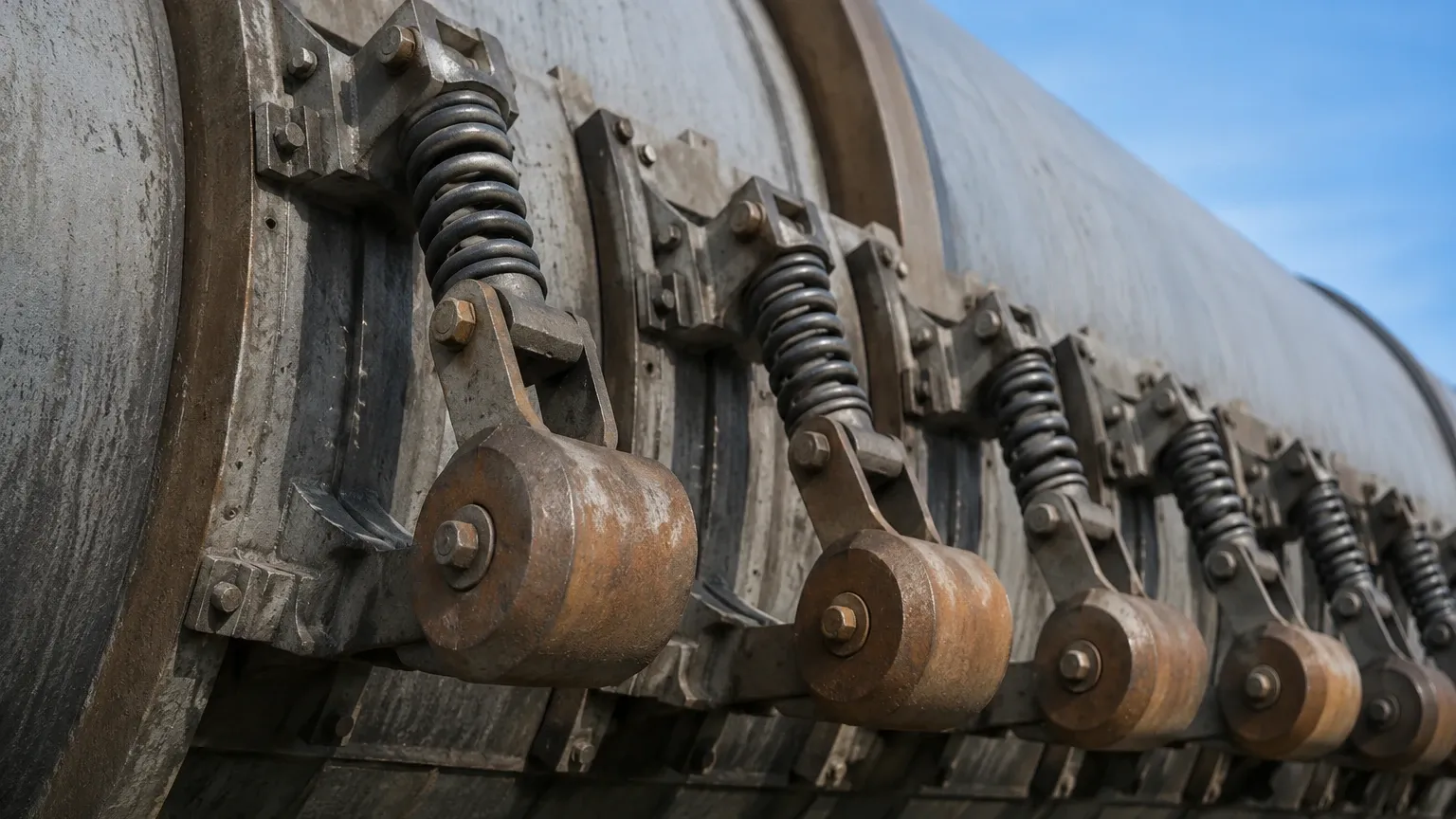
These devices are mounted on the exterior of the drum or on a supporting framework to deliver timed, high-energy impacts. The resulting shockwaves dislodge the "cake" or buildup from the internal walls. Without these flow aids, the process would require frequent manual cleaning, leading to significant downtime and safety risks. To optimize the use of these knockers, engineers rely on level measurement technology to determine exactly when and where the buildup is occurring, preventing unnecessary wear on the drum structure from excessive knocking.
Measurement Principles for Monitoring Drum Accumulation
Before implementing a knocker system, it is vital to understand the measurement principles used to monitor the material bed and wall scaling. Level sensors provide the data necessary to trigger the knockers or adjust the drum's rotational speed.
Radar Level Measurement (FMCW)
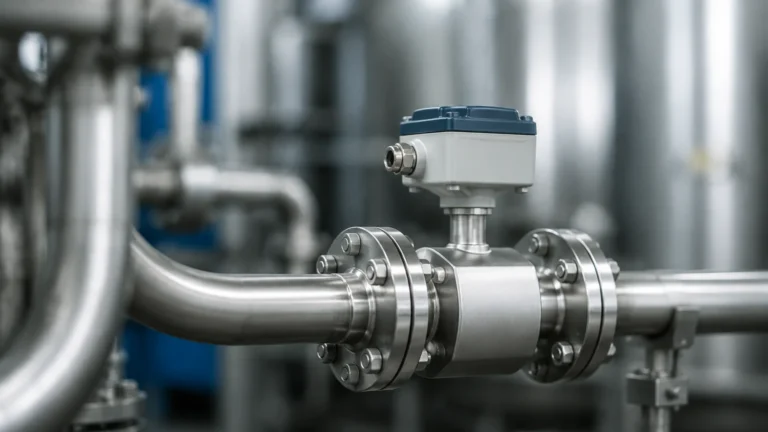
Frequency Modulated Continuous Wave (FMCW) radar is the preferred technology for monitoring agglomeration drums. Operating at high frequencies, typically 80 GHz, these sensors emit a continuous signal that changes in frequency. The difference between the emitted and received frequency is proportional to the distance.
In the context of an agglomeration drum, radar sensors must be capable of penetrating high levels of dust and steam. The narrow beam angle of an 80 GHz radar allows it to be mounted in locations where it can monitor the material bed height without interference from the drum's internal flights or the knockers' mounting brackets. By monitoring the "profile" of the material, the system can detect if the bed is rising due to downstream blockages or if the drum's internal diameter is effectively shrinking due to wall buildup.
Ultrasonic Level Sensors
Ultrasonic sensors measure the time-of-flight of sound pulses. While cost-effective, they are generally less suitable for the interior of an agglomeration drum than radar. This is because the speed of sound is affected by temperature fluctuations and the high-density dust clouds common in granulation. However, they are frequently used on the exterior feed hoppers that supply the drum.
Capacitance and Point Level Detection
For detecting specific "high-water marks" of material buildup on the drum's discharge end, capacitance switches or vibrating rod sensors are used. These provide a binary signal (material present or absent) to the control system. When the buildup reaches a certain thickness, the agglomeration drum knockers are activated at a higher frequency to clear the obstruction.
For a comprehensive overview of the instruments used to monitor these processes, you can Review product options and application support on our Main Page.
Types of Agglomeration Drum Knockers
Knockers are categorized by their actuation method and the type of force they apply to the drum. Selecting the right type depends on the material's moisture content and the drum's structural integrity.
1. Pneumatic Impact Knockers
These are the most common type used in heavy industry. A pneumatic piston is accelerated by compressed air (typically 3 to 6 bar) and strikes a base plate welded to the drum or a striking bar.
* Single-Impact: Delivers one powerful blow at set intervals. This is effective for brittle buildup that cracks easily.
* Continuous Impact: Delivers a rapid succession of blows. This is better for "sticky" or plastic-like buildup that requires sustained energy to dislodge.
2. Pneumatic Vibrators
Unlike knockers, vibrators use an unbalanced mass (rotary) or a reciprocating piston (linear) to create high-frequency oscillation. While they are quieter, they can sometimes cause material to compact further if the frequency is not tuned correctly. They are often used on the discharge chutes of the drum rather than the main body.
3. Electric Electromagnetic Knockers
These use an electromagnetic coil to pull a plunger against a spring, which then strikes the drum. They offer precise control over the impact force and timing but are generally more expensive and require more maintenance in the harsh environments of a chemical or mining plant.
Selection Criteria for Knockers and Level Sensors
Choosing the correct combination of flow aids and sensors requires an evaluation of several operational parameters. The following table provides a general guide for selection based on application needs.
| Feature | Pneumatic Impactors | Electromagnetic Knockers | Radar Level Sensors |
| :— | :— | :— | :— |
| Primary Use | Dislodging heavy, wet buildup | Precision cleaning of thin walls | Continuous bed height monitoring |
| Energy Source | Compressed Air (3-7 bar) | Electricity (110V/220V) | 24V DC / 4-20mA Loop |
| Maintenance | Moderate (Seal replacement) | Low (No air leaks) | Very Low (Non-contact) |
| Impact Force | High (Up to 1500 kgm/s) | Medium (Adjustable) | N/A |
| Environmental Resistance | Excellent (Explosion proof) | Good | Excellent (IP68/69K) |
| Best For | Mining, Fertilizer | Food, Pharmaceuticals | All Agglomeration Drums |
Installation and Engineering Considerations
Proper installation is critical to prevent damage to the drum shell, which is a significant capital asset.
Mounting and Reinforcement
Knockers should never be mounted directly to the skin of a thin-walled drum. Continuous impacting will lead to metal fatigue and cracking. Instead, a "channel" or reinforcement plate should be welded to the drum. This plate distributes the force of the impact over a larger surface area.
Synchronization with Level Data
Modern systems integrate the agglomeration drum knockers with the level meter's output. For example, if the radar sensor on the Main Page detects a bed level deviation of more than 10% from the setpoint, the PLC (Programmable Logic Controller) can trigger an "emergency" knocking cycle. This automated response prevents the drum from becoming unbalanced, which can destroy the trunnion bearings.
Impact Frequency and Timing
The timing of the knockers is usually managed by a solenoid valve. In many agglomeration processes, a "staggered" firing sequence is used. If multiple knockers are installed along the length of the drum, they fire in a sequence (e.g., 1-3-2-4) to ensure the drum remains balanced during its rotation.
Limitations and Operational Challenges
While essential, the use of knockers and level sensors in these environments is not without challenges.
1. Structural Fatigue: The primary risk of using high-energy knockers is the potential for stress fractures in the drum shell. Regular NDT (Non-Destructive Testing) inspections are required.
2. Noise Pollution: Pneumatic knockers are loud, often exceeding 100 dB at the source. Sound-dampening shrouds or the use of pneumatic mufflers is often necessary to meet occupational health and safety standards.
3. Sensor Interference: The vibration caused by knockers can interfere with sensitive electronic instruments. When installing level meters, it is vital to use mounting brackets with vibration isolation (such as rubber dampers). Additionally, the software in the level meter must have advanced signal processing to filter out the "noise" created by the mechanical impact.
4. Air Consumption: In large plants with dozens of drums, the demand for compressed air can be substantial. Ensuring a dedicated air receiver tank near the drum helps maintain consistent impact force.
Frequently Asked Questions (FAQ)
Q: How do I know if my agglomeration drum needs knockers?
A: If you observe fluctuating motor current (indicating an unbalanced load), inconsistent granule size, or if manual inspections reveal more than 50 mm of material buildup on the walls, a knocker system is likely required.
Q: Can radar level sensors see through the dust generated by the knockers?
A: Yes, high-frequency 80 GHz radar is specifically designed to penetrate heavy dust. Unlike ultrasonic sensors, radar waves are not reflected by airborne particles, allowing for an accurate reading of the material bed even during active knocking.
Q: How often should the knockers be fired?
A: This is process-dependent. Some plants fire them every 30 seconds, while others use a level-based trigger. It is generally better to fire them more frequently with less force than to wait for heavy buildup and use maximum force.
Q: Do knockers work on stainless steel drums?
A: Yes, but stainless steel is more prone to work-hardening and cracking under impact than carbon steel. Special care must be taken in the design of the reinforcement plates and the selection of the impact force.
Conclusion
Agglomeration drum knockers are a vital link in the chain of industrial granulation. By preventing material buildup, they ensure that the drum operates at peak efficiency and produces a consistent product. However, the effectiveness of these mechanical tools is greatly enhanced when paired with accurate level measurement. By utilizing advanced radar and ultrasonic technology, operators can transition from blind, timed knocking to a data-driven approach that protects the equipment and optimizes the process. For more information on selecting the right instrumentation for your industrial needs, visit our Main Page.