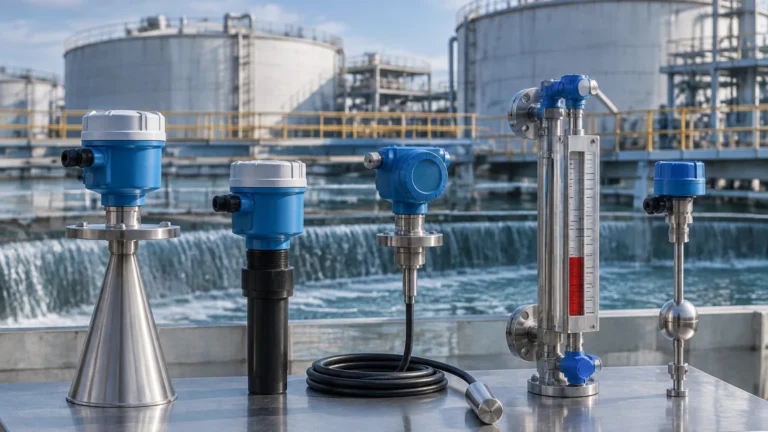
Wastewater Treatment Plant Water Monitoring
Wastewater Treatment Plant Water Monitoring
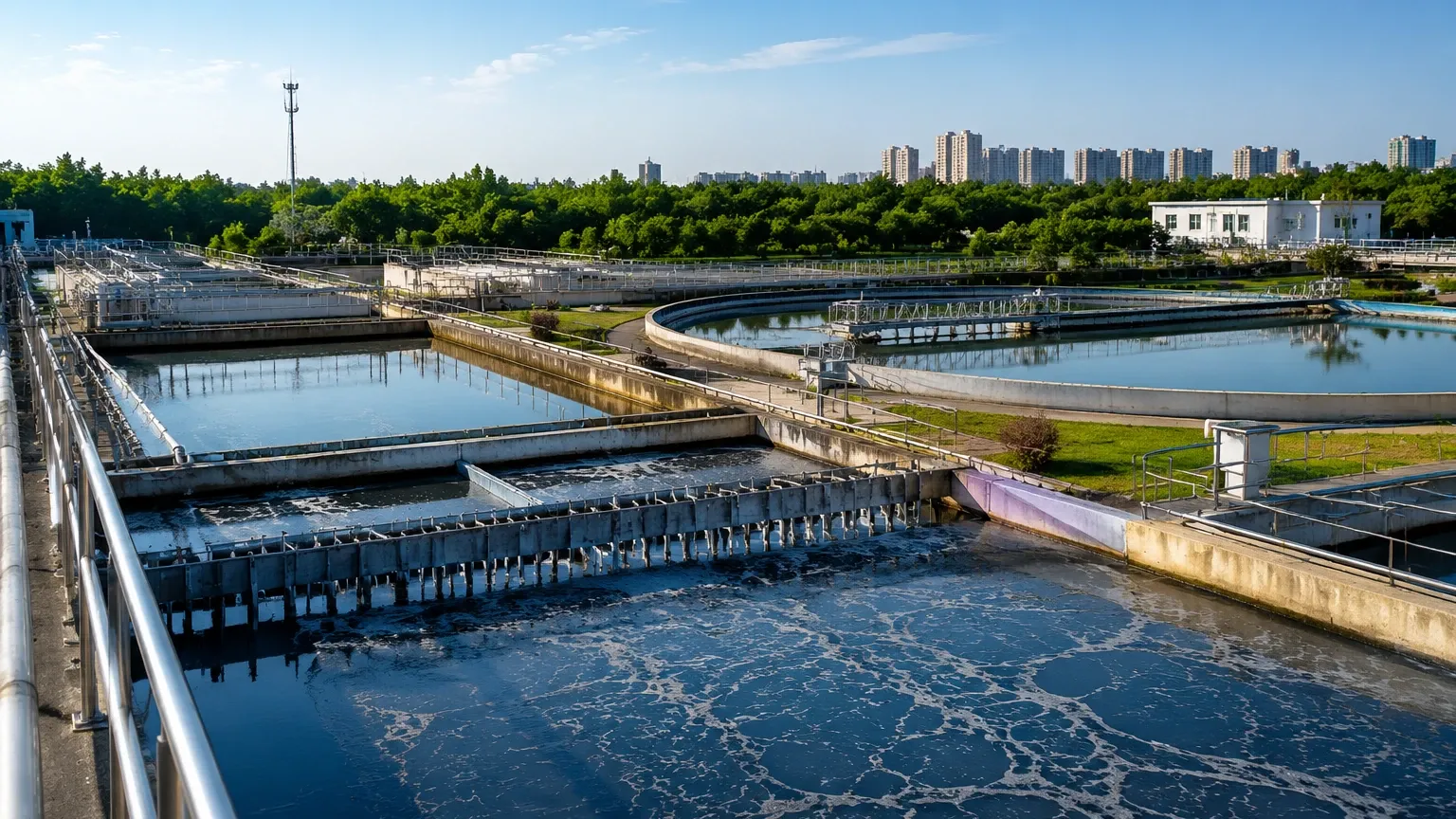
Effective wastewater treatment plant water monitoring is a cornerstone of modern environmental engineering and municipal management. It ensures that facilities operate within regulatory compliance, optimize chemical usage, and protect downstream ecosystems. In a typical wastewater treatment plant (WWTP), monitoring involves the continuous assessment of liquid levels, flow rates, and sludge accumulation across various stages—from the initial influent screening to the final effluent discharge.
Reliable data collection in these environments is challenging due to the presence of foam, turbulence, corrosive chemicals, and fluctuating temperatures. Selecting the appropriate measurement technology requires a deep understanding of physics, fluid dynamics, and the specific mechanical constraints of the treatment facility. This guide examines the primary level measurement technologies used in wastewater applications, their operating principles, and practical selection criteria for plant engineers.
Core Measurement Principles for Wastewater Applications
Before selecting instrumentation for wastewater treatment plant water monitoring, it is essential to understand how different sensors interact with the medium and the environment. Most level measurement tasks in a WWTP rely on one of three primary principles: ultrasonic (acoustic), radar (electromagnetic), or hydrostatic (pressure).
Ultrasonic Level Measurement
Ultrasonic sensors operate on the "time-of-flight" principle. The sensor emits a high-frequency sound pulse that travels through the air, reflects off the liquid surface, and returns to the transducer. By measuring the time interval between the emission and reception of the pulse, the device calculates the distance to the liquid level.
Since ultrasonic sensors are non-contact, they are ideal for monitoring raw sewage or corrosive liquids where physical contact would lead to sensor fouling or degradation. However, because sound speed is affected by air temperature, these sensors typically include integrated temperature compensation. They are most effective in open channels, wet wells, and sumps where the air space is relatively clear of heavy vapor or foam.
Radar Level Measurement
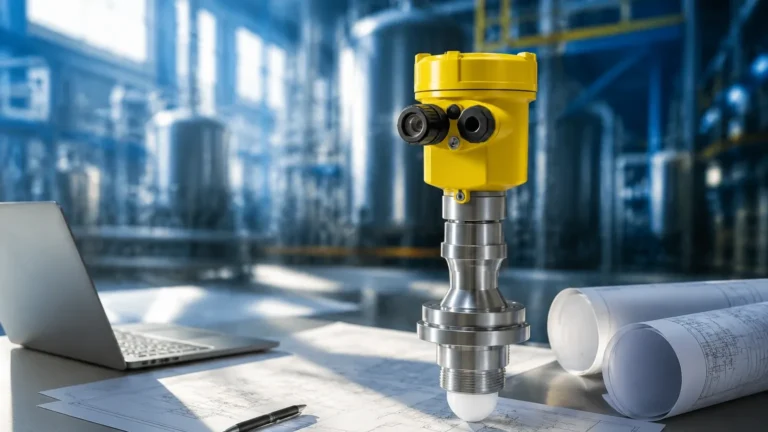
Radar level meters also use the time-of-flight principle but utilize electromagnetic waves (microwaves) instead of sound. There are two main types: Pulse Radar and Frequency Modulated Continuous Wave (FMCW) radar. FMCW radar is increasingly preferred in wastewater monitoring due to its higher precision and ability to filter out noise from internal tank obstructions.
Unlike sound, microwaves are unaffected by air temperature, vacuum, or high pressure. This makes radar the superior choice for sludge digesters or closed tanks where steam, vapor, or gas layers are present. Radar waves can penetrate some foam, though heavy, dense foam may still attenuate the signal. For engineers evaluating advanced instrumentation, the Main Page of a specialized manufacturer offers detailed technical specifications on high-frequency radar units designed for these complex environments.
Hydrostatic Level Measurement
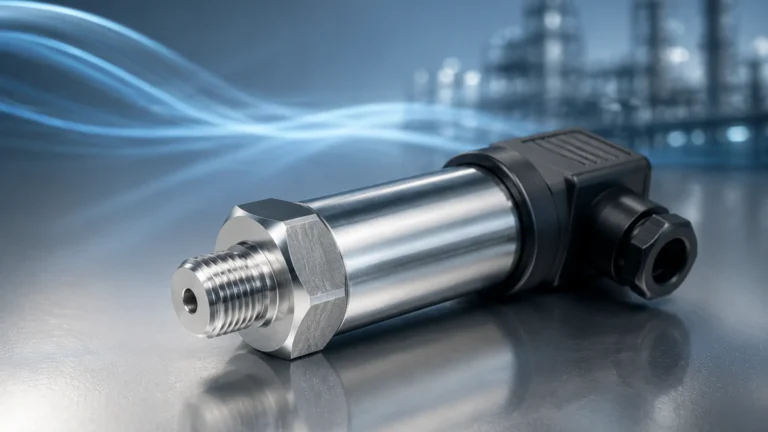
Hydrostatic transmitters measure the pressure exerted by the liquid column above the sensor. The principle is based on the formula: *Pressure (P) = Density (ρ) × Gravity (g) × Height (h)*. These sensors are submerged at the bottom of a tank or well.
Hydrostatic sensors are highly reliable for deep-well monitoring and lift stations where surface foam or turbulence would interfere with non-contact sensors. However, they are sensitive to changes in liquid density. If the density of the wastewater fluctuates significantly due to heavy solids loading, the sensor must be recalibrated to maintain accuracy.
Practical Selection Criteria for WWTP Monitoring
Choosing the right instrument for wastewater treatment plant water monitoring depends on the specific stage of the treatment process. The following table provides a comparison of common technologies based on typical WWTP conditions.
| Application Stage | Recommended Technology | Key Benefit | Potential Limitation |
| :— | :— | :— | :— |
| Inlet / Screening | Ultrasonic | Non-contact, handles debris | Affected by heavy wind/steam |
| Aeration Tanks | Radar (80GHz) | Ignores surface turbulence | Higher initial cost |
| Sludge Digesters | Radar | Penetrates vapor/gas layers | Requires nozzle mounting |
| Chemical Dosing | Magnetic Level Gauge | Visual + Electronic feedback | Limited to bypass mounting |
| Lift Stations | Hydrostatic | Unaffected by surface foam | Sensor fouling from grease |
| Effluent Channel | Ultrasonic | Precise for flumes/weirs | Requires stable air temp |
Environmental Factors
When evaluating a site for wastewater treatment plant water monitoring, engineers must consider the chemical composition of the wastewater. For instance, in primary treatment areas where H2S (Hydrogen Sulfide) gas is prevalent, sensor housings and diaphragms must be constructed from corrosion-resistant materials such as PVDF (Polyvinylidene Fluoride) or high-grade stainless steel.
Installation Guidelines and Best Practices
Even the most advanced level meter will fail to provide accurate data if installed incorrectly. Proper installation ensures the longevity of the device and the reliability of the wastewater treatment plant water monitoring system.
1. The Dead Zone (Blocking Distance): Every non-contact sensor (ultrasonic and radar) has a minimum distance near the transducer face where it cannot measure. For an ultrasonic sensor, this might be 0.25 meters to 0.5 meters (10 to 20 inches). Ensure the sensor is mounted high enough that the maximum liquid level never enters this zone.
2. Beam Angle and Obstructions: Sensors emit signals in a cone shape. Any internal structure—such as ladders, pipes, or agitators—within this beam angle will cause "false echoes." Radar sensors with higher frequencies (e.g., 80GHz) have narrower beam angles, making them easier to install in narrow tanks or near walls.
3. Positioning Over Flumes: For open channel flow monitoring, the sensor must be positioned at a specific distance upstream from the weir or flume throat, as defined by ISO or hydraulic standards. It must be perfectly perpendicular to the liquid surface to ensure the signal reflects directly back to the transducer.
4. Submersible Sensor Anchoring: Hydrostatic sensors in high-flow areas should be installed inside a stilling well (a perforated pipe) to prevent the sensor from moving or being damaged by the force of the water.
Addressing Environmental Challenges and Limitations
Wastewater treatment plant water monitoring is rarely performed in a controlled environment. Several factors can limit the performance of level instruments:
* Foam Accumulation: Foam is a common byproduct of the aeration process. It acts as an acoustic absorber for ultrasonic signals and can scatter radar waves. In cases of light foam, a high-power radar is usually sufficient. In cases of extremely thick, protein-based foam, a hydrostatic sensor or a displacement-type sensor may be necessary.
* Steam and Condensation: In sludge heat treatment or in cold climates, condensation can form on the sensor face. While many modern sensors have "drip-off" lens designs to shed water droplets, heavy buildup can still cause signal loss. Some radar units utilize integrated air purging systems to keep the antenna clean.
* Build-up and Scaling: In lime dosing or sludge applications, material can build up on submerged sensors. Regular maintenance cycles are required to clean hydrostatic diaphragms. Non-contact sensors are generally preferred here to minimize maintenance frequency.
Frequently Asked Questions (FAQ)
Q: How often should wastewater level sensors be calibrated?
A: For critical regulatory points, such as effluent discharge monitoring, monthly or quarterly verification is standard. For process control (e.g., wet well levels), annual calibration is usually sufficient, provided there is no significant drift in the data.
Q: Can I use an ultrasonic sensor in a sludge digester?
A: It is generally not recommended. Sludge digesters often contain methane gas and water vapor, which change the speed of sound and lead to significant measurement errors. Radar is the industry standard for this application.
Q: What is the advantage of using 80GHz radar for wastewater?
A: The 80GHz frequency allows for a much smaller antenna and a narrower beam (often as tight as 3 degrees). This allows the sensor to avoid hitting the sides of manholes or internal tank supports, providing a much cleaner signal than older 6GHz or 26GHz models.
Q: How do I monitor level in a tank containing highly corrosive sulfuric acid for pH adjustment?
A: A non-contact radar or ultrasonic sensor with a PVDF or PTFE-coated face is ideal. Alternatively, a magnetic level gauge mounted on a bypass chamber can provide both a local visual indicator and a 4-20mA remote signal without the electronics coming into contact with the acid.
Conclusion and Next Steps
Successful wastewater treatment plant water monitoring requires a balanced approach between technology selection and environmental adaptation. While ultrasonic sensors remain a cost-effective solution for many open-air applications, the falling cost and high precision of radar technology have made it a versatile alternative for more demanding process stages.
Engineers should begin by auditing the physical constraints of their installation sites—checking for foam, vapor, and physical obstructions—before selecting a measurement principle. For those requiring detailed product comparisons or customized OEM/ODM level measurement solutions, further technical resources can be found on the Main Page of professional instrumentation providers. By following established installation best practices and accounting for the unique challenges of the wastewater environment, facilities can ensure accurate data, operational safety, and long-term reliability.
Download Wastewater Treatment Plant Water Monitoring as a PDF