Pem Electrolyser
Pem Electrolyser
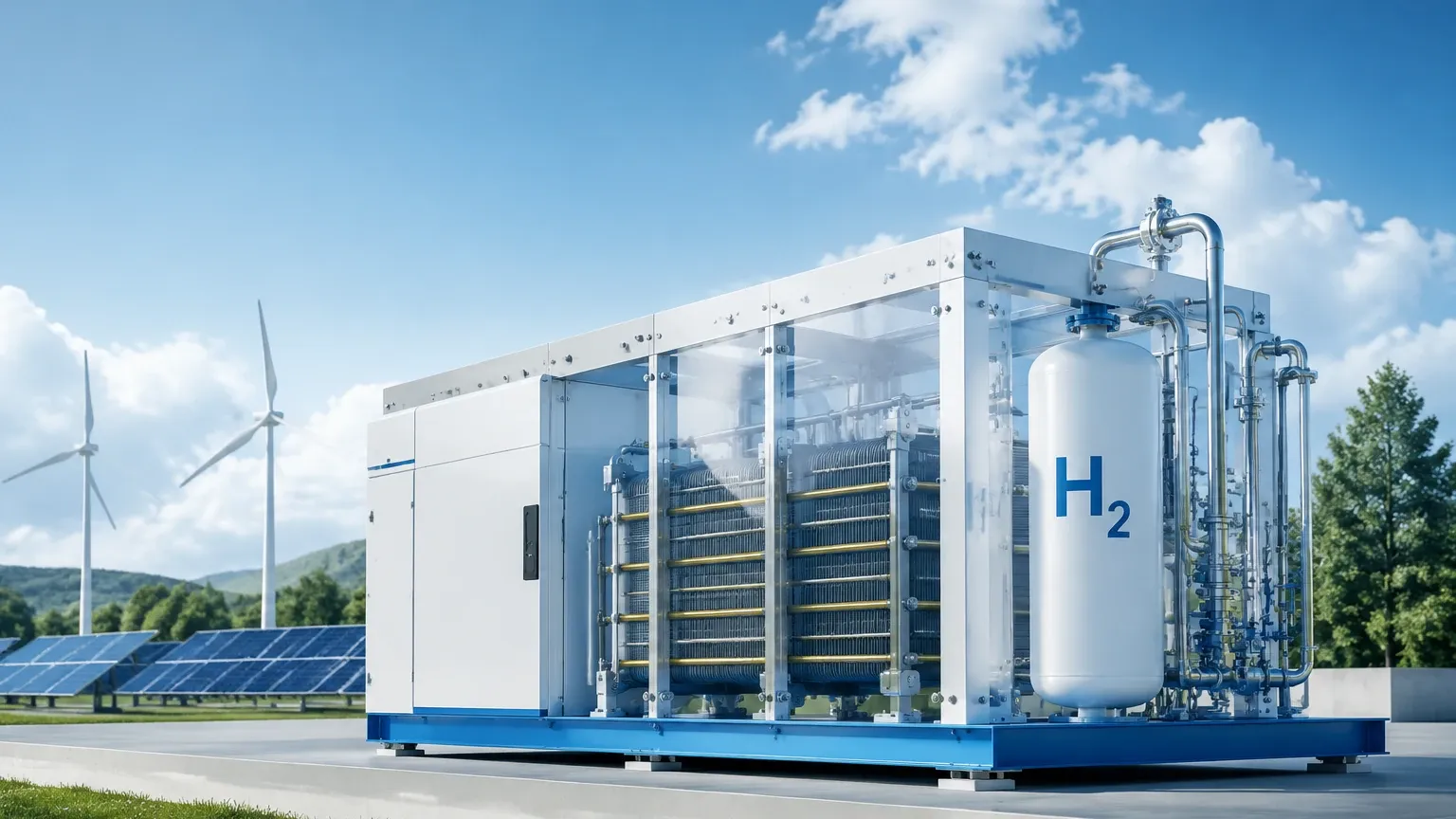
The PEM electrolyser (Proton Exchange Membrane) has emerged as a cornerstone technology in the global transition toward a hydrogen economy. By utilizing a solid polymer electrolyte to split water into hydrogen and oxygen through electrolysis, these systems offer high efficiency, fast response times, and the ability to operate under high pressure. For process engineers and system integrators, the reliability of a PEM electrolyser depends significantly on the precise management of its "Balance of Plant" (BoP). Among the most critical components in this auxiliary system are the level measurement instruments used to monitor water supply tanks and gas-liquid separators.
Accurate level control ensures that the electrolyser stack remains hydrated, prevents pump cavitation, and manages the separation of hydrogen and oxygen from the circulating water. This article explores the technical requirements for level measurement within PEM electrolyser systems, the principles of various sensing technologies, and practical selection criteria for industrial applications.
Understanding the PEM Electrolyser Process
A PEM electrolyser operates by passing a direct current through a cell containing a proton exchange membrane. On the anode side, water is split into oxygen, protons, and electrons. The protons migrate through the membrane to the cathode, where they combine with electrons to form hydrogen gas.
In a typical industrial setup, deionized water is continuously circulated. As the process progresses, water is consumed, and gas is generated. This creates two primary areas where level measurement is essential:
1. Water Feed Tanks: These reservoirs store the high-purity (deionized) water required for the process. Level sensors here prevent the system from running dry and manage the replenishment cycle.
2. Phase Separators: After the electrolysis process, the output is a mixture of gas (hydrogen or oxygen) and water. Phase separators use gravity to decouple the gas from the liquid. Maintaining a precise liquid level in these vessels is vital to prevent gas from entering the water circulation pumps (gas carry-under) or water from entering the gas processing lines (liquid carry-over).
Measurement Principles for PEM Systems
Choosing the right technology requires an understanding of how different sensors interact with the high-purity water and pressurized gas environments found in a PEM electrolyser.
Radar Level Measurement
Radar level meters operate on the Time-of-Flight (ToF) principle. The device emits high-frequency microwave pulses (typically in the 26GHz or 80GHz range) that travel to the liquid surface and reflect back to the sensor. The distance is calculated based on the travel time and the speed of light.
* Advantages: Radar is non-contact, meaning it is not affected by the conductivity or purity of the water. High-frequency 80GHz radar is particularly effective in PEM systems because it can focus the beam in narrow separator tanks and ignore internal obstructions like cooling coils.
* Suitability: Excellent for both atmospheric feed tanks and high-pressure separators.
Ultrasonic Level Sensors
Ultrasonic sensors also use the ToF principle but utilize sound waves instead of microwaves. The sensor emits an ultrasonic pulse that reflects off the liquid surface.
* Advantages: Cost-effective for atmospheric water tanks.
* Limitations: In PEM electrolysers, separators often operate at pressures exceeding 30 bar (435 psi). Ultrasonic waves are heavily influenced by gas density and pressure changes, which can lead to significant errors or signal loss. Therefore, they are generally restricted to ambient-pressure storage tanks.
Hydrostatic Level Transmitters
This technology measures the pressure exerted by the liquid column. Since pressure is directly proportional to the height of the liquid (P = ρgh), the level can be calculated if the density (ρ) is known.
* Advantages: Simple, reliable, and easy to install at the bottom of a tank.
* Limitations: In pressurized PEM electrolysers, the sensor must account for the headspace gas pressure. This requires a differential pressure (DP) setup, where one side of the sensor measures the total pressure and the other measures the gas pressure above the liquid.
Magnetic Level Gauges
Magnetic level gauges consist of a bypass chamber mounted to the side of the vessel. A float containing a permanent magnet moves with the liquid level, flipping colored flaps on an external scale or triggering a reed-chain transmitter.
* Advantages: Provides a clear visual indication for operators without requiring power. They are highly robust and can handle the high pressures typical of hydrogen separation.
* Suitability: Ideal for phase separators where local visual monitoring is required alongside electronic signal transmission.
Selecting the Right Level Instrument for PEM Applications
When specifying instrumentation for a PEM electrolyser, engineers must consider the chemical compatibility, pressure ratings, and accuracy requirements. The following table provides a comparison of common technologies used in these systems.
| Technology | Typical Application | Pressure Range | Accuracy | Key Consideration |
| :— | :— | :— | :— | :— |
| 80GHz Radar | Separators / Feed Tanks | Up to 100 bar+ | ±1 mm | Non-contact; unaffected by gas density. |
| Ultrasonic | Ambient Feed Tanks | Atmospheric | ±0.25% FS | Sensitive to temperature and pressure. |
| Hydrostatic | Feed Tanks | Up to 40 bar | ±0.1% FS | Requires density compensation. |
| Magnetic Gauge | Phase Separators | Up to 200 bar | ±5 mm | Visual backup; no power needed for local display. |
| Level Switch | Overfill Protection | Up to 100 bar | N/A | Essential for safety redundancy. |
For a comprehensive overview of available instrumentation and technical specifications, engineers can consult the Main Page to review product options and application support.
Engineering and Installation Best Practices
Successful integration of level sensors into a PEM electrolyser skid requires attention to several engineering details:
Chemical Compatibility and Purity
PEM systems require ultra-pure, deionized water. Any leaching of ions from the level sensor can poison the membrane, leading to a permanent loss of electrolyser efficiency. Sensors should be constructed from high-grade stainless steel (316L) or compatible plastics like PTFE. For magnetic level gauges, ensure the float material is compatible with high-purity water.
Managing Turbulence and Foam
In phase separators, the rapid entry of gas-liquid mixtures can create surface turbulence or foam.
* Radar: Use a stilling well or bypass pipe if the surface is excessively turbulent.
* Damping: Configure the sensor's software damping (integration time) to smooth out readings caused by momentary ripples.
Pressure and Temperature Compensation
In pressurized electrolysers, the density of the gas in the headspace increases. While radar is largely unaffected by this, hydrostatic and ultrasonic methods require careful compensation. If using differential pressure for level measurement, ensure the impulse lines are properly sloped and protected against freezing if the system is located outdoors.
Hazardous Area Certifications
Hydrogen is highly flammable (ATEX/IECEx Zone 0, 1, or 2). All level instruments installed near the hydrogen separator or gas processing lines must carry the appropriate explosion-proof or intrinsically safe certifications.
Limitations and Challenges
While modern instrumentation is highly capable, the PEM electrolyser environment presents specific challenges:
* Hydrogen Embrittlement: High-pressure hydrogen can penetrate the crystalline structure of certain metals, making them brittle. Ensure that all wetted parts of the level sensor, especially diaphragms in hydrostatic transmitters, are made from materials resistant to embrittlement or are gold-plated to prevent hydrogen permeation.
* Small Vessel Sizes: Many PEM electrolyser skids are compact. This limits the space available for large sensors. Compact 80GHz radar units with small process connections (e.g., G1/2" or 1/2" NPT) are preferred for these modular designs.
* Dielectric Constant: Deionized water has a high dielectric constant (approx. 80), which makes it an excellent reflector for radar signals. However, if the water is highly aerated (full of micro-bubbles), the effective dielectric constant can drop, requiring a more sensitive radar sensor.
Maintenance and Troubleshooting
To ensure the long-term reliability of a PEM electrolyser, a regular maintenance schedule for level instrumentation should be implemented:
1. Calibration Verification: Periodically check the zero and span of hydrostatic transmitters. For radar, verify that the "blocking distance" (near-field dead zone) is clear of any buildup.
2. Float Inspection: For magnetic level gauges, ensure that there is no accumulation of metallic particulates (if any) that could interfere with the magnetic coupling.
3. Seal Integrity: High-pressure hydrogen systems are prone to leaks. Inspect process connections and cable glands for gas tightness during routine shutdowns.
Frequently Asked Questions (FAQs)
Q: Why is radar preferred over ultrasonic for hydrogen separators?
A: Hydrogen separators often operate at high pressures. Ultrasonic sensors rely on sound waves, and the speed of sound changes significantly with gas composition and pressure. Radar uses electromagnetic waves, which are not affected by the gas medium, providing much higher accuracy in these conditions.
Q: Can I use a standard level switch for high-low alarms in a PEM system?
A: Yes, but it must be rated for the process pressure and be ATEX/IECEx certified if used on the hydrogen side. Tuning fork switches are common for high-level alarms because they are robust and can detect the interface between gas and liquid reliably.
Q: Does the purity of the deionized water affect hydrostatic level measurement?
A: The purity itself has a negligible effect on density. However, temperature changes significantly affect water density. If the electrolyser operates across a wide temperature range (e.g., 20°C to 80°C / 68°F to 176°F), the hydrostatic transmitter must be temperature-compensated to maintain accuracy.
Q: How do I handle level measurement if the separator tank is very small?
A: For very small tanks, a bypass magnetic level gauge or a compact 80GHz radar with a narrow beam angle is the best solution. These technologies allow for precise measurement without interference from the vessel walls.
By selecting the appropriate level measurement technology and following rigorous installation standards, operators can ensure the safe and efficient performance of their PEM electrolyser systems, contributing to the reliable production of green hydrogen for industrial use.