Vegetable Oil Separator
Vegetable Oil Separator
In the industrial production of edible oils, the vegetable oil separator is a critical component used to refine crude oils into high-quality, consumable products. Whether the process involves degumming, neutralization, or dewaxing, the efficiency of a separator depends heavily on the precise monitoring and control of liquid levels and interfaces. Accurate level measurement ensures that oil and water phases are separated effectively, preventing product loss and maintaining the purity of the final output.
Selecting the appropriate instrumentation for a vegetable oil separator requires an understanding of the physical properties of the media, including density, viscosity, and the presence of emulsions. This guide explores the measurement principles, technology selection, and installation best practices for level sensors in vegetable oil processing environments.
Measurement Principles in Oil Separation
Level measurement in a vegetable oil separator typically involves two distinct tasks: monitoring the total liquid level and detecting the interface between two immiscible liquids (usually oil and water or oil and soapstock).
Time-of-Flight (ToF) Principle
Technologies such as radar and ultrasonic sensors rely on the Time-of-Flight principle. A sensor emits a signal (electromagnetic for radar, sound waves for ultrasonic) that travels to the liquid surface and reflects back. The distance is calculated based on the time elapsed and the speed of the wave. In vegetable oil applications, non-contact radar is often preferred because it is unaffected by the vacuum conditions or high temperatures often found in refining stages.
Hydrostatic Pressure Principle
This principle relates the pressure at the bottom of a tank to the height of the liquid column above it. The formula $P = \rho gh$ (where $P$ is pressure, $\rho$ is density, $g$ is gravity, and $h$ is height) is used. However, in a vegetable oil separator, the density of the oil may change with temperature, requiring compensation to maintain accuracy.
Buoyancy and Magnetic Coupling
Magnetic level gauges and float switches use a float with an internal magnet that moves with the liquid level. This motion is coupled to an external indicator or a reed switch array. This is a robust method for visual confirmation and point-level control in pressurized separator vessels.
Level Measurement Technologies for Vegetable Oil Separators
Choosing the right sensor depends on the specific stage of the separation process. For a comprehensive overview of available technologies, engineers can refer to the Main Page of industrial instrument catalogs to compare specifications.
1. Guided Wave Radar (GWR)
GWR is highly effective for interface measurement in vegetable oil separators. A probe is immersed in the liquid, and the radar signal travels along it. When the signal hits the top layer (oil), a portion is reflected. The remaining signal continues through the oil and reflects off the interface with the water layer.
* Pros: Excellent for interface detection; unaffected by foam or turbulence.
* Cons: Contact-based, which may require cleaning if the oil is highly viscous or prone to build-up.
2. Non-Contact Radar
80 GHz high-frequency radar is increasingly used for total level monitoring. The narrow beam angle allows for installation in narrow nozzles and avoids interference from internal separator components like agitators or baffles.
* Pros: Maintenance-free due to no moving parts; high accuracy (up to ±1 mm).
* Cons: Cannot measure the interface between two liquids as effectively as GWR.
3. Ultrasonic Level Sensors
Ultrasonic sensors are cost-effective for open-air storage or atmospheric separation tanks. They emit sound pulses that reflect off the liquid surface.
* Pros: Low cost; easy installation.
* Cons: Not suitable for vacuum processes; sensitive to surface foam and high-temperature vapors which can attenuate the sound signal.
4. Magnetic Level Gauges
In high-temperature neutralization or bleaching stages, magnetic level gauges provide a clear visual indication of the level. They are often equipped with reed chain transmitters for remote monitoring.
* Pros: No power required for local indication; handles high pressures (up to 100 bar or more).
* Cons: Mechanical components can stick if the oil contains high amounts of solids or waxes.
Key Evaluation Criteria for Separator Instrumentation
When specifying a level sensor for a vegetable oil separator, the following technical factors must be confirmed:
| Feature | Radar (GWR/Non-Contact) | Hydrostatic Transmitter | Magnetic Level Gauge |
| :— | :— | :— | :— |
| Accuracy | High (±1 mm to ±5 mm) | Moderate (±0.1% to ±0.5% FS) | Moderate (±5 mm to ±10 mm) |
| Interface Detection | Excellent (GWR) | Difficult (Requires constant density) | Good (Density-specific float) |
| Temperature Range | Up to +450°C | Up to +120°C (Typical) | Up to +400°C |
| Pressure Range | Vacuum to 160 bar | Up to 40 bar | Up to 100+ bar |
| Maintenance | Very Low | Low | Moderate (Cleaning required) |
Application Challenges in Vegetable Oil Processing
Emulsion Layers (The "Rag" Layer)
In many vegetable oil separators, a stable emulsion layer can form between the oil and water phases. This layer can confuse some level sensors. GWR is typically the most reliable here, but the dielectric constant difference between the oil ($\\epsilon_r \approx 2.0$) and water ($\\epsilon_r \approx 80$) must be sufficient for the sensor to distinguish the interface.
Coating and Build-up
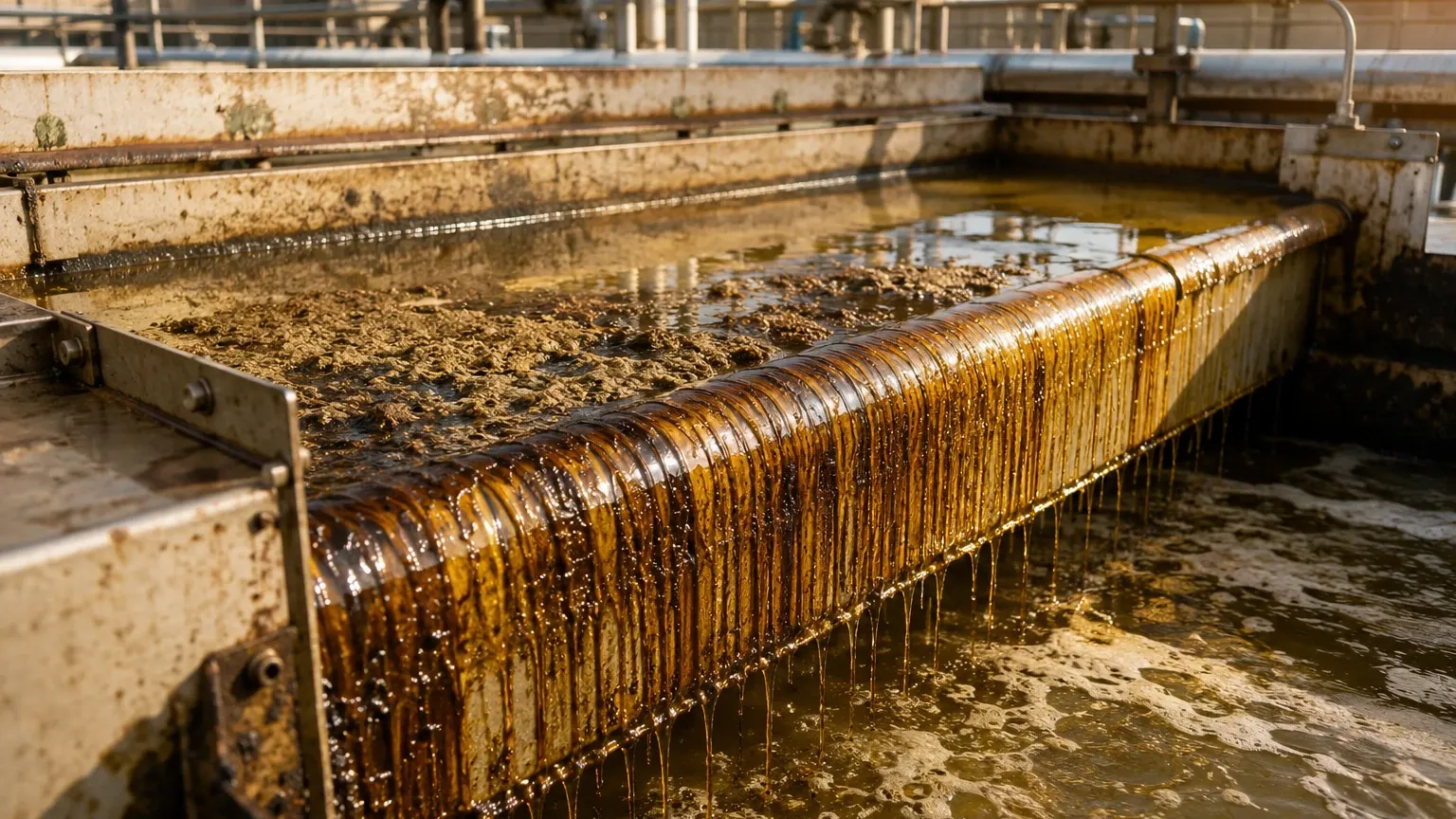
Crude vegetable oils contain gums and waxes that can coat sensor probes. If using contact-based instruments like GWR or hydrostatic sensors, it is essential to select probes with PTFE or PFA coatings to minimize adhesion. Non-contact radar is the preferred solution if coating becomes a recurring maintenance issue.
Vacuum Conditions
Many separators operate under vacuum to facilitate the removal of moisture or volatiles. Ultrasonic sensors fail in vacuums because sound requires a medium to travel. Radar, being an electromagnetic wave, operates perfectly in vacuum conditions.
Installation and Engineering Considerations
Proper installation is as important as technology selection to ensure the longevity and accuracy of the instrument on a vegetable oil separator.
1. Nozzle Dimensions: For non-contact radar, ensure the nozzle height and diameter do not interfere with the signal beam. High-frequency 80 GHz radars allow for smaller nozzles (DN25 or DN50).
2. Stilling Wells: In separators with high turbulence or internal heaters, installing the sensor inside a stilling well or bypass chamber can stabilize the liquid surface and provide a cleaner signal.
3. Orientation: For magnetic level gauges, ensure the chamber is perfectly vertical to allow the float to move freely. For radar, avoid mounting the sensor directly over the center of a tank with a domed top, as this can cause multiple reflections.
4. Density Compensation: If using hydrostatic pressure for level measurement, ensure the PLC or DCS is programmed to compensate for density changes if the process temperature fluctuates significantly (e.g., from 20°C to 90°C).
Maintenance and Troubleshooting
Regular maintenance ensures the reliability of the vegetable oil separator's control system.
* Calibration Checks: Perform annual wet calibrations or use internal diagnostics (available in modern radar sensors) to verify accuracy.
* Probe Cleaning: For contact sensors in crude oil stages, inspect for "caking" or hardened oil deposits every six months.
* Float Inspection: For magnetic gauges, ensure the float has not lost its buoyancy due to build-up or structural damage.
Frequently Asked Questions (FAQ)
Q: Can I use a single sensor to measure both the total level and the interface in a separator?
A: Yes, Guided Wave Radar (GWR) is specifically designed for this purpose. It can track the top of the oil layer and the interface where the water layer begins, provided the upper layer is non-conductive (like oil) and has a lower dielectric constant than the bottom layer.
Q: What is the best sensor for a vegetable oil separator operating at 200°C?
A: High-temperature versions of non-contact radar or magnetic level gauges are best. Ensure the electronics are remote-mounted or equipped with cooling fins to protect them from the process heat.
Q: How does foam affect the measurement?
A: Foam can absorb ultrasonic signals and some low-frequency radar signals. High-frequency radar (80 GHz) or GWR are generally more robust in foaming applications, as they can either penetrate the foam or provide a stable reflection from the liquid surface beneath it.
Conclusion
Effective management of a vegetable oil separator relies on selecting level measurement tools that can withstand the rigors of the refining process. By prioritizing technologies like radar for their accuracy and low maintenance, and by following strict installation guidelines, operators can optimize their separation efficiency and product quality. For detailed technical specifications and support in selecting the right instrument for your specific application, reviewing various Main Page resources and consulting with measurement specialists is recommended.