Dielectric Constant of Cardboard
Dielectric Constant of Cardboard
In the field of industrial automation and bulk solids management, understanding the electrical properties of materials is essential for accurate level measurement. One of the most critical parameters for non-contact sensing technologies, such as radar and capacitance-based systems, is the dielectric constant (relative permittivity). For facilities handling paper products, packaging, and recycling, the dielectric constant of cardboard determines the reliability and precision of inventory monitoring.
This article examines the dielectric properties of cardboard, how these values influence the performance of various level measurement instruments, and the engineering considerations required for successful installation in silos, hoppers, and processing lines.
Understanding Dielectric Constant in Level Measurement
The dielectric constant, denoted by the Greek letter epsilon (εr), is a dimensionless measure of a material's ability to store electrical energy in an electric field compared to a vacuum. In a vacuum, the dielectric constant is exactly 1.0. Air is very close to this value, approximately 1.0006.
Level measurement technologies interact with the dielectric constant in two primary ways:
1. Time-of-Flight (Radar): Radar level meters emit electromagnetic pulses or continuous waves. When these waves encounter a change in the dielectric constant—such as the transition from air (εr ≈ 1) to cardboard (εr > 2)—a portion of the energy is reflected back to the sensor. The strength of this reflection is directly proportional to the difference between the dielectric constants of the two media.
2. Capacitance: These sensors measure the change in electrical capacitance between a probe and the tank wall (or a reference probe). As the cardboard level rises, it displaces air. Because cardboard has a higher dielectric constant than air, the total capacitance increases, which the electronics convert into a level reading.
When the dielectric constant of cardboard is low, the reflected radar signal is weak, and the change in capacitance is minimal. Therefore, selecting the correct instrumentation requires a precise understanding of the material's electrical behavior.
Values for the Dielectric Constant of Cardboard
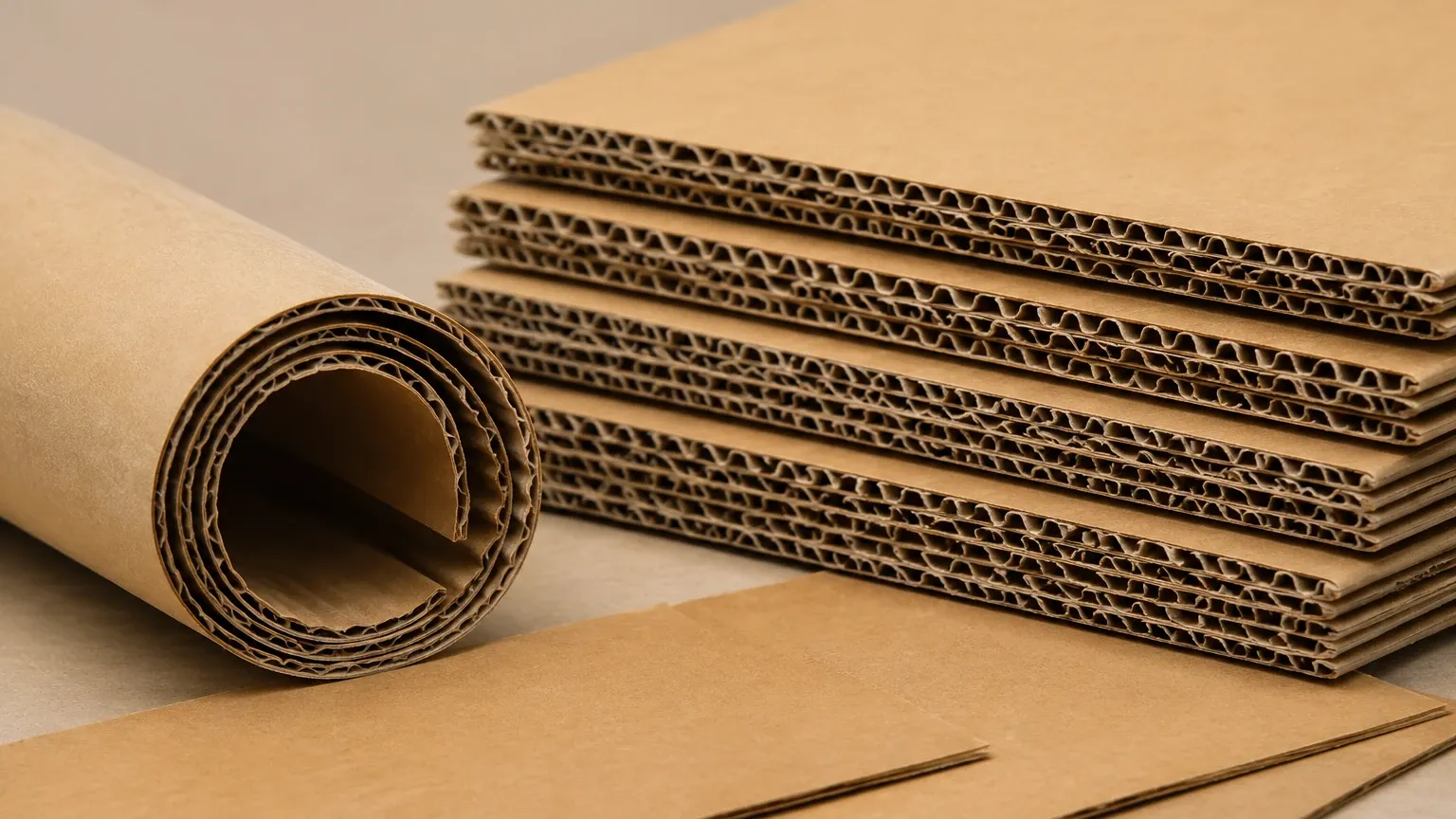
Cardboard is not a monolithic material; it is a composite of cellulose fibers, air, and often various coatings or adhesives. Consequently, its dielectric constant can vary based on its physical form and composition.
Typically, the dielectric constant of cardboard ranges from 2.0 to 4.5.
Typical Dielectric Values for Paper-Based Materials
| Material State | Typical Dielectric Constant (εr) |
| :— | :— |
| Dry Corrugated Cardboard | 2.0 – 2.5 |
| Solid Fiberboard (Dense) | 2.5 – 3.5 |
| Compressed Paper/Bales | 3.0 – 4.0 |
| Moist/Damp Cardboard | 5.0 – 10.0+ |
| Wood Chips (Raw Material) | 2.1 – 2.7 |
For engineers designing level systems, a conservative estimate of εr = 2.0 is often used for dry cardboard to ensure the selected sensor has sufficient sensitivity to detect the material surface under the most challenging conditions.
Factors Influencing Cardboard Dielectric Properties
Several physical and environmental factors can shift the dielectric constant of cardboard, potentially affecting measurement accuracy if not accounted for during the calibration phase.
1. Moisture Content
Water has a very high dielectric constant (approximately 80 at room temperature). Even a small increase in the moisture content of cardboard will significantly raise its overall dielectric constant. While this makes the material easier to detect via radar (stronger reflection), it can cause errors in capacitance-based systems if the sensor was calibrated for bone-dry material.
2. Bulk Density and Air Gaps
Corrugated cardboard contains a significant amount of air between its liners. Since air has a dielectric constant of 1.0, the effective dielectric constant of a stack of corrugated cardboard is lower than that of solid, compressed paper. In recycling facilities where cardboard is shredded, the "bulk" dielectric constant of the pile will be lower than the solid material due to the increased air-to-fiber ratio.
3. Chemical Additives and Coatings
Cardboard used for food packaging or heavy-duty shipping may be coated with wax, plastic (polyethylene), or metallic foils. Metallic foils are conductive and will act as a perfect reflector for radar waves, regardless of the cardboard's internal dielectric constant. Plastic coatings generally have dielectric constants similar to dry cardboard (2.2 – 2.4) and have a negligible impact on measurement.
Selecting Level Sensors for Cardboard and Paper Products
Choosing the right instrument involves balancing the dielectric constant of cardboard against the physical environment, such as dust levels and silo geometry. For more detailed technical specifications on these instruments, engineers can consult the Main Page for comprehensive product data.
Radar Level Meters (Non-Contact)
Radar is the preferred solution for cardboard level measurement due to its high accuracy and lack of moving parts. However, the frequency of the radar matters:
* 80GHz Radar: This is the modern standard for solids. The high frequency allows for a very narrow beam angle (often as low as 3 degrees), which helps avoid reflections from silo walls or internal bracing. The high sensitivity of 80GHz sensors makes them excellent at detecting the weak reflections associated with the low dielectric constant of cardboard.
* 26GHz Radar: Suitable for larger grain or more reflective materials, but may struggle with low-density shredded cardboard unless a large antenna is used to increase signal gain.
Ultrasonic Level Sensors
Ultrasonic sensors rely on sound waves rather than electromagnetic waves. Therefore, they are unaffected by the dielectric constant of cardboard. However, they are highly sensitive to dust, which is common in cardboard shredding and processing. If the application is dust-free, ultrasonic is a cost-effective alternative. If dust is present, radar is superior.
Capacitance Transmitters
Capacitance probes are effective for point-level detection (high/low alarms) in cardboard silos. They are robust and can be coated to prevent material buildup. For continuous level measurement, they require consistent moisture content in the cardboard to maintain accuracy.
Practical Selection Table for Cardboard Level Monitoring
| Technology | Suitability | Best Used For | Limitations |
| :— | :— | :— | :— |
| 80GHz Radar | Excellent | High-accuracy continuous level in tall silos. | Higher initial cost compared to ultrasonic. |
| Ultrasonic | Fair | Open-air stacks or dust-free bins. | Fails in heavy dust or vacuum conditions. |
| Capacitance | Good | Point level detection (clogged chute or full bin). | Sensitivity to moisture changes. |
| Laser | Good | Precise distance measurement on flat surfaces. | Affected by dust and surface color/texture. |
Installation and Engineering Considerations
When installing a level meter to measure cardboard, the dielectric constant of cardboard dictates several installation parameters:
1. Beam Aiming: Because the reflection from dry cardboard is weak, the sensor must be mounted perpendicular to the material surface whenever possible. In silos where the material forms a cone (angle of repose), an adjustable mounting flange is recommended to aim the radar beam at the slope to maximize signal return.
2. Avoiding Obstructions: In low-dielectric applications, the signal-to-noise ratio is lower. Any internal obstructions like ladders or pipes will create "false echoes." While software can filter these out (False Echo Suppression), it is best to mount the sensor with a clear line of sight to the material.
3. Nozzle Length: For radar sensors, the antenna should ideally extend past the mounting nozzle. If the nozzle is long and narrow, the radar signal may reflect off the nozzle walls, masking the weak return signal from the cardboard.
4. Dust Mitigation: Cardboard processing generates fine cellulose dust. While radar penetrates dust easily, heavy buildup on the sensor face can eventually attenuate the signal. Sensors with a flush-mounted PTFE lens are easier to clean and less prone to accumulation.
Limitations and Troubleshooting
Despite the advanced technology available, measuring materials with a low dielectric constant presents specific challenges.
* Signal Loss (Attenuation): If the cardboard is extremely loose or shredded, the radar signal may penetrate deep into the pile rather than reflecting off the surface. This is known as the "sponge effect." Increasing the radar frequency or using a larger antenna can help.
* The "Double Bounce": In some metal silos, the radar signal may reflect off the cardboard, then the wall, then the cardboard again before returning to the sensor. This can result in a false high-level reading. Proper sensor positioning and software mapping are required to resolve this.
* Moisture Fluctuations: If a capacitance sensor is used and the cardboard becomes wet due to a leak or humidity, the sensor will report a much higher level than actually exists. In such environments, radar is the more stable choice.
Frequently Asked Questions
Q: Can radar see through cardboard?
A: Yes, to an extent. Because the dielectric constant of cardboard is low, radar waves can penetrate the material. This is why radar is often used to detect objects *inside* cardboard boxes. For level measurement, we calibrate the sensor to trigger on the first significant change in dielectric constant (the surface).
Q: What is the minimum dielectric constant a radar can measure?
A: Most modern high-frequency radar level meters can measure materials with a dielectric constant as low as 1.4. With an εr of 2.0 to 4.5, cardboard is well within the detectable range for these instruments.
Q: How does temperature affect the measurement?
A: Temperature has a negligible effect on the dielectric constant of dry cardboard. However, high temperatures can change the air density in a silo, which slightly affects the speed of sound for ultrasonic sensors. Radar is unaffected by air temperature or pressure changes.
Q: Is a guided wave radar (TDR) better than non-contact radar for cardboard?
A: Guided wave radar (GWR) uses a cable or rod to guide the signal. It is very effective for low-dielectric materials because it concentrates the energy along the probe. However, in cardboard applications, the physical force of moving cardboard can pull on the cable (tensile load), potentially damaging the silo roof. Non-contact radar is generally preferred for bulk solids to avoid these mechanical risks.
Summary
The dielectric constant of cardboard is a foundational factor in designing an effective level measurement system. By recognizing that dry cardboard sits at the lower end of the dielectric scale (εr 2.0–2.5), engineers can specify high-sensitivity 80GHz radar systems that provide reliable data despite weak signal reflections. Understanding the impact of moisture, density, and installation geometry ensures that the chosen solution provides long-term, maintenance-free operation in the demanding environments of the paper and packaging industry.