Mobile Tank Management
Mobile Tank Management
Mobile tank management represents a specialized subset of industrial process control, focusing on the tracking, level measurement, and inventory management of fluids stored in non-stationary vessels. Unlike fixed storage tanks found in refineries or water treatment plants, mobile tanks—including Intermediate Bulk Containers (IBCs), ISO tank containers, chemical skids, and truck-mounted tankers—present unique engineering challenges. These challenges include varying environmental conditions, physical vibration during transport, and the need for low-power, wireless communication.
Effective mobile tank management ensures that chemical suppliers, logistics providers, and industrial end-users maintain visibility over their assets, preventing run-outs, optimizing refill schedules, and ensuring safety during transit. To achieve this, engineers must select level measurement technologies that are robust enough to withstand movement while providing the accuracy required for high-value inventory.
Understanding the Challenges of Mobile Tank Level Monitoring
Managing liquid levels in mobile assets is significantly more complex than monitoring stationary tanks. The primary difficulties stem from the dynamic nature of the application:
1. Liquid Sloshing: When a tank is in motion or recently moved, the liquid surface is rarely level. This turbulence can cause erratic readings in sensors that do not have advanced signal processing or damping capabilities.
2. Power Constraints: Mobile tanks often lack a permanent wired power source. Sensors must operate on batteries or solar power, requiring high energy efficiency and optimized data transmission intervals.
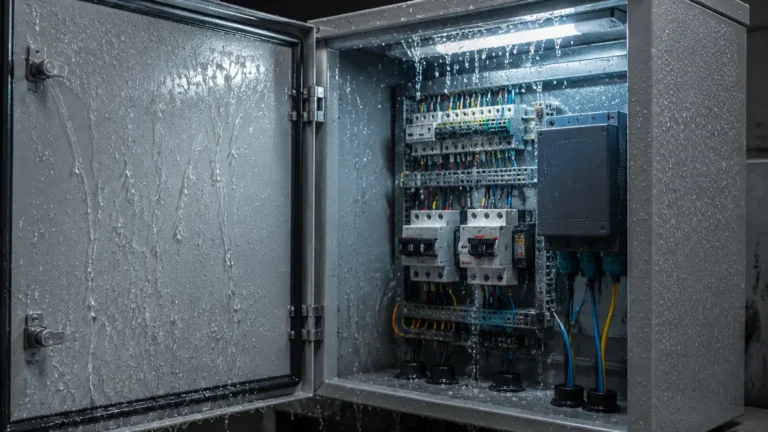
3. Variable Environments: A mobile tank may move from a climate-controlled warehouse to an outdoor site with extreme temperatures, high humidity, or corrosive atmospheres. The instrumentation must be ruggedized, typically requiring IP67 or IP68 ingress protection.
4. Connectivity Issues: Since these tanks move across different locations, traditional wired communication (like 4-20mA or Modbus) is often replaced by wireless protocols such as NB-IoT, LoRaWAN, or satellite links to ensure data reaches the central management system.
Measurement Principles for Mobile Applications
Before selecting a system for mobile tank management, it is essential to understand the underlying measurement principles. Each technology has specific strengths and limitations when applied to mobile environments.
Radar Level Measurement (Non-Contact)
Radar level meters, particularly those operating at high frequencies like 80 GHz, are increasingly the standard for mobile tanks. These devices use the Time of Flight (ToF) principle. The sensor emits a high-frequency microwave signal that reflects off the liquid surface and returns to the receiver. By measuring the time taken for the signal to travel, the device calculates the distance to the liquid.
For mobile applications, radar is preferred because it is non-contact, meaning it is not affected by the chemical properties, density, or viscosity of the liquid. The narrow beam angle of 80 GHz radar allows it to be installed on small process connections (such as 1.5" or 2" bungs on IBCs) without interference from tank walls or internal baffles.
Ultrasonic Level Measurement (Non-Contact)
Ultrasonic sensors work similarly to radar but use sound waves instead of microwaves. The sensor emits an ultrasonic pulse that bounces off the surface. While cost-effective, ultrasonic sensors are sensitive to air temperature, pressure, and the presence of heavy vapors or foam. In mobile chemical tanks, where vapors are common, ultrasonic technology may require careful calibration or temperature compensation.
Hydrostatic Level Measurement (Contact)
Hydrostatic transmitters measure the pressure exerted by the liquid column. The principle is based on the formula $P = \rho gh$ (Pressure = Density × Gravity × Height). In mobile tanks, submersible pressure transducers or externally mounted threaded sensors are used. While highly accurate for stationary volume measurement, hydrostatic sensors can be affected by the "sloshing" effect during movement, as the pressure at the bottom of the tank fluctuates with the movement of the liquid mass.
Magnetic Level Gauges (Visual/Contact)
For mobile tanks requiring local visual indication without continuous power, magnetic level gauges are used. A float containing a magnet moves with the liquid level inside a bypass chamber, flipping magnetic flags on the outside. These are exceptionally durable but provide only local data unless paired with a reed chain transmitter or a magnetostrictive probe.
Selection Criteria for Mobile Tank Management Systems
Choosing the right instrumentation requires a balance between accuracy, cost, and the specific physical constraints of the mobile vessel. The following table provides a comparison of common technologies used in this field.
Technology Comparison Table
| Technology | Accuracy | Power Demand | Suitability for Vapors | Best Use Case |
| :— | :— | :— | :— | :— |
| 80 GHz Radar | ±2 mm | Moderate | Excellent | High-value chemicals, narrow IBCs |
| Ultrasonic | ±0.25% of range | Low | Poor | Water-based liquids, open-top skids |
| Hydrostatic | ±0.1% to 0.5% | Low | N/A | Fuel tankers, deep mobile cisterns |
| Capacitance | ±1% | Moderate | Good | Small oil tanks, non-conductive media |
When evaluating a solution, engineers should also consider the tank geometry. For horizontal cylindrical tanks (common in transport), the relationship between level and volume is non-linear. The management software or the sensor itself must support strapping tables or linearization curves to provide accurate volume data in liters or gallons.
Installation Guidelines and Best Practices
Proper installation is critical to the longevity and accuracy of mobile tank sensors. Because these tanks are subject to physical shock, the mounting must be secure.
1. Sensor Placement: For non-contact sensors (Radar/Ultrasonic), the device should be mounted away from the fill inlet to avoid false readings during filling. It should also be positioned at least 200 mm (approx. 8 inches) away from the tank wall to prevent signal interference.
2. Damping and Filtering: In mobile tank management, software damping is essential. This involves averaging the level readings over a set period (e.g., 30 to 60 seconds) to filter out the noise caused by liquid movement. This ensures the reported inventory level is stable even if the tank is vibrating.
3. Dead Zone Awareness: Every non-contact sensor has a "dead zone" or "blocking distance" near the sensor face where measurement is impossible. Ensure the sensor is mounted high enough (perhaps using a nozzle or stand-off) so that the tank can be filled to its maximum capacity without entering the dead zone.
4. Venting: Mobile tanks must be properly vented. If a tank is sealed and the temperature changes, the internal pressure can change, which may affect hydrostatic sensors or even physically damage thin-walled tanks like IBCs.

Limitations and Risk Mitigation in Dynamic Environments
While modern sensors are highly capable, there are inherent risks in mobile applications that must be managed:
* Signal Loss: In remote areas, wireless sensors may lose connectivity. Systems should be configured with internal data logging to store time-stamped level data, which can be uploaded once the tank enters an area with network coverage.
* Physical Damage: Sensors on mobile tanks are prone to being struck during loading or transport. Using low-profile sensors or protective cages can mitigate the risk of mechanical failure.
* Media Build-up: In tanks carrying resins or heavy oils, material may build up on the sensor face. Radar sensors with PTFE or PP encapsulation are preferred here, as they are less susceptible to build-up and easier to clean.
For a comprehensive look at the hardware options available for these applications, you can Main Page to review product options and application support from Welk, a professional manufacturer of industrial level measurement instruments.
Frequently Asked Questions (FAQs)
Q: How do I track the location of the tank along with the level?
A: Most modern mobile tank management systems integrate a GPS module within the wireless transmitter. This allows the user to see both the volume of the liquid and the geographical coordinates of the tank on a single dashboard.
Q: Can these sensors be used in hazardous areas (Ex-zones)?
A: Yes. Mobile tanks often carry flammable liquids (like fuels or solvents). In these cases, sensors must be intrinsically safe (ATEX/IECEx certified). Always check the certification of the sensor before installing it on a tank containing hazardous materials.
Q: How long does the battery typically last in a wireless mobile tank sensor?
A: Battery life depends on the frequency of measurement and data transmission. For a typical application reporting once or twice a day, high-quality lithium batteries can last between 3 to 5 years.
Q: Is radar better than ultrasonic for mobile chemical tanks?
A: Generally, yes. Radar is not affected by the vapors, temperature fluctuations, or pressure changes that are common in chemical transport, making it more reliable for mobile tank management.
Conclusion
Mobile tank management is an essential component of modern industrial logistics. By understanding the measurement principles of radar, ultrasonic, and hydrostatic technologies, and by accounting for the unique stresses of transport, engineers can implement systems that provide accurate, real-time visibility into their mobile assets. Selecting the right sensor—one that balances ruggedness with precision—is the first step toward optimizing inventory and ensuring operational safety. For detailed specifications on sensors designed for these environments, visiting the manufacturer's Main Page provides access to the necessary technical documentation and selection tools.