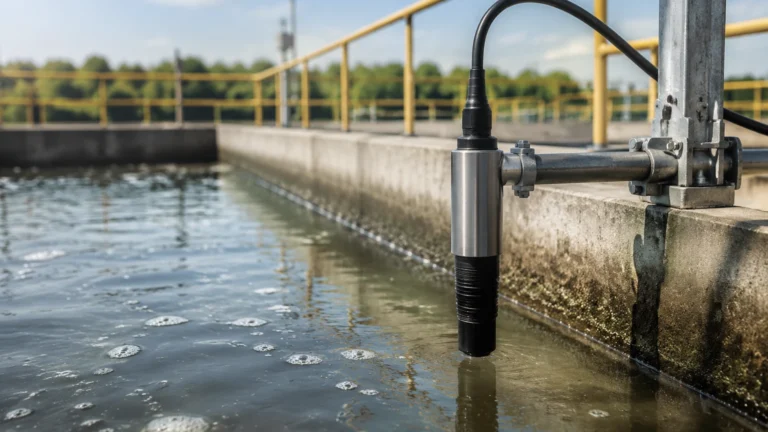
Water Treatment Food Industry
Water Treatment Food Industry
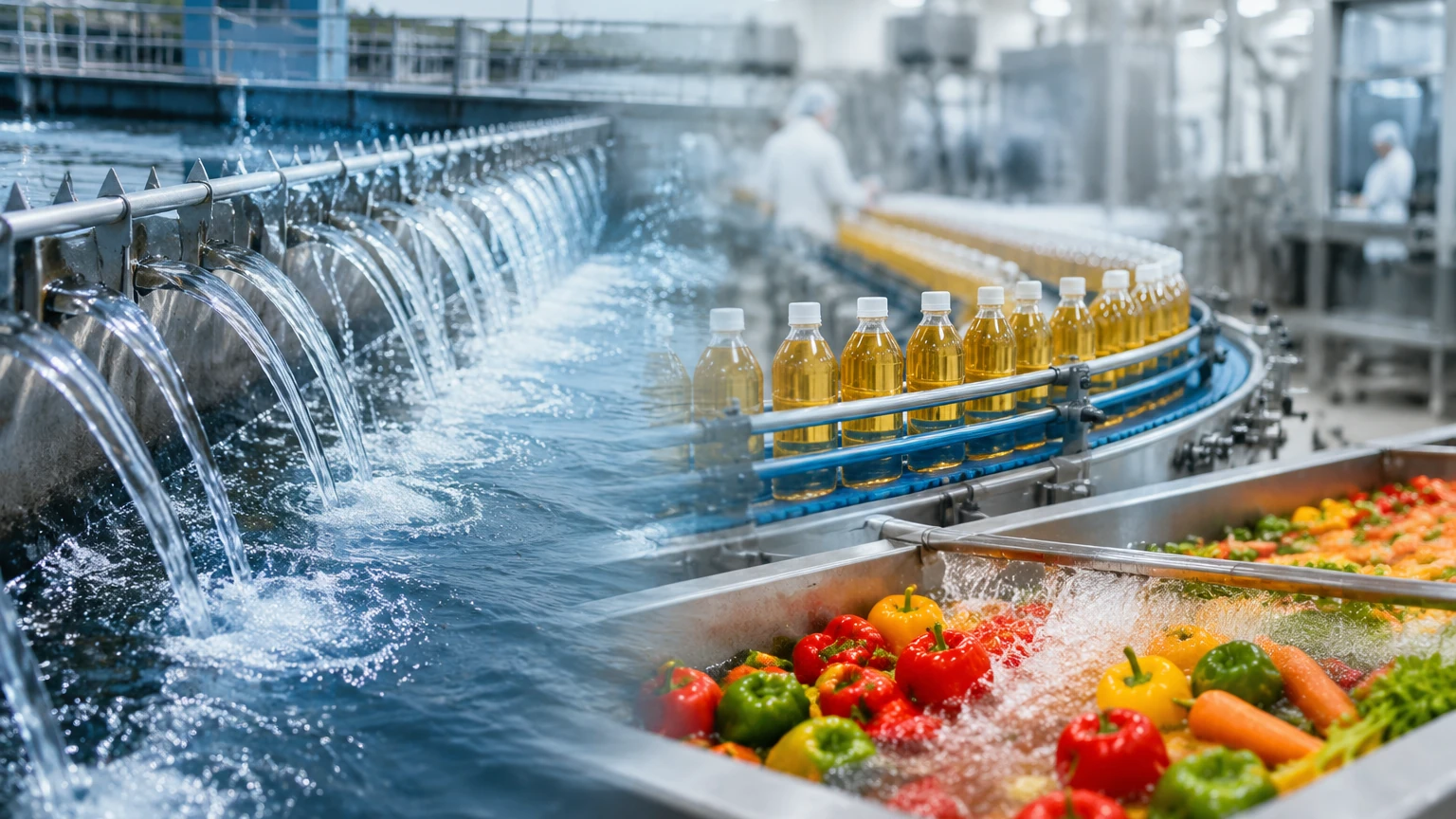
In the food and beverage sector, water is more than just a utility; it is a critical ingredient, a cleaning agent, and a heat transfer medium. The intersection of the water treatment food industry requires a rigorous approach to process control, where precision and hygiene are non-negotiable. Effective water management ensures that the water used in production meets stringent safety standards while managing the environmental impact of effluent discharge. Central to this management is the accurate monitoring of liquid levels throughout the treatment cycle.
Reliable level measurement allows plant operators to automate chemical dosing, prevent tank overflows, and ensure a continuous supply of treated water. For those seeking specific instrumentation for these environments, reviewing the Main Page of technical providers provides a baseline for available hardware and application support.
The Role of Level Measurement in Food Industry Water Treatment
Water treatment within a food processing facility typically involves three distinct stages: influent (raw water) treatment, process water management, and wastewater (effluent) treatment. Each stage presents unique challenges for level instrumentation.
1. Influent Treatment: Raw water from municipal supplies or wells must be filtered, softened, or demineralized. Level sensors here monitor large storage tanks and chemical day tanks for flocculants and disinfectants.
2. Process Water: This is water that comes into direct contact with food products or is used for Clean-in-Place (CIP) systems. Instrumentation must often meet sanitary standards, such as 3-A or EHEDG, to prevent bacterial growth.
3. Wastewater Treatment: Food processing creates high-organic-load wastewater. Treatment often involves Dissolved Air Flotation (DAF), anaerobic digestion, or aerobic basins. Level sensors must handle foam, grease, and suspended solids.
Measurement Principles and Technology Overview
Before selecting a device, it is essential to understand the physical principles governing different level measurement technologies. In the water treatment food industry, the most common methods include radar, ultrasonic, and hydrostatic measurement.
Radar Level Measurement (Non-Contact)
Radar level meters operate on the Time-of-Flight (ToF) principle. The sensor emits a high-frequency electromagnetic pulse (typically in the 26 GHz or 80 GHz range) toward the liquid surface. The pulse reflects off the surface and returns to the sensor. The distance ($D$) is calculated using the formula:
$$D =
rac{c imes t}{2}$$
Where $c$ is the speed of light and $t$ is the measured transit time. Radar is highly effective because it is independent of air temperature, pressure, or vapor. High-frequency 80 GHz radar is particularly useful in the food industry due to its narrow beam angle, which avoids internal tank obstructions like agitators or spray balls.
Ultrasonic Level Measurement (Non-Contact)
Similar to radar, ultrasonic sensors use ToF but utilize sound waves instead of electromagnetic pulses. The sensor calculates the distance based on the speed of sound. While cost-effective, ultrasonic measurement is sensitive to temperature fluctuations and heavy steam, as the speed of sound changes with the density of the air medium. Most modern ultrasonic sensors include internal temperature compensation to mitigate these effects.
Hydrostatic Level Measurement (Contact)
Hydrostatic transmitters measure the pressure exerted by the liquid column at the bottom of a tank. The level ($h$) is determined by the formula:
$$P =
ho imes g imes h$$
Where $P$ is pressure, $
ho$ is the liquid density, $g$ is gravity, and $h$ is the height of the liquid. In the food industry, these sensors often use flush-mounted diaphragms to ensure there are no crevices where food particles or bacteria can accumulate.
Selecting Level Sensors for Specific Applications
Choosing the right technology depends on the specific characteristics of the water and the vessel. The following table provides a comparison for common applications in the water treatment food industry.
| Application | Recommended Technology | Key Benefit | Considerations |
| :— | :— | :— | :— |
| Raw Water Silos | Ultrasonic or Radar | Non-contact, long range | Dust during filling (if applicable) |
| Chemical Dosing Tanks | Hydrostatic or Ultrasonic | Chemical compatibility | Use PTFE or PVDF wetted parts |
| CIP Storage Tanks | Radar (80 GHz) | High temperature/Steam resistance | Must withstand caustic/acidic cleaners |
| Wastewater Pits | Submersible Hydrostatic | Simple installation | Potential for sensor fouling/clogging |
| DAF Units | Non-contact Radar | Ignores surface foam | High accuracy for skim control |
Installation Considerations and Best Practices
Proper installation is as critical as technology selection. In food-grade environments, the physical integration of the sensor must support the overall hygiene of the system.
Avoiding Dead Zones
All non-contact sensors (radar and ultrasonic) have a "dead zone" or "blocking distance" directly beneath the sensor face where measurements are not possible. For a sensor with a 0.25 m (10 in) dead zone, the tank should be designed so the maximum liquid level never enters this region, or the sensor should be mounted on a nozzle that accounts for this distance.
Mounting Positions
Sensors should be mounted away from the tank wall to prevent false reflections and away from the liquid inlet to avoid turbulence and aeration. For tanks with agitators, radar sensors with narrow beam angles are preferred to "aim" between the blades and the tank wall.
Sanitary Connections
In the process water stage, sensors must use sanitary fittings such as Tri-Clamp or Varivent connections. These allow for easy removal for manual cleaning and ensure that the seal is flush with the tank interior, eliminating "dead legs" where stagnant water could harbor pathogens.
Challenges and Risk Mitigation
Operating in the water treatment food industry involves several environmental factors that can interfere with measurement accuracy.
* Foam: Many food wastewater processes involve proteins or fats that create thick surface foam. Ultrasonic waves are often absorbed by foam, leading to signal loss. Radar is generally more robust, but in cases of extremely dense foam, a stilling well or a contact-based technology like a magnetic level gauge may be required.
* Steam and Condensation: CIP processes often use hot water (80°C / 176°F or higher), creating heavy steam. This can attenuate ultrasonic signals. Radar is unaffected by steam, but condensation on the sensor face can cause signal scattering. Selecting a sensor with a convex lens or a PTFE dripper shield helps shed condensation.
* Varying Density: Hydrostatic sensors rely on constant liquid density. If the water treatment process involves significant changes in salt concentration or temperature (which changes density), the level reading will drift. In these scenarios, non-contact radar is the superior choice as it measures the surface position regardless of liquid density.
Frequently Asked Questions (FAQs)
Q: Can I use the same sensor for wastewater and purified process water?
A: While the measurement principle might be the same, the hardware requirements differ. Process water requires stainless steel (SS316L) and food-grade seals, whereas wastewater sensors may prioritize chemical resistance to corrosive sludge or simplified maintenance in open pits.
Q: How does 80 GHz radar differ from 26 GHz radar in these applications?
A: 80 GHz radar has a much narrower beam (often as small as 3 degrees). This allows it to be installed in smaller tanks with complex internals without interference. 26 GHz radar is often sufficient for large, open basins or simple storage tanks.
Q: Is maintenance required for non-contact sensors?
A: Generally, non-contact sensors are low-maintenance because they do not touch the media. However, in the food industry, periodic inspection is recommended to ensure no biological buildup has occurred on the sensor face, especially in humid or high-protein environments.
Conclusion and Next Steps
Precision in water treatment is a prerequisite for operational efficiency and regulatory compliance in the food industry. By understanding the physics of radar, ultrasonic, and hydrostatic measurement, engineers can select the most reliable tool for each specific stage of the water cycle. For detailed technical specifications and to explore a range of industrial-grade level measurement solutions, professionals should visit the Main Page to evaluate product options and application-specific support.
Before finalizing a selection, always confirm the chemical compatibility of wetted materials with your specific cleaning agents and ensure the chosen device meets the local regulatory requirements for food safety and wastewater discharge.