Dielectric Constant of Metals
Dielectric Constant of Metals
In the field of industrial process automation, understanding the electrical properties of materials is fundamental to selecting the correct instrumentation. One of the most critical parameters for level measurement—specifically for radar and capacitive technologies—is the dielectric constant (relative permittivity, εr). While process engineers frequently discuss the dielectric constants of oils, chemicals, and water, the concept of the dielectric constant of metals often requires a more nuanced technical explanation.
In practical engineering, metals are treated differently than dielectric (insulating) materials. This article explores the physics behind the dielectric constant of metals, how it influences level measurement accuracy, and the selection criteria for instruments used in metallic environments.
Understanding Dielectric Constants in Level Measurement
The dielectric constant is a dimensionless measure of a material's ability to store electrical energy in an electric field compared to a vacuum. In a vacuum, the dielectric constant is defined as 1.0. Air is very close to this, typically measured at approximately 1.0006.
In industrial level measurement, particularly when using radar level meters (both non-contact and guided wave), the instrument emits electromagnetic pulses. When these pulses encounter a change in the dielectric constant between two media (such as air and a liquid), a portion of the energy is reflected back to the sensor. The strength of this reflection is directly proportional to the difference between the dielectric constants of the two materials.
For non-conductive materials, the dielectric constant ranges from low values like 1.7 (for certain liquefied gases) to 80 (for pure water at room temperature). However, the dielectric constant of metals presents a unique case because metals are conductors rather than insulators.
The Physics of the Dielectric Constant of Metals
From a classical electrostatics perspective, a perfect conductor has an infinite dielectric constant. This is because metals contain free electrons that move instantaneously in response to an external electric field. These electrons redistribute themselves until the internal electric field within the metal is zero, effectively canceling out the applied field.
In high-frequency applications, such as the gigahertz (GHz) frequencies used by modern radar level transmitters, the behavior of metals is described by complex permittivity. While the theoretical "static" dielectric constant of metals is infinite, in the context of radar level sensing, we treat metals as perfect reflectors.
Why Metals Reflect 100% of Radar Signals
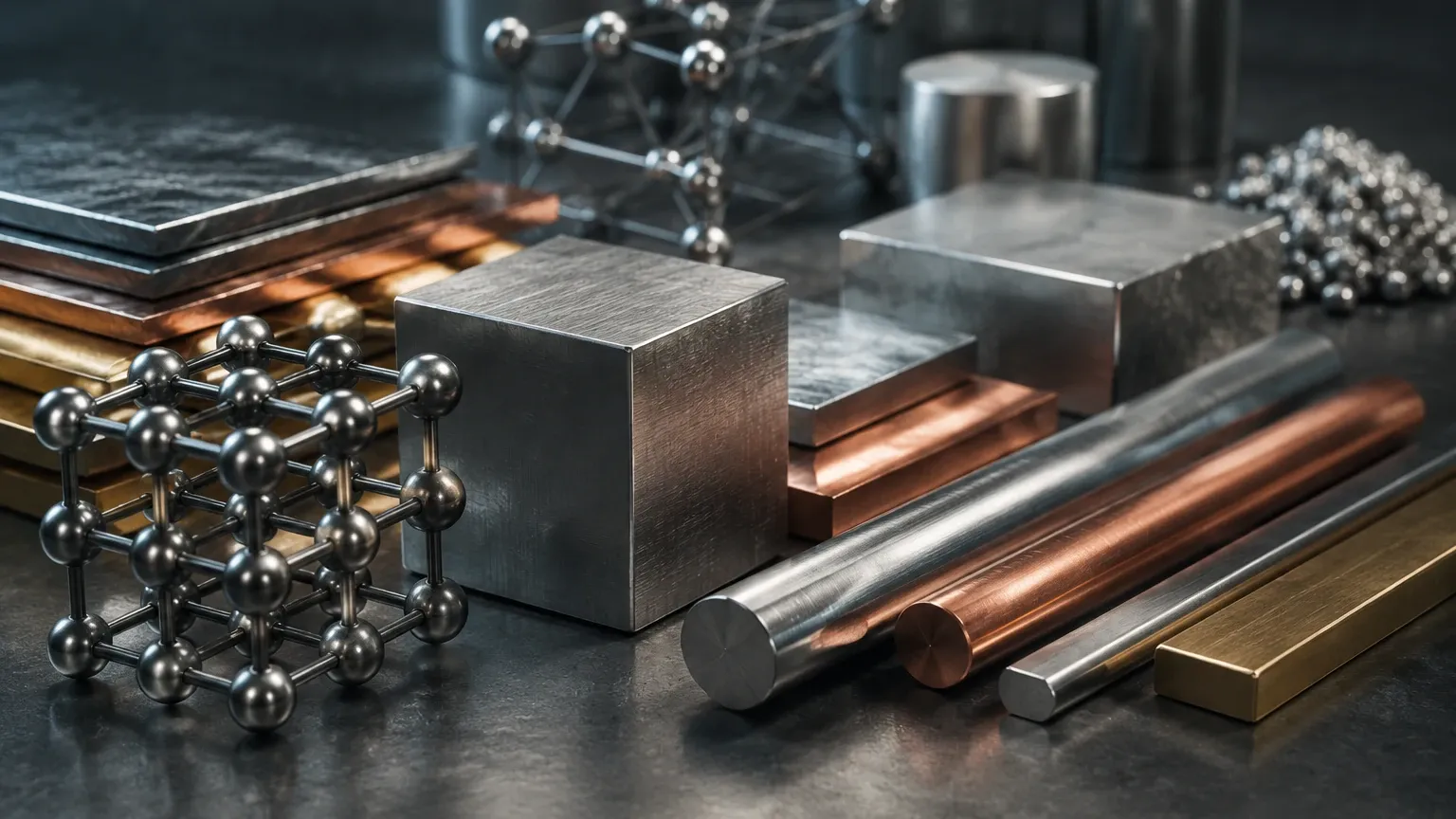
Because the conductivity of metals like stainless steel, carbon steel, and aluminum is so high, the electromagnetic waves emitted by a level meter cannot penetrate the surface. Instead, the waves induce a current on the surface of the metal, which then re-radiates the energy back toward the source. This results in a reflection coefficient of nearly 1.0 (100% reflection), regardless of the specific type of metal used in the tank or the target material.
Impact on Radar Level Measurement Technologies
The effectively infinite dielectric constant of metals makes them the easiest targets for radar level measurement, provided the geometry of the application is managed correctly.
Non-Contact Radar (FMCW and Pulse)
Non-contact radar units, such as those operating at 26 GHz or 80 GHz, rely on the "Time of Flight" principle. Because the metal surface reflects almost all the energy, the signal-to-noise ratio is exceptionally high. This allows for accurate measurement even in tall silos or tanks with turbulent surfaces. However, the high reflectivity of metal also means that internal tank structures (ladders, agitators, or heating coils) will also produce strong reflections, which must be filtered out using "false echo suppression" software.
Guided Wave Radar (GWR)
Guided Wave Radar uses a probe (cable or rod) to guide the microwave pulse to the surface. When the pulse hits a metal surface—or a liquid with a high dielectric constant—the reflection is very strong. If the medium being measured is a metal (such as molten lead or aluminum in specialized smelting applications), the GWR probe provides a highly reliable level reading because the signal cannot bypass the surface.
For more information on how these technologies are applied in various industries, you can visit the Main Page to review product options and application support from Welk.
Comparative Analysis: Dielectric Values of Industrial Media
To understand the significance of the dielectric constant of metals, it is helpful to compare it with common process materials. The following table outlines the typical dielectric constants (εr) used for instrument calibration.
| Material Type | Material Name | Dielectric Constant (εr) | Reflectivity Strength |
| :— | :— | :— | :— |
| Metal | Steel, Aluminum, Copper | Effectively Infinite | Highest (Total Reflection) |
| Aqueous | Water (20°C) | 80.0 | Very High |
| Alcohol | Ethanol | 24.0 | High |
| Fertilizer | Urea | 3.5 to 5.0 | Medium |
| Hydrocarbon | Diesel Fuel | 2.1 | Low |
| Gas | Liquid Nitrogen | 1.4 | Very Low |
| Vacuum | N/A | 1.0 | None |
Engineering Selection Criteria for Metal-Related Applications
When selecting a level meter for an application involving metal—either as the target material or as the containment vessel—engineers must consider several factors beyond just the dielectric constant of metals.
1. Tank Material and Geometry
Metal tanks act as a Faraday cage, which is beneficial for radar measurement as it shields the sensor from external electromagnetic interference. However, the tank walls also reflect the radar beam. Narrow metal tanks or tall nozzles can cause "ringing" or interference if the beam angle is too wide. In these cases, high-frequency 80 GHz radars with narrow beam angles (e.g., 3 degrees) are preferred.
2. Surface Conditions
While the metal surface itself is highly reflective, the physical state of the metal matters. For example, in a metal powder silo (like aluminum powder), the dielectric constant of the bulk material is much lower than the solid metal because of the air gaps between particles. The effective dielectric constant of metal powders may drop to values between 1.5 and 4.0, requiring more sensitive electronics.
3. Temperature and Pressure
In applications involving molten metals, the dielectric constant remains effectively infinite, but the extreme temperatures (often exceeding 1000°C) require specialized non-contact measurement solutions with cooling jackets or high-temperature wave horns to protect the sensor electronics.
Installation Considerations and Practical Challenges
When installing level measurement instruments in metallic environments, follow these engineering guidelines to ensure long-term reliability:
* Nozzle Design: For non-contact radar, the mounting nozzle should be as short as possible. If a long nozzle is necessary, the inner surface must be smooth to prevent parasitic reflections. The diameter of the nozzle should be large enough so that the radar beam does not hit the nozzle edges before entering the tank.
* Stilling Wells: In tanks with heavy foam or turbulence, a metal stilling well (a bypass pipe) can be used. The metal pipe acts as a waveguide, concentrating the radar energy and providing a clean, calm surface for measurement. Because the dielectric constant of metals is so high, the pipe walls perfectly contain the signal.
* Obstruction Clearance: Ensure that the "keep-out zone" of the radar beam is free from metal structural members. Even a small metal bolt or bracket can reflect enough energy to be mistaken for the product level if it is within the beam path.
Limitations and Considerations
Although the high reflectivity associated with the dielectric constant of metals is generally an advantage, it can lead to specific challenges:
1. Multi-path Reflections: In a highly reflective metal tank, the radar signal may bounce off the liquid surface, hit the tank wall, hit the surface again, and finally return to the sensor. This is known as a double-bounce or multi-path reflection. Modern signal processing algorithms are designed to identify and ignore these late-arriving signals.
2. Conductive Coating: If a conductive metal dust or a metallic film builds up on the antenna or the insulator of a guided wave radar probe, it can cause a "short circuit" of the signal, leading to a false high-level reading. Regular maintenance or the use of PTFE-coated probes is recommended in such environments.
3. Minimum Dielectric Thresholds: While metals are not an issue, if you are measuring a low-dielectric liquid (like hexane) inside a metal tank, the signal reflection from the liquid will be weak, while the reflection from the metal tank bottom will be very strong. This can make it difficult to measure the level when the tank is nearly empty (the "bottom effect").
Frequently Asked Questions (FAQ)
Q: Does the specific type of metal (e.g., 316 Stainless Steel vs. Carbon Steel) affect the radar signal?
A: No. For the purposes of industrial level measurement, all common industrial metals have high enough conductivity that they are seen as perfect reflectors. The signal strength will be the same regardless of the alloy.
Q: Can radar measure the level of metal powders?
A: Yes, but the measurement is based on the bulk dielectric constant of the powder, not the dielectric constant of metals in their solid form. Because of the air between the granules, the reflection is weaker than it would be for a solid metal plate or a liquid metal surface.
Q: How does rust or oxidation on a metal surface affect measurement?
A: Generally, a thin layer of oxidation (rust) does not significantly impact radar measurement because the underlying metal still provides a strong reflection. However, extremely thick, non-conductive crusting might slightly attenuate the signal, though this is rare in most process applications.
Q: Is guided wave radar better than non-contact radar for metal tanks?
A: Both work well. Non-contact radar is often preferred for corrosive or high-temperature applications to avoid contact with the media. Guided wave radar is superior when there is heavy foam or when the tank geometry is extremely complex with many internal obstructions.
For engineers seeking reliable level measurement solutions, Welk offers a range of radar, ultrasonic, and hydrostatic instruments designed to handle the complexities of both metallic and non-metallic media. For technical assistance and product selection, please visit our Main Page.